



Good patient care involves noticing what someone needs before they have to ask. A patient might be uncomfortable, need help changing position or struggle to reach their call bell. Regular checks allow healthcare staff to address these everyday concerns.
Intentional rounding is a structured nursing practice in which healthcare staff visit patients at planned intervals to check their comfort, safety and personal care needs. It usually follows the 4 Ps: pain, position, personal needs and placement.
In UK hospitals, intentional rounding helps nursing teams organise routine patient checks and maintain awareness of individual needs. This guide explains the 4 Ps, how the process works and what healthcare assistants, nursing associates and student nurses should know.
Level 3 Diploma in Nursing Assistant Complete Training
Table of Contents
What Is Intentional Rounding in Nursing?
Intentional rounding involves regular, planned bedside checks designed to identify patients’ needs and provide appropriate support.
During each round, healthcare staff ask about discomfort, positioning, toileting and access to essential belongings. They also observe the patient’s immediate environment and report concerns requiring further attention.
The Health Research Authority’s research on intentional rounding in hospital wards describes the approach as structured patient checks using a standardised protocol.
Intentional rounding is sometimes called purposeful rounding or hourly rounding. Although hourly checks are common, the timing can vary according to the patient’s needs and local procedures.
The focus is on meaningful patient interaction, timely assistance and clear communication within the nursing team.
What Are the 4 Ps of Intentional Rounding?
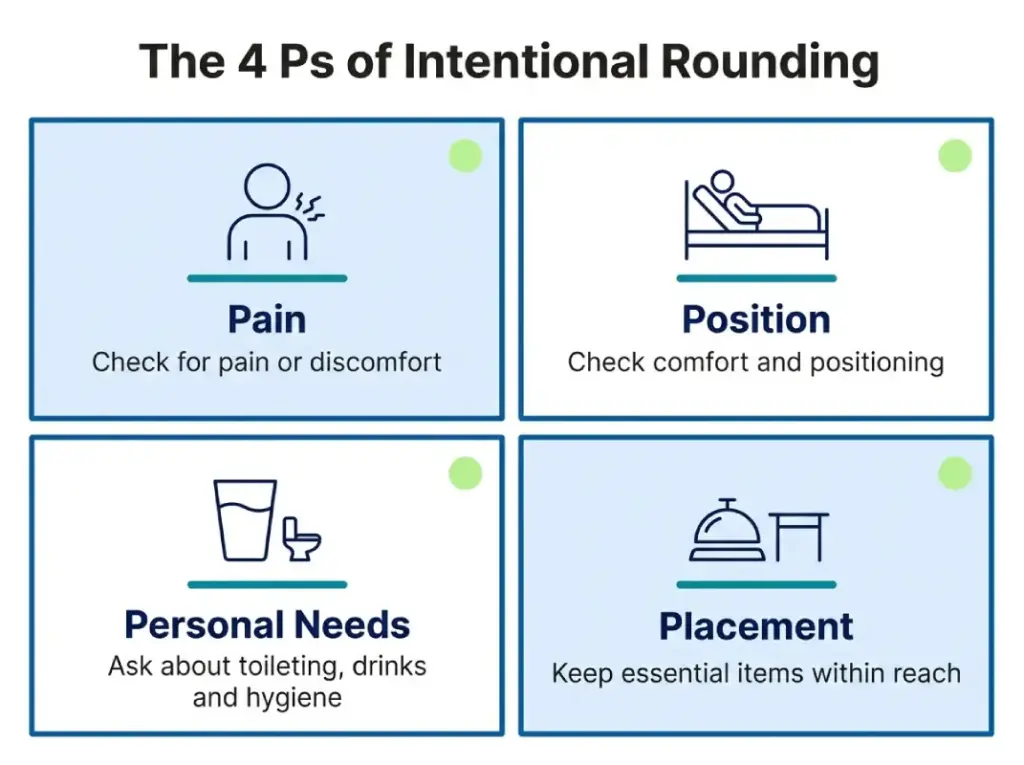
The 4 Ps of intentional rounding are pain, position, personal needs and placement. Healthcare staff use these four checks to identify discomfort, support appropriate positioning, respond to everyday care needs and ensure essential items remain accessible.
1. Pain
The first P involves asking whether the patient is experiencing pain or discomfort.
For example, someone recovering from surgery might report increasing pain when moving. A healthcare assistant should listen carefully, recognise the concern and inform the appropriate registered professional.
Staff should also pay attention to non-verbal signs of discomfort, particularly when patients have difficulty communicating.
2. Position
Position refers to checking whether patients are comfortable, appropriately supported and able to move safely within their care plan.
When assisting someone to change position, safe body mechanics for nursing assistants are also important for protecting both the patient and the worker.
Staff may consider whether:
- The patient needs assistance changing position.
- Pillows and other supports are appropriately arranged.
- Essential mobility equipment is accessible.
- Obstacles around the bed could create a hazard.
These checks are especially relevant to patients with reduced mobility.
Checking for obstacles, mobility difficulties and unsafe positioning can contribute to reducing falls risks in care settings. Patients should receive moving and handling assistance according to their individual care plans.
3. Personal Needs
Personal needs include toileting, hydration, hygiene and other everyday requirements.
During a round, staff might ask whether the patient needs the toilet, would like a drink or requires help with personal care.
When fluid monitoring is required, knowing how to record fluid intake and output helps staff maintain accurate patient records.
Staff may also recognise when someone requires assistance with mouth care, washing or other hygiene needs.
Personal care checks may also highlight when a patient needs help with washing, oral hygiene or maintaining good mouth care.
Every interaction should respect the patient’s dignity, privacy and preferences.
For those new to care work, Care Certificate training covering the 15 standards introduces important principles such as communication, dignity, hydration and person-centred care.
4. Placement
Placement means checking that important belongings and equipment are within the patient’s reach, where appropriate.
Common items include:
- Call bell
- Drinking water, where permitted
- Glasses or hearing aids
- Personal belongings
- Walking aids, positioned safely
For example, a patient with limited mobility may need assistance reaching their call bell. Addressing this during a routine check helps them request support when necessary.
Together, the four Ps create a straightforward framework for attentive, person-centred care.
How Does Intentional Rounding Work in Practice?
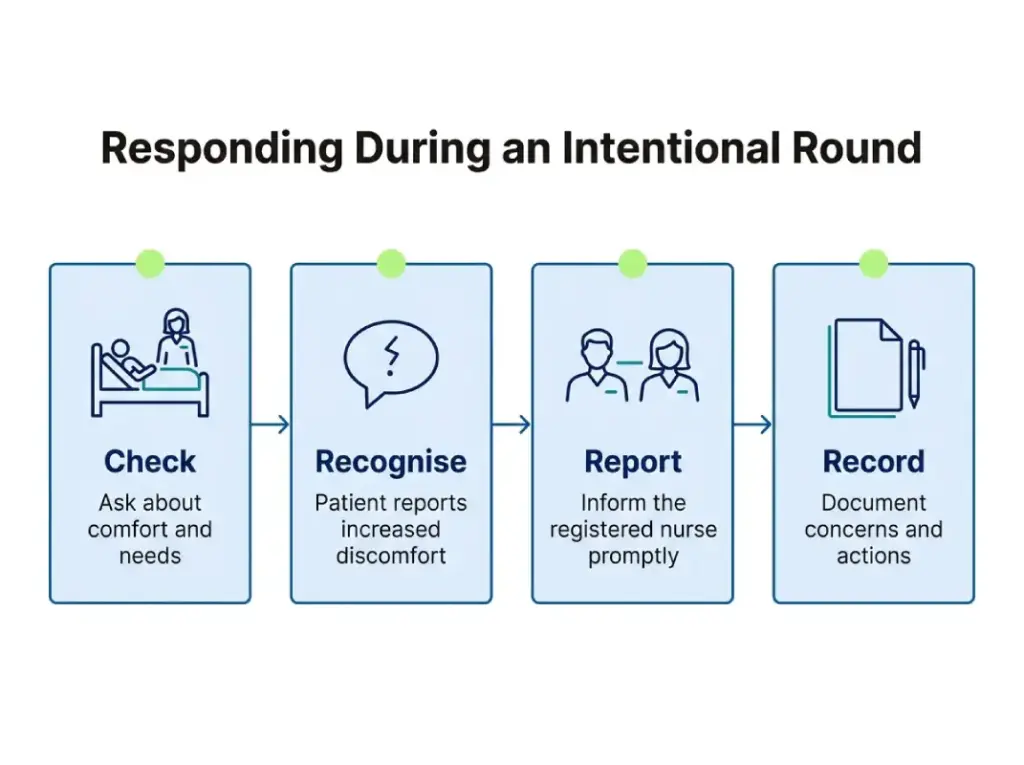
Intentional rounding follows a planned process. Staff communicate with the patient, check the 4 Ps, respond to immediate needs, report concerns and document relevant observations.

Five Steps in an Intentional Rounding Check
- 1.Introduce yourself and communicate. Approach the patient respectfully, explain the check and ask how they are feeling.
- 2. Heck the 4 Ps. Ask bout pain, positioning, personal needs and access to important belongings.
- 3. Provide appropriate assistance. Help with everyday needs within your training, competence and the patient’s care plan.
- 4. Report concerns promptly. Inform the appropriate registered professional about new symptoms, changes in condition or needs requiring further assessment.
- 5. Document the round. Record relevant findings, actions and escalation according to the organisation’s procedures.
Effective rounding also depends on clear communication between nursing assistants and patients, particularly when recognising discomfort or reporting changes in a patient’s condition.
Those who want to develop their knowledge of routine patient checks and everyday nursing support can also consider training in nursing assistance.
Routine checks may also highlight concerns involving medical devices. For example, a patient with a urinary catheter might report discomfort or difficulty moving. Staff should report any concerns and follow appropriate catheter care procedures within their training and responsibilities.
Example of Intentional Rounding and Documentation
Imagine a healthcare assistant carrying out a scheduled round on an NHS hospital ward.
An older patient recovering from surgery reports increased discomfort when moving and asks for help adjusting their position.
The assistant checks that the call bell is accessible, listens to the patient’s concern and contacts the registered nurse. Any assistance with repositioning follows the patient’s moving and handling plan.
A brief documentation entry might read:
10:00 – Patient reports increased discomfort when moving. Call bell accessible. Registered nurse informed promptly. Awaiting assessment.
This example shows how observations, actions and communication can be recorded clearly. Actual entries should follow the patient’s care record and the employer’s documentation system.
The NMC Code’s standards for record keeping require registered nurses and nursing associates to maintain clear, accurate and timely records. Healthcare support workers must follow their employer’s recording and confidentiality procedures.
How Often Should Intentional Rounding Be Done?
Intentional rounding is commonly associated with hourly patient checks, although the appropriate frequency depends on individual needs and local policy.
Some wards use different schedules during the day and night. Patients who require closer monitoring may need more frequent attention, while planned checks should also take account of rest and sleep.
Factors influencing the frequency include:
- The patient’s clinical condition.
- Mobility and personal care requirements.
- Individual care plans and risk assessments.
- Local NHS trust procedures.
Healthcare staff should follow the agreed schedule while remaining responsive to changing needs.
For example, if a patient reports sudden or worsening discomfort, the concern should be addressed promptly rather than waiting for the next planned round.
Who Carries Out Intentional Rounding?
Intentional rounding may involve registered nurses, nursing associates, healthcare assistants and other appropriately trained healthcare support staff.
Responsibilities depend on professional roles, competence, supervision and local arrangements.
Registered nurses coordinate nursing care, assess patient concerns and make clinical decisions within their professional responsibilities.
Nursing associates support patient assessment, care delivery and monitoring within their scope of practice. In England, the nursing associate is a registered profession regulated by the Nursing and Midwifery Council.
The wider responsibilities of a nursing associate also include supporting patient care, monitoring wellbeing and working alongside registered nurses.
For anyone considering this role, nursing associate pay and progression in the NHS may also be useful when comparing healthcare career options.
Healthcare assistants and support workers may undertake delegated routine checks and provide practical assistance according to their training and competence.
The Royal College of Nursing’s guidance on accountability and delegation within nursing teams explains the responsibilities involved when care activities are delegated.
Healthcare support workers interested in progressing their careers may also consider training through a nursing associate apprenticeship.
Apex Learning’s Level 3 Diploma in Nursing Assistant Complete Training covers relevant subjects, including patient communication, personal care, mobility and safety. This CPD-accredited online training supports knowledge development and is separate from regulated nursing qualifications and clinical competency assessments.
Healthcare workers developing their patient-care knowledge can study topics such as communication, personal care and mobility through Apex Learning’s Nursing Assistant Level 3 training.
Benefits and Limitations of Intentional Rounding
Intentional rounding is designed to make routine patient checks more structured and consistent.
Potential benefits include:
- Greater awareness of patient needs: Regular contact provides opportunities to recognise discomfort and personal care requirements.
- Improved access to assistance: Staff can check call bells, belongings and essential equipment.
- Consistent communication: Rounds create opportunities for patients to raise concerns.
- Clearer documentation: Structured records help communicate observations and actions within the care team.
Developing broader adult nursing and social care knowledge can also help learners become more familiar with everyday patient support and person-centred care principles.
Routine checks may reveal changes in a patient’s eating or drinking habits. When nutritional concerns arise, assessing malnutrition risk using the MUST score may form part of the appropriate follow-up.
However, the benefits depend on how rounding is carried out.
An NIHR evaluation of intentional rounding in English hospitals found that structured checks could support accountability and risk management, although improvements in nurse–patient communication were not consistently demonstrated.
This highlights the importance of combining scheduled checks with attentive listening, individualised care and professional judgement.
Conclusion
Intentional rounding helps healthcare staff maintain regular contact with patients and respond to everyday care needs. The 4 Ps—pain, position, personal needs and placement—provide a simple framework for checking comfort, safety and accessibility.
Effective rounding combines these structured checks with clear communication, accurate documentation and individualised support. For nursing teams, it is a practical way to keep patient needs at the centre of routine care.
Level 3 Diploma in Nursing Assistant Complete Training
Build essential healthcare knowledge and practical skills with our CPD-accredited online course. Explore patient care, personal hygiene, infection control, medication support, safeguarding and clinical communication to develop your understanding for potential roles as a Nursing Assistant, Healthcare Support Worker or Care Assistant in the UK.
Explore This Course →Frequently Asked Questions About Intentional Rounding
Is intentional rounding the same as hourly rounding?
The terms are closely related. Hourly rounding describes patient checks scheduled every hour, while intentional rounding refers to the structured approach itself. The timing may vary depending on individual needs and local policy.
Can healthcare assistants carry out intentional rounding?
Yes. Healthcare assistants can undertake delegated rounding activities when they have the appropriate training, competence and support. They should report concerns requiring clinical assessment to the relevant registered professional.
Is intentional rounding mandatory in every NHS hospital?
Not automatically. Staff should consider the patient’s condition, care plan and need for rest. Essential observations and clinically required care should still take place at the appropriate times.
Should patients be woken up for intentional rounding?
Yes. Regular interaction may help staff notice changes in discomfort, mobility, behaviour or communication. For example, a patient might report new pain or appear unusually confused. Healthcare workers should promptly report relevant changes to the appropriate registered professional for assessment.
Can intentional rounding help identify changes in a patient's condition?
Structured resident checks may be used in care homes, although the terminology and procedures can differ from hospital-based intentional rounding. Care staff may regularly check comfort, mobility, hydration and personal needs according to individual care plans and the organisation’s procedures.
Is intentional rounding used in care homes as well as hospitals?
Lorem ipsum dolor sit amet, consectetur adipiscing elit. Ut elit tellus, luctus nec ullamcorper mattis, pulvinar dapibus leo.
 " alt="Falls Prevention in Care: 12 Practical Steps for Care Workers" />
 " alt="Catheter Care: A Step-by-Step Guide for Care Staff" />