

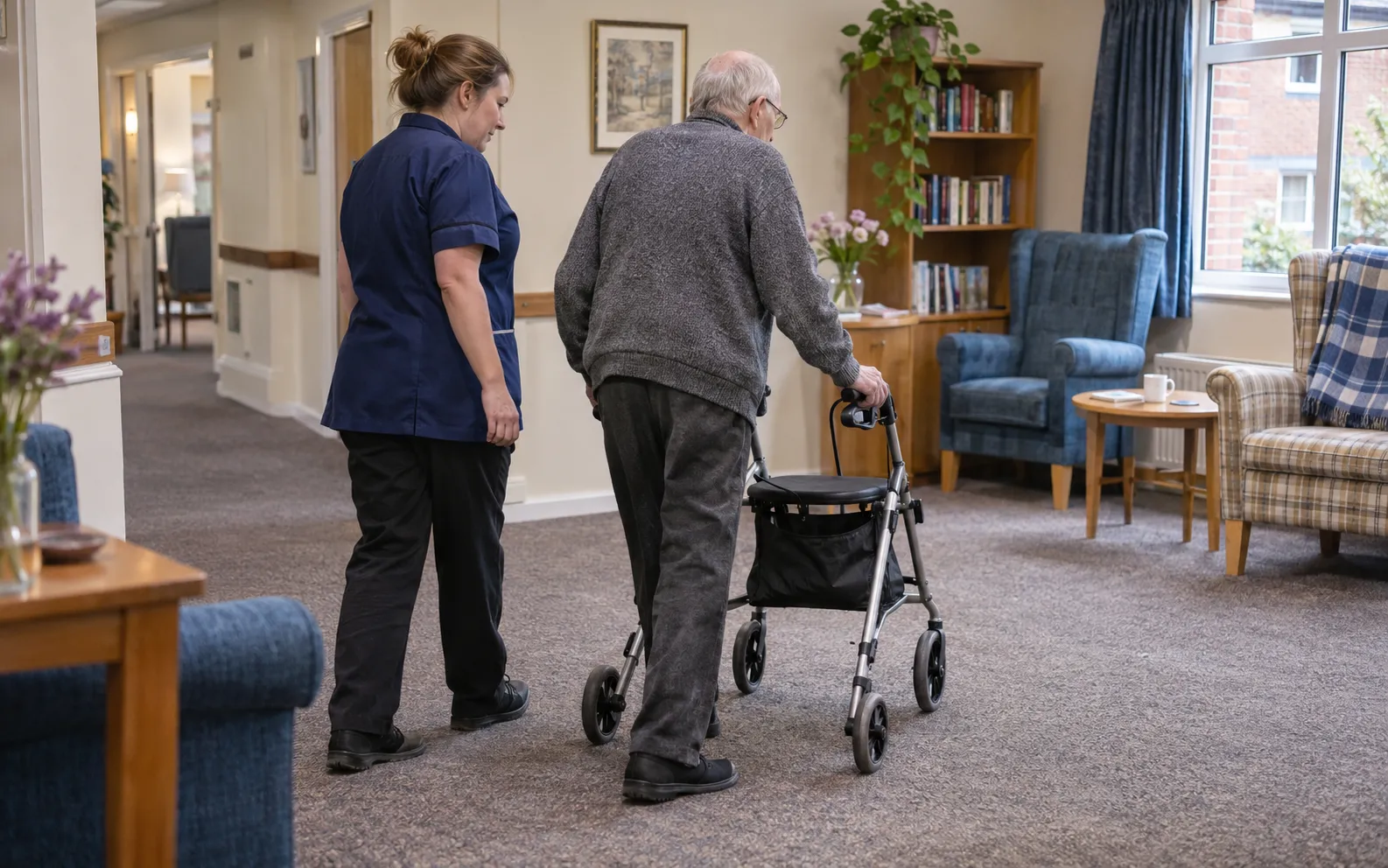

in a residential care home.
A care home resident gets out of bed and heads towards the bathroom. The lighting is poor, their walking frame is out of reach, and they seem less steady than usual. Each issue might appear small, but together they could increase the risk of a fall.
Falls prevention is an important part of everyday health and social care. It involves recognising risks, creating safer environments and helping people maintain their independence.
For care workers, preventing falls is not simply about removing hazards. It also means understanding individual needs, following care plans and recognising when someone needs additional support.
This guide explains 12 practical falls prevention strategies that care workers can use to support safer care.
Falls prevention in care involves identifying factors that could cause someone to fall and taking appropriate steps to reduce those risks. It includes maintaining safe environments, supporting mobility, following individual care plans and recognising changes in health. Effective prevention also depends on professional assessment, communication and regular review.
Level 3 Diploma in Nursing Assistant Complete Training
Table of Contents
What Causes Falls in Care Settings?
Falls rarely have just one contributing factor. Someone might experience dizziness while walking through a cluttered room, or struggle to stand because of muscle weakness.
Understanding these combined risks helps care workers recognise situations where additional support may be needed.
Common Falls Risk Factors in Older Adults
Common factors associated with falls include:
- Physical changes: Muscle weakness, reduced mobility and balance difficulties.
- Health conditions: Vision problems, cognitive impairment and conditions affecting movement.
- Medication effects: Dizziness, drowsiness or changes in blood pressure associated with certain medicines.
- Environmental hazards: Poor lighting, wet floors, clutter and unsuitable footwear.
- Previous falls: A history of falling may indicate the need for further assessment.
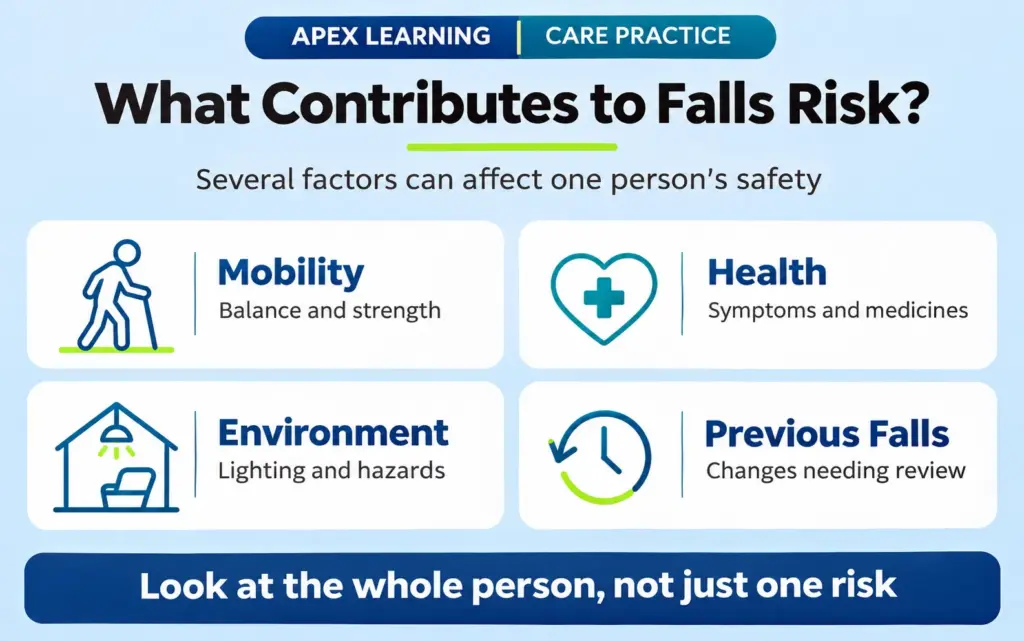
According to NICE guidance on falls assessment and prevention, identifying individual risk factors is essential when planning appropriate interventions.
What Is a Falls Risk Assessment?
A falls risk assessment identifies factors that may make someone more likely to fall and helps determine appropriate support.
NICE recommends comprehensive falls assessment and management for people in residential care settings. Depending on individual needs, assessment may consider walking, balance, medication, vision, cognition and other health factors.
Care workers contribute by noticing changes and communicating concerns. However, comprehensive clinical assessments must be undertaken by appropriately competent professionals.
A simple checklist cannot replace an individual assessment or an agreed care plan.
12 Practical Falls Prevention Steps for Care Workers
Effective falls prevention in care homes involves consistent attention to people’s needs, surroundings and daily routines.
The following steps show how care workers can support safer movement while respecting individual independence.
1. Follow Each Person’s Falls Prevention Care Plan
Every resident has different mobility needs, abilities and preferences. A prevention measure that helps one person might not suit another.
Before providing support, check the person’s current care plan.
Pay attention to:
- Previous falls and identified risks.
- Mobility equipment and assistance requirements.
- Agreed arrangements for walking and transferring.
- Personal preferences and communication needs.
For example, one resident may walk independently with a frame, while another needs assistance when standing.
Follow the agreed arrangements rather than making assumptions based on age or appearance.
Care workers also collaborate with registered nurses and other professionals. Understanding wider nursing associate responsibilities can help explain how different members of the care team contribute to safe care.
2. Remove Trip Hazards and Keep Walkways Clear
Environmental hazards are often straightforward to identify, but they can be overlooked during a busy shift.
Check frequently used areas for:
- Loose cables or clutter.
- Wet or slippery flooring.
- Furniture blocking walking routes.
- Equipment left in corridors.
- Loose or damaged floor coverings.
Consider a resident who uses a walking frame. If a cleaning trolley blocks their usual route, they may attempt to move around it without enough space.
Remove hazards when it is safe and within your responsibilities. Report maintenance problems through the appropriate workplace procedure.
Practical tip: Pay particular attention to bedrooms, bathrooms and routes residents regularly use.
3. Make Lighting and Essential Items Easy to Access
Poor lighting can make it harder to identify obstacles, especially when someone gets up at night.
Check whether residents can see their usual walking routes and reach important items safely.
This may include ensuring that:
- Bedside lighting works properly.
- Bathroom routes are adequately lit.
- Call bells are within agreed reach.
- Walking aids are positioned according to the care plan.
- Frequently used belongings are accessible.
Avoid rearranging someone’s room without considering their preferences and established routines.
For residents with visual difficulties, a familiar layout can be particularly helpful.
Report broken lights or accessibility concerns rather than relying on temporary arrangements.
4. Support Safe Walking and Transfers
Moving between a bed, chair, toilet or wheelchair can create difficulties for someone with reduced strength or balance.
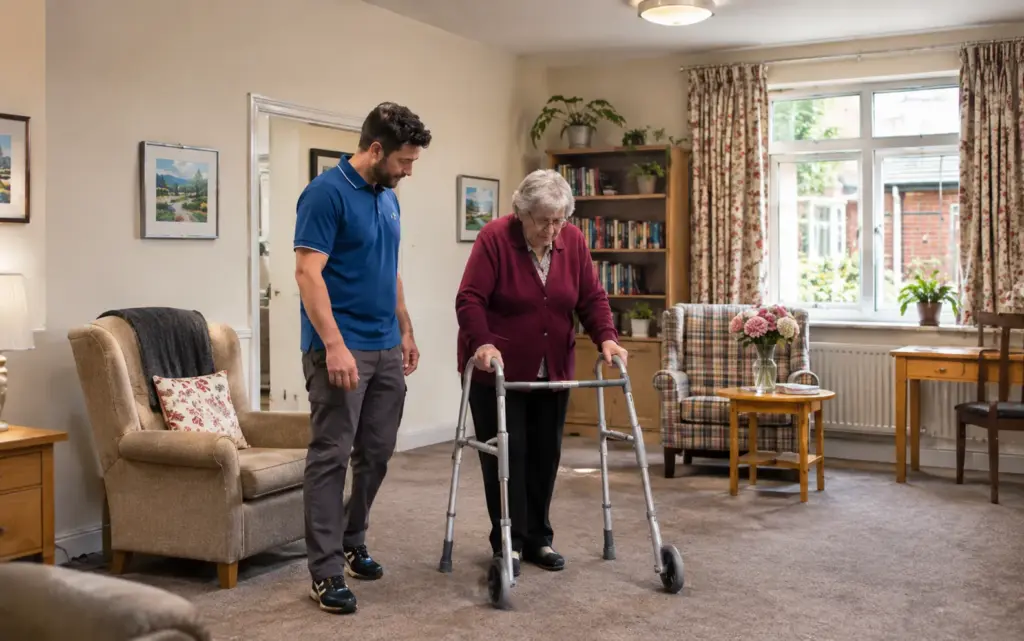
Care workers should follow the person’s moving and handling plan and use equipment only when trained and authorised to do so.
Never rush a transfer or attempt to physically support someone beyond your competence.
Where appropriate, allow sufficient time for the person to move at their own pace.
If their ability changes, stop and seek guidance rather than assuming the existing support arrangements remain suitable.
Those developing healthcare support knowledge may find Nursing Assistant L3 relevant to broader care responsibilities. Online learning does not replace practical moving and handling training or workplace competency assessment.
5. Encourage Appropriate Strength and Balance Activities
Maintaining movement can help people preserve strength, confidence and independence.
For some older adults, an appropriately designed exercise programme can form an important part of falls prevention.
The NICE recommendations on falls prevention exercise explain the role of exercise programmes tailored to individual needs.
Care workers can support activities already included in a person’s agreed plan.
This might mean helping someone attend a physiotherapy session or providing appropriate encouragement during everyday movement.
However, staff should not independently prescribe exercises or introduce unfamiliar activities without suitable guidance.
The aim is to promote safe participation, not to restrict movement unnecessarily.
6. Check Footwear and Report Vision Concerns
Footwear and eyesight can influence how safely someone moves around their environment.
Shoes that are loose, damaged or poorly fitted may make walking more difficult.
Encourage footwear that suits the person’s needs and professional recommendations. Notice when footwear becomes unsuitable or uncomfortable.
Vision concerns also deserve attention.
For example, someone might begin misjudging distances, struggling to identify obstacles or reporting blurred vision.
Record and report relevant changes so appropriate assessment can be arranged.
Care workers should not diagnose eyesight problems or assume that changing footwear alone will resolve balance difficulties.
7. Notice Dizziness and Possible Medication-Related Problems
Some medicines can contribute to falls risk through effects such as dizziness or drowsiness.
A resident might appear unusually sleepy, feel light-headed when standing or become less steady following a medication change.
These observations should be communicated promptly.
NICE recommends a structured medication review in residential care as part of comprehensive falls management.
Care workers should not stop medicines, change doses or independently decide whether a prescription is appropriate.
Instead, record relevant symptoms accurately and inform the appropriate registered professional.
Example: If someone becomes dizzy when standing, help them remain safe, follow the care plan and report the change rather than encouraging them to continue walking.
8. Respond to Hydration and Wellbeing Concerns
Changes in hydration and general health may contribute to symptoms such as weakness or dizziness.
Care workers should support residents with drinks according to their individual care arrangements and any prescribed fluid restrictions.
Pay attention to changes in alertness, behaviour, mobility or reported wellbeing.
Where monitoring is required, accurate recording of fluid intake and output helps the care team understand the person’s needs.
Do not assume that someone who appears unsteady simply needs more fluids. The cause may require clinical assessment.
Report unexpected changes promptly and follow the person’s existing care plan.
9. Provide Appropriate Support for People with Dementia
Falls prevention for people living with dementia should remain individualised.
Changes in memory, spatial awareness, judgement or communication may affect how someone moves through their surroundings.
Care workers can help by:
- Maintaining familiar routines where appropriate.
- Giving clear, calm explanations.
- Keeping walking routes accessible.
- Recognising changes in behaviour or mobility.
- Providing assistance according to the person’s care plan.
For example, someone may become unsettled when furniture is moved from its usual position.
Discuss environmental changes with the person and relevant care professionals wherever possible.
Safety measures should support dignity and independence rather than unnecessarily restricting movement.
10. Support Safer Toileting and Night-Time Movement
Getting to the toilet can present additional challenges for residents with mobility difficulties.
Someone experiencing urgency may try to stand or walk before assistance arrives.
Follow agreed toileting support arrangements and ensure residents know how to request help.
Check that bathroom routes are clear and appropriately lit.
Where required, make sure mobility aids and call bells are accessible.
A resident who usually needs assistance should not be encouraged to walk independently simply because staff are busy.
At the same time, avoid unnecessary restrictions or changes to toileting routines without appropriate review.
The goal is to make personal care safer while preserving privacy and dignity.
11. Report and Record Changes in Falls Risk
Falls prevention depends on communication between staff members.
A small change noticed during one shift may become important when combined with other observations.
Report concerns such as:
- New difficulty standing or walking.
- Increased dizziness or confusion.
- Repeated loss of balance.
- Changes in mobility aid use.
- Falls or relevant near misses.
Write factual observations rather than assumptions.
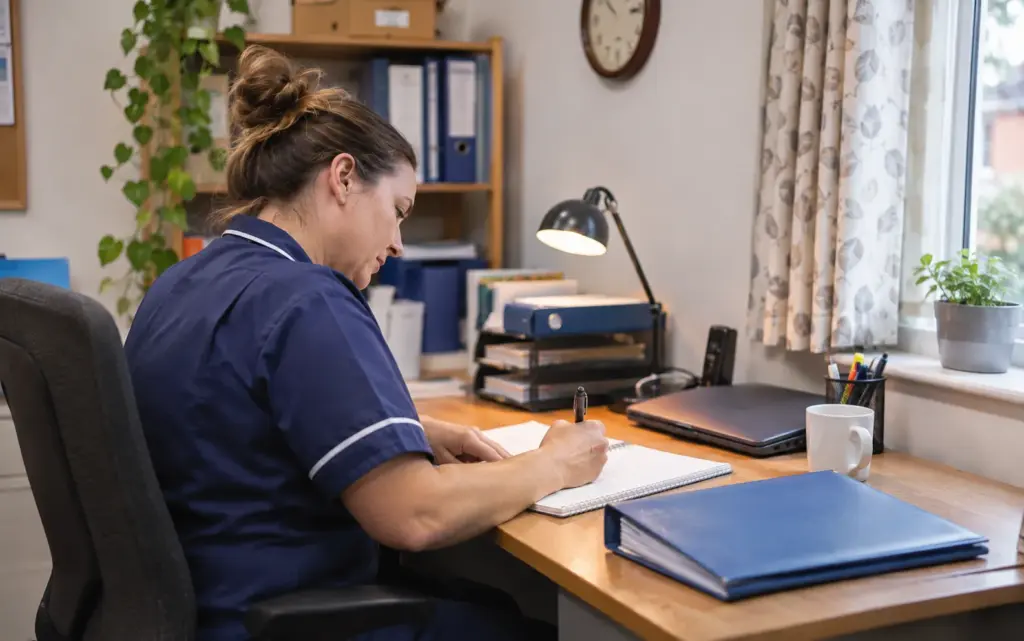
For example, “Resident required additional support when standing from the chair” is more informative than “Resident seemed unsafe.”
In England, CQC Regulation 12 on safe care and treatment requires registered providers to assess and mitigate relevant risks. This is a provider-level legal requirement; individual staff must follow their roles, training and workplace procedures.
12. Review Prevention Measures with the Care Team
A falls prevention plan should respond to changing circumstances.
Someone recovering from illness may require additional mobility support. Another resident might regain confidence and become more independent.
Care workers should communicate these developments to the appropriate professionals.
Depending on individual needs, the team may involve registered nurses, GPs, physiotherapists, occupational therapists or pharmacists.
NICE emphasises individualised falls management in residential care, rather than relying on identical interventions for everyone.
Supervisors also help ensure that staff understand care plans, communicate concerns and follow established procedures.
For those working towards management responsibilities, the TQUK Level 5 Diploma in Leadership and Management for Adult Care (RQF) is a relevant further-learning option.
What Should a Care Worker Do After a Fall?
Even with appropriate prevention measures, falls can still occur.
When someone falls, the immediate priority is their safety.
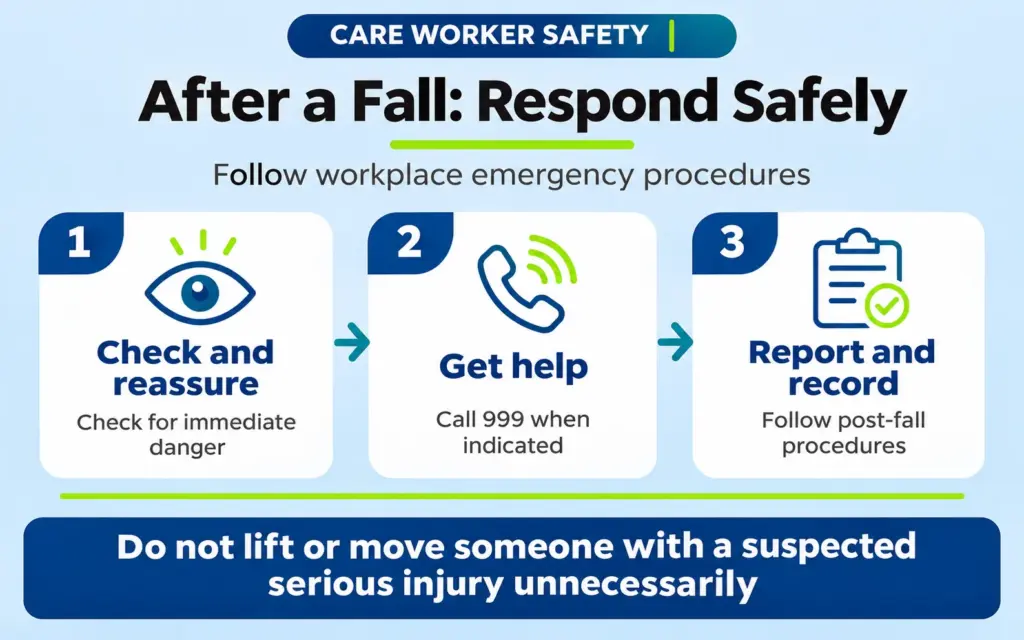
Follow the organisation’s post-fall and emergency procedures:
- Stay calm, reassure the person and summon appropriate assistance.
- Check for immediate danger without moving them unnecessarily.
- Do not automatically lift someone from the floor or attempt an unsafe manual transfer.
- Seek urgent medical assistance where serious injury is suspected, including possible head, neck, back or hip injury.
- Inform the appropriate registered professional or senior colleague.
- Record the incident accurately and follow arrangements for post-fall monitoring and review.
The NHS guidance on what to do after a fall advises seeking emergency help for suspected serious injuries and appropriate support when someone cannot get up safely.
A fall without an obvious injury may still require assessment. Follow the workplace protocol rather than assuming the person is unharmed.
A Practical Falls Prevention Checklist for Care Workers
Use this short reminder alongside existing workplace procedures and individual care plans.
- Care plan: Are current mobility needs and assistance arrangements understood?
- Environment: Are walkways clear, lighting suitable and essential items accessible?
- Mobility: Are walking aids available and agreed support arrangements followed?
- Observations: Have new symptoms, hazards or changes in ability been reported?
- Communication: Are relevant concerns documented and passed to the appropriate person?
This checklist supports everyday awareness. It is not a clinical falls risk assessment or a substitute for formal care documentation.
Building Falls Prevention Knowledge Through Care Training
Falls prevention is one part of providing safe, person-centred care.
Care workers seeking broader professional development may explore Apex Learning’s TQUK Level 2 Diploma in Care (RQF) or TQUK Level 3 Diploma in Healthcare Support (RQF).
These qualifications address wider care or healthcare-support knowledge. Learners should check the entry requirements, assessment arrangements and course content before enrolling.
Completing a qualification does not independently authorise specialist clinical procedures or guarantee employment.
Safer Care Starts with Everyday Awareness
Effective falls prevention combines individual care planning, safer surroundings, appropriate mobility support and timely communication.
Care workers cannot eliminate every risk. However, by recognising concerns early, respecting professional boundaries and following agreed procedures, they can make a meaningful contribution to safer, more confident and person-centred care.
Level 3 Diploma in Nursing Assistant Complete Training
Build essential healthcare knowledge and practical skills with our CPD-accredited online course. Explore patient care, personal hygiene, infection control, medication support, safeguarding and clinical communication to develop your understanding for potential roles as a Nursing Assistant, Healthcare Support Worker or Care Assistant in the UK.
Explore This Course →Frequently Asked Questions About Catheter Care
Can All Falls in Care Homes Be Prevented?
No. Falls prevention aims to reduce avoidable risks, but some falls may still occur despite appropriate measures. Individual assessment, suitable support and regular review can help manage risks while protecting a person’s independence and quality of life.
Who Is Responsible for Falls Prevention in a Care Home?
Falls prevention is a shared responsibility. Care providers must maintain safe systems, while care workers follow individual plans, observe changes and report concerns. Registered professionals and other qualified specialists undertake relevant clinical assessments and interventions within their responsibilities.
How Often Should Falls Risks Be Reviewed?
Falls risks should be reviewed according to individual needs, relevant professional guidance and workplace procedures. Changes in mobility, health, medication or falls history may require reassessment. There is no single review interval that is appropriate for every resident.
How Can Care Workers Support Residents Who Fear Falling?
Listen to their concerns, provide reassurance and follow agreed mobility arrangements. Encourage appropriate activity and discuss persistent fears with the care team. Unnecessary restriction may reduce independence, so support should reflect the person’s abilities, preferences and professional advice.
What Is the Difference Between Falls Prevention and Falls Detection?
Falls prevention involves actions intended to reduce the likelihood of someone falling. Falls detection involves recognising that a fall may have happened, sometimes through monitoring equipment or alarms. Detection systems may help alert others, but they do not replace preventive care.
 " alt="Intentional Rounding: What It Is & How It Works" />
 " alt="Catheter Care: A Step-by-Step Guide for Care Staff" />