

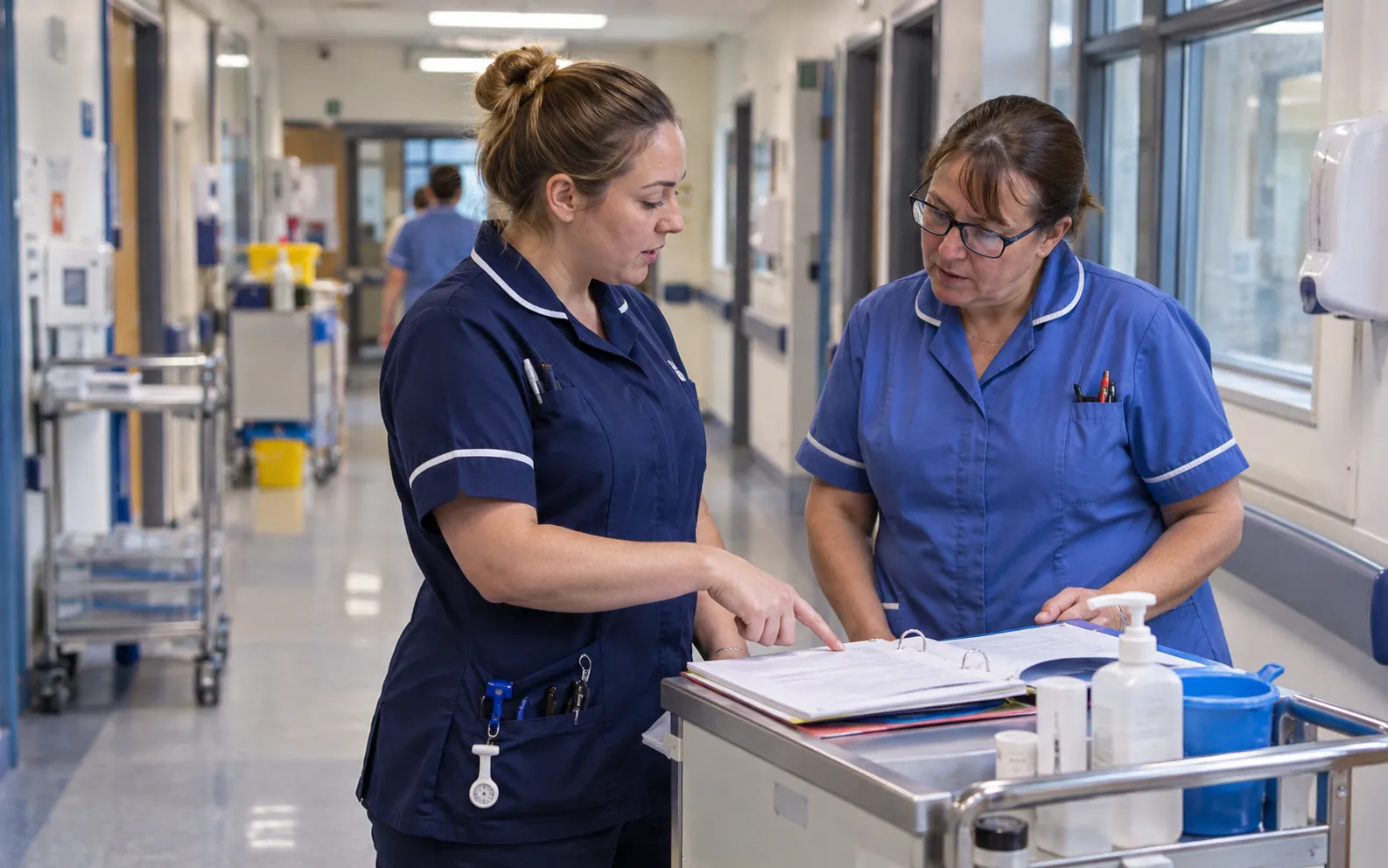

Thinking about a career in nursing but unsure whether becoming a registered nurse is your only option? The nursing associate role offers a different route into professional nursing care, with its own responsibilities, qualifications and career opportunities.
If you’re already a healthcare assistant, considering a career change or exploring NHS jobs, understanding this role can help you make an informed decision.
A nursing associate is a registered healthcare professional who provides nursing care and supports patients under the professional standards of the Nursing and Midwifery Council (NMC). Nursing associates work alongside registered nurses in hospitals, community services and other care settings. The role is regulated in England and requires approved training and professional registration.
Table of Contents
What Is a Nursing Associate?
A nursing associate is a member of the nursing team who helps bridge the gap between healthcare assistants and registered nurses.
According to the Nursing and Midwifery Council (NMC), nursing associates are a separate regulated profession with their own standards of proficiency.
Their work involves delivering person-centred care, monitoring patients’ conditions and contributing to healthcare teams. Although nursing associates and registered nurses share some responsibilities, their professional roles and training requirements differ.
Nursing associates may work in:
- NHS hospitals and outpatient departments
- GP practices and primary care services
- Community nursing teams
- Mental health services
- Care homes and other adult care settings
- Hospices and rehabilitation services
The exact responsibilities depend on the workplace, the needs of patients and the professional’s demonstrated competence.
Importantly, the nursing associate role is regulated in England, rather than being a separate NMC-regulated profession throughout the whole UK.
Level 3 Diploma in Nursing Assistant Complete Training
What Does a Nursing Associate Do?
A nursing associate helps deliver safe, compassionate care while working with registered nurses and other healthcare professionals.
The NHS nursing associate role guidance describes responsibilities involving direct patient care, clinical observations and supporting patients with different healthcare needs.
Main Duties and Responsibilities
Typical nursing associate duties include:
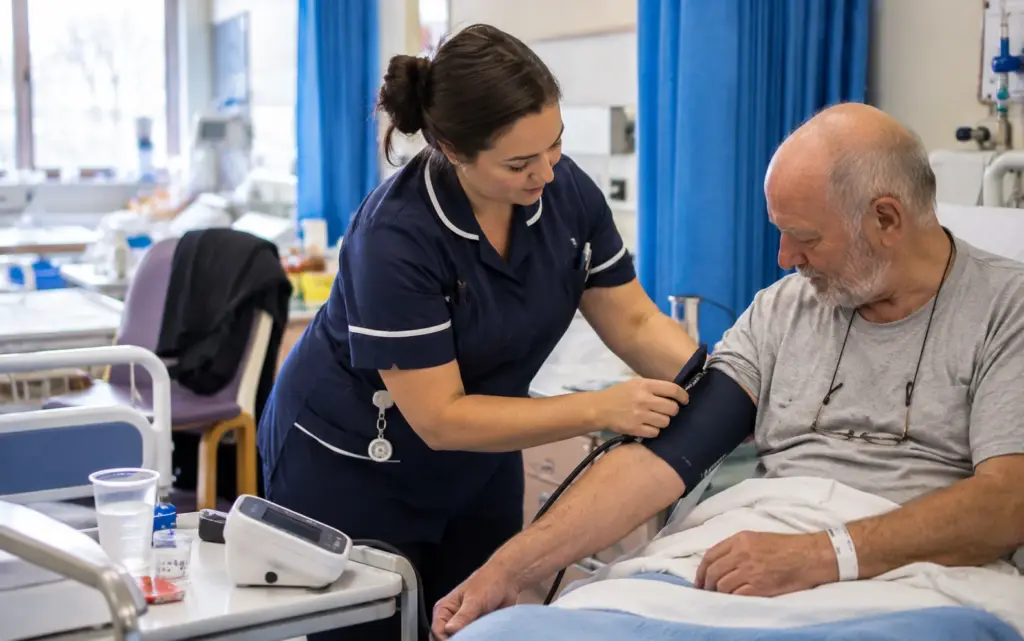
- Monitoring patients: Taking and recording observations such as temperature, pulse, blood pressure and breathing rate.
- Supporting personal care: Helping patients with hygiene, mobility, nutrition and other daily needs.
- Recognising changes: Identifying signs that someone’s condition may be deteriorating and escalating concerns appropriately.
- Maintaining care records: Recording relevant information accurately and communicating updates to colleagues.
- Providing emotional support: Listening to patients, answering appropriate questions and supporting families or carers.
- Promoting patient safety: Following infection prevention, safeguarding and workplace safety procedures.
- Supporting clinical care: Carrying out appropriate procedures within their professional competence and the organisation’s policies.
Nursing associates contribute to care delivery, but they must recognise when a situation requires a registered nurse or another suitably qualified professional.
A Typical Day as a Nursing Associate
Illustrative example:
A nursing associate begins a hospital shift by receiving a handover from colleagues. They check patients’ observations, help someone who needs mobility support and record relevant changes in the care notes.
Later, a patient reports feeling unusually breathless. The nursing associate assesses the situation within their competence, promptly escalates the concern and helps the team respond.
Throughout the shift, communication, documentation and patient wellbeing remain central to their work.
Interested in Nursing Assistant Training?
For readers interested in understanding related support responsibilities, Apex Learning’s Level 3 Nursing Assistant training covers subjects including personal care, communication, safeguarding and infection prevention.
This CPD-accredited online course is separate from professional nursing associate qualification.
Explore Level 3 Nursing Assistant Training →Develop your knowledge with flexible online learning.
Nursing Associate vs Registered Nurse vs Healthcare Assistant
These three roles contribute to patient care, but they are not interchangeable.
| Feature | Healthcare Assistant | Nursing Associate | Registered Nurse |
|---|---|---|---|
| NMC Registration | Not required for the HCA role | Required in England | Required |
| Training | Depends on the role and employer | NMC-approved nursing associate programme | NMC-approved nursing programme |
| Main Responsibilities | Supporting care and daily needs | Providing nursing care within a defined professional scope | Nursing assessment, care planning and more complex clinical responsibilities |
| Accountability | Accountable for assigned work within their competence | Professionally accountable under the NMC Code | Professionally accountable under the NMC Code |
Nursing associates have their own professional responsibilities. They are not simply experienced healthcare assistants, nor are they replacements for registered nurses.
Actual duties also depend on competence, patient needs and workplace governance arrangements.
Those exploring foundational care roles may find the TQUK Level 2 Diploma in Care (RQF) relevant to developing care knowledge and competence. However, it does not replace the approved programme required to become a nursing associate.
Nursing Associate Salary in the UK: NHS Band 4 Pay
How much does a nursing associate earn?
Qualified nursing associates employed under NHS Agenda for Change arrangements in England are generally paid at Band 4.
For the 2026/27 pay year, the basic annual Band 4 salary is:
- Starting salary: £28,392
- Top of Band 4: £31,157
These figures apply from 1 April 2026 and are confirmed in the official NHS Employers pay scales for 2026/27.
Trainee nursing associates are commonly employed at Band 3, although individual employment and training arrangements can differ.
Actual earnings may also be affected by working hours, qualifying allowances, location supplements and contractual arrangements.
These figures describe NHS England pay. They should not be treated as a universal salary scale for every healthcare employer or every part of the UK.
How to Become a Nursing Associate in England
Becoming a nursing associate involves meeting entry requirements, completing approved education and gaining professional registration.
There are different ways to access the training, depending on your qualifications, employment circumstances and the opportunities available.
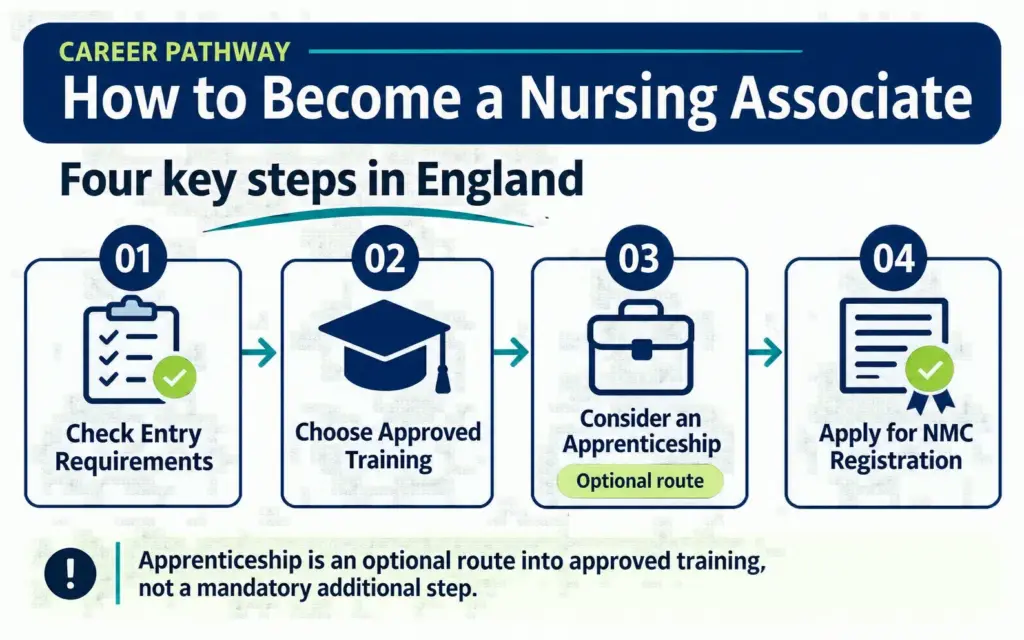
Step 1: Check the Entry Requirements
Start by reviewing the requirements of an approved nursing associate programme.
Education providers may consider your existing qualifications, English and maths skills, relevant experience and suitability for practice learning.
Requirements are not identical across every programme.
If you’re already working as a healthcare assistant or support worker, your employer may be able to explain available development opportunities. Career changers should check whether a university-based route is available and what its admissions criteria involve.
Step 2: Choose an NMC-Approved Training Programme
The standard route involves completing an approved nursing associate qualification, commonly a Level 5 foundation degree or an approved programme leading to an equivalent qualifying award.
Training typically takes around two years and combines academic learning with supervised practice experience.
Students develop knowledge of patient care, clinical observations, professional accountability, communication and safe nursing practice.
Before applying, check NMC-approved nursing associate programmes to confirm that the specific qualification leads towards the appropriate professional registration.
Step 3: Consider the Nursing Associate Apprenticeship
A nursing associate apprenticeship offers a work-based route that combines employment with approved education.
It may suit existing healthcare support workers who want to develop their skills while continuing to work.
The apprenticeship must meet the relevant professional and occupational requirements, including those in the Skills England nursing associate apprenticeship standard.
Applications generally depend on suitable employer opportunities and the requirements of the training provider.
Step 4: Complete Training and Register With the NMC
After successfully completing an approved programme, eligible candidates must apply to join the nursing associate part of the NMC register.
Registration confirms that the individual has met the relevant professional requirements. It is necessary before practising as a registered nursing associate in England.
For those developing healthcare support competencies, Apex Learning also offers the TQUK Level 3 Diploma in Healthcare Support (RQF). It covers areas such as person-centred care, communication, infection prevention and duty of care, with competency assessment through a portfolio of evidence.
This is a healthcare support qualification, not an NMC-approved nursing associate programme.
Nursing Associate Qualifications and NMC Registration
One important distinction can save prospective learners considerable confusion: not every nursing or healthcare qualification leads to professional nursing associate registration.
What Qualifications Do You Need?
To enter the profession through the standard education route in England, you must complete an NMC-approved pre-registration nursing associate programme and meet the registration requirements.
Relevant previous study or healthcare experience may support an application, but it does not automatically replace the required professional education.
A Level 2 care qualification, Level 3 healthcare diploma or CPD-accredited nursing assistant course may provide useful learning. None should be assumed to confer nursing associate registration eligibility.
How to Check Whether a Course Leads to NMC Registration
Before enrolling, check four things:
- Approval: Is the exact programme recognised by the NMC for nursing associate registration?
- Qualification: What award will you receive, and what professional outcome does it support?
- Practice learning: How are clinical placements, supervised learning and practical assessments arranged?
- Entry requirements: What qualifications, checks or employment arrangements must you meet?
Do not rely on course titles alone. Words such as nursing, healthcare or Level 5 do not independently confirm NMC approval.
If you’re comparing qualifications, the most important question is whether the programme meets your intended professional goal.
What Skills Does a Good Nursing Associate Need?
Clinical knowledge matters, but successful nursing associates also need strong communication, judgement and interpersonal skills.
Important qualities include:
- Compassion: Treating patients with dignity, patience and respect.
- Communication: Explaining information clearly and listening to concerns.
- Attention to detail: Recording observations and recognising changes accurately.
- Teamwork: Sharing relevant information and working effectively with colleagues.
- Professional judgement: Understanding personal competence and knowing when to escalate concerns.
- Organisation: Managing responsibilities while keeping patient safety central.
For example, accurate documentation can help the wider nursing team recognise patterns in a patient’s condition and make informed care decisions.
Apex Learning’s TQUK Level 3 Diploma in Healthcare Support Services (RQF) covers related care-setting topics, including communication and working relationships. It is a separate healthcare qualification rather than a route to nursing associate registration.
Nursing Associate Career Progression
Becoming a nursing associate can provide opportunities to develop professionally within healthcare services.
Some nursing associates continue building their experience in particular care settings, while others pursue further education.
Can a Nursing Associate Become a Registered Nurse?
Yes. Registered nursing associates may apply to suitable NMC-approved programmes leading to registered nurse qualification.
Previous academic and practice learning can sometimes be recognised, potentially reducing the amount of additional study required.
However, progression is not automatic. Admissions criteria, recognition of prior learning and programme duration depend on the individual education provider and the applicant’s circumstances.
The nursing associate role is also a profession in its own right, so becoming a registered nurse is an option rather than an expected next step.
Taking the Next Step Towards a Nursing Associate Career
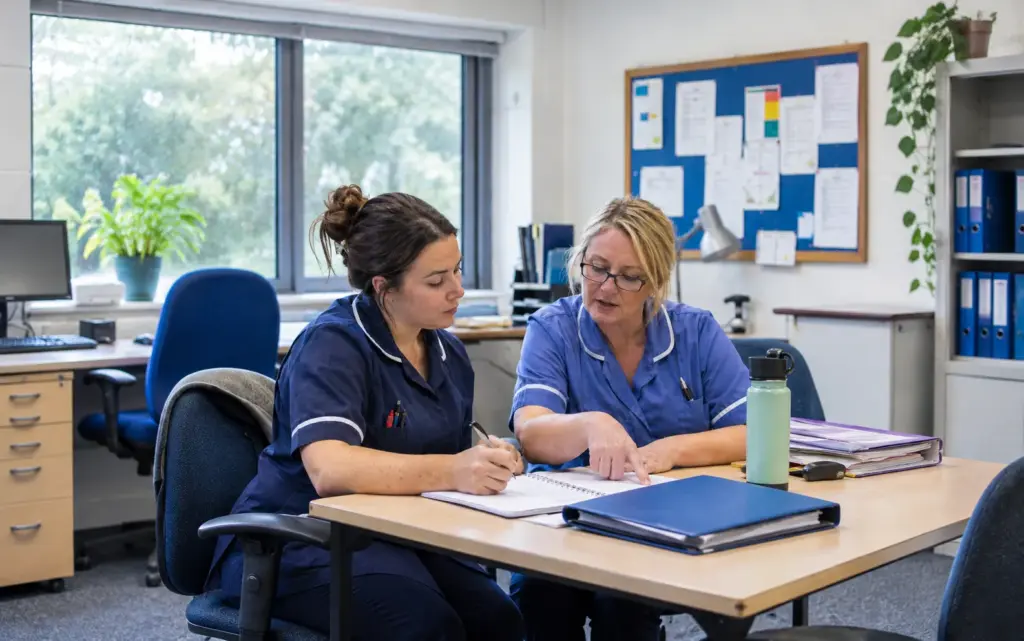
A nursing associate career combines direct patient care, professional responsibility and opportunities for further development. The most useful next step is to check your existing qualifications, explore approved programmes and understand the registration requirements.
Related healthcare courses can strengthen your knowledge, but NMC-approved training remains essential for entering this regulated profession through the standard route in England.
Frequently Asked Questions About Nursing Associates
Is a Nursing Associate the Same as a Healthcare Assistant?
No. Although both roles involve supporting patients, their responsibilities, training and professional status are different. Nursing associates complete an NMC-approved programme and must register with the Nursing and Midwifery Council to practise in England. Healthcare assistants do not require NMC registration for their role. Nursing associates also have their own professional standards and accountability, while healthcare assistants work within responsibilities assigned by their employer.
Can You Become a Nursing Associate Without Healthcare Experience?
Yes, it may be possible to become a nursing associate without previous healthcare employment. Some universities offer direct-entry foundation degree programmes, while apprenticeship routes usually require a suitable employment arrangement. Entry requirements vary between education providers and may include academic qualifications, English and maths skills, interviews and health-related checks. Always confirm the specific requirements of an NMC-approved programme before applying.
Can Nursing Associates Administer Medication?
Yes. Registered nursing associates can administer certain medicines when they have the necessary training, demonstrated competence and appropriate workplace authorisation. Their responsibilities must follow professional standards, relevant legislation and local medicines policies. However, nursing associates cannot independently prescribe medication. The NMC Code explains the professional responsibilities associated with safe medicines administration.
Is Nursing Associate a UK-Wide Regulated Role?
No. Nursing associate is an NMC-regulated profession specifically in England. Although healthcare support roles exist across Scotland, Wales and Northern Ireland, the same nursing associate regulatory framework does not automatically apply throughout the UK. If you live outside England, check the healthcare career pathways and professional requirements available in your nation before choosing a training programme.
How Long Does It Take to Become a Nursing Associate?
Nursing associate training typically takes around two years through an approved foundation degree or apprenticeship programme. Training combines academic study with supervised clinical practice, helping learners develop the knowledge and competencies required for professional registration. The exact timetable may depend on the programme, study arrangements and any recognised prior learning. After successfully completing an approved programme, you must also meet the NMC’s registration requirements.
Can a Nursing Associate Work in a GP Surgery?
Yes. Nursing associates can work in GP surgeries and other primary care environments, as well as hospitals, community services and suitable care settings. Their responsibilities may include supporting patient appointments, carrying out appropriate observations, promoting health and communicating with the wider clinical team. The exact duties depend on their competence, the needs of patients and the practice’s policies and supervision arrangements.
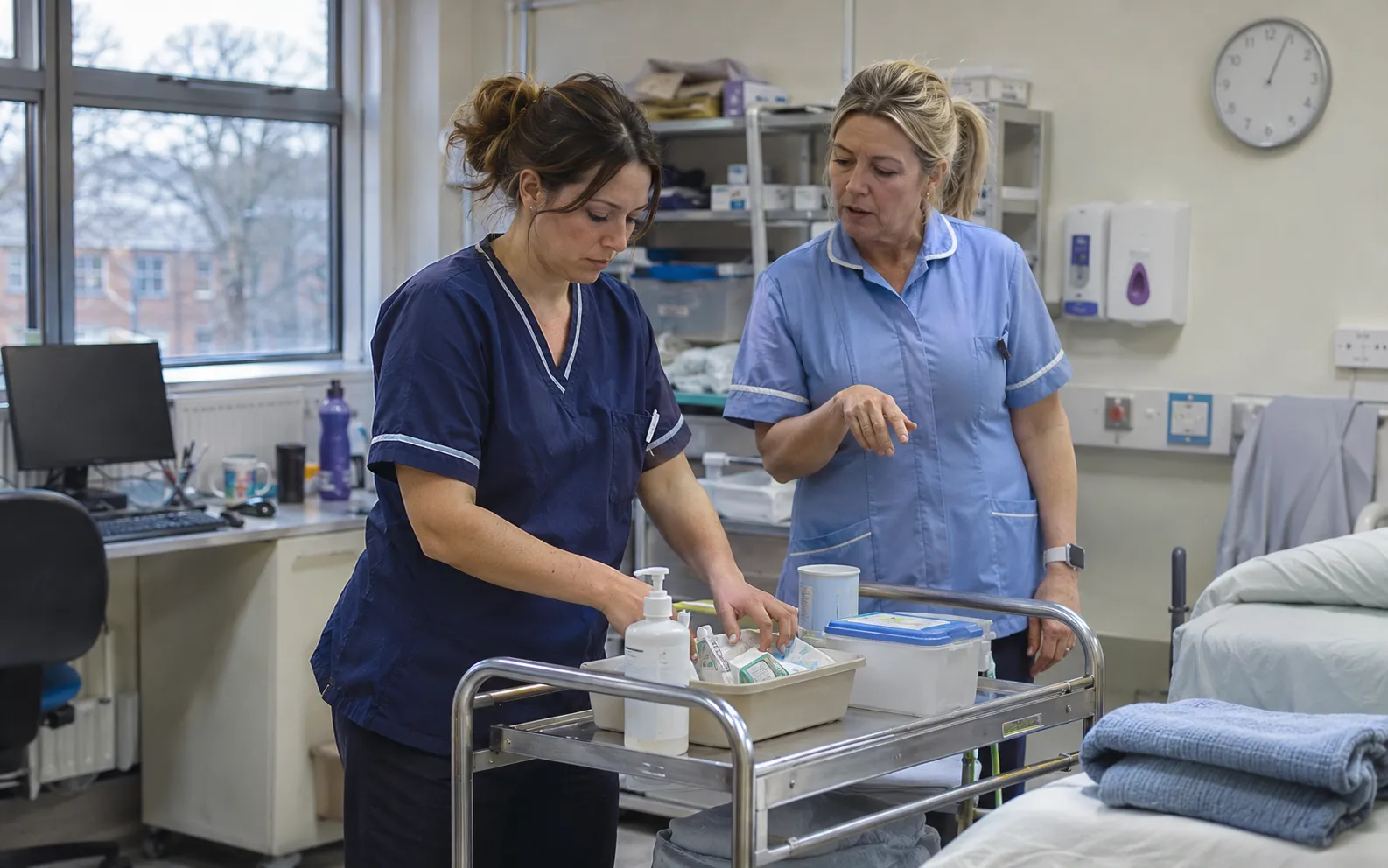 " alt="Nursing Associate Apprenticeship: NHS Entry Guide" />
 " alt="2026 Nursing Associate Salary: Band 4 Pay Explained" />