


The temperature danger zone for food is the range between 5°C and 63°C. Within this range, harmful bacteria can grow rapidly and multiply to unsafe levels, increasing the risk of foodborne illness. To keep food safe, cold food should be stored at 5°C or below, while hot food should be kept at 63°C or above. When cooking, food should reach a core temperature of at least 75°C to ensure that dangerous bacteria are destroyed. Additionally, food should not be left in the danger zone for more than two hours, and if it has been in this range for longer, it should be reheated thoroughly to 75°C or disposed of. Proper temperature control is one of the most important aspects of food hygiene and is essential for anyone working in catering, food handling, or food preparation in the UK.
Temperature danger zone is part of your shift, even if no one names it. You are halfway through serving lunch when a resident needs support. You leave the trolley for a moment. Or you are unpacking a chilled delivery while the phone rings and someone asks for help. The food still looks fine. You are doing your job. Yet this is the point where time and temperature start to matter. In UK care settings and kitchens, these familiar interruptions carry real responsibility.
Safe food temperatures in the UK mean keeping chilled food at or below 5°C, hot food at or above 63°C, and cooking or reheating high-risk food to 75°C, with time control and records to meet legal food safety requirements.
This guide explains:
- the correct UK temperature range
- the 4-hour rule in practice
- safe cooking, chilling, reheating, and hot holding
- how these apply in care homes, hospitals, nurseries, and home kitchens
- how to handle food with confidence and meet legal duties
🎁 FREE COURSE! 🎁
Health, Safety & Laws at Workplace | CPD Accredited Course (Free Today!)


HACCP is a preventive food safety management system that identifies, evaluates, and controls hazards throughout the food production process. Instead of reacting to problems after contamination occurs, HACCP focuses on anticipating risks and implementing controls at critical stages.
In food manufacturing and processing, hazards typically fall into three categories:
- Biological hazards – bacteria, viruses, moulds, and pathogens
- Chemical hazards – cleaning agents, allergens, additives
- Physical hazards – foreign objects such as glass, metal, or plastic
By systematically analysing each stage of production — from raw material sourcing to final distribution — HACCP ensures food is safe, traceable, and compliant with UK food safety legislation.
What Is the Temperature Danger Zone?
The temperature danger zone is the range between 5°C and 63°C where harmful bacteria multiply quickly in food.
Food rarely shows any visible warning. A plated meal waits while a resident needs support. A pan of soup stands on the hob after service. Has it cooled faster than expected, or not at all? These are ordinary moments in UK kitchens and care settings. This is where safe practice is tested.
Bacteria grow here because the conditions suit them. The food holds moisture and nutrients. The temperature gives them warmth. Time does the rest. How long has the food been sitting there? Was the fridge door opened too often during the morning round? Small details decide whether food stays safe or becomes a risk.


Why the Temperature Danger Zone Matters in the UK
In the UK, keeping food out of the temperature danger zone is a legal requirement under food safety law. Every care provider, caterer, and food handler must control how food is stored, cooked, cooled, and served. Time and temperature are part of daily compliance, not just kitchen routine.
Environmental Health Officers focus on this during inspections. They check fridge readings, hot holding temperatures, and probe records. They ask how food is cooled and reheated. Gaps in these checks affect the outcome of an inspection and the food hygiene rating that the public can see.
That rating shapes confidence. Families look for it when choosing a care home. Patients and residents rely on safe meals each day. One weak area can change how a service is viewed.
Think about a care home lunch service. Plates are prepared and placed on a trolley at the correct temperature. A staff member is called away to assist a resident. Service pauses. Has the food stayed above 63°C? Has anyone rechecked the temperature before it reaches the dining room? In health and social care, these small decisions form part of safeguarding.
🎁 FREE COURSE! 🎁
Health, Safety & Laws at Workplace | CPD Accredited Course (Free Today!)
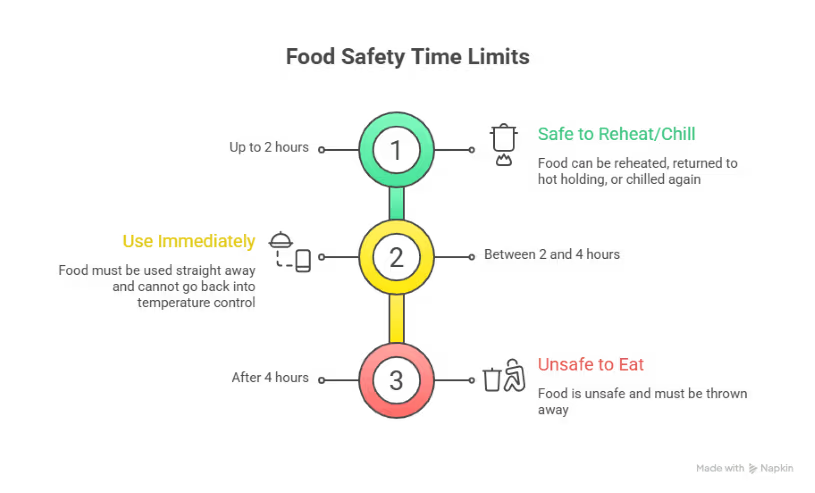
The 4-Hour Rule Explained in Simple Terms
Time controls the level of risk once food enters the temperature danger zone. A meal can leave the kitchen safely and still become unsafe if service slows. From the point the food drops below 63°C, or rises above 5°C, the timing matters.
- Up to 2 hours: food can be reheated, returned to hot holding, or chilled again
- Between 2 and 4 hours: food must be used straight away and cannot go back into temperature control
- After 4 hours: food is unsafe and must be thrown away
These limits apply whether the food is on a counter, on a trolley, or waiting to be served.
Picture a care home breakfast. Scrambled eggs go into a hot trolley at the correct temperature. Staff are called to assist residents. The trolley waits in the corridor. How long has the food been below 63°C?
- If it has been less than 2 hours, it can be reheated to a safe core temperature.
- If it has been over 2 hours, it must be served and eaten straight away.
- If it reaches 4 hours, it becomes waste.
The food may look the same. Time is what makes it safe or unsafe.


Safe Cooking Temperatures (UK Core Guide)
Food is safely cooked in the UK when it reaches the correct core temperature, which for most high-risk foods is 75°C.
A safe result depends on what happens at the centre of the food, not on colour or texture. In practice, this means checking the thickest part with a clean probe before the meal leaves the kitchen.
- Poultry: 75°C
- Minced meat and burgers: 75°C
- Sausages: 75°C
- Rolled joints: 75°C
- Fish: 63°C
- Whole cuts of beef or lamb: 63°C when properly sealed
- Reheated food: 75°C
Some foods need stricter control because bacteria can spread through them during preparation.
- minced meat and formed products
- poultry
- rolled or stuffed joints
- cooked rice used for later service
- meals prepared for residents or patients
Reheating follows one clear rule. Heat the food to 75°C at its core once only, then serve it or hold it above 63°C. A bain-marie keeps food hot, but it does not reheat it.
🎁 FREE COURSE! 🎁
Health, Safety & Laws at Workplace | CPD Accredited Course (Free Today!)
Safe Chilling and Cold Holding Temperatures
Chilled food in the UK must be kept at 5°C or below, and frozen food must stay at –18°C or colder to remain safe.
A fridge that reads 8°C is not just slightly warm. It sits inside the temperature danger zone. Milk, cooked meat, desserts, and prepared meals begin to move into higher risk. This is why daily temperature checks matter. A quick look at the display is not enough. Staff need to know what the reading means and what action to take.
Freezers protect food for longer storage, but only if the temperature stays stable. Opening the door during busy service, overfilling shelves, or placing warm food inside can raise the internal temperature. Has the food fully frozen again before use? If not, safety cannot be guaranteed.
Deliveries create another key moment of control. Chilled food must arrive cold. Frozen food must arrive solid. In a workplace kitchen, this means checking temperatures before putting items away. If a delivery of yoghurt, cooked meats, or ready meals feels warm, it cannot go into storage and be used later.
Think about a nursery kitchen receiving its weekly delivery. The driver brings in crates while staff prepare lunch. The cold items wait near the door. How long have they been out of refrigeration? Are they still below 5°C before going into the fridge? Safe chilling starts at that first check, not once the food is stored.
Hot Holding Temperatures and Serving Food Safely
Hot food in the UK must be kept at 63°C or above until it is served.
In practice, this means using equipment that holds the temperature, not just keeps food warm. A bain-marie, heated trolley, or hot cupboard must already be at the correct heat before the food goes in. Heat lamps can protect plated meals for a short period, but they do not raise the core temperature. The check is always at the centre of the food.
Delays change the picture. Service rarely runs to the minute. A call bell sounds. A medication round takes longer than planned. Plates wait on the pass. Has the food stayed above 63°C, or has it dropped into the danger zone? Once it falls below this point, the time limit begins and the food cannot return to hot holding without full reheating to 75°C.
Think about a care home evening meal. Portions are plated in the kitchen and placed in a heated trolley. Staff begin to serve, then pause to assist a resident who needs support to sit safely. The trolley stands in the corridor. Has anyone checked the temperature before serving the last plate?
The same applies to a buffet in a day centre. Food sits in a bain-marie while people are called in stages to eat. Lids are lifted again and again. Each opening releases heat. If the food drops below 63°C, it is no longer in safe hot holding. It must be used within the time limit or reheated properly before service.
Foods That Become High-Risk in the Danger Zone
Meat, dairy, cooked rice, seafood, and gravies become high-risk in the temperature danger zone because they allow harmful bacteria to grow quickly.
These foods hold moisture and nutrients that support rapid multiplication. Many are cooked in advance, cooled, stored, and reheated. Each stage adds handling. Each delay increases exposure to unsafe temperatures. In a care setting, they are often prepared for people who cannot afford that risk.
Cooked rice shows how this happens. It is safe when served straight after cooking. It becomes high-risk if it cools on the worktop while staff attend to residents. Sliced cooked meat for sandwiches can do the same during a busy lunch round. Has it gone back into the fridge within minutes, or has it stayed out while other tasks took over?
Cross-contamination makes the situation worse. High-risk food in the danger zone can pass bacteria to ready-to-eat items through hands, utensils, or shared shelves. A container of warm gravy placed above chilled desserts in a fridge that is running too high creates more than one problem at once. One break in control spreads across the whole service.
How to Check and Monitor Food Temperatures Properly
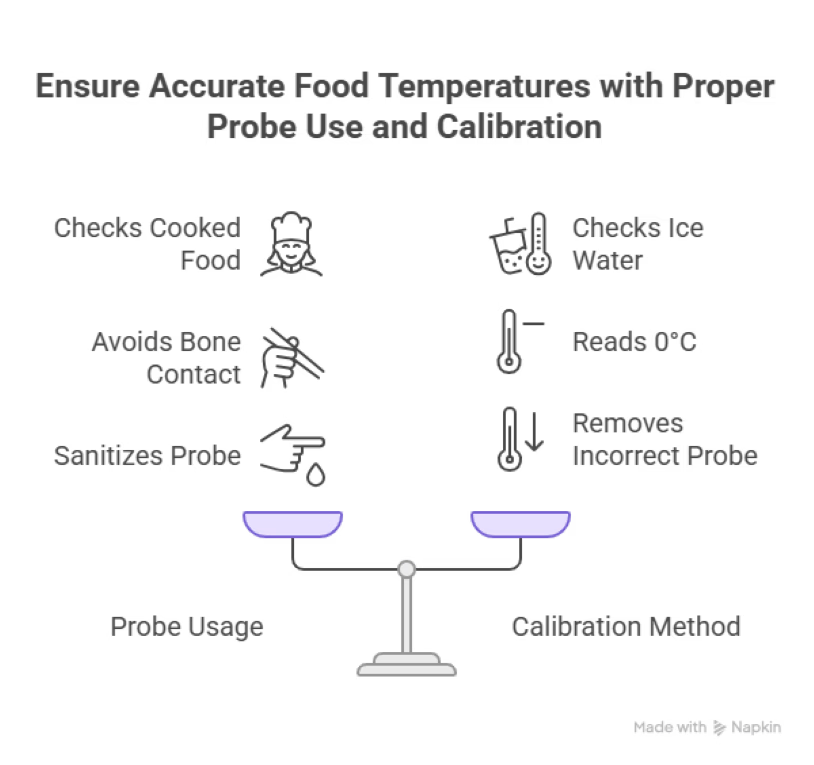
Food temperature in UK workplaces is checked with a clean, calibrated probe thermometer and recorded as part of daily food safety controls.
A probe is placed into the centre of the food, where heat reaches last. The reading tells staff what to do next. Serve it, continue cooking, or reheat it. Visual checks are not enough.
Using a probe in practice:
- check cooked and reheated food before service
- check chilled food if there is any doubt about fridge performance
- avoid touching bone or the tray, as this gives a false reading
- sanitise the probe before and after every use
The probe must also be accurate. This is confirmed through calibration.
Common calibration method in UK kitchens:
- place the probe into crushed ice and a small amount of water
- wait for the reading to settle
- it should read close to 0°C
- remove the probe from use if the reading is incorrect
Cleaning the probe prevents cross-contamination. This step protects ready-to-eat food and the people who consume it, especially in care settings.
Records provide evidence that checks take place.
Typical temperature records:
- daily fridge and freezer temperatures
- core cooking temperatures
- reheating temperatures
- hot holding checks during service
Environmental Health Officers review these records during inspections. If a temperature is not written down, it is treated as not checked.
Formal food safety training often becomes meaningful evidence of safe temperature control because it shows that the person understands the danger zone in practice, not just in theory. In busy UK care kitchens and catering services, recognised programmes such as Certificate in Food Hygiene and Safety at QLS Level 3, Certificate in Food Hygiene and Safety at QLS Level 3 or Food Hygiene Level 3 Training help staff turn routine checks into confident, consistent actions that stand up during supervision and inspection.
4 Common Mistakes That Lead to Food Safety Breaches
Food safety breaches often happen when hot food is cooled at room temperature, fridges are overfilled, food is reheated more than once, or temperatures are guessed instead of checked with a probe.
1. Cooling food at room temperature
Food left on a worktop cools too slowly. The centre stays warm and remains in the danger zone. A large pot of soup or cooked rice is a common example. It looks harmless. It is not safe.
2. Overloading fridges
An overfilled fridge cannot hold 5°C or below. Cold air cannot circulate. Warm items raise the internal temperature for everything stored inside. The display may look normal. The food temperature tells the real story.
3. Reheating more than once
Reheating is a single process. Each extra cycle allows the food to pass through the danger zone again. A tray heated, cooled, and reheated during a delayed service creates avoidable risk and must not be used.
4. Guessing instead of probing
Food can appear ready when the centre is still too cool. Steam and colour do not confirm safety. Only a clean probe at the thickest point gives a reliable reading. Without it, the decision to serve becomes a guess.
Temperature Control in Different UK Settings
Temperature control works in the same way across the UK, but the pressure points change with the setting. The routine in each place decides where food can slip into the danger zone.
Care homes
Meals are often plated away from the dining room. Staff stop to support residents with mobility or medication. Hot food waits on a trolley. Has it stayed above 63°C before the last plate is served? Chilled desserts must go back to the fridge straight after portioning, not after the round ends.
Schools and nurseries
Service runs to a timetable. Children arrive in groups. Food sits in hot holding between sittings. Lids are lifted again and again. Cold items for packed lunches can stand at room temperature during preparation. The check is whether they return to refrigeration within minutes.
Restaurants and takeaways
Rush periods fill the pass with plated meals. Heat lamps hold food for collection. Delivery orders wait for drivers. The question is always the same. How long has the food been below 63°C or above 5°C? Reheated items must reach 75°C before they leave the kitchen.
Home kitchens
Risk often comes from cooling and storage. A large pot is left to cool overnight. The fridge is filled with warm leftovers after a family meal. Cooked rice sits on the side for later. Dividing food into smaller portions and chilling it quickly keeps it out of the danger zone
UK Food Safety Law and Who Is Responsible
UK food safety law places the duty on the food business and its staff to keep food safe through effective temperature control at every stage.
The Food Safety Act 1990 makes it an offence to sell or serve food that is unsafe. It also requires food to be of the nature, substance, and quality expected. In day-to-day practice, this links directly to how food is stored, cooked, cooled, reheated, and held for service. If temperature control fails, the legal duty has not been met.
This legal duty is managed through HACCP–based procedures. Hazards are identified. Control measures are put in place. Temperature checks, cooling methods, and hot holding limits form part of these controls. They must work in real time, not just on paper.
Responsibility is shared across the team.
- Food handlers check temperatures, follow safe methods, and record the results
- Supervisors and managers make sure equipment works, records are completed, and staff are trained
- The food business operator or care provider holds overall legal responsibility
Environmental Health Officers look for evidence that these controls are active.
They expect to see:
- accurate temperature records
- working probes and calibrated equipment
- clear cleaning and cross-contamination controls
- staff who understand the safe limits and can explain them
During an inspection, practice matters more than policy. A member of staff should be able to show how they check a core temperature, not just point to a written procedure. In health and social care, this forms part of safe, regulated care.
Quick Reference: UK Safe Temperature Chart
These are the core UK food safety temperatures used in kitchens, care settings, and inspections to keep food out of the temperature danger zone.
- Temperature danger zone: 5°C to 63°C
- Fridge: 5°C or below
- Freezer: –18°C or below
- Minimum core cooking temperature (high-risk foods): 75°C
- Reheating temperature: 75°C once only
- Hot holding: 63°C or above
This chart supports quick decisions during service. A cook checks the core temperature before plating. A care assistant looks at the hot trolley display before serving the last resident. A supervisor reviews the fridge record at the start of the shift. The numbers guide each action.
When these limits are met, food stays outside the danger zone. When they are missed, the risk increases and the food cannot be served safely.
How to Stay Out of the Temperature Danger Zone Every Day
Daily routine keeps food safe more than any single check. In a UK kitchen or care setting, this means building temperature control into each task so it happens without delay or guesswork.
Simple routine for food handlers
- check fridge and freezer temperatures at the start of the shift
- preheat hot holding equipment before food goes in
- cook high-risk food to the correct core temperature
- serve hot food without waiting on the side
- divide large batches into smaller portions for quick cooling
- return chilled food to the fridge straight after use
- probe, record, and act if a reading is outside the safe limit
These steps take seconds when they are part of the normal flow.
Workflow from preparation to storage
Preparation begins with taking chilled food from a fridge that is at or below 5°C. Ingredients are used and returned without standing on the worktop. Cooking reaches the required core temperature before plating. Service follows without long gaps, so hot food stays above 63°C. Any food prepared in advance is cooled quickly, covered, labelled, and placed back into cold storage. Leftovers that are suitable for reuse are reheated once to 75°C and served straight away.
A typical care home lunch shows how this works. Vegetables are prepared in small batches and kept chilled until needed. The main meal is probed before leaving the kitchen. The heated trolley is already at temperature. Desserts are portioned and returned to the fridge between sittings. Each step keeps food moving through safe temperatures, not resting in the danger zone.
Conclusion – Temperature Control Is a Daily Habit, Not a One-Off Task
Temperature control is part of everyday care. It sits in the same routine as hand hygiene, cleaning, and safe moving and handling. When each check is done at the right moment, food stays safe and people are protected. Consistency, not speed, is what keeps practice within the law and within professional standards.
The approach is straightforward and repeatable. Know the safe temperatures. Use the probe. Record the result. Act without delay if something falls outside the limit. These small, steady habits build confidence across the team and ensure every meal is served with safety and respect.
FAQs
What is the temperature danger zone for food safety?
5°C to 63°C is the temperature danger zone. Food kept within this range allows harmful bacteria to multiply and must be moved through it quickly or kept outside it.
What is the danger zone in Celsius?
5°C to 63°C is the danger zone in Celsius used in the UK. Keeping food below or above this range slows bacterial growth and keeps meals safe to serve.
What does the 5°C to 63°C danger zone mean?
5°C to 63°C is the temperature band where food becomes unsafe if left for too long. Time control within this range is essential for safe handling.
What is the TCS danger zone temperature range for food?
5°C to 63°C applies to foods that need time and temperature control. These foods must stay chilled, hot held, or pass through this range without delay.
What is a temperature danger zone free food safety chart PDF?
A food safety chart is a quick reference that shows the key UK control temperatures. Staff use it during preparation, cooking, storage, and service to guide safe practice.
What is the temperature danger zone in Celsius?
5°C to 63°C is the recognised UK danger zone in Celsius. Food outside this range remains under safe temperature control.
What is a temperature danger zone food safety chart in Celsius?
A Celsius chart lists 5°C for fridges, –18°C for freezers, 75°C for cooking and reheating, and 63°C for hot holding. These values support daily checks.
What temperature range is the danger zone for food?
5°C to 63°C is the range where bacteria grow most quickly. Food should not remain in this band for extended periods.
What is the HACCP danger zone?
5°C to 63°C is treated as a critical control point in HACCP-based systems. Monitoring this range helps prevent unsafe food from being served.
What is the temperature danger zone for cold food?
Cold food enters the danger zone when it rises above 5°C. It must return to refrigeration promptly to stay safe.
What is the temperature danger zone for food in ServSafe terms?
5°C to 63°C is the UK equivalent range used in food safety practice. Workplaces follow Food Standards Agency guidance and HACCP procedures for control.
What is included in a food safety temperature chart?
A UK chart shows the safe limits for chilling, freezing, cooking, reheating, and hot holding. It provides a clear guide for everyday food handling.
 " alt="The 6 Principles of Safeguarding: Protect Before Harm Happens" />
 " alt="Personal Development Goals: 5 Meaningful Examples That Work" />
 " alt="TILE in Manual Handling: Meaning, Checklist & Safer Lifting Guide" />