

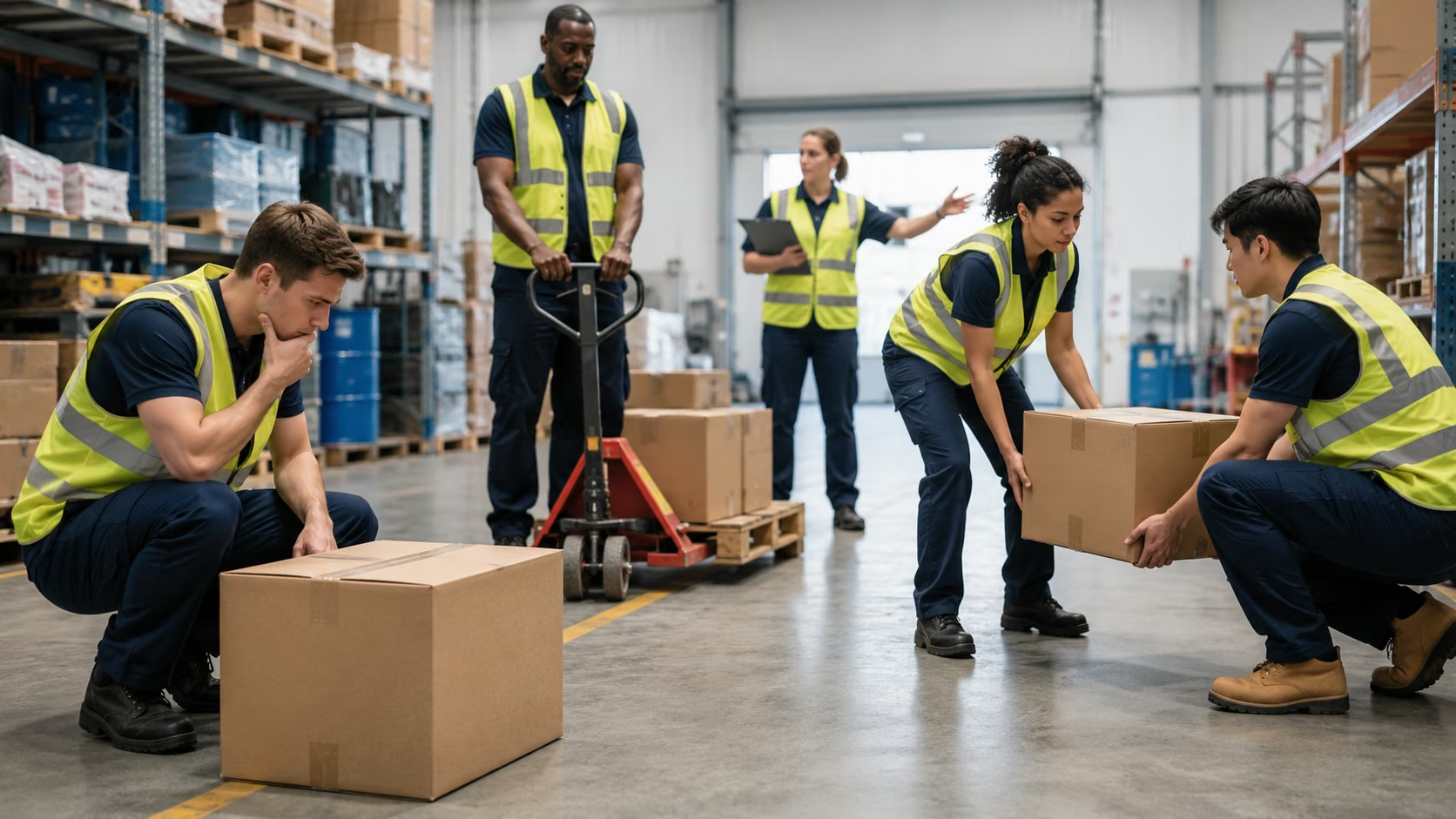
Have you ever watched someone lift a heavy box, twist their back, and say, “It’s fine, I’ve got it,” even when you know it is not fine? That one moment can lead to pain, absence from work, lost productivity, and a serious workplace injury. The good news is, the Manual Handling Level 2 course helps workers and supervisors understand Tile in Manual Handling, spot risks early, and use safer ways to lift, carry, push and pull.
Manual handling is still a major workplace issue. In Great Britain, HSE statistics for 2024/25 reported 511,000 workers suffering from work-related musculoskeletal disorders, with 7.1 million working days lost because of these disorders. Handling, lifting or carrying also remains a key cause of workplace non-fatal injuries.
In this guide, you will learn what TILE means, how it works, why it matters, and how to use it in real work situations. You will also see examples, a checklist, common mistakes, control measures and a short toolbox talk you can use with your team. Ready to reduce manual handling risks at work? Start learning today with our Manual Handling Level 2 course and learn how to apply TILE with confidence.
This TILE in Manual Handling Guide Will Help You Understand
- TILE basics: What TILE stands for in manual handling, understanding Task, Individual, Load and Environment, and what manual handling means.
- Why TILE matters: Manual handling injuries, risk assessment, legal duties, and why weight alone is not enough.
- TILE breakdown: What to check under T — Task, I — Individual, L — Load, and E — Environment.
- TILE risk assessment: How to complete a TILE manual handling risk assessment, with a filled-in TILE risk assessment example.
- Practical tools and checklists: Free TILE checklist, TILE for pushing and pulling, and the 5-minute TILE toolbox talk.
- Comparisons and assessment tools: TILE vs LITE vs TILEO, and TILE vs MAC, RAPP and ART assessment tools.
- Workplace application: Industry examples for warehouse, construction, healthcare, care homes, retail and delivery, common TILE mistakes, and safe manual handling control measures.
What does TILE stand for in manual handling?
TILE is one of the easiest ways to understand manual handling risk. Before a person lifts, lowers, carries, pushes or pulls something, TILE helps them stop and look at the situation properly. It is a simple reminder that manual handling safety is not only about the weight of the item. It helps you slow down for a few seconds and ask: “What could go wrong here?”
TILE stands for four key risk areas:
- T — Task
- I — Individual
- L — Load
- E — Environment
Each part asks an important question. First, Task means the work the person does. For example, does the person need to bend, twist, reach, carry the load far, or repeat the same movement many times? Next, Individual means the person doing the task. This means you should check whether they are trained, fit, tired, injured, pregnant, new to the job, or unsure about the safest method.
Then, Load means the item being moved. For instance, is it heavy, awkward, unstable, sharp, slippery, hot, cold, or difficult to grip? Finally, Environment means the place where the task happens. In other words, you should check whether the floor is wet, uneven, cluttered, poorly lit, narrow, noisy, or full of obstacles.
This is why TILE is so useful in manual handling. It helps workers and managers look beyond the load itself. A box may look safe, but the task may involve twisting. A load may be light, but the route may be unsafe. A worker may be strong, but they may not have had proper training.
In short, TILE gives everyone a clear way to spot danger before an injury happens. Instead of simply saying “be careful,” it encourages people to say, “Let’s check the task, individual, load and environment first.”
Understanding TILE: Task, Individual, Load, Environment
TILE means Task, Individual, Load and Environment. It is a pragmatic way to assess manual handling risks before work begins. Instead of rushing into a lift, carry, push or pull, TILE encourages workers to pause and look at the whole situation. This matters because manual handling injuries often happen when people only focus on the weight of the load and forget the movement, the person, or the workplace conditions.
Before we look at each part in detail, remember this: TILE works best when you use it before the task begins, not after something goes wrong. It is a simple pause that helps you see the full picture. A manual handling task is rarely risky because of one thing only. The movement, the person, the load and the workplace all work together. When one of these is unsafe, the chance of injury increases. So, by checking all four parts of TILE, you can plan the task better, choose safer methods, and protect yourself and others from avoidable harm.
-
Task
The Task is the actual movement needed to complete the manual handling activity. Before starting, ask: what does the person need to do? Will they lift from the floor, carry the load across a room, twist their body, reach above shoulder height, or repeat the same movement many times? These actions can place extra strain on the back, shoulders, arms and knees. A task becomes more risky when it involves awkward posture, long distances, sudden movement, or working under pressure. By checking the task first, workers can decide whether the job can be changed, avoided, shared, or supported with equipment.
-
Individual
The Individual is the person carrying out the manual handling task. Every worker is different, so the same task may not be safe for everyone. Ask: who is doing the work? Have they received proper training? Can they complete the task safely? Check whether they are tired, injured, pregnant, new to the job, or unsure about the correct method. Individual capability matters because strength, fitness, experience and health can affect risk. This part of TILE is not about blaming the worker. It is about making sure the task fits the person. Good manual handling practice protects all workers, not only the strongest or most experienced ones.
-
Load
The Load means the item, object, person, animal, box, tool, parcel or material the worker moves. Many people think only heavy loads are dangerous, but this is not true. A light load can still be risky if it is awkward, unstable, sharp, slippery, hot, cold, or difficult to grip. Ask: what is being moved? Is the weight clear? Can the load shift while being carried? Does it block the worker’s view? Are there safe handholds? Can the load be made smaller or split into lighter parts? Checking the load helps workers choose the safest way to handle it before injury happens.
-
Environment
The Environment is the place where the manual handling task happens. Even a simple lift can become unsafe if the surroundings are poor. Ask: where is the load being moved? Check whether the floor is wet, uneven, cluttered or slippery. Make sure there is enough space to turn. Look at whether the lighting is good. Also, check for stairs, ramps, narrow doorways, obstacles or distractions. Are there stairs, ramps, narrow doorways, obstacles or distractions? The environment can increase risk quickly, especially when workers are carrying loads and cannot see clearly. By checking the environment, workers can clear walkways, improve lighting, remove hazards, use safer routes, and make the task easier before manual handling begins.
TILE is easy to remember, but powerful in practice. It turns a risky lift into a planned activity. Instead of saying, “Just be careful,” TILE helps workers ask better questions: What is the task? Who is doing it? What is being moved? Where is it being moved? That small pause can prevent serious injuries.
What is manual handling?
Manual handling means moving or supporting a load by hand or bodily force. It is any work where a person uses their body to lift, lower, carry, push, pull, hold, drag or move something. It can also include team handling, where two or more people move a load together.
A “load” does not always mean a heavy box. It can be many things, such as a parcel, sack, tool, trolley, roll cage, gas cylinder, building material, furniture item, animal, or even a person in healthcare and care settings. This is why manual handling happens in many workplaces, including warehouses, construction sites, hospitals, care homes, retail stores, offices and delivery jobs.
Many people think manual handling only becomes dangerous when the load is heavy. But that is not true. A light load can still cause injury if the person has to bend, twist, reach, stretch, or repeat the same movement again and again. Poor posture, long carrying distances, awkward grips, slippery floors and rushed work can increase the risk.
This is where Tile in Manual Handling becomes important. TILE helps you look at the full situation, not just the weight of the load. It reminds you to check the Task, Individual, Load and Environment before starting the work.
Manual handling is not about “can I lift this?” A better question is, “Can I move this safely, in this place, in this way, with the right support?” That question can help prevent pain, strain and serious injury. In a Manual Handling Level 2 course, learners explore each part of TILE in detail. They learn how to spot risks, choose safer methods, and apply the acronym in real workplace situations.
So, when we talk about Tile in Manual Handling, we are not talking about weight. We are talking about the full situation.
Why TILE matters: injuries, risk assessment and legal duties
TILE matters because manual handling injuries can have a serious effect on a person’s life. A back injury, shoulder strain, neck pain or wrist problem may start with one poor lift, but it can also build up slowly over time. Repeated bending, twisting, carrying or pulling can place stress on the body every day. At first, the pain may feel small. Later, it can lead to time off work, medical treatment, reduced movement and long-term discomfort.
This is why manual handling should never be treated as a simple “lift and go” task. Before someone moves a load, workers or employers should check the risk.TILE gives workers and employers a clear way to do this by looking at the Task, Individual, Load and Environment. It helps people spot problems before they turn into injuries.
TILE also supports legal duties. In the UK, manual handling law expects employers should avoid hazardous manual handling where possible, assess unavoidable hazardous handling, and reduce the risk as far as reasonably practicable. The Manual Handling Operations Regulations 1992 also require suitable and sufficient assessment where risky manual handling cannot be avoided. If employers cannot avoid the task, they must assess the risk and reduce it as much as reasonably possible. This means employers should not wait for an injury to happen before taking action.
HSE guidance also links closely with TILE. It says assessments should consider the task, the load, the working environment and the individual’s capability. This includes posture, carrying distance, frequency, grip, floor condition, lighting, temperature, strength, fitness and health conditions.
So, TILE is not just a useful acronym. It is a pragmatic safety tool that helps protect workers, support legal compliance and create safer workplaces.
T — Task: what to check
The Task is the actual movement involved in the manual handling activity. Before anyone lifts, carries, pushes or pulls a load, they should ask one simple question: what does the worker need to do? This part of TILE helps you look at the body movement, not just the object being moved.
A task becomes riskier when the worker puts their body in an awkward or weak position. For example, lifting a box close to the body is usually safer than reaching across a pallet. Turning with your feet is safer than twisting your spine. In the Manual Handling Level 2 course, learners understand that the better question is not only, “Can I lift this?” but “Can I change the task so I do not need to lift it this way?”
Check these points, look closely at how the task is carried out and ask, “Can this movement be made safer, easier or avoided completely?”
-
Bending
Bending is one of the most common manual handling risks. When a worker bends from the back to pick something up, extra pressure is placed on the spine. This risk becomes higher if the load is heavy, awkward or picked up from floor level. Where possible, loads should be stored at waist height so workers do not need to bend too much.
-
Twisting
Twisting while lifting or carrying can put serious strain on the back. It often happens when workers pick up a load and turn quickly without moving their feet. This movement can be risky because the spine is not in a strong position. A safer method is to turn the whole body by moving the feet, rather than twisting the waist.
-
Reaching
Reaching can make a simple task much harder on the body. When a worker stretches forward, sideways or upward to grab a load, the load moves further away from the body. This increases strain on the arms, shoulders and back. Loads should be kept close to the worker whenever possible.
-
Lifting from floor level
Lifting from the floor is more demanding than lifting from waist height. The worker may need to bend deeply, which can place pressure on the lower back and knees. The risk increases if the load is heavy, bulky or difficult to grip. A better solution is to raise the load before lifting or use equipment to avoid floor-level handling.
-
Lifting above shoulder height
Lifting above shoulder height can strain the neck, shoulders and upper back. It also makes the load harder to control because the arms are working in a weaker position. If the load slips, the worker may not be able to react safely. Heavy or awkward items should not be stored above shoulder level if they need to be handled often.
-
Carrying over distance
Carrying a load over a long distance increases tiredness and reduces control. Even a moderate load can become risky if it must be carried too far. The worker may also lose balance, especially if the load blocks their view. Trolleys, carts or shorter carrying routes can help reduce the risk.
-
Repeating the same movement
Repeating the same movement again and again can cause strain over time. This is common in warehouses, retail, packing areas and production lines. The injury may not happen suddenly, but the body can become tired and overused. Job rotation, rest breaks and better work layout can help reduce repetitive manual handling risks.
-
Working at speed
Working too quickly increases the chance of mistakes. When people rush, they may forget safe lifting techniques, ignore hazards or use poor posture. Speed can also make loads harder to control, especially during pushing, pulling or team handling. Managers should give workers enough time to complete manual handling tasks safely.
-
Team handling problems
Team handling means two or more people move a load together. It can reduce the effort for each person, but only if it is planned properly. Problems happen when workers lift at different times, move at different speeds or do not communicate clearly. A safe team lift needs clear instructions, one person leading, and everyone understanding the route before the task begins.
I — Individual: what to check
The Individual is the person carrying out the manual handling task. This part of TILE matters because people are not machines. Every worker has different strength, height, fitness, experience, confidence, health conditions and training levels.
This does not mean blaming the worker. It means making sure the task is suitable for the person doing it. A safe system of work should protect everyone, not only the strongest or most experienced person on the team.
Check these points before the task begins, ask whether the person is ready, able and properly supported to complete the manual handling activity safely.
-
Has the person been trained?
Training is one of the first things to check. A worker may be strong, but if they do not know how to lift, carry, push or pull safely, the risk of injury increases. Training helps them understand posture, planning, safe movement and when to ask for help. A Manual Handling Level 2 course can help workers build this knowledge and apply it in real workplace situations.
-
Are they tired or rushed?
Tired workers are more likely to make mistakes. When someone is fatigued, their body may react more slowly, and they may use poor posture without noticing. Rushing also increases risk because people skip simple safety checks. Manual handling should be planned so workers have enough time and energy to do the task safely.
-
Do they have a back, shoulder or knee problem?
Existing injuries or pain can make manual handling more dangerous. A worker with a back, shoulder or knee problem may not be able to move a load safely, even if the load seems manageable to someone else. The task may need to be changed, shared or supported with equipment. Ignoring pain can make the injury worse and lead to longer recovery time.
-
Are they pregnant or returning from injury?
Pregnant workers and people returning from injury may need extra support. Their strength, balance, movement or comfort may be different from before. This does not mean they cannot work, but the task should be assessed carefully. Adjustments may include lighter loads, shorter carrying distances, more breaks or different duties.
-
Can they see clearly?
Clear vision is important during manual handling. If a worker cannot see the route, the floor, the load, or other people around them, the risk of slips, trips and collisions increases. This can happen because of poor lighting, blocked view, missing glasses, or carrying a load that is too large. Workers should always be able to see where they are going before moving a load.
-
Do they understand the task?
A person should understand exactly what the supervisor asks them to do. Confusion can lead to unsafe lifting, wrong routes, poor communication or rushed decisions. This is especially important for new workers, temporary staff or team handling tasks. Clear instructions help everyone work in the same safe way.
-
Are they wearing suitable footwear and clothing?
Footwear and clothing can affect manual handling safety. Shoes should provide good grip and support, especially on smooth, wet or uneven floors. Loose clothing can catch on objects, while tight clothing may restrict movement. Workers should wear clothing that helps them move safely and stay balanced.
Good manual handling is not about being tough. It is about being prepared. When the task is matched to the person, workers are safer, more confident and less likely to suffer avoidable injuries.
L — Load: What to check
The Load means the object, person, animal, material or item the worker moves . Weight matters, but it is not the only thing that creates risk. A load can be light and still be dangerous if it is awkward, unstable, slippery or hard to hold.
This part of TILE helps you look at the load properly before the task starts. Instead of guessing whether something is safe to move, you check the features that could make handling more difficult.
Check these points before handling the load, because the size, shape, grip and condition of the load can increase the risk just as much as its weight:
-
How heavy is it?
The weight of the load is one of the first things to check. A heavy load can place strain on the back, shoulders, arms and legs, especially if it has to be lifted from the floor or carried far. However, weight alone does not tell the full story. A heavy load may be safer with equipment, while a lighter load may still be risky if it is awkward to handle.
-
Is the weight clearly marked?
A clearly marked weight helps workers make safer decisions before lifting. If the weight is unknown, a person may underestimate it and try to move it without help. This can lead to sudden strain when the load is heavier than expected. Where possible, employers should label heavy items clearly or manual handling instructions.
-
Is it bulky or unstable?
A bulky load can be difficult to carry because it may be hard to hold close to the body. If the load is unstable, its contents may shift during movement and cause the worker to lose balance. This is common with open boxes, liquid containers, loose materials or unevenly packed items. Bulky or unstable loads may need to be repacked, secured, reduced in size or moved with equipment.
-
Is the centre of gravity uneven?
The centre of gravity is where the weight of the load is balanced. If one side is heavier than the other, the load may pull the worker off balance. This can make lifting, carrying or lowering much harder to control. Workers should test the load carefully, keep it close, and use help or equipment if it feels uneven.
-
Is it hot, cold, sharp, wet or slippery?
The condition of the load can create extra hazards. A hot or cold item may cause burns or discomfort, while a sharp item may cut the hands or body. Wet or slippery loads are harder to grip and can fall suddenly. In these cases, workers may need gloves, wrapping, better packaging or another safe method of handling.
-
Is there a good handhold?
A good handhold makes a load easier and safer to control. If there are no handles or grip points, the worker may need to hold the load in an awkward way. This can increase strain on the fingers, wrists, arms and back. Employers should improve loads with poor handholds, carried in a container, or moved using suitable equipment.
-
Can it be split into smaller loads?
Splitting a load can reduce strain and make handling easier. Instead of moving one large or heavy item, Workers may divide it into smaller parts to make it safer. This also helps workers keep better balance and control. However, the task should still be planned, because making many repeated trips can also increase fatigue.
-
Does it block the worker’s view?
A load that blocks the worker’s view can be very dangerous. If the person cannot see the floor, steps, doorways or other people, the chance of slips, trips and collisions increases. Large items should be carried in a way that keeps the route visible. If this is not possible, workers should use equipment, take a safer route or ask someone to guide them.
A 10 kg box with handles may be easier to carry than a 5 kg awkward item with no grip. This is why Tile in Manual Handling is better than guessing. It helps you look at the real risk, not just the number on a label.
E — Environment: What to check
The Environment is the place where manual handling happens. Even if the load is not very heavy, poor surroundings can make the task much more dangerous. A safe lift can quickly become risky if the floor is wet, the space is tight, or the route is blocked.
This part of TILE helps workers look around before they move the load. The aim is simple: make the area safer before the task begins, not after someone slips, trips or gets hurt.
Check these points before moving the load, because the workplace around you can increase the risk just as much as the load itself:
-
Slippery or uneven floors
Slippery or uneven floors can easily cause slips, trips and falls during manual handling. This is especially dangerous when a worker is carrying a load and cannot react quickly. Workers should deal with wet floors, loose mats, damaged surfaces and uneven ground before the task starts. If workers cannot make the floor safe, workers should use another route or suitable handling equipment.
-
Steps, ramps or kerbs
Steps, ramps and kerbs make manual handling harder because the worker must control the load while changing height. This can affect balance and increase strain on the legs, back and shoulders. Ramps can also make pushing or pulling more difficult, especially with heavy trolleys or roll cages. Where possible, use level routes, lifts, suitable equipment or extra support.
-
Poor lighting
Poor lighting makes it harder to see hazards clearly. A worker may miss a step, spill, obstacle or uneven surface while carrying a load. It can also make it difficult to judge distance and direction. Good lighting helps workers see the route, place the load safely, and avoid accidents.
-
Tight spaces
Tight spaces can force workers into awkward postures. They may need to twist, bend, stretch or hold the load away from the body. This increases strain and makes the load harder to control. If space is limited, the task should be planned carefully, and smaller loads or equipment may be needed.
-
Cluttered walkways
Cluttered walkways are a common cause of manual handling accidents. Boxes, cables, tools, packaging or waste can block the route and create trip hazards. When a worker is carrying something, they may not see these hazards in time. Walkways should be cleared before moving any load.
-
Cold, heat or poor ventilation
Temperature can affect how safely a person handles a load. Cold conditions can make muscles stiff and reduce grip, while heat can cause tiredness, sweating and loss of focus. Poor ventilation can also make workers feel uncomfortable or fatigued. These conditions should be managed with breaks, suitable clothing, ventilation and safer work planning.
-
Noise or distractions
Noise and distractions can make manual handling less safe. Workers may not hear instructions, warnings or other people nearby. This is especially risky during team handling, pushing equipment, or moving loads in busy areas. Clear communication and reduced distractions help everyone stay aware and in control.
-
Long carrying distances
Long carrying distances increase tiredness and reduce control. A load that feels manageable at first can become difficult after several metres. The worker may start to change posture, rush, or grip the load badly. Trolleys, carts, lifting aids or shorter routes can help reduce the risk.
-
Lack of space to turn
A lack of turning space can force workers to twist their body instead of moving naturally. Twisting while carrying a load can place extra strain on the spine. It can also make the load harder to control, especially in corners, doorways or narrow aisles. Workers should make sure there is enough space to turn safely before starting the task.
Imagine carrying boxes through a narrow stockroom with poor lighting and a wet floor. The load may be manageable, but the environment makes the task risky. Small changes can make a big difference: clear the route, improve lighting, remove trip hazards, use a trolley, and give workers enough space to move safely.
TILE vs LITE vs TILEO
When learning about manual handling risk assessment, you may come across three similar terms, TILE, LITE and TILEO, which can seem confusing at first because they use almost the same risk factors in slightly different ways. The good news is that they all point to the same main idea: before moving a load, stop and check the risks.
-
TILE
TILE stands for Task, Individual, Load and Environment. It is one of the most common ways to assess manual handling risks. It starts with the task, so workers think first about the movement involved, such as lifting, bending, twisting, carrying, pushing or pulling.
-
LITE
LITE uses the same four areas, but in a different order: Load, Individual, Task and Environment. Some trainers prefer this because it starts with the load being moved. However, the meaning is almost the same as TILE.
-
TILEO
TILEO adds one extra area: Other factors. This can include equipment, communication, supervision, time pressure, emergency conditions, staffing levels or work organisation. TILEO is useful when the task is more complex and needs a wider discussion.
|
Acronym |
Stands for |
Main focus |
Best used for |
|
TILE |
Task, Individual, Load, Environment |
A simple, clear manual handling risk check |
Most workplace manual handling tasks |
|
LITE |
Load, Individual, Task, Environment |
Same risk areas as TILE, but in a different order |
Training settings where the load is discussed first |
|
TILEO |
Task, Individual, Load, Environment, Other factors |
A wider look at extra risks around the task |
More complex tasks, team handling or unusual situations |
So, which one should you use? For most workplaces, TILE is simple, easy to remember and easy to teach. LITE is very similar, so there is no need to worry if you see it used in training materials. TILEO is helpful when you need to think beyond the basic four areas.
The key point is, do not get stuck on the acronym. Use the method to start better safety conversations and make manual handling safer.
How to complete a TILE manual handling risk assessment
A TILE manual handling risk assessment does not need to be complicated. The aim is to look at the task calmly before someone gets hurt. Start by watching how workers do the task. Then, talk to the people doing the work and write down the main risks and the control measures they need.
Before you go through each step, remember that a good risk assessment should help people, not just complete a form. It should help workers understand what could go wrong and what they need to change. In a Manual Handling Level 2 course, learners see how to decide when a quick check is enough and when they need a detailed written assessment.
-
Describe the manual handling activity
Start by describing the task clearly. Write down what workers need to move, where they move it from, and where they move it to. Include whether workers lift, lower, carry, push or pull the load. This gives you a clear picture before you start checking the risks.
-
Check the Task
Next, look at the movement involved in the task. Ask whether the worker needs to bend, twist, reach, lift from the floor, carry over a distance, or repeat the same action many times. These movements can increase strain on the body. If the task involves awkward posture or too much effort, workers or managers may need to change it.
-
Check the Individual
Then look closely at the load itself. Check its weight, size, shape, stability and grip. A load may create risk if it is heavy, awkward, sharp, slippery, hot, cold or difficult to hold. If workers cannot control the load safely, they may need to split it, label it, repack it or move it with equipment.
-
Check the Load
Then look closely at the load itself. Check its weight, size, shape, stability and grip. A load may create risk if it is heavy, awkward, sharp, slippery, hot, cold or difficult to hold. If workers cannot control the load safely, they may need to split it, label it, repack it or move it with equipment.
-
Check the Environment
After that, check the place where the handling happens. Look for slippery floors, poor lighting, tight spaces, cluttered walkways, steps, ramps or long carrying distances. Poor surroundings can turn even a simple lift into a dangerous task. Clear routes, better lighting and safer flooring can make a big difference.
-
Decide the risk level
Once you have checked the task, individual, load and environment, decide how serious the risk is. You can rate it as low, medium or high, depending on the chance of injury and how serious the injury could be. Be honest at this stage. If the task feels unsafe, do not ignore it just because workers do it every day.
-
Add control measures
Control measures are the actions you take to reduce the risk. You may use a trolley, reduce the load weight, change the route, improve storage, give training, or arrange team handling. The best control is to avoid hazardous manual handling where possible. If workers cannot avoid it, employers should reduce the risk as much as possible.
-
Review after changes, incidents or new work methods
Workers and managers should not write a TILE assessment once and forget it. Review it if the task changes, if workers start using new equipment, if an incident happens, or if workers report pain or difficulty. Workplaces change, so risk assessments must change too. Regular review helps keep the task safe and practical.
A TILE risk assessment helps turn manual handling from a rushed action into a planned activity. It gives workers a simple way to think before they lift, carry, push or pull. Most importantly, it helps prevent injuries by checking the full situation before the work begins. HSE says some low-risk tasks may not need a formal assessment, but employers should assess hazardous manual handling when workers cannot avoid it.
Filled-in TILE risk assessment example
A filled-in TILE risk assessment helps you see how the method works in real life. Instead of only telling workers to “lift carefully,” it looks at the full situation and finds practical ways to reduce the risk.
In this example, staff are moving boxes in a stockroom. At first, the task seems simple. But when we look closer, there are several risks. The boxes are lifted from floor level, the worker is new, the load is not easy to grip, and the stockroom is narrow and cluttered.
By using TILE, we can break the task into four clear parts: Task, Individual, Load and Environment. This makes it easier to spot what needs to change. The aim is not to blame the worker. The aim is to improve the way the job is planned and carried out.
|
TILE area |
Example finding |
Control measure |
|
Task |
Staff lift boxes from floor to shelf. |
Store boxes at waist height where possible to reduce bending and strain. |
|
Individual |
New workers have limited manual handling training. |
Provide Manual Handling Level 2 training, clear instructions and supervision. |
|
Load |
Boxes weigh 12 kg and have poor grip. |
Use smaller boxes, reduce the weight, or add handles for better control. |
|
Environment |
The stockroom is narrow and cluttered. |
Clear the route, remove obstacles and mark safe storage zones. |
- Risk before controls: Medium to high
- Risk after controls: Low to medium
Notice what changed. The answer was not simply “lift better.” The safer solution was better storage, better training, better load design and a cleaner workspace.
That is the real value of Tile in Manual Handling. It helps turn a risky task into a planned, safer activity.
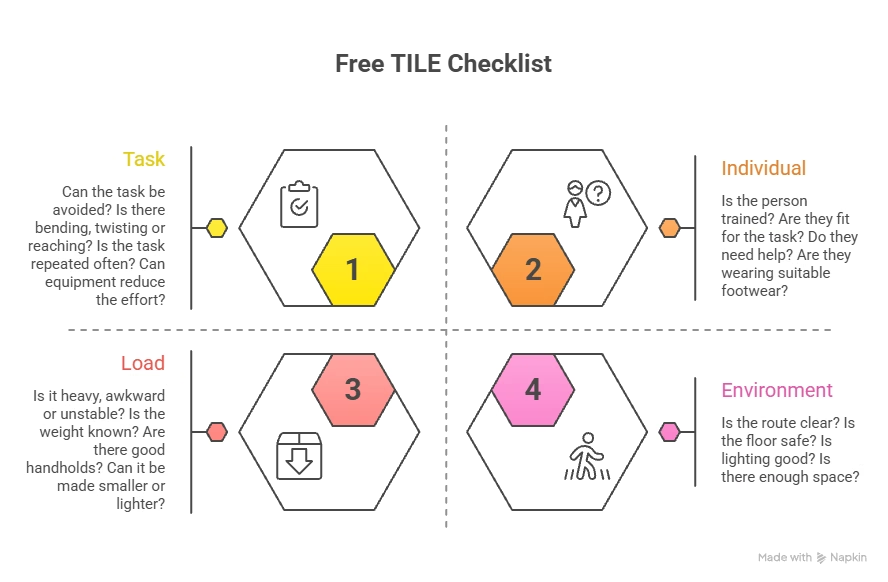
Free TILE checklist
A TILE checklist is a simple tool you can use before any manual handling task begins. It helps workers pause, look at the situation, and decide whether the task is safe. You can use it during daily work, risk assessments, staff training, or short toolbox talks.
The checklist does not need to be complicated. The aim is to ask the right questions before someone lifts, carries, pushes or pulls a load. If the answer shows a risk, workers or managers should change the task, use equipment, or assess it in more detail.
-
Task
The Task is the movement the worker needs to complete. This includes lifting, lowering, carrying, pushing, pulling, bending, twisting or reaching. Before starting, check whether workers can make the task easier, safer or avoid it completely.
-
Can the task be avoided?
The safest manual handling task is the one workers do not need to do. Before lifting or carrying, ask whether someone really needs to move the load by hand. Could a supplier, trolley, pallet truck or delivery system move it closer to where workers need it? If workers can avoid or reduce the task, they can lower the risk of injury.
-
Is there bending, twisting or reaching?
Bending, twisting and reaching can place extra strain on the back, shoulders and arms. These movements create more risk when workers hold a load at the same time. Workers should try to keep the load close to the body and move their feet instead of twisting. If the task forces awkward posture, managers should change the work layout.
-
Is the task repeated often?
A task may feel easy once, but repeated movement can make it risky. Repeated lifting, carrying or reaching can lead to tired muscles and long-term strain. This is common in warehouses, retail, packing areas and care settings. Breaks, job rotation and better equipment can help reduce the risk.
-
Can equipment reduce the effort?
Manual handling equipment can make a task safer and easier. Trolleys, pallet trucks, hoists, conveyors and lifting aids can reduce strain on the body. Before moving a load by hand, workers should check whether suitable equipment is available. If workers use equipment, they must know how to use it safely.
-
Individual
The Individual is the person doing the manual handling task. Every worker is different, so the task should match their training, health, strength, experience and confidence. This part helps make sure the work is safe for the person, not just possible in general.
-
Is the person trained?
Training helps workers understand how to handle loads safely. A trained worker is more likely to plan the lift, check the route, use good posture and ask for help when needed. Without training, people may rely on strength or habit, which can increase risk. A Manual Handling Level 2 course can help workers build this confidence.
-
Are they fit for the task?
The person doing the task should have the physical ability to complete it safely. This does not mean they must be the strongest person on the team. It means the task should match their ability, health, experience and condition on the day. If someone feels unwell, injured or unable to manage the task, managers should adjust the work.
-
Do they need help?
Some manual handling tasks need more than one person. A worker may need help if the load is heavy, awkward, large, unstable or difficult to control. Team handling can reduce effort, but workers must plan it properly. Everyone should know when to lift, where to move, and who will lead the task.
-
Are they wearing suitable footwear?
Footwear can make a big difference during manual handling. Shoes should give good grip, support and stability, especially on smooth, wet or uneven floors. Poor footwear can increase the chance of slipping or losing balance. Workers should also wear clothing that allows safe movement.
-
Load
The Load is the object, person, material or item being moved. Weight is important, but it is not the only risk factor. The size, shape, balance, grip and condition of the load can also make it harder or safer to handle.
-
Is it heavy, awkward or unstable?
A load does not need to be extremely heavy to create risk. If it feels awkward, unbalanced or unstable, workers may struggle to control it. The contents may shift, the worker may lose grip, or the load may pull the body into a poor position. If the load feels unsafe, workers should use equipment, reduce the weight or ask for help.
-
Is the weight known?
Knowing the weight helps workers make better decisions before lifting. If no one marks the weight, someone may guess wrongly and try to lift too much. This can cause sudden strain, especially if the load weighs more than expected. Employers should label heavy items clearly where possible.
-
Are there good handholds?
Good handholds make a load easier to grip and control. If the load has no handles, the worker may have to hold it awkwardly. This can strain the hands, wrists, arms and back. If the grip is poor, workers should repack the load, use a container, or move it with equipment.
-
Can it be made smaller or lighter?
Workers may reduce risk by splitting a large or heavy load into smaller parts. Smaller loads can reduce strain and improve control. However, workers should avoid creating too many repeated trips, as this can also cause fatigue. The best option should reduce the overall risk.
-
Environment
The Environment is the place where the manual handling task happens. Even a simple lift can become risky if the surroundings are unsafe.Floors, lighting, space, temperature and the route all affect how safely workers can move the load.
-
Is the route clear?
Workers should check the route before they move the load. Boxes, cables, tools, waste and other obstacles can cause trips and falls. This becomes especially dangerous when the load blocks the worker’s view. Clear the route first, then move the load.
-
What is the floor condition like?
Workers should check whether the floor is dry, level and stable. Wet, uneven or slippery floors can cause a worker to lose balance while carrying a load. Damaged flooring, loose mats and ramps can also increase risk. If the floor is unsafe, fix the hazard or use another route.
-
Can the lighting be improved?
Good lighting helps workers see hazards, steps, corners and other people. Poor lighting can make a safe task much more dangerous. A worker carrying a load may not notice a spill, obstacle or uneven surface in time. Improve lighting before the task begins if workers cannot see clearly.
-
Do workers have enough space?
Workers need enough space to move, turn and place the load safely. Tight spaces can force bending, twisting or reaching. This can make the task harder and increase strain on the body. If space is limited, workers should clear the area, move smaller loads, or use suitable handling equipment.
TILE for pushing and pulling
Manual handling is not only about lifting and carrying. Pushing and pulling can also cause injuries, especially when workers use trolleys, roll cages, pallet trucks, beds, bins, carts or other moving equipment. These tasks may look easier than lifting, but they can still place strain on the back, shoulders, arms, wrists and legs.
This is why workers should also use TILE for pushing and pulling tasks. It helps workers check the full situation before they start moving the load.
For the Task, think about the amount of force needed. Is the worker pushing over a long distance? Are there slopes, ramps, corners or sudden stops? Does the task need repeated effort throughout the day? If the answer is yes, the risk may be higher.
For the Individual, check whether the person has been trained and can use the equipment safely. Their body position matters too. They should avoid leaning too far forward, twisting, or pulling with poor posture.
For the Load, check whether it is stable and balanced. If the load can shift, fall or block the worker’s view, it becomes harder to control. Also check the wheels, brakes and handles on the equipment.
For the Environment, look at the floor, ramps, doorways, space and route. Uneven floors, tight corners and cluttered walkways can make pushing and pulling much more dangerous.
HSE also provides a specific tool called Risk Assessment of Pushing and Pulling (RAPP) tool, which stands for Risk Assessment of Pushing and Pulling. It helps assess wheeled loads and non-wheeled moving tasks.
A simple rule helps: pushing is often safer than pulling, but only when visibility, posture and control are good.
TILE vs MAC, RAPP and ART assessment tools
TILE is a broad thinking tool that helps workers and supervisors spot manual handling risks quickly. It is useful because it gives you a simple starting point before a task begins. However, some manual handling tasks need a deeper assessment, especially when the work is complex, repeated often, or already causing discomfort.
This is where tools such as MAC, RAPP and ART become helpful. They are more detailed assessment tools, often used when TILE shows that the task may carry a higher level of risk. In simple terms, use TILE first to understand the situation, then use a more specific tool if the task needs closer review.
-
TILE: Simple framework for checking Task, Individual, Load and Environment
TILE helps you check the four main areas of manual handling risk: Task, Individual, Load and Environment. It is easy to remember and can be used in almost any workplace. It helps people look beyond the weight of the load and think about posture, distance, grip, space and worker capability. TILE is best used as a first step to identify whether the task is low risk or needs a more detailed assessment.
-
MAC: Used for lifting, lowering, carrying and team handling
MAC stands for Manual Handling Assessment Charts. Safety teams use it for tasks that involve lifting, lowering, carrying and team handling. MAC helps assess specific risk factors such as load weight, hand distance from the lower back, vertical lift zone, twisting, grip and floor condition. It is more detailed than TILE and is useful when manual handling tasks are regular, demanding or difficult to control.
-
RAPP: Used for pushing and pulling
RAPP stands for Risk Assessment of Pushing and Pulling. Workers use RAPP when they move loads using trolleys, roll cages, pallet trucks, carts or similar equipment. It can also help assess non-wheeled moving tasks, such as dragging, sliding or rolling. RAPP is useful because pushing and pulling can still cause injuries, even when no lifting is involved.
-
ART: Used for repetitive upper limb tasks
ART stands for Assessment of Repetitive Tasks. Safety teams use ART for tasks that involve repeated movements of the hands, wrists, arms, shoulders or neck. These tasks may not involve heavy loads, but they can still cause strain over time. ART is often useful in packing, assembly, food production, sorting, scanning and other repetitive work areas.
|
Tool |
Full name |
Best used for |
Main purpose |
|
TILE |
Task, Individual, Load, Environment |
General manual handling risk checks |
Helps identify key risks before work starts |
|
MAC |
Manual Handling Assessment Charts |
Lifting, lowering, carrying and team handling |
Gives a more detailed assessment of physical handling risks |
|
RAPP |
Risk Assessment of Pushing and Pulling |
Trolleys, roll cages, pallet trucks and dragging tasks |
Assesses risks from pushing, pulling and moving loads |
|
ART |
Assessment of Repetitive Tasks |
Repeated hand, arm, wrist, shoulder or neck movements |
Assesses repetitive upper limb strain risks |
So, use TILE as your starting point. It helps you ask the right first questions. Then, if the task needs a deeper look, use MAC, RAPP or ART to assess the risk in more detail and choose better control measures.
Manual handling weight limits: why weight alone is not enough
When people talk about manual handling, they often focus on one thing: weight. But weight is only part of the risk. A small load can still cause injury if it is awkward, unstable, carried too far, or handled in poor conditions. That is why TILE looks at the full situation.
Many workers ask, “What is the maximum weight I can lift?” It sounds like a simple question, but in manual handling, you cannot base the answer on weight alone. There is no single safe weight that applies to every person, every task and every workplace.
A load may be light but still awkward to carry. It may have no handholds, poor balance, sharp edges or a slippery surface. It may need to be lifted from the floor, carried over a long distance, or placed above shoulder height. The worker may also need to bend, twist or reach while handling it.
The person doing the task matters too. A trained, fit and experienced worker may manage a task differently from someone who is tired, injured, new to the job or unsure about the safest method. The environment also plays a big role. Uneven floors, poor lighting, tight spaces, steps, ramps and cluttered walkways can all increase the risk.
That is why TILE matters. It helps you look at the full picture: Task, Individual, Load and Environment. Instead of asking only, “How heavy is it?”, ask the better question: “How is it being moved, by whom, and in what conditions?”
Industry examples: warehouse, construction, healthcare, care homes, retail and delivery
TILE works across many industries because manual handling happens almost everywhere. The load may change, the workplace may change, and the type of work may change, but the same safety questions still apply. Whether someone is moving parcels, lifting materials, supporting a person, or pushing a trolley, TILE helps them pause and plan the task safely.
-
Warehouse
In a warehouse, TILE is useful for pallet work, roll cages, order picking, packing and moving stock. Workers may lift items repeatedly, carry loads over distance, or handle boxes from awkward positions. The task may also involve bending, twisting or reaching across pallets. TILE helps workers check the movement, the load, the worker’s ability and the condition of the route before the job starts.
-
Construction
In construction, manual handling risks are often higher because the work environment can change quickly. Workers may move blocks, boards, tools, pipes, bags of materials or heavy equipment. The ground may be uneven, muddy, narrow or full of obstacles. TILE helps construction workers think about site conditions, load size, team handling and whether lifting equipment should be used.
-
Healthcare
In healthcare, manual handling can involve moving equipment, supplies, laundry, beds or assisting with patient-related tasks. These activities need care because the load may be awkward, sensitive or unpredictable. Workers may also need to move in tight spaces or respond quickly. TILE helps staff plan safer handling while protecting both workers and patients.
-
Care homes
In care homes, TILE supports safer moving and handling practices during daily care tasks. Staff may handle mobility aids, laundry, supplies, furniture or assist residents with movement. Care teams must consider the needs of both the resident and the worker. TILE helps care teams think about dignity, safety, equipment, space and support before moving or assisting someone.
-
Retail
In retail, manual handling often happens in stockrooms, shop floors and delivery areas. Workers may lift boxes, fill shelves, move displays or unload deliveries. Risks can increase when aisles are narrow, stockrooms are cluttered or staff work quickly during busy periods. TILE helps retail workers manage stock safely without relying only on strength or speed.
-
Delivery
In delivery work, drivers and couriers handle parcels in changing environments every day. They may deal with stairs, kerbs, tight entrances, poor lighting, bad weather or unknown load weights. A parcel may seem simple, but the route can make it risky. TILE helps delivery workers check the task, their own capability, the parcel and the delivery environment before moving the load.
-
What is the task?
This question helps workers understand the movement involved. Are they lifting, lowering, carrying, pushing or pulling? Does the task involve bending, twisting, reaching or repeating the same action many times? Once the task is clear, it becomes easier to choose a safer method.
-
Who is doing it?
The person doing the task matters. Are they trained, fit, experienced and able to handle the load safely? Are they tired, injured, pregnant, new to the job or unsure about the method? TILE reminds us that a safe task should match the person, not just the workplace routine.
-
What is the load?
The load must be checked before handling begins. It may be heavy, awkward, unstable, sharp, slippery or difficult to grip. It may also block the worker’s view or shift while being moved. By checking the load properly, workers can decide whether to split it, label it, repack it or use equipment.
-
Where is it happening?
The environment can change the whole risk level. A task that feels safe in a clear, dry space may become risky on a wet floor, narrow path, ramp or cluttered route. Lighting, space, floor condition and obstacles all matter. TILE helps workers make the area safer before the load is moved.
The setting changes, but the questions stay the same:
- What is the task?
- Who is doing it?
- What is the load?
- Where is it happening?
That is why Tile in Manual Handling is so easy to apply.
Common TILE mistakes
The most common TILE mistake is rushing. People see a load, think it looks manageable, and move it without checking the full situation. But manual handling injuries often happen in those quick, everyday moments when workers skip the pause and rely on habit.
TILE works best when it is used properly, not just remembered as an acronym. The aim is to look at the Task, Individual, Load and Environment together, because missing one part can increase the risk. A good safety culture gives people permission to stop, think, and ask for help before the task begins.
-
Only checking the weight
Many people focus only on how heavy the load is. Weight matters, but it is not the full risk. A light load can still be dangerous if it is awkward, slippery, unstable or hard to grip. TILE reminds workers to look at the whole situation, not just the number on the label.
-
Ignoring the route
The route is often forgotten until the worker is already carrying the load. This can be dangerous if there are wet floors, steps, clutter, tight spaces or poor lighting. A safe load can become risky if the path is unsafe. Workers should always check where they are going before they lift or move anything.
-
Forgetting individual capability
Not every worker has the same strength, training, experience or health condition. A task that feels easy for one person may be risky for another. Ignoring individual capability can lead to strain, poor technique or injury. TILE helps make sure the task matches the person doing it.
-
Using team lifts without planning
Team lifting can reduce effort, but only when it is organised properly. If people lift at different times, move at different speeds or do not communicate, the risk can increase. One person should lead the lift and give clear instructions. Everyone should know the route, timing and final position before starting.
-
Not reviewing assessments
Workers should not write a TILE assessment once and forget it. Workplaces change, equipment changes, staff change and tasks change. If an incident happens or workers report discomfort, the assessment should be reviewed. Regular review keeps the controls useful and realistic.
-
Treating training as a one-time event
Manual handling training should not be treated as something workers do once and never revisit. People forget details, work habits change, and new risks can appear. Refresher training helps keep safe handling fresh in people’s minds. A Manual Handling Level 2 course can support workers with practical knowledge they can use every day.
-
Not using available equipment
Sometimes equipment is available, but workers still move loads by hand because it feels quicker. This can lead to unnecessary strain and injury. Trolleys, pallet trucks, hoists and lifting aids are there to reduce effort and improve control. If equipment is suitable and safe to use, it should not be ignored.
-
Assuming “we have always done it this way” means it is safe
Old habits can be one of the biggest risks in manual handling. Just because a task has been done the same way for years does not mean it is safe. Injuries can build slowly over time, and risks may have been missed. TILE encourages workers to question the task and look for safer ways to do it.
A good safety culture does not push people to “just get it done.” It gives workers the confidence to pause, speak up and ask for help. That one short pause before moving a load can prevent weeks or even months of pain.
Safe manual handling control measures
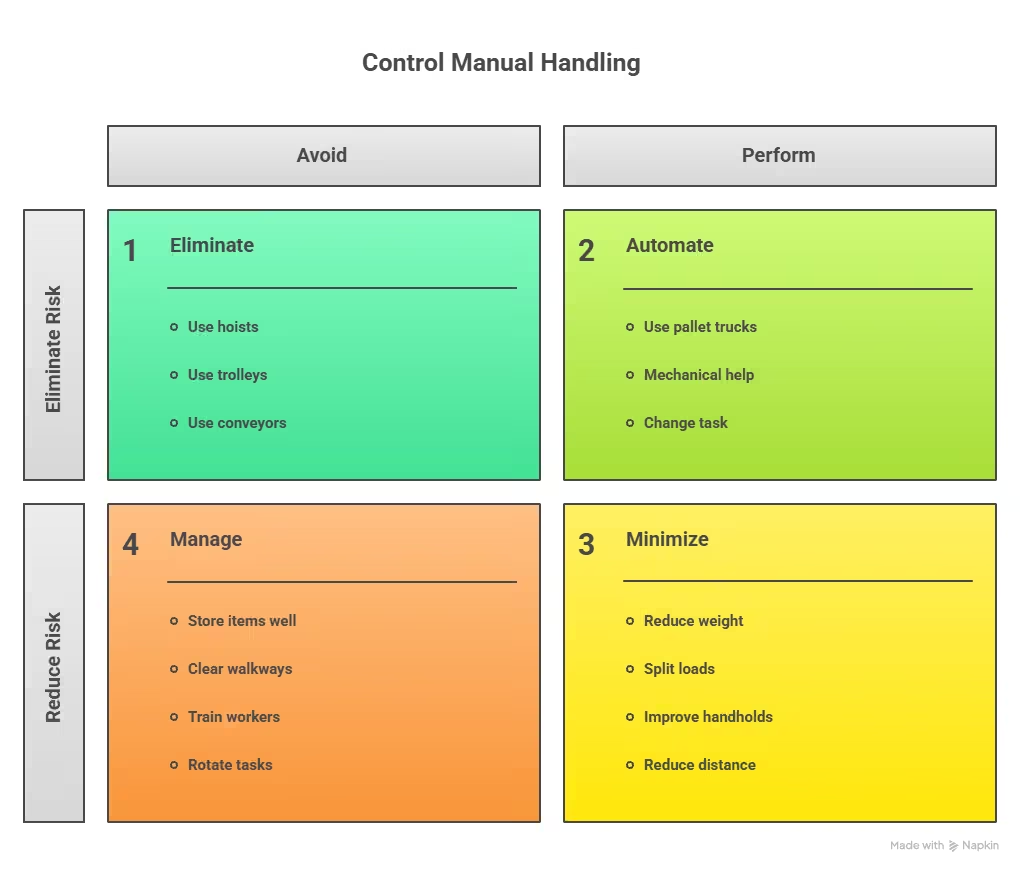
The best control measure is to avoid hazardous manual handling where possible. If workers do not need to move a load by hand, they should not move it by hand. When the team cannot avoid manual handling, they must reduce the risk as much as possible.
Good control measures make the task safer, easier, and more practical for workers. They focus on changing the task, improving the load, making the environment safer, and giving workers the right training and support. Learners explore these points in a Manual Handling Level 2 course, so they can apply safe handling controls in real workplace situations.
-
Use hoists, trolleys, pallet trucks or conveyors
Mechanical aids can reduce the amount of force workers need to move a load. Hoists, trolleys, pallet trucks, and conveyors help workers move items without putting too much strain on their bodies. These aids work especially well for heavy, bulky, or repeated handling tasks. However, workers need proper training before they use this equipment.
-
Reduce load weight
Reducing the weight of a load gives workers one of the simplest ways to lower manual handling risk. A lighter load usually gives workers better control during lifting and carrying. This can reduce pressure on the back, shoulders, arms, and knees. If the load feels too heavy, make it lighter before anyone tries to move it.
-
Split large loads
Workers can often divide large loads into smaller, safer parts. This makes each lift easier and gives the worker better control. It can also improve balance and reduce the chance of dropping the load. However, workers should still avoid too many repeated trips, as repetition can also cause fatigue.
-
Improve handholds
Good handholds make a load easier to grip and control. If a load has no handles, workers may need to hold it awkwardly, which can increase strain on the hands, wrists, arms, and back. Adding handles, using better packaging, or placing items in suitable containers can make handling safer. A secure grip also reduces the risk of the load slipping or falling.
-
Store heavy items between knee and shoulder height
Store heavy items where workers can reach them safely. The best storage zone usually sits between knee and shoulder height. This reduces deep bending, overhead lifting, and awkward stretching. Better storage can make everyday manual handling tasks much safer.
-
Reduce carrying distances
The farther a worker carries a load, the more tired they become. Fatigue can lead to poor posture, weaker grip, and reduced control. Shorter carrying distances reduce strain and make the task easier to manage. Arrange work areas so workers store loads close to where they need them.
-
Clear walkways
Clear walkways help workers move safely while carrying, pushing, or pulling a load. Boxes, cables, tools, packaging, and waste can create trip hazards. These hazards become even more dangerous when the load blocks the worker’s view. Before manual handling starts, check and clear the route.
-
Improve lighting and flooring
Good lighting helps workers see hazards, steps, corners, and other people. Poor lighting can make it harder to judge distance or spot risks along the route. Keep flooring dry, even, and in good condition. Fix wet, damaged, or slippery floors before manual handling takes place.
-
Rotate tasks
Task rotation helps reduce strain from repeated movements. If one worker lifts, carries, or reaches in the same way all day, the worker uses the same muscles and joints again and again. Rotating tasks gives the body time to recover and reduces the risk of overuse injuries. This works best when managers plan rotation properly and workers receive training for each task.
-
Train workers
Training helps workers understand the risks and use safer methods. It teaches them how to plan a lift, check the route, use equipment, recognise hazards, and ask for help. Training also helps workers understand that manual handling does not depend only on strength. A Manual Handling Level 2 course gives learners core knowledge they can use in daily work.
-
Plan team handling
Team handling can help when a load feels too large or awkward for one person. But the team must plan it carefully. Workers should agree who will lead, when to lift, where to move, and how to lower the load safely. Poor communication during team handling can increase the risk, so workers need clear instructions.
Safe manual handling control measures do not make work slower. They make work smarter and safer. HSE guidance recommends using mechanical help where possible and changing the task, load, or workplace when workers cannot avoid manual lifting. The goal is simple: reduce strain, prevent injuries, and help workers go home safely at the end of the day.
5-minute TILE toolbox talk
Here is a short toolbox talk you can use before manual handling work begins.
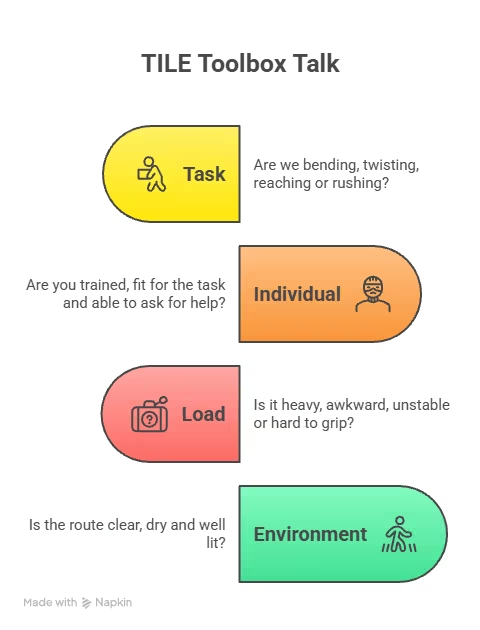
Before we move any load today, we will use TILE. This means we will check the Task, Individual, Load and Environment before lifting, carrying, pushing or pulling anything. A few seconds of planning can prevent pain, injury and time off work.
First, look at the Task. Are we bending, twisting, reaching, rushing or repeating the same movement? Can the task be changed, made easier, or supported with equipment?
Next, think about the Individual. Are you trained for the task? Are you fit and comfortable to do it today? If you feel tired, injured, unsure or unable to handle the load safely, speak up and ask for help.
Then check the Load. Is it heavy, awkward, unstable, sharp, slippery or hard to grip? Can it be split into smaller parts or moved with a trolley, hoist or pallet truck?
Finally, check the Environment. Is the route clear, dry and well lit? Are there steps, ramps, tight spaces, clutter or trip hazards?
If something feels wrong, stop. Do not force it. Safe manual handling is not about strength. It is about smart choices.
Final thoughts
Manual handling injuries are common, painful and often preventable. The TILE method gives you a simple way to spot risks before they become injuries.
Remember the four words: Task, Individual, Load, Environment.
That is the heart of Tile in Manual Handling. It helps workers think clearly, supervisors assess fairly, and businesses reduce avoidable harm.
Take the next step today. Join our Manual Handling Level 2 course and learn how to use TILE, complete better risk assessments, and make manual handling safer in your workplace.
Frequently Asked Questions
1. What does TILE stand for in manual handling?
TILE stands for Task, Individual, Load and Environment. Workers use it as a simple risk-assessment method before lifting, carrying, pushing or pulling items. Each part helps workers and employers identify hazards, reduce injury risk and decide whether the task needs changing, assistance or mechanical handling support.
2. Why is TILE important in manual handling?
TILE is important because it helps people check the main causes of manual handling injuries before work begins. By looking at the task, worker capability, load and environment, employers can spot risks early, reduce unsafe lifting, improve control measures and support legal health-and-safety duties.
3. What does “Task” mean in TILE?
In TILE, Task means the way the manual handling activity is performed. It includes bending, twisting, reaching, lifting from floor level, carrying distance, repetition, speed and duration. A task becomes riskier when it involves awkward posture, long distances, frequent lifting or sudden movement.
4. What does “Individual” mean in TILE?
Individual means the person doing the manual handling task. Employers should consider strength, fitness, training, experience, fatigue, medical conditions, previous injuries and whether the worker needs help. A task that is safe for one person may be unsafe for another, especially with heavy or repeated handling.
5. What does “Load” mean in TILE?
Load refers to the item being moved. Risk depends on its weight, size, shape, grip, stability and contents. A light object can still be dangerous if it is awkward, sharp, hot, slippery, unstable, difficult to hold or blocks the worker’s view while carrying.
6. What does “Environment” mean in TILE?
Environment means the area where manual handling happens. Poor lighting, uneven floors, wet surfaces, stairs, slopes, tight spaces, clutter, temperature extremes and long routes can increase injury risk. A safe load may become unsafe if the worker has to move it through a poor environment.
7. What is the difference between TILE, LITE and TILEO?
TILE and LITE use the same core factors: Task, Individual, Load and Environment, but in a different order. TILEO adds Other factors, such as PPE, equipment, time pressure, team handling or communication. TILEO is useful when the manual handling task is more complex or higher risk.
8. Is TILE a legal requirement?
TILE itself is not named as a legal requirement, but it helps employers meet manual handling duties. HSE guidance says employers should avoid hazardous manual handling where possible, assess unavoidable tasks and reduce the risk of injury. TILE is a practical way to structure that assessment.
9. Is there a maximum safe lifting weight in manual handling?
There is no single legal maximum lifting weight in UK manual handling law. Weight matters, but risk also depends on posture, frequency, distance, grip, load shape, worker capability and environment. That is why TILE is useful: it looks beyond weight and checks the whole handling situation.
10. When should a TILE risk assessment be reviewed?
A TILE risk assessment should be reviewed whenever the task, worker, load or environment changes. It should also be checked after accidents, near misses, complaints, new equipment, layout changes or increased workload. Regular review keeps controls relevant and prevents old assessments from missing new risks.
 " alt="The 6 Principles of Safeguarding: Protect Before Harm Happens" />
 " alt="Personal Development Goals: 5 Meaningful Examples That Work" />