

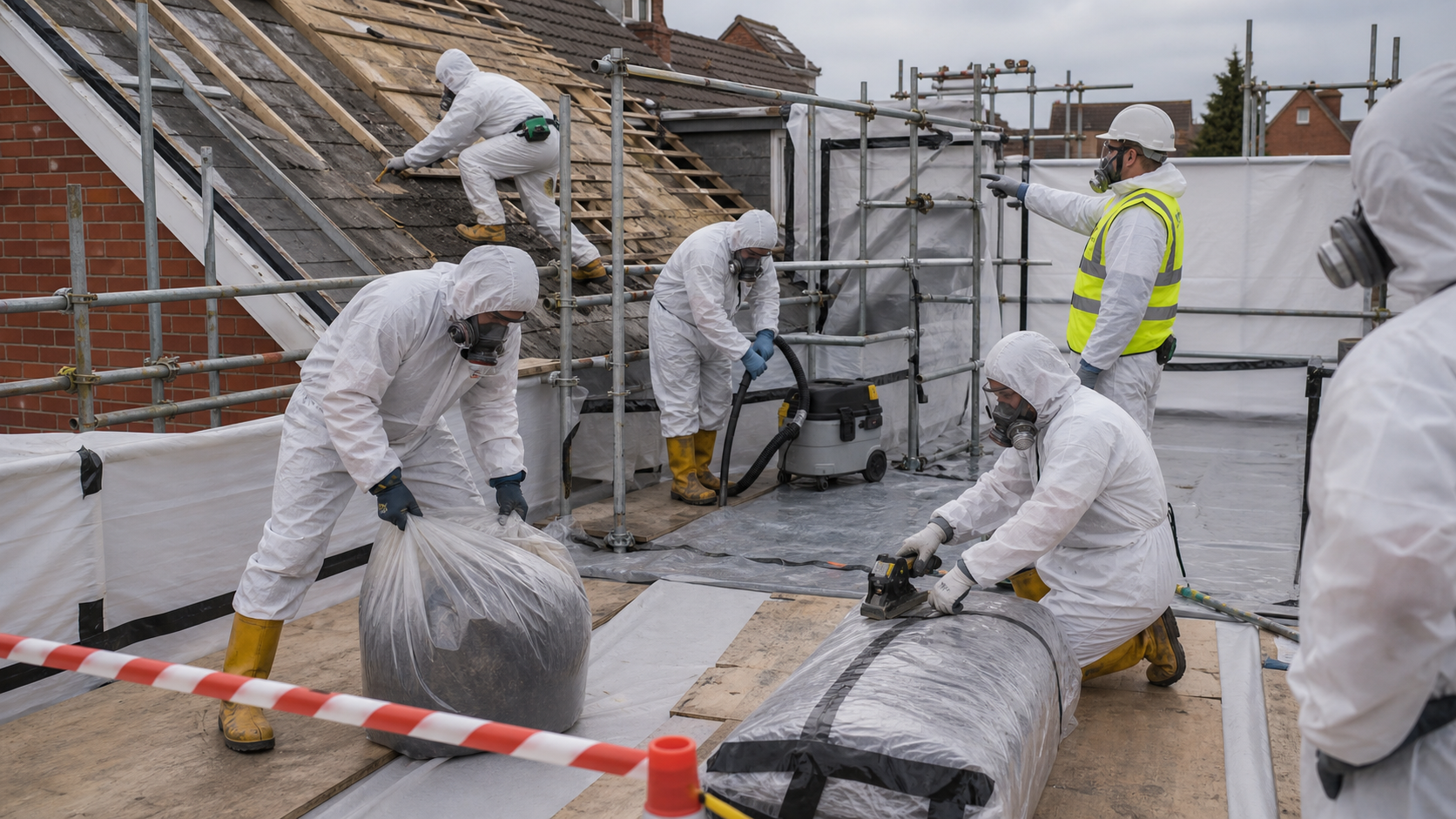

Have you ever been asked to move old boards, ceiling tiles, pipe covers, dusty boxes, or building waste in an older workplace and thought, “It is just a lifting job”? That is exactly where the danger starts. Manual Handling & Asbestos risks often meet in the same place. The Asbestos Awareness and Risk Assessment course helps workers spot asbestos risks before they lift, drag, shift, or disturb anything.
Demand for this knowledge is growing because the risk is still real. HSE’s 2025 summary recorded 511,000 workers with work-related musculoskeletal disorders and 7.1 million working days lost from them in Great Britain. It also recorded 2,218 mesothelioma deaths in 2023, with a similar number of asbestos-related lung cancer deaths.
In this guide, you will learn how manual handling and asbestos risks connect. The guide also shows what to check before moving materials, when to stop work, how TILE/TILEO helps, what employers must do, and why asbestos awareness training matters. You will also get simple checklists you can use before starting a job. Protect your team before the next lift. Start learning with the Asbestos Awareness and Risk Assessment and learn how to recognise asbestos risks before manual handling turns into exposure.
What You’re About to Explore
- Manual Handling & Asbestos Awareness: Why Both Matter Together
- What Is Manual Handling?
- What Is Asbestos?
- Why Asbestos Is Dangerous When Disturbed
- Where Asbestos Can Be Found in Older Buildings
- How Manual Handling Tasks Can Accidentally Disturb Asbestos
- Manual Handling Legal Duties for Employers
- Asbestos Duty to Manage Responsibilities
- Manual Handling Risk Assessment Using TILE/TILEO
- Asbestos Risk Assessment Before Moving Materials
- Safe Manual Handling Techniques
- When Not to Move a Load: Suspected Asbestos Warning Signs
- Stop, Check, Report: What Workers Should Do
- What to Do If Asbestos Is Accidentally Disturbed
- Using Mechanical Aids Without Disturbing Asbestos
- PPE/RPE Considerations During Manual Handling
- Manual Handling Training vs Asbestos Awareness Training
- Who Needs Training?
- Licensed vs Non-Licensed Asbestos Work
- Industry Examples
- Toolbox Talk: Manual Handling & Asbestos
- Employer Compliance Checklist
- Worker Pre-Task Safety Checklist
- Common Mistakes to Avoid
Manual Handling & Asbestos Awareness: Why Both Matter Together
Manual handling means moving something by using your body. It can include lifting, carrying, pushing, pulling, lowering, or holding a load. Asbestos awareness means understanding what asbestos is, why it is dangerous, where it may be found, and how to avoid disturbing it during work.
At first, these two topics may seem separate. Manual handling is usually linked with back pain, muscle strain, and physical injury. People link asbestos with breathing in harmful fibres. But in many workplaces, both risks can appear in the same task. That is why workers need to think about them together.
The main danger comes before the lifting begins. A load may not only be heavy or awkward. It may also be old, damaged, dusty, or part of a building where asbestos could be present. If a worker moves it without checking, the material may break, crack, or release dust. When that dust contains asbestos fibres, people nearby could breathe them in without knowing.
This is why safe manual handling is not only about how you lift. It is also about what you are lifting, where it came from, and what could happen if it is moved. A worker should never rush into a task just because the load looks simple.
Manual handling protects the body. Asbestos awareness protects the lungs. When workers use both together, they can stop, check, and make safer choices before harm happens.
What Is Manual Handling?
Manual handling means moving or supporting a load by using your body. This can include lifting, lowering, carrying, pushing, pulling, holding, or dragging something from one place to another. It sounds simple, but it is one of the most common causes of workplace injury.
A load does not always mean a heavy box. It can be a tool, pipe, board, door, bag, panel, machine part, waste material, or even furniture. Some loads are heavy. Others are awkward to grip. A few may also be sharp, unstable, dusty, or too large to see around. This is why manual handling is not only about weight. It is also about shape, position, movement, and the place where the task happens.
Poor manual handling can cause back pain, pulled muscles, shoulder injuries, trapped fingers, slips, trips, and long-term joint problems. These injuries may happen suddenly, or they may build up over time. For example, repeated bending, twisting, or carrying can slowly damage the body.
Safe manual handling starts with planning. Before moving any load, a worker should ask a few simple questions. Is the load too heavy? Can I grip it safely? Is the route clear? Do I need help? Can I use a trolley, hoist, or other aid? Is there anything nearby that could be damaged or disturbed?
Good manual handling is not about being strong. It is about being careful, prepared, and aware of the risk before the movement begins. A safe lift protects the worker, the team, and the workplace.
What Is Asbestos?
Asbestos is a natural mineral. Very small fibres make up asbestos. In the past, builders widely used asbestos because it was strong, cheap, and resistant to heat, fire, and chemicals. This made it useful for insulation, fire protection, roofing, flooring, and many other building materials.
The problem is that asbestos can be dangerous when it is damaged or disturbed. If workers break, drill, cut, scrape, or handle asbestos-containing material badly, it can release tiny fibres into the air. These fibres are so small that you may not see them. You may not smell them either. But if people breathe them in, the fibres can stay in the lungs and cause serious illness many years later.
Asbestos can be hidden in many parts of older buildings. Workers may find asbestos in pipe insulation, ceiling tiles, floor tiles, wall boards, roofing sheets, cement products, sprayed coatings, and textured finishes. It may also sit behind panels, inside service areas, or around old heating systems. This is why workers should never assume a material is safe just by looking at it.
Asbestos awareness is important because it teaches people how to recognise possible asbestos risks before work begins. It also teaches them when to stop, who to report to, and why they should not disturb unknown materials.
The key point is simple. Asbestos does not always create danger when people leave it alone and keep it in good condition.The danger starts when it is disturbed and fibres enter the air.
Why Asbestos Is Dangerous When Disturbed
Asbestos becomes dangerous when workers damage, break, cut, drill, scrape, or move it in the wrong way. When this happens, tiny asbestos fibres can escape into the air. These fibres are very small, so workers may not see them, smell them, or feel them. That is what makes asbestos so risky. A person may breathe it in without knowing exposure has happened.
- The fibres can enter the lungs
When asbestos fibres are in the air, people nearby can breathe them in. The fibres can travel deep into the lungs because they are so small. The body cannot remove them easily once they enter. Over time, they can irritate and damage lung tissue. - The health effects can take many years to appear
Asbestos-related diseases do not usually happen straight away. A person may feel fine for many years after exposure. This delay can make the risk seem less serious at the time. But the damage may be developing slowly inside the body. - Disturbance can affect more than one worker
One careless action can put several people at risk. If asbestos dust spreads, it may reach other workers, cleaners, visitors, or people using the building later. Fibres can also settle on clothing, tools, and surfaces. This means the risk can move beyond the original task area. - Small jobs can still create serious risk
Asbestos exposure does not only happen during large construction work. It can happen during small repair, maintenance, cleaning, or moving tasks. Even a quick job can release fibres if asbestos-containing material is damaged. That is why workers should always stop and check before disturbing unknown materials.
Asbestos becomes most dangerous when workers disturb it and fibres enter the air. If a material may contain asbestos, do not touch it, move it, or clean it up without proper guidance.
Where Asbestos Can Be Found in Older Buildings
Workers may find asbestos in many older buildings, especially buildings constructed or refurbished before the UK fully banned asbestos. The difficult part is that asbestos is not always easy to spot. Building materials, panels, ceilings, and old service areas can hide it. This is why workers should always check before moving, drilling, lifting, or removing unknown materials.
- Pipe insulation and boiler rooms
Builders often used asbestos around pipes and heating systems because it could handle high temperatures. In older boiler rooms, you may find asbestos lagging around pipes, tanks, or valves. It may look old, dusty, or damaged, but it can still be dangerous. Workers should never cut, scrape, or remove pipe insulation unless it has been checked by a competent person.
- Ceiling voids, wall panels, and boards
Ceiling voids and wall panels can hide asbestos materials that are not easy to see. These areas may contain insulation boards, fire-resistant panels, or old service coverings. Maintenance workers may disturb them when running cables, fixing lights, or accessing hidden spaces. Always check building records or ask for an asbestos survey before working in these areas.
- Floor Tiles and Textured Coatings
Older floor tiles, tile adhesive, and textured coatings may contain asbestos. These materials can seem harmless because they look solid or decorative. However, sanding, breaking, drilling, or removing them can release fibres. If the material is old, damaged, or unknown, it should be treated with caution.
- Roofing Sheets, Soffits, and Fire Doors
Workers may also find asbestos in roofing sheets, soffits, and some old fire doors. Builders used these materials because asbestos helped with strength and fire protection. Damage from weather, age, or maintenance work can increase the risk. Before lifting, cutting, or replacing these parts, workers should confirm whether asbestos is present.
How Manual Handling Tasks Can Accidentally Disturb Asbestos
Manual handling tasks can accidentally disturb asbestos when workers move, lift, drag, or shift materials without checking the area first. In many older buildings, insulation, wall panels, floor tiles, ceiling boards, or pipe coverings may hide asbestos. The danger often appears when people rush to finish a job or assume the material is safe. Most accidents do not happen because workers are careless; they happen because teams miss checks.
Before starting any manual handling task, workers should ask: “Could this movement damage old building materials?” If the answer is yes, stop and check first.
-
Pulling or Moving Old Pipe Lagging
A worker may need to reach a pipe, valve, or service area and pull away old insulation without thinking. If that insulation contains asbestos, it can release fibres into the air. This is especially risky when the lagging is old, dry, cracked, or dusty. Workers should never remove or disturb pipe insulation unless it has been checked and confirmed safe.
-
Stacking Materials Against Walls
Teams may stack boards, tools, boxes, or equipment against an old wall during a moving task. If the wall has asbestos panels or fragile surfaces, the pressure can cause cracks or damage. Even a small impact can disturb hidden asbestos materials. It is safer to plan a storage area before moving items and avoid leaning heavy objects against unknown surfaces.
-
Dragging Waste Across Old Floor Tiles
Dragging bags, rubble, or equipment across old floor tiles can scrape or break the surface. Some older floor tiles and adhesives may contain asbestos. If the tiles are already loose, cracked, or damaged, the risk becomes higher. Workers should lift items properly or use planned routes instead of dragging materials across unknown flooring.
-
Using Trolleys Without Planning the Route
A trolley can help reduce lifting strain, but it can also cause impact damage. It may hit wall panels, doors, corners, or low-level boards that contain asbestos. A poor route can turn a safe handling aid into a hazard. Always check the route, remove obstacles, and avoid contact with old building materials.
The safest approach is, slow down, check the area, plan the route, and do not disturb unknown materials.
Manual Handling Legal Duties for Employers
Employers have a clear legal duty to protect workers from injuries caused by manual handling. Manual handling means lifting, carrying, pushing, pulling, lowering, or moving something by hand or by body force. These tasks may look simple, but they can cause serious injuries when they are not planned properly.
The main rule is simple: employers should avoid, assess, and reduce manual handling risks. This means they should first try to avoid risky lifting or moving tasks where possible. For example, employers can provide a trolley, hoist, lift, or other equipment instead of asking workers to carry heavy loads by hand.
If employers cannot avoid the task, they must assess the risk. They need to look at the load, the route, the space, the floor condition, and how often the task is done. Employers should also think about the worker’s strength, training, and experience. A task may be safe for one person but unsafe for another.
After employers assess the risk, they must reduce it as much as possible. This may include making the load lighter, using more people, clearing the route, giving proper training, or changing the way the work is done. Employers should not leave workers to “just manage it” or “be careful.”
Good employers plan manual handling before the work starts. They check what could go wrong and put controls in place. This protects workers from back injuries, muscle strains, slips, trips, and other harm.
In simple terms, manual handling safety is not just about lifting correctly. It is about planning the job properly, using the right equipment, and making sure workers are not put at unnecessary risk.
Asbestos Duty to Manage Responsibilities
In many non-domestic buildings, there is a legal duty to manage asbestos risk. This duty usually applies to the person or organisation responsible for the building. It may be the building owner, landlord, managing agent, employer, or the person in charge of maintenance.
The purpose of this duty is simple: The dutyholder must find, record, check, and manage asbestos before anyone accidentally disturbs it. This is especially important during repair, maintenance, refurbishment, or moving work. The dutyholder must find out whether asbestos-containing materials may be in the building. This usually means checking building records, old plans, and asbestos surveys.
-
Checking if Asbestos Is Present
The dutyholder must find out whether asbestos-containing materials may be in the building. This usually means checking building records, old plans, and asbestos surveys. If there is no clear information, workers should treat the material with caution until a competent person checks it. Guessing is not enough, because Panels, ceilings, floors, pipes, and insulation can hide asbestos.
-
Keeping an Asbestos Register
An asbestos register is a record of where asbestos is known or suspected to be. It should include the location, type, and condition of asbestos-containing materials. This register helps workers know which areas may be risky before they start work. The dutyholder must keep it up to date, especially when workers remove, damage, or inspect materials again.
-
Assessing the Risk of Exposure
The dutyholder must assess how likely it is that people could be exposed to asbestos fibres. This depends on the condition of the material and whether it could be disturbed. For example, sealed asbestos floor tiles may be lower risk than damaged pipe insulation. The more likely the material is to be touched, broken, drilled, or moved, the higher the risk.
-
Creating an Asbestos Management Plan
A management plan explains how asbestos risk will be controlled. It should show what asbestos is present, what condition it is in, and what action is needed. The plan may include regular inspections, warning labels, safe work controls, or removal by licensed specialists. A good plan helps prevent accidental disturbance.
-
Giving Information to Workers
The dutyholder must give clear information to people who may disturb asbestos before work starts. This includes maintenance workers, contractors, cleaners, and anyone involved in repair or building work. They need to know where asbestos is and what they must not touch. Good communication is one of the strongest ways to prevent asbestos exposure.
Manual Handling Risk Assessment Using TILE/TILEO
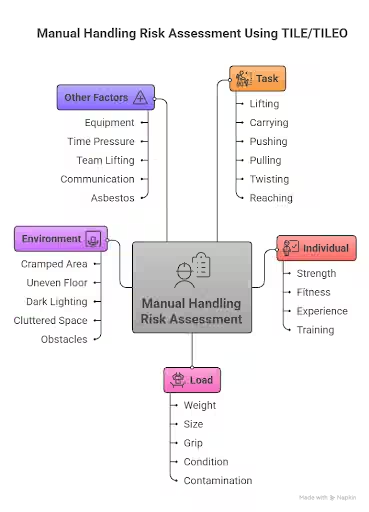
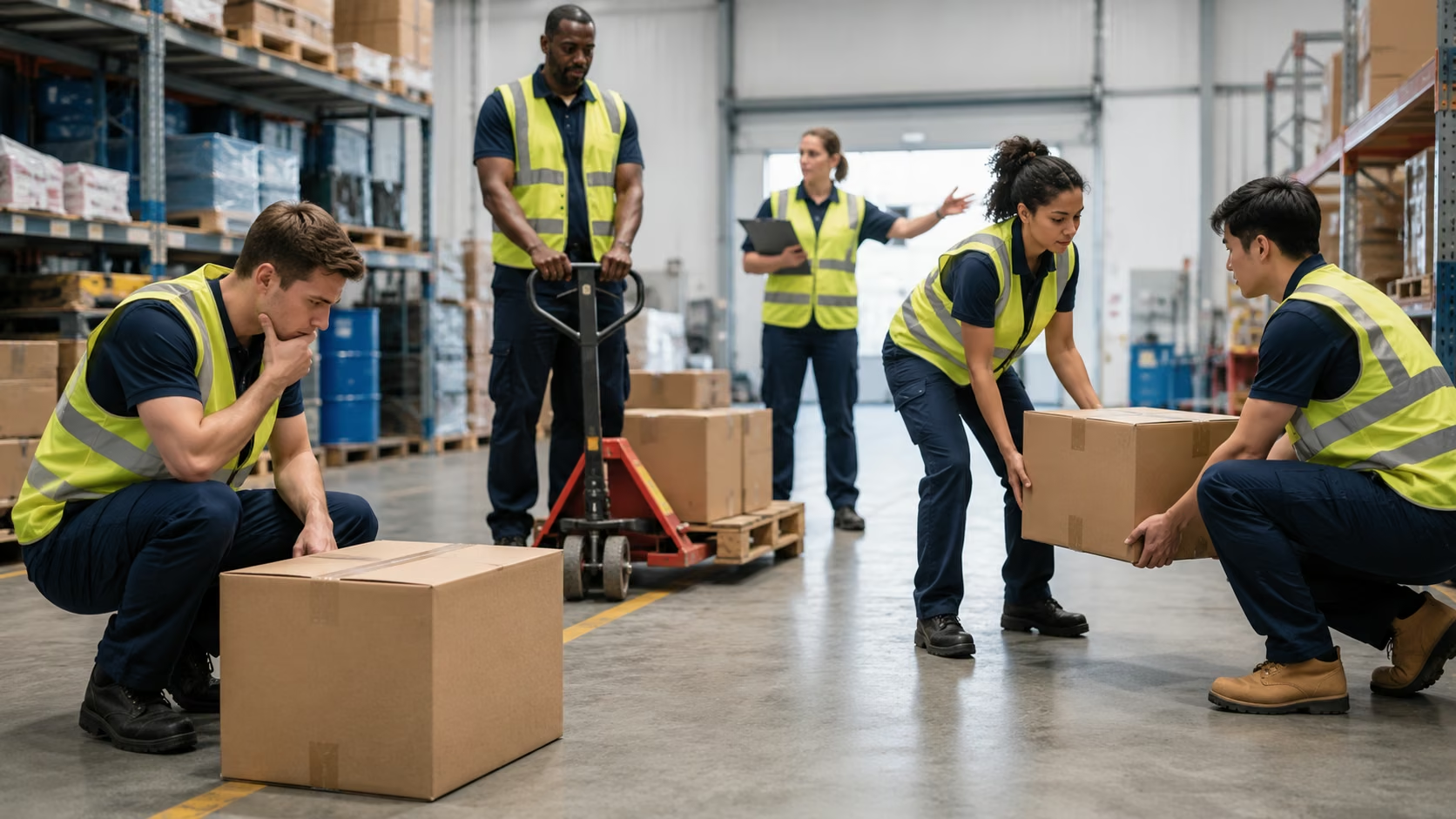
A manual handling risk assessment helps workers think before they lift, carry, push, pull, or move something. Many workplaces call one simple method TILE. It helps people check the main risks before the task starts.
TILE stands for Task, Individual, Load, and Environment. Some workplaces also use TILEO, which adds Other factors. This is especially useful when manual handling takes place in older buildings where asbestos may be present. In these situations, the load is not only a lifting risk. It may also be a contamination risk if it damages or disturbs asbestos-containing materials.
-
Task: What movement is needed?
The task looks at what the worker has to do. This includes lifting, carrying, lowering, pushing, pulling, twisting, or reaching. A task becomes riskier if the worker has to bend, stretch, turn suddenly, or move the load over a long distance. Before starting, workers should ask whether they can avoid the task, change it, or make it safer with equipment.
-
Individual: Who is doing it, and are they trained?
The individual part looks at the person doing the task. Not every worker has the same strength, experience, training, or physical ability. A task that is safe for one person may be unsafe for another. Employers should make sure workers are trained, confident, and physically able to complete the task safely.
-
Load: Is it heavy, sharp, unstable, dusty, or damaged?
The load is one of the most important things to check. A load may be too heavy, awkward to hold, sharp, fragile, unstable, or difficult to grip.In older buildings, asbestos may contaminate a dusty, damaged, or unknown load. Workers should not move unknown materials without checking whether they could release harmful fibres.
-
Environment: Is the area cramped, uneven, dark, or cluttered?
The environment can make a manual handling task much more dangerous. A narrow space, uneven floor, poor lighting, or cluttered route can increase the risk of slips, trips, falls, and impact damage. In older buildings, poor routes can also lead to accidental contact with walls, panels, floor tiles, or pipe insulation. Workers should check the route before moving anything.
-
Other Factors: What else could increase the risk?
TILEO adds Other factors that may affect safety. These can include time pressure, poor communication, team lifting, lack of equipment, damaged trolleys, or unclear instructions. For Manual Handling & Asbestos tasks, this part is very important because workers must also think about possible asbestos disturbance. If the task could damage old building materials, workers should stop until a competent person checks the area.
Using TILEO helps workers slow down and look at the full picture. This method checks more than whether someone can lift the load. It checks whether the task, person, material, route, equipment, and building condition are safe before work begins.
Asbestos Risk Assessment Before Moving Materials
Before moving old materials, workers should always check whether asbestos may be present. This is especially important in older buildings, floor tiles, wall panels, ceiling boards, pipe insulation, roofing sheets, or textured coatings may hide asbestos. Moving materials without checking first can damage asbestos-containing materials and release harmful fibres into the air.
Workers should complete a proper asbestos risk assessment before any movement begins. Workers should not rely on memory, guesswork, or someone saying, “It should be fine.” If the material is unknown, damaged, dusty, brittle, or part of the building fabric, the safest action is to stop and check.
-
Check the Asbestos Register
The asbestos register shows where inspectors know or suspect asbestos exists in the building. Workers should check this before moving old materials, especially in maintenance or refurbishment areas. The register can help identify risky locations, such as pipework, ceiling spaces, floor tiles, or wall panels. If the register is missing, unclear, or out of date, workers should not continue until a supervisor gives proper advice.
-
Look for Surveys, Permits, or Work Plans
An asbestos survey can confirm whether asbestos-containing materials are present. A permit or work plan may also explain what work is allowed and what controls are needed. These documents help workers understand the risk before touching or moving anything. If no survey or plan is available, workers should pause the job until a competent person checks the area.
-
Ask the Site Supervisor
Workers should ask the site supervisor if the area has been inspected. This is a simple but important step before moving materials. The supervisor should know whether asbestos information is available and whether the task is safe to continue. If the supervisor cannot confirm the area is safe, workers should stop and report the concern.
-
Stop if the Material Looks Risky
Workers should always treat unknown, dusty, brittle, cracked, or damaged materials with caution. These materials may release fibres if lifted, dragged, broken, or knocked. This is especially important in older buildings where asbestos may have been used in many hidden places. If there is any doubt, stop work and wait for a proper asbestos risk assessment.
The safest rule is, check before you move, and never disturb unknown materials.
Safe Manual Handling Techniques
Safe manual handling is not only about protecting your back. It also helps protect the work area, especially in older buildings where asbestos may be present. A rushed lift, a dropped load, or a scraped surface can cause damage to building materials. If those materials contain asbestos, harmful fibres may be released into the air.
That is why workers should plan every lift before it starts. Workers should check the load, the route, the space, and the possible hazards nearby. If suspected asbestos is in the area, extra care is needed. A safe lift should be slow, controlled, and planned.
-
Plan the Route First
Before lifting or moving anything, check where you are going. Look for obstacles, uneven floors, tight corners, poor lighting, or fragile surfaces. In older buildings, also look for materials that could be damaged, such as old wall panels, floor tiles, pipe insulation, or ceiling boards. Planning the route helps prevent trips, knocks, and accidental contact with suspected asbestos materials.
-
Move Obstacles Before You Start
Workers should move obstacles before lifting the load. Do not try to step over tools, cables, waste, or loose materials while carrying something heavy. This can cause slips, trips, or sudden movements. A clear route helps workers move safely and reduces the chance of dropping or dragging the load.
-
Get Help if the Item Is Too Heavy or Awkward
If the item is too heavy, large, unstable, or difficult to grip, ask for help. Do not try to prove strength by lifting something unsafe alone. Team lifting or using equipment such as a trolley or hoist can reduce the risk of injury. It can also help prevent the load from hitting walls, doors, or old building materials.
-
Keep the Load Close to Your Body
Keeping the load close helps reduce strain on your back, shoulders, and arms. If you hold the load too far away, your body has to work harder to control it. This can make you lose balance or drop the item. A close and steady load is easier to move safely and carefully.
-
Bend Your Knees, Not Your Back
When lifting from a lower level, bend your knees and keep your back as straight as possible. Do not bend fully from the waist, because this puts extra pressure on your spine. Use your legs to help lift, as they are stronger than your back. This technique lowers the risk of strains and sudden injuries.
-
Avoid Twisting While Carrying
Twisting while carrying a load can injure your back and make the load harder to control. Instead of twisting your body, move your feet and turn your whole body slowly. This gives you better balance and control. It also helps avoid accidental knocks against walls, panels, or nearby surfaces.
-
Set the Load Down Gently
Putting a load down safely is just as important as lifting it safely. Do not drop, throw, or slide the item into place. Lower it slowly and make sure your fingers are clear before releasing it. If suspected asbestos is nearby, gentle movement helps prevent impact, scraping, or damage to old materials.
-
Avoid Knocking, Scraping, Dragging, or Dropping Near Suspected Asbestos
If asbestos may be present, workers must avoid rough movement. Knocking, scraping, dragging, or dropping materials can damage asbestos-containing surfaces. This may release dangerous fibres into the air. If there is any doubt about the material or area, stop and ask for advice before continuing.
A safe lift is controlled, slow, and planned. Good manual handling protects workers from injury and helps prevent accidental asbestos disturbance.
When Not to Move a Load: Suspected Asbestos Warning Signs
Workers should not move a load if there are signs that asbestos may be present. In older buildings, insulation, boards, tiles, panels, pipe coverings, and dusty debris can hide asbestos. Moving a load in the wrong area can damage these materials and release harmful fibres into the air.
Before lifting, dragging, pushing, or carrying anything, stop and look around. Ask yourself: “Could moving this item disturb old building materials?”If the answer is yes, do not continue until the area has been checked. When in doubt, do not test it with your hands, break it, scrape it, or move it “just a little.”
-
Old Insulation or Pipe Lagging
Workers may commonly find asbestos in old insulation and pipe lagging. They may be wrapped around pipes, boilers, tanks, or heating systems. If the material looks cracked, dusty, loose, or damaged, workers should not touch or move it. Even a small disturbance can release fibres, so workers should stop and report it before continuing.
-
Broken Boards or Damaged Ceiling Tiles
Broken boards and damaged ceiling tiles can be a warning sign in older buildings. Some boards and tiles may contain asbestos, especially if they were used for fire protection, insulation, or ceiling systems. Moving a load near them could cause more damage or create dust. Workers should avoid contact and check the asbestos register or ask a supervisor before work continues.
-
Dusty Debris or Unknown Panels
Workers should always treat dusty debris with caution when they do not know the source. It may come from damaged asbestos-containing materials, especially during maintenance or repair work. Workers should also avoid disturbing unknown wall panels, ceiling panels, or backing boards. If workers cannot confirm what the material is, they should stop and get advice.
-
Asbestos Labels or Sealed-Off Areas
Asbestos warning labels mean the material or area has already been identified as a risk. Sealed-off areas may also show that asbestos work, damage, or inspection is taking place. Workers should never enter, move materials, or remove barriers unless they are authorised to do so. These signs must be respected because they are there to prevent exposure.
-
Materials Listed in an Asbestos Register
If the asbestos register lists a material or area, workers must follow the controls outlined in the site plan. The register may show where asbestos is located, what condition it is in, and what work is allowed. Moving a load near listed materials could create risk if the movement causes impact or dust. Always check the register before starting manual handling in older buildings.
-
Hidden Spaces, Damaged Surfaces, or Dust Creation
Do not move a load if it could expose hidden spaces, damage surfaces, or create dust. For example, pulling out boards, lifting old panels, or dragging items across fragile floors can disturb hidden asbestos. Dust is a serious warning sign because asbestos fibres can be invisible once airborne. If the task may create dust or damage, stop and request a proper asbestos risk assessment.
If asbestos is suspected, do not move the load. Stop, isolate the area if needed, report the concern, and wait for competent advice.
Stop, Check, Report: What Workers Should Do
If you think asbestos may be present, stop work straight away. Do not move the load, touch the material, sweep the dust, or try to clean the area. Asbestos becomes dangerous when work disturbs it, because tiny fibres can enter the air and people can breathe them in.
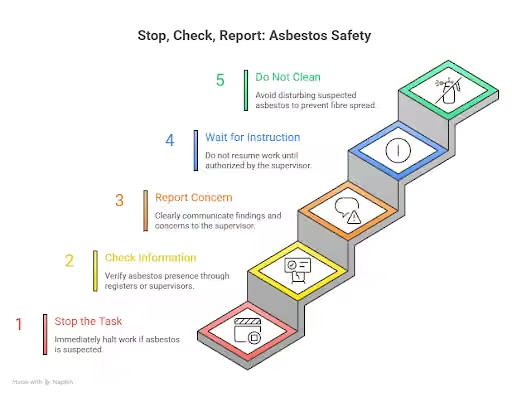
Workers should know exactly what to do in this situation: stop, check, report, and wait.
First, stop the task and keep away from the material. Then check the asbestos register or ask the site supervisor if the area has been inspected. Next, report what you have found. Be clear and simple. Say where the material is, what it looks like, and why you are concerned. After that, wait for further instruction from the supervisor or a competent person.
Avoid moving the load, touching the material, sweeping the dust, or trying to clean the area. If the material is old, damaged, dusty, brittle, or unknown, treat it as a possible risk.
The safest worker is not the one who rushes to finish the job. A safer worker stops before harm happens. This simple action can protect you, your team, and everyone else in the building.
-
Stop the Task
If you think asbestos may be present, stop the work immediately. Do not lift, drag, break, drill, sweep, or move the material. Even a small disturbance can release harmful asbestos fibres into the air. Stopping the task is not a delay; it is the safest and most responsible action.
-
Check the Asbestos Register or Ask the Supervisor
After stopping, check the asbestos register if it is available. The register may show whether asbestos is known or suspected in that area. If you cannot access the register, ask the site supervisor or responsible person. Never rely on memory, guesswork, or someone saying, “It should be fine.”
-
Report the Concern Clearly
Report what you saw and where you saw it. Be clear and simple when explaining the concern. For example, say, “There is damaged pipe insulation near the work area,” or “This old board is dusty and broken.” Clear reporting helps the right person assess the risk quickly.
-
Wait for Instruction
Do not restart the task until you are told it is safe by the right person. Waiting is important because asbestos risk must be assessed properly. A supervisor, dutyholder, or competent asbestos professional may need to check the area first. Starting again too soon can put everyone at risk.
-
Do Not Clean, Sweep, or Move Suspected Material
Do not try to clean up suspected asbestos yourself. Sweeping, brushing, vacuuming, or moving the material can spread fibres into the air. Even if you are trying to help, you may make the area more dangerous. Leave the material alone and wait for trained people to deal with it safely.
This simple rule protects you and everyone around you. Stop the task, check the information, report the concern, and wait for instruction. Safety should always come before speed.
What to Do If Asbestos Is Accidentally Disturbed
If someone disturbs asbestos, stop work straight away. Do not continue the task, even if the job is nearly finished. Asbestos becomes dangerous when tiny fibres enter the air. People can breathe in these fibres without seeing them, so workers must stop exposure as quickly as possible.
Keep people away from the area. Avoid letting others walk through the space. Leave the damaged material alone and never try to clean it yourself. Sweeping, vacuuming, brushing, or picking up debris can spread asbestos fibres and make the situation worse.
Try not to carry dust through the building. If dust or debris gets on your clothing, shoes, tools, or equipment, stay calm and follow the site emergency procedure. Proper training makes a real difference here. The Asbestos Awareness and Risk Assessment course helps workers understand what to do in this kind of situation, how to avoid making the risk worse, and when to report the issue instead of handling it themselves.
Report the incident straight away. Tell the supervisor, dutyholder, or responsible person what happened. Explain where it happened, which material workers disturbed, and who may have been nearby. Clear information helps the right people respond quickly.
Competent asbestos professionals may need to close off the area, add warning signs, and check the site. They can decide what needs to happen next, such as air testing, safe cleaning, or specialist removal.
Act fast but stay calm. Do not panic or try to fix the problem yourself. Stop the task, keep people away, report the issue, and follow instructions. This protects you, your team, and everyone else in the building.
Using Mechanical Aids Without Disturbing Asbestos
Mechanical aids can make manual handling safer. Trolleys, pallet trucks, hoists, and other lifting equipment can reduce strain on the body. They help workers move heavy or awkward loads with less effort. But workers must use them carefully, especially in older buildings where asbestos may be present.
Before using any equipment, plan the route. Check the floor, walls, doorways, corners, and tight spaces. Make sure the route gives enough space for the load and the equipment. If clutter, uneven flooring, or narrow space blocks the route, the load may hit old surfaces and cause damage.
Do not ram, scrape, drag, or force loads through the area. Rough movement can damage wall panels, floor tiles, pipe insulation, ceiling boards, or other old building materials. If those materials contain asbestos, they may release fibres into the air.
Also, check whether the route passes near materials that may contain asbestos. If it does, stop and review the task before moving anything. Ask the supervisor, check the asbestos register, or follow the site work plan. Do not assume the route is safe just because the equipment makes lifting easier.
Mechanical aids should make the job safer, not rougher. Use them slowly and with control. Keep the load stable. Watch for corners, edges, and fragile surfaces. If the equipment looks damaged, unsuitable, or hard to control, do not use it.
The safest approach is simple: plan first, move carefully, and avoid contact with unknown or old building materials.
PPE/RPE Considerations During Manual Handling
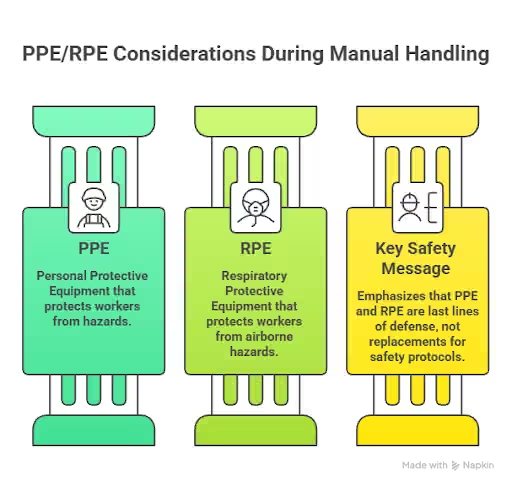
PPE and RPE can help protect workers, but they should never be the first control. The first step is always to avoid disturbing asbestos. If asbestos is not disturbed, fibres are less likely to enter the air. This is why planning, risk assessment, training, and safe systems of work must come before protective equipment.
- PPE means Personal Protective Equipment. It includes items worn to protect the body from harm. During manual handling tasks, PPE may include gloves, safety footwear, protective coveralls, eye protection, and hard hats. Gloves can protect hands from sharp edges or dirty materials. Safety footwear can protect feet if loads are dropped. Coveralls may help stop dust from getting onto clothing if there is a contamination risk.
- RPE means Respiratory Protective Equipment. It is equipment that helps protect the lungs from breathing in harmful substances. In asbestos-related work, RPE may include a suitable respirator or mask. But it must be the right type for the task. It must also fit the worker’s face properly. If it does not fit well, harmful fibres can still leak in.
Workers must be trained to use RPE correctly. They need to know how to put it on, check the fit, wear it, remove it, and store it safely. Facial hair can also stop some masks from sealing properly.
Most importantly, wearing a mask does not make unsafe work safe. If asbestos may be disturbed, the task needs proper assessment, controls, and competent people. PPE and RPE are the last layer of protection, not permission to take risks.
Manual Handling Training vs Asbestos Awareness Training
Manual handling training and asbestos awareness training teach different safety skills, but both are important in older buildings. The first type of training focuses on how to move loads safely. It helps workers avoid injuries such as back strain, muscle damage, slips, trips, and dropped loads.
Asbestos awareness training focuses on recognising where asbestos may be found and what to do if it could be disturbed. Through this training, workers learn to stop, check, and report instead of touching unknown or damaged materials.
Workers may need both types of training when they lift, carry, move, drill, pull, or clear materials in older buildings. Even if someone knows how to lift safely, they may still disturb asbestos by dragging a load across old floor tiles or knocking pipe insulation. Likewise, understanding asbestos risks does not prevent injury if lifting is done incorrectly.
The Asbestos Awareness and Risk Assessment course supports this by helping learners think before they move anything. It also encourages them to check the area, assess the task, and avoid actions that could create injury or asbestos exposure.
|
Training Type |
What It Teaches |
Why It Matters |
|
Manual Handling Training |
How to lift, carry, push, pull, and move loads safely |
Helps prevent back injuries, strains, slips, trips, and dropped loads |
|
Asbestos Awareness Training |
How to recognise possible asbestos, avoid disturbing it, and report concerns |
Helps prevent asbestos fibres from being released into the air |
|
Both Together |
How to move materials safely while checking for asbestos risks |
Protects workers from both physical injury and asbestos exposure |
|
Best Use |
Older buildings, maintenance work, refurbishment, repairs, and clearance tasks |
Helps workers think before they move, lift, drill, pull, or clear materials |
Who Needs Training?
Training is useful for anyone who may work around older building materials. In older buildings, asbestos can be hidden in places such as floor tiles, ceiling boards, pipe insulation, wall panels, roofing sheets, and textured coatings. A person may disturb asbestos without meaning to, especially during cleaning, repair, maintenance, lifting, or moving work.
If someone could disturb asbestos during normal work, they need asbestos awareness training. Workers who also lift, carry, push, pull, or move loads need manual handling knowledge too. Both types of training help workers stay safe and make better decisions before starting a task.
-
Maintenance Workers and Caretakers
Maintenance workers and caretakers often work in different parts of a building. They may enter plant rooms, ceiling spaces, store rooms, basements, or service areas. These places may contain old insulation, boards, pipe lagging, or panels. Training helps them recognise warning signs and stop before disturbing unknown materials.
-
Cleaners and Facilities Staff
Cleaners and facilities staff may come across damaged tiles, dusty debris, old panels, or sealed-off areas. They may also move furniture, bins, equipment, or stored materials. Without training, they may sweep dust or move debris that should not be touched. Asbestos awareness helps them know when to stop, report, and wait for advice.
-
Construction Workers and Tradespeople
Construction workers, plumbers, electricians, decorators, and other tradespeople often drill, cut, lift, pull, or remove materials. This can create a high risk if asbestos is present. They need to know where asbestos may be found and how to avoid disturbing it. Manual handling training also helps them move tools, materials, and equipment safely.
-
Warehouse Teams and Moving Staff
Warehouse teams and moving staff may handle heavy loads, stored items, old boards, or building materials. If they work in older premises, they may accidentally damage asbestos-containing surfaces while moving items. Trolleys, pallets, and heavy loads can scrape walls, floors, or panels. Training helps them plan routes and move loads without causing damage.
-
Landlords, Supervisors, and Managers
Landlords, supervisors, and managers need training because they are often responsible for planning and controlling work. They must understand when asbestos information is needed and when work should stop. They also need to make sure workers have the right instructions before tasks begin. Good supervision can prevent unsafe work and protect everyone in the building.
Anyone who may disturb old building materials needs asbestos awareness. Workers who move loads also need manual handling knowledge. Together, these skills help prevent injuries and reduce the risk of asbestos exposure.
Licensed vs Non-Licensed Asbestos Work
There are two main types of asbestos work: licensed asbestos work and non-licensed asbestos work. The difference depends on the level of risk, the type of asbestos material, its condition, and how likely it is to release fibres during the task.
Some higher-risk asbestos work must be carried out by licensed asbestos contractors. This usually includes work on materials that can release fibres more easily, such as asbestos insulation, pipe lagging, sprayed coatings, or asbestos insulating board.
Some lower-risk asbestos work may be classed as non-licensed or notifiable non-licensed work. But this does not mean workers can treat it casually. HSE states that all non-licensed and notifiable non-licensed asbestos work still needs a risk assessment, suitable controls, and the correct level of information, instruction, and training.
Never decide casually. Always check the asbestos register, survey, work plan, and guidance from a competent person before work starts.
|
Type of Asbestos Work |
What It Means |
What Is Needed |
|
Licensed asbestos work |
Higher-risk asbestos work that may release more fibres |
Must be done by a licensed asbestos contractor |
|
Non-licensed asbestos work |
Lower-risk asbestos work where fibre release is expected to be low |
Needs risk assessment, controls, and proper training |
|
Notifiable non-licensed work |
Some lower-risk work that must still be reported |
Needs notification, records, assessment, and controls |
|
Unknown or unclear work |
When the risk is not confirmed |
Stop and ask a competent person before continuing |
Being non-licensed does not mean no risk. Asbestos work should always be planned, checked, and controlled before anyone starts.
Industry Examples
Manual handling and asbestos risks can appear in many workplaces, not only on construction sites. Older buildings may hide asbestos in forgotten or hard-to-see areas. Workers may disturb it while moving materials, clearing storage, removing fixtures, or carrying out repairs. The main rule stays the same: check before moving anything that could disturb old building materials.
-
Construction Sites
In construction, workers may move boards, tiles, pipes, rubble, or old building materials. These items may look like normal waste, but some may contain asbestos or sit close to asbestos-containing materials. Rough movement can create dust or damage hidden surfaces. Workers should check the asbestos survey, follow the work plan, and stop if they cannot identify the material or see damage.
-
Schools
In schools, caretakers and site teams may move storage items, old ceiling panels, furniture, or equipment near service voids. Older schools may hide asbestos in ceiling spaces, wall panels, floor tiles, or pipe insulation. A simple task like shifting boxes can become risky if it damages old materials. Staff should check the asbestos register before moving items in older or hidden areas.
-
Warehouses
In warehouses, teams may move stock, pallets, shelving, or equipment against old walls or damaged flooring. Older warehouse buildings may contain asbestos in floor tiles, wall panels, roof sheets, or backing boards. Trolleys and pallet trucks can also scrape or hit fragile surfaces if workers do not plan the route. Workers should keep routes clear and avoid ramming or dragging loads.
-
Offices
In offices, maintenance staff may remove old fixtures, move partitions, lift ceiling tiles, or access service areas. These tasks may disturb hidden asbestos materials in older buildings. Workers should check even small jobs, such as changing fittings or moving panels, before they start. They should ask whether someone has inspected the area before starting the task.
-
Housing
In housing, tradespeople may lift old floor tiles, remove panels, repair pipework, or move materials during refurbishment. Workers may find asbestos in textured coatings, floor tiles, soffits, insulation boards, or pipe lagging. A rushed repair can easily disturb hidden asbestos. Before moving or removing anything, workers should check the available information and follow safe procedures.
Across every industry, do not guess, do not rush, and do not disturb unknown materials. Check before moving.
Toolbox Talk: Manual Handling & Asbestos
Keep a good toolbox talk short, clear, and practical. Workers do not need a long speech before starting the job. They need simple questions that help them spot risk before they lift, carry, move, push, or pull anything.
Manual handling and asbestos risks can overlap in older buildings. A worker may move a board, drag a load, or use a trolley and accidentally damage materials that contain asbestos. That is why the talk should focus on planning, checking, and reporting. Keep the message simple: check before moving, and stop if something looks wrong.
-
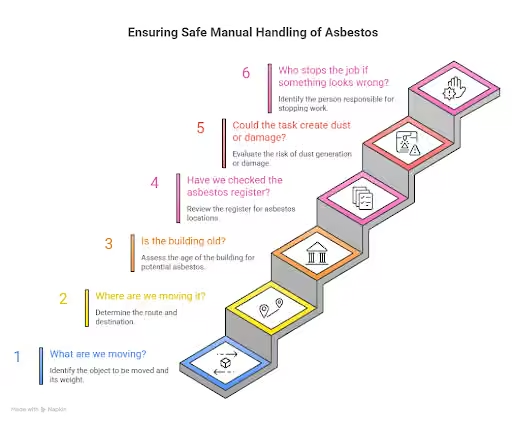
What Are We Moving?
The team should first understand the load. Is it a box, board, pipe, panel, tile, fixture, or waste material? If the material looks old, dusty, damaged, brittle, or unknown, workers should not move it without checking first. Knowing the load helps the team decide whether the task creates a manual handling risk, an asbestos risk, or both.
-
Where Are We Moving It?
Workers should know the route before the task begins. They should check floors, doorways, corners, stairs, walls, and tight spaces. A poor route can lead to slips, dropped loads, scraping, or impact damage. If the route passes near old panels, pipe insulation, floor tiles, or ceiling materials, the team should review the task.
-
Is the Building Old?
Older buildings are more likely to contain materials that contain asbestos. This does not mean every old building is dangerous, but workers should act with more care. Ceiling voids, pipe lagging, wall boards, floor tiles, or textured coatings may hide asbestos. If the building is old and the material is unknown, workers should stop and check before moving anything.
-
Have We Checked the Asbestos Register?
The asbestos register can show where inspectors know or suspect asbestos. Workers should check it before work starts, especially in maintenance, repair, clearance, or refurbishment tasks. They should not rely on memory or guesswork. If the register is missing, unclear, or out of date, the team should ask the supervisor before continuing.
-
Could the Task Create Dust or Damage?
The team should think about whether the task could break, scrape, drill, knock, drag, or damage materials. Dust warns workers that asbestos fibres could enter the air if the task disturbs materials that contain asbestos. Even a small task can create risk if it damages the wrong material. If the job could create dust or damage, stop and reassess the task.
-
Who Stops the Job If Something Looks Wrong?
Everyone should know they have the right to stop the job if something looks unsafe. The supervisor should not carry that responsibility alone. Any worker who sees damaged material, dust, unknown panels, or possible asbestos should speak up. A clear stop-work rule helps prevent unsafe decisions and protects the whole team.
-
Final Rule for the Toolbox Talk
End the talk with one clear message: no one gets punished for stopping work to ask about asbestos. Stopping work does not cause trouble. It shows safe and responsible behaviour. A short pause to check the risk can prevent serious exposure and protect everyone on site.
Employer Compliance Checklist
Employers must make sure manual handling tasks stay safe and asbestos risks remain under control. They must do more than give workers general advice. They need to plan the work, check the risks, provide the right information, and make sure workers know what to do before the task starts.
Compliance is not just paperwork. It helps prevent injuries, exposure, delays, and unsafe decisions. A good checklist helps employers confirm that they have the right controls in place.
-
Avoid Manual Handling Tasks Where Possible
Employers should first check whether they can avoid the manual handling task. If workers can move a load with a trolley, hoist, lift, or other equipment, employers should not ask them to carry it by hand. Avoiding the task often keeps workers safer than trying to control the risk later. This reduces the chance of back injuries, strains, dropped loads, and accidental damage to nearby materials that may contain asbestos.
-
Complete Risk Assessments
Employers must assess manual handling risks before work begins. They need to look at the task, the person doing it, the load, the route, and the work area. In older buildings, they should also check whether the task could disturb asbestos. A proper risk assessment helps employers identify problems before they put workers at risk.
-
Train and Supervise Workers
Workers need the right training before they carry out manual handling tasks or work near possible asbestos. Training helps them understand safe lifting methods, warning signs, and reporting steps. Supervision also matters because site conditions can change. A trained and supervised worker is more likely to stop when something does not look safe.
-
Provide Asbestos Information Before Work Starts
Employers should make sure workers can access asbestos information before the task begins. This may include an asbestos register, survey, permit, or work plan. Employers should not make workers guess whether materials are safe. Clear information helps workers avoid disturbing asbestos during lifting, moving, clearing, or maintenance work.
-
Keep the Asbestos Register Current
Employers should keep the asbestos register accurate and up to date. The register should show where asbestos is known or suspected, what condition it is in, and what controls workers need to follow. If the register is old, missing, or unclear, workers may make unsafe decisions. Employers should review and update it when workers inspect, damage, remove, or change materials.
-
Manage Suspected Materials Clearly
Employers should clearly control suspected asbestos-containing materials. They may use warning labels, barriers, restricted access, or clear instructions not to disturb the material. Workers should know which areas or materials need caution. If employers leave suspected materials unmanaged, someone may move, drill, scrape, or damage them by mistake.
-
Explain Emergency Steps
Workers should know what to do if they accidentally disturb asbestos. They should stop work, keep people away, avoid cleaning or sweeping, and report the incident immediately. Employers should explain the emergency procedure before work starts. In an emergency, clear steps help prevent panic and reduce further exposure.
-
Check Mechanical Aids
Mechanical aids should make the task safer, not rougher. Employers should check that trolleys, pallet trucks, hoists, and lifting equipment suit the load and the route. They should keep equipment in good condition and make sure workers can control it easily. If the route passes near suspected asbestos materials, employers should review the task before workers use the equipment.
-
Teach Workers How to Stop and Report Concerns
Workers must feel confident to stop work when something looks unsafe. They should know who to report concerns to and what information to give. Employers should make it clear that stopping for safety is the right decision, not a problem. This helps prevent small doubts from becoming serious incidents.
When employers plan properly, train workers, check asbestos information, and control manual handling risks, they protect people before harm happens.
Worker Pre-Task Safety Checklist
Before you lift or move anything, take a few seconds to stop and think. This small pause can prevent serious injury and possible asbestos exposure. Many accidents happen because workers rush into a task without checking the material, the route, or the condition of the area.
A pre-task safety checklist helps you ask the right questions before the work begins.It is not complicated. The checklist simply helps you notice risks early. If the material is old, damaged, dusty, brittle, or unknown, you should not move it until it has been checked.
Ask yourself these questions before starting:
-
Do I know what this material is?
If you do not know what the material is, do not guess. Older boards, tiles, panels, insulation, or debris may contain asbestos. Always check before moving unknown materials.
-
Is it heavy, awkward, dusty, or damaged?
A heavy or awkward load can cause injury. Dusty or damaged loads may also create an exposure risk. If it looks unsafe, stop and ask for advice.
-
Could it contain asbestos?
In older buildings, asbestos may be hidden in many materials. If there is any doubt, check the asbestos register or speak to the supervisor. Never test it by touching or breaking it.
-
Have I checked the route?
A clear route helps prevent trips, knocks, scraping, and dropped loads. Check floors, doorways, corners, walls, and nearby surfaces before moving anything.
-
Do I need help or equipment?
If the load is too heavy or hard to control, ask for help. Use the right equipment, such as a trolley or hoist, if needed.
-
Has the supervisor confirmed it is safe?
If the area or material is uncertain, get confirmation before starting. Do not rely on guesswork or memory.
-
What should I do if it breaks?
Know the emergency procedure before work begins. If something breaks and asbestos may be present, stop, keep people away, and report it immediately.
These questions only take seconds, but they can protect your health for life. A safe worker checks first, moves carefully, and never takes chances with unknown materials.
Common Mistakes to Avoid
The biggest mistake is treating asbestos as someone else’s problem. In older buildings, asbestos safety is everyone’s responsibility. A small manual handling task can become dangerous if workers move, scrape, break, or disturb unknown materials.
Many asbestos incidents happen during simple tasks. A worker may move old boards, drag a load across floor tiles, or sweep up dust without thinking. The task may look small, but the risk can be serious. In Manual Handling & Asbestos safety, confidence should never replace evidence. Always check before you move.
-
Moving Unknown Materials
Moving unknown materials is a common mistake. Workers may think a board, tile, panel, or piece of insulation is harmless because it looks old or ordinary. But in older buildings, these materials may contain asbestos or may be close to asbestos-containing materials. If you do not know what the material is, do not move it until it has been checked.
-
Sweeping or Cleaning Dust
Sweeping dust can make asbestos risk worse. If the dust contains asbestos fibres, brushing or sweeping can spread them into the air. Once fibres are airborne, people may breathe them in without seeing them. Never sweep, vacuum, or clean suspected asbestos dust unless trained and authorised to do so.
-
Ignoring Damaged Boards or Panels
Damaged boards, panels, ceiling tiles, or wall materials should never be ignored. Damage can mean fibres are more likely to be released if the material is disturbed. A small crack, broken edge, or dusty surface can be a warning sign. Stop and report damaged materials before continuing the task.
-
Dragging Loads Across Old Surfaces
Dragging loads across old floors, walls, or panels can cause scraping and damage. This is risky in older buildings where asbestos may be present in floor tiles, adhesives, wall panels, or backing boards. Even a trolley or pallet truck can cause damage if the route is not planned. Loads should be lifted, moved carefully, and kept away from fragile surfaces.
-
Skipping the Asbestos Register
The asbestos register is there to protect workers. Skipping it means you may miss important information about known or suspected asbestos. Before working in older areas, workers should check the register or ask the supervisor. Guesswork is not a safe system of work.
-
Using PPE as a Shortcut
PPE can help protect workers, but it does not make unsafe work safe. A mask, gloves, or coveralls should never be used as an excuse to disturb suspected asbestos. The first step is always to avoid disturbing asbestos in the first place. Proper assessment, controls, training, and competence must come before PPE.
-
Rushing Because the Task Looks Small
Small tasks can still create serious exposure. Moving one board, lifting one tile, or clearing one dusty area may seem quick, but it can release fibres if asbestos is present. Rushing often leads to missed checks and unsafe decisions. Take time to stop, check, and report before starting the task.
Final Thought
Manual handling is not just about lifting with a straight back. It is about reading the whole scene before you act. Asbestos awareness is not just about knowing a dangerous word. It is about spotting hidden risk before your work releases it.
So before the next load moves, pause. Look around. Ask questions. Check the register. Report anything suspicious. That simple pause can prevent injury, exposure, downtime, and regret.
Ready to build that habit across your team? Enrol in the Asbestos Awareness and Risk Assessment course and make safer decisions before the lift begins.

Frequently Asked Questions
1. What is manual handling?
Manual handling means moving or supporting a load by hand or bodily force. This includes lifting, carrying, pushing, pulling, lowering, or holding items at work. Employers should avoid hazardous manual handling where reasonably practicable, assess unavoidable tasks, and reduce injury risk.
2. What is asbestos?
Asbestos is a hazardous material that was widely used in older buildings and products. It can become dangerous when materials containing asbestos are damaged or disturbed, because fibres may be released into the air and inhaled. HSE guidance covers asbestos dangers, duty to manage, training, surveys, and safe working requirements.
3. Can manual handling disturb asbestos?
Yes. Manual handling tasks can disturb asbestos if workers lift, carry, drag, break, or move old building materials that contain asbestos. This can happen during maintenance, refurbishment, demolition, or when moving damaged panels, insulation, ceiling tiles, floor tiles, or debris in older buildings.
4. What should workers do if they suspect asbestos before moving a load?
Workers should stop work, avoid disturbing the material, check the asbestos register or survey if available, report it to a supervisor or dutyholder, and wait for competent advice before moving anything. This is especially important in older buildings where asbestos-containing materials may still be present.
5. What is a manual handling risk assessment?
A manual handling risk assessment checks the risk of injury from tasks that cannot be avoided. It should consider the task, the load, the working environment, and individual capability, including posture, carrying distance, task frequency, load weight, lighting, flooring, temperature, and worker fitness.
6. What is the asbestos duty to manage?
The duty to manage asbestos applies to people responsible for maintenance or repair of certain non-domestic premises. Dutyholders must identify asbestos risks, assess them, create a management plan, and provide information to people who may disturb asbestos during work.
7. Do workers need training for manual handling and asbestos awareness?
Yes. Manual handling training helps workers understand safer techniques, but HSE says training alone is not enough; employers should first design work to reduce risk. Asbestos awareness training is also important for workers who may disturb building materials during their job.
8. What should happen if asbestos is accidentally disturbed?
Work should stop immediately, access should be restricted, the incident should be reported, and the asbestos management plan should be followed. Any asbestos release must be dealt with quickly and appropriately by competent people.
9. Are there legal weight limits for manual handling?
No fixed legal weight limit applies to all manual handling tasks. HSE says the weight of the load is important, but risk also depends on posture, distance, frequency, grip, environment, individual capability, and whether lifting aids are available.
10. How can employers reduce manual handling and asbestos risks together?
Employers can reduce both risks by planning work properly, checking asbestos information before work starts, avoiding unnecessary handling, using mechanical aids where safe, training workers, keeping routes clear, maintaining asbestos registers, and making sure workers know when to stop and report suspected asbestos. HSE recommends redesigning tasks, mechanising handling where possible, and controlling unavoidable manual handling risks.
 " alt="The 6 Principles of Safeguarding: Protect Before Harm Happens" />
 " alt="Personal Development Goals: 5 Meaningful Examples That Work" />
 " alt="TILE in Manual Handling: Meaning, Checklist & Safer Lifting Guide" />