



Are you tired of feeling busy all day but still stuck in the same place? You set goals, make plans, and promise yourself that “this time will be different.” Then life gets noisy again. This is where the Life Coaching | Online courses can help. It gives you structure, guidance, and vital tools to turn Personal Development Goals into real daily action.
The demand for personal growth is rising fast. Experts valued the global personal development market at about USD 48.4 billion in 2024 and expect it to reach USD 67.21 billion by 2030. In the U.S., the life coaching market is also growing, from USD 1.98 billion in 2024 toward a projected USD 3.08 billion by 2033. Low employee engagement also costs the global economy about USD 8.9 trillion, showing why growth, clarity, and self-leadership matter.
In this guide, you will learn what personal development goals are, why they matter, how to choose the right goal, how to use SMART goals, and how to start with five simple examples. You will also get a 7-day starter plan, tracker template, 30-day plan, quiz, and FAQs. Ready to build a better version of yourself? Start learning today with a Life Coaching | Online Course and learn how to set goals, build habits, improve confidence, and guide others toward meaningful change.
Inside This Guide: Steps to Build Better Goals
- The Foundation of Personal Growth: What personal development really means, what personal development goals are, and why they are important.
- Personal vs Professional Development Goals: The key differences, how they connect, and why both matter for long-term growth.
- Choosing and Setting the Right Goal: How to choose the right personal development goal, use SMART goals, and compare weak goals with SMART goal examples.
- 5 Examples of Personal Development Goals: Improve time management, build better communication skills, learn a new skill, improve emotional intelligence, and create a healthy daily routine.
- Action Plans and Progress Tracking: A 7-day action plan for each goal, how to measure progress, and a personal development goal tracker template.
- 30-Day Personal Development Plan: A simple monthly plan to build habits, review progress, and stay consistent.
- Mistakes, Goal Ideas, and Self-Assessment: Common mistakes to avoid, personal development goals for different people, and a mini self-assessment quiz.
The Foundation of Personal Growth: What Personal Development Really Means
Personal development means working on yourself in a clear and steady way. It is the process of improving your thoughts, habits, skills, confidence, and daily actions. In simple words, it is about becoming a better version of yourself, one small step at a time.
Many people think personal development means making big life changes. But it does not always start that way. It can begin with simple actions, like waking up earlier, reading a few pages each day, managing your time better, or speaking more kindly to yourself. These small changes may look simple, but they can create a big difference over time.
Personal growth also helps you understand yourself better. You start to notice your strengths, your weaknesses, your fears, and your goals. When you know yourself, you make better choices. You stop living on autopilot and start taking control of your life.
Personal development can improve many areas of your life, including your career, health, relationships, mindset, communication, and confidence. Better time management can help you feel less stressed. Stronger communication skills can improve your relationships. A healthier mindset can help you handle challenges with more patience.
Personal development is not about being perfect. It is about making progress. Some days will be easy, and some days will feel hard. That is normal. What matters is that you keep moving forward.
As a whole, personal development is a promise you make to yourself: to grow, learn, and live with more purpose.
What Are Personal Development Goals?
Personal Development Goals are goals that help you grow and improve in your everyday life. In other words, they are small or big targets you set to become better in areas that matter to you. Also, these goals are not only about your job or career. They can improve your health, relationships, mindset, confidence, habits, skills, and overall lifestyle.
In simple words, personal development goals help you become a better version of yourself. For example, you may want to manage your time better, wake up earlier, speak with more confidence, read more books, exercise regularly, or control stress. Because of this, these actions count as personal development goals because they help you improve your daily life.
The good news is that these goals do not have to be complicated. Changing everything at once is not necessary. Instead, start with one simple goal. For instance, a 20-minute daily walk, a short journal entry before bed, or careful listening during conversations can all help you make progress.
In addition, personal development goals help you understand yourself better. You begin to notice what you need to improve, what makes you feel stuck, and what actions can help you move forward. As a result, you gain more clarity and confidence.
Think of it this way: you are not trying to become a completely different person. Rather, you are trying to become stronger, calmer, wiser, and more focused. Over time, every small step you take builds progress.
Finally, personal development is not about perfection. It is about growth. More importantly, it is about learning, improving, and creating a life that feels more meaningful and balanced.
Why Personal Development Goals Are Important
Personal development goals are important because they give your life direction. Without clear goals, you may stay busy every day but still feel stuck. You may do many things, but those actions may not lead to real growth. Once you set personal development goals, you know what to focus on and why it matters.
In addition, these goals help you understand where you are now and where you want to go. They also help you build better habits, improve your mindset, and make better decisions. Over time, small actions can create big changes in your personal life, career, health, and relationships.
More Confidence
Personal development goals help you build confidence because they give you proof that you can improve. Each time you complete a small goal, you start to trust yourself more. For example, if you set a goal to speak up in meetings and you practise it, your confidence slowly grows. As a result, confidence does not appear suddenly; it grows through action.
Better Clarity
Goals give you clarity about what you truly want. Without goals, everything can feel confusing or overwhelming. However, when you set a clear personal development goal, you know what step to take next. As a result, your decisions become easier, and you avoid wasting time on things that do not support your growth.
Stronger Habits
Personal development goals help you build stronger habits. In fact, good habits make your life easier because they reduce the need to depend only on motivation. For example, if your goal is to become healthier, you may build habits like walking daily, sleeping earlier, or drinking more water. Over time, these small habits can improve your life when you repeat them every day.
Higher Productivity
Another benefit is higher productivity. When you have personal development goals, you become more productive because you know your priorities. Instead of spending too much time on random tasks, you start focusing on what matters most. For instance, a goal like improving time management can help you plan your day better. As a result, you complete more important work with less stress.
Career Growth
Personal development goals can also support your career growth. When you improve your communication, time management, confidence, or leadership skills, you become more valuable at work. Because of this, you may find it easier to take on new responsibilities or apply for better opportunities. In many cases, career growth starts with personal growth.
Better Self-Awareness
Self-awareness means understanding your thoughts, feelings, strengths, and weaknesses. Personal development goals help you look at yourself honestly. As you reflect, you begin to notice what habits help you and what habits hold you back. Once you understand yourself better, you can make better choices and improve faster.
Healthier Relationships
Personal development goals can improve your relationships because they help you communicate and respond better. When you work on patience, empathy, listening, or emotional control, your connections with others become stronger. As a result, you may argue less and understand people more. In the long run, healthy relationships often begin with better self-control and better communication.
Overall, when you work on yourself, your choices improve. You stop reacting to every problem without thinking. Instead, you start leading yourself with more purpose, patience, and confidence. That is why personal development goals are not just helpful; they can change the way you live.
Personal Development Goals vs Professional Development Goals
Personal and professional development goals are closely connected, but they are not exactly the same. A personal goal focuses on your whole life. It can improve your mindset, habits, health, confidence, communication, relationships, and emotional balance.
Professional development goals focus mainly on your career. They help you improve job-related skills, workplace performance, leadership, technical knowledge, and career growth.
For example, improving emotional intelligence is a personal development goal because it helps you understand yourself and others better. Learning project management software is a professional development goal because it helps you perform better at work.
Still, both types of goals often support each other. Better communication can improve your relationships and also help you at work. Good time management can make you more productive in your job and less stressed at home. So, do not treat them as completely separate. A stronger person often becomes a stronger professional too.
|
Point |
Personal Development Goals |
Professional Development Goals |
|
Main focus |
Whole life improvement |
Career and work improvement |
|
Areas covered |
Mindset, health, habits, relationships, confidence |
Job skills, leadership, performance, technical skills |
|
Example |
Improve emotional intelligence |
Learn project management software |
|
Purpose |
Become a better version of yourself |
Grow in your career |
|
Benefit |
Better life balance and self-awareness |
Better job performance and career growth |
|
Connection |
Helps you become stronger personally |
Helps you become stronger professionally |
How to Choose the Right Personal Development Goal
Choosing the right personal development goal starts with one honest question: What area of my life needs the most attention right now? The best goal is not always the one that sounds big or impressive. The best goal is the one that solves your current problem and helps you move forward.
Many people make the mistake of choosing goals because they look good on paper. They may say, “I want to learn five new skills,” or “I want to completely change my life in one month.” But if the goal does not match their real problem, they often lose motivation quickly.
So, before you choose a goal, look at your daily life. Notice where you feel stuck, stressed, confused, or unhappy. Your goal should support that area first. When your goal connects with your real need, it becomes easier to stay committed.
-
Struggling with procrastination? Choose time management.
Time management should be your first goal when you keep delaying tasks. Procrastination often happens when you feel overwhelmed or do not know where to start. A time management goal can help you plan your day, set priorities, and take action faster. You can begin with simple steps like making a daily task list, setting deadlines, or using a timer for focused work. Over time, this helps you feel more in control of your day.
-
Feeling stressed? Choose emotional intelligence or stress management.
Emotional intelligence can help when you often feel stressed, worried, or easily upset. It teaches you to understand your feelings better instead of reacting too quickly. Stress management can also help you calm your mind and respond with more control. You can practise deep breathing, journaling, taking short breaks, or noticing what triggers your stress. These small actions help you handle pressure in a healthier way. As your stress becomes easier to manage, your mind becomes clearer and your decisions improve.
-
Stuck in your career? Learn a new skill.
Learning a new skill can open new opportunities when your career feels stuck. Sometimes people feel trapped because they keep doing the same things every day without growing. A new skill can make you more confident, useful, and ready for better roles. You can learn digital skills, communication skills, leadership skills, or a skill related to your industry. Even 30 minutes of learning each day can create strong progress over time.
-
Often misunderstood? Improve communication.
Communication should be your goal when people often misunderstand what you say. Good communication is not only about speaking more; it is about speaking clearly and listening carefully. You can improve by asking better questions, checking if others understand you, and avoiding unclear words. Active listening also helps because it teaches you to give full attention before replying. Better communication can improve your relationships, teamwork, and confidence.
-
Low on energy? Build a healthy daily routine.
A healthy daily routine may need attention when you often feel tired, lazy, or unfocused. Better routines give your body and mind more stability. You can start by improving your sleep, drinking more water, walking daily, eating better, or reducing screen time at night. You do not need a perfect routine from day one. Start small, stay consistent, and your energy will slowly improve.
In the end, do not choose a goal just because it sounds impressive. Choose the goal that your life is quietly asking for. When your goal matches your real problem, personal growth becomes more natural, useful, and meaningful.
How to set personal development goals using SMART goals
Setting personal development goals becomes easier when you use the SMART goal method. A SMART goal is clear, realistic, and easy to track. This method helps you move from a general wish to an action plan you can actually follow. MindTools explains SMART goals as specific, measurable, achievable, relevant, and time-bound, so this is a strong fit.
Many people say things like, “I want to improve myself,” “I want to be healthier,” or “I want to become more confident.” These goals sound good, but they are too vague. Without clear steps, you do not know what to do, how to measure progress, or when to complete the goal.
SMART goals solve this problem by making your goal specific, measurable, achievable, relevant, and time-bound. When your goal has these five parts, it becomes easier to follow and harder to ignore.
For example, instead of saying, “I want to improve myself,” you can say, “I will read 10 pages every night for 30 days.” That sentence gives you a clear action, a simple target, and a deadline. You know exactly what to do and how to track your progress.
Specific: What exactly will you do?
Specific goal tells you exactly what action you need to take. Clear wording removes confusion and gives your mind a proper direction. For example, “I want to be better” is not specific, but “I will read 10 pages every night” is clear. Once your goal becomes specific, you know what to start doing today. That makes action easier than just thinking about change.
Measurable: How will you track it?
The measurable goal helps you see your progress. Without measurement, you may not know whether you are improving or staying in the same place. For example, someone who wants to exercise can track how many days they work out each week. Readers who want to read more can track pages or books finished. Simple tracking keeps you motivated because you can see your effort turning into progress.
Achievable: Is it realistic?
An achievable goal matches your current time, energy, and resources. It should challenge you, but it should not feel impossible. For example, reading 10 pages a day is more realistic than trying to read one full book every day. Unrealistic goals often make people quit quickly. Realistic goals help you build confidence through small wins.
Relevant: Does it matter to your life?
Relevant goal connects with your real needs and values. The goal should improve an area of life that truly matters to you. For example, a better morning routine may help if you feel stressed and unfocused. Career growth may require learning a new skill. Relevance keeps you committed because you understand why the goal matters.
Time-bound: When will you complete it?
Time-bound goal has a deadline. Without a deadline, you can easily delay action and say, “I will start later.” A clear time limit creates focus and urgency. For example, “I will read 10 pages every night for 30 days” gives you a fixed period to follow. Deadlines also help you plan better and review your progress at the end.
In short, SMART goals make personal development simple and useful. They turn your dreams into clear steps. Instead of waiting for motivation, you know what to do, how to do it, and when to review your progress.
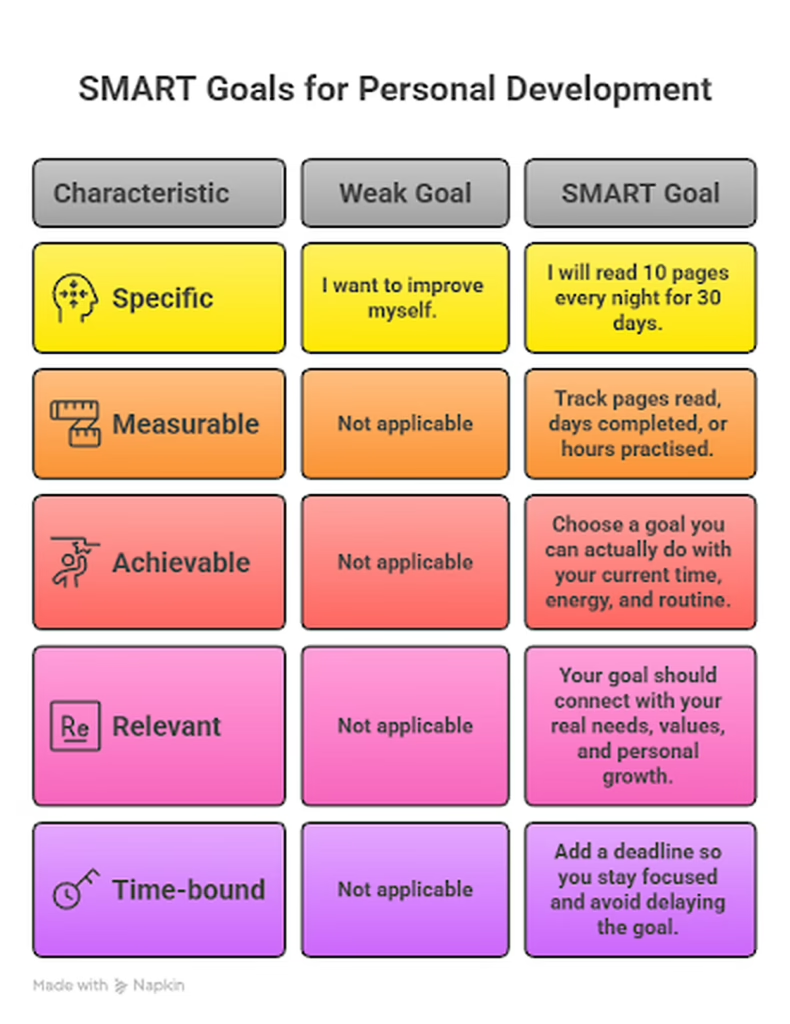
Weak Goal vs SMART Goal Examples
Weak goals often sound positive, but they are not clear enough to follow. In most cases, they describe what you want, but they do not explain what action you will take, how often you will do it, or when you want to complete it. Because of this, weak goals can quickly become forgotten.
On the other hand, a SMART goal gives you a clear direction. It tells you exactly what to do, how to measure your progress, and how long you will follow the goal. As a result, it becomes easier to stay focused and take action every day.
For example, saying “I want to be healthier” is a weak goal because it is too general. However, saying “I will walk 30 minutes a day, 5 days a week, for 8 weeks” gives you a clear plan. This way, you know the action, the time, and the deadline.
In short, a weak goal gives you emotion, but a SMART goal gives you direction.
Weak Goal | SMART Goal |
Become healthier. | Walk 30 minutes a day, 5 days a week, for 8 weeks. |
Manage time better. | Plan my top 3 tasks every morning for 30 days. |
Communicate more clearly. | Practise active listening in one conversation daily for 14 days. |
Learn more consistently. | Complete one online lesson every weekday for 4 weeks. |
5 examples of personal development goals
Personal development goals are goals that help you improve your daily life. They are pragmatic because they focus on real problems, real habits, and real growth. These goals are not only about becoming successful at work. They also help you become more confident, focused, calm, healthy, and self-aware.
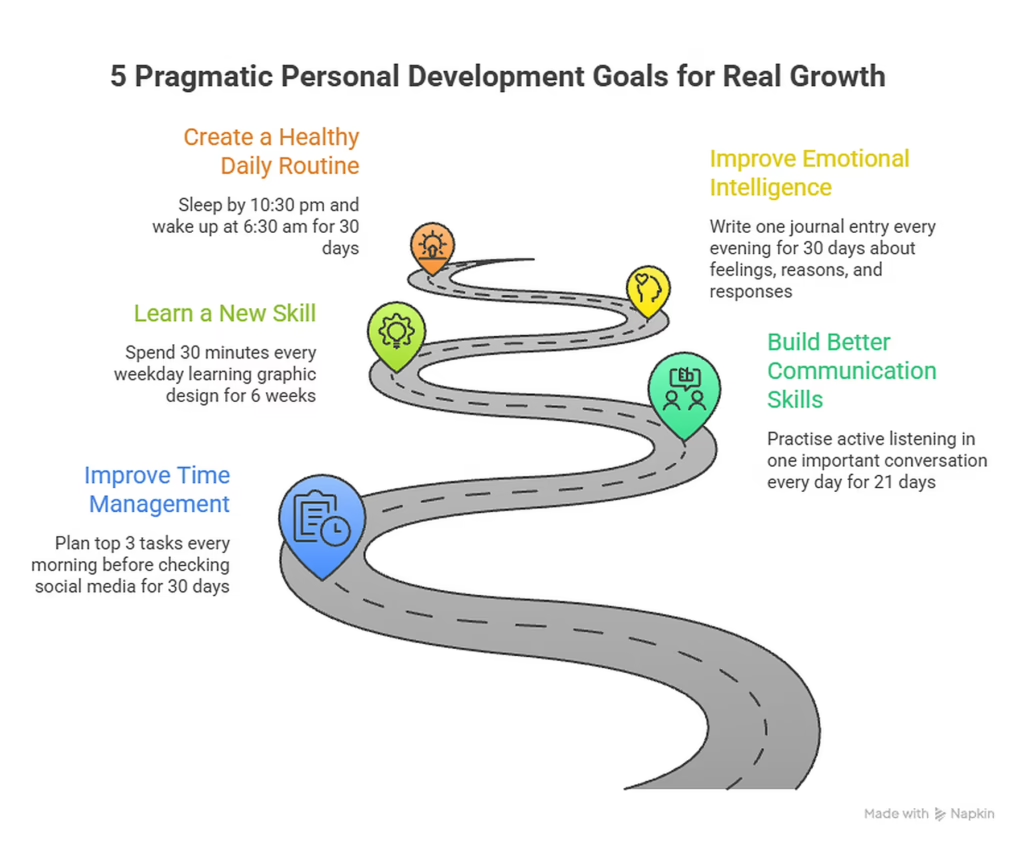
Here are five powerful examples of personal development goals that can help you grow in a simple and meaningful way.
- Improve time management
- Build better communication skills
- Learn a new skill
- Improve emotional intelligence
- Create a healthy daily routine
These goals are pragmatic because they touch real life. They help you work better, think better, feel better, and connect better.
Goal 1: Improve Time Management
Time management is one of the most useful personal development goals. Your time becomes your life, because what you do daily shapes your future. When you waste time every day, you slowly waste your energy, focus, and potential. But when you manage your time well, you feel more organised and less stressed.
A SMART example is: “I will plan my top 3 tasks every morning and work on them before checking social media for the next 30 days.”
This goal works because it is clear and easy to follow. You know what to do, when to do it, and how long to continue.
Daily action steps:
- Make a to-do list
- Choose your top 3 tasks
- Use a timer for focused work
- Avoid multitasking
- Review your day at night
You can measure progress by tracking tasks completed, focused hours, and distractions reduced.
Goal 2: Build Better Communication Skills
Good communication can improve almost every area of your life. It helps you share your thoughts clearly, avoid misunderstandings, and build stronger trust with others. Whether you are talking to family, friends, coworkers, or clients, better communication makes your relationships smoother.
A SMART example is: “I will practise active listening in one important conversation every day for 21 days.”
This goal is simple but powerful. It helps you become more present when someone is speaking. Good communication is not about talking more. It is about understanding better and connecting better.
Focus on:
- Active listening
- Clear speaking
- Better writing
- Asking better questions
- Reducing assumptions
You can start by listening without interrupting. Then ask questions if something is unclear. Over time, this habit can reduce confusion and improve your confidence in conversations.
Goal 3: Learn a New Skill
Learning a new skill is a great way to grow personally and professionally. It keeps your mind active and helps you feel more confident about your future. A new skill can improve your career, creativity, income, or personal happiness. It can also make life more exciting because you are always learning something fresh.
A SMART example is: “I will spend 30 minutes every weekday learning graphic design for the next 6 weeks.”
This goal is clear because it tells you what skill to learn, how often to practise, and how long to continue.
You can learn:
- Professional skills
- Creative skills
- Digital skills
- A new language
- Personal hobbies
Choose a skill that matches your life goals. Do not learn something only because it is popular. Choose something useful, meaningful, and realistic for you right now.
Goal 4: Improve Emotional Intelligence
Emotional intelligence means understanding your emotions and managing them in a healthy way. It also means understanding other people’s feelings. This goal is important because emotions affect your decisions, reactions, relationships, and stress levels.
A SMART example is: “I will write one journal entry every evening for 30 days about what I felt, why I felt it, and how I responded.”
This goal helps you become more aware of your thoughts and reactions. When you understand your emotions, they become easier to manage. You stop reacting too quickly and start responding with more calmness.
This goal helps with:
- Self-awareness
- Managing reactions
- Empathy
- Stress control
- Better relationships
You can improve emotional intelligence by journaling, pausing before replying, and noticing what triggers you. Over time, you become calmer and more balanced.
Goal 5: Create a Healthy Daily Routine
A healthy daily routine gives your life more stability. It helps your body and mind work better. When your routine is poor, you may feel tired, stressed, lazy, or unfocused. But when your routine is healthy, you have more energy and better control over your day.
A SMART example is: “I will sleep by 10:30 pm and wake up at 6:30 am for the next 30 days.”
This goal is simple and realistic. It focuses on one habit that can improve your energy, mood, and focus.
Focus on:
- Better sleep
- Regular exercise
- Journaling
- A simple morning routine
- A calm evening routine
- Stress management
You do not need a perfect routine. You only need a routine you can repeat. Start small, stay consistent, and improve one habit at a time.
7-day action plan for each goal
Starting a personal development goal can feel difficult when you do not know what to do first. A 7-day action plan gives you a simple starting point. Instead of trying to change everything at once, you follow one small step each day.
The aim is not to become perfect in one week. Your real goal is to build momentum. Small daily actions help you gain confidence, understand your habits, and stay consistent. When you complete one task each day, personal growth feels easier and more realistic.
Use the table below as a starter plan. Choose one goal first, follow the steps for seven days, and review your progress at the end of the week.
Goal |
7-Day Starter Plan |
Time management |
Track your time on the 1st day. Remove one distraction on the 2nd day. Pick your top 3 tasks on the 3rd day. Use a timer on the 4th day. Batch small tasks on the 5th day. Review your week on the 6th day. Plan next week on the 7th day. |
Communication |
Listen without interrupting on the 1st day. Ask one better question on the 2nd day. Speak more clearly on the 3rd day. Write a cleaner message on the 4th day. Notice body language on the 5th day. Summarise what someone said on the 6th day. Review one conversation on the 7th day. |
New skill |
Choose one skill on the 1st day. Find learning resources on the 2nd day. Study for 20 minutes on the 3rd day. Practise the skill on the 4th day. Take notes on the 5th day. Create something small on the 6th day. Review your progress on the 7th day. |
Emotional intelligence |
Name your emotions on the 1st day. Notice your triggers on the 2nd day. Pause before reacting on the 3rd day. Journal your thoughts on the 4th day. Practise empathy on the 5th day. Manage stress on the 6th day. Reflect on your progress on the 7th day. |
Healthy routine |
Fix your wake-up time on the 1st day. Drink more water on the 2nd day. Walk for 20 minutes on the 3rd day. Plan simple meals on the 4th day. Write in a journal on the 5th day. Sleep earlier on the 6th day. Review your energy on the 7th day. |
By the end of the week, check what worked, what felt difficult, and what you want to continue. This review helps you turn a short plan into a stronger habit.
How to Measure Progress for Each Goal
You improve what you measure. When you track your progress, you can see what is working and what needs to change. This makes personal development easier because you are not guessing. You are looking at real actions and real results.
But tracking should be simple. Do not try to measure everything at once. If you track too many things, you may feel tired and stop. Instead, choose a few clear metrics that show your real progress.
For example, if your goal is better time management, track tasks completed and hours focused. If your goal is a healthy routine, track workouts, sleep hours, and stress levels. The key is to measure the actions that matter most.
-
Tasks Completed
Tracking completed tasks helps you understand how productive you are. It shows whether you are finishing important work or just staying busy. At the end of each day, write down how many important tasks you completed. This helps you notice patterns and improve your daily planning.
-
Hours Focused
Focused hours show how much time you spend on meaningful work without distractions. You may work for many hours, but that does not always mean you are focused. Track the time you spend doing deep work, studying, planning, or practising a skill. This helps you reduce distractions and use your time better.
-
Books or Pages Read
If your goal is to learn or build knowledge, tracking books or pages read is useful. You do not need to read a full book quickly. Even 10 pages a day can create strong progress over time. By tracking pages, you can see your learning habit growing day by day.
-
Lessons Finished
If you are learning a new skill, track how many lessons you finish. This works well for online courses, training videos, language apps, or skill-based programmes. Completing lessons gives you a clear sign that you are moving forward. It also helps you stay motivated because you can see your progress clearly.
-
Workouts Completed
If your goal is health or fitness, track your completed workouts. This can include walking, stretching, gym sessions, yoga, or home exercise. You do not need to do long workouts every day. What matters most is consistency, because regular movement builds energy, discipline, and better health.
-
Journal Entries Written
Journal entries are helpful when your goal is emotional intelligence, self-awareness, or stress control. Writing your thoughts helps you understand your feelings better. You can track how many days you write in your journal each week. Over time, this habit can help you notice triggers, emotions, and personal growth.
-
Conversations Improved
If your goal is better communication, track conversations that went well. Ask yourself if you listened better, spoke more clearly, or avoided interrupting. You can also note when you asked better questions or reduced misunderstandings. This helps you become more aware of how you communicate with others.
-
Sleep Hours
Sleep hours are important if your goal is a healthier daily routine. Poor sleep can affect your mood, energy, focus, and decision-making. Track what time you sleep, what time you wake up, and how many hours you rest. This helps you build a better routine and understand what affects your energy.
-
Stress Level from 1 to 10
Tracking your stress level helps you understand your emotional health. Each day, rate your stress from 1 to 10, where 1 means very calm and 10 means very stressed. This simple score can show you what situations increase your stress. It also helps you see whether habits like journaling, walking, or breathing exercises are helping.
In the end, progress tracking should support you, not pressure you. Choose the metrics that match your goal. Keep them simple, review them weekly, and use them to make better decisions.
Personal Development Goal Tracker Template
A personal development goal tracker helps you stay clear, focused, and consistent. Most importantly, it gives you one simple place to write your goal, daily action, progress measure, and weekly review. As a result, growth becomes easier because you can see what you are doing and what needs improvement.
However, many people set goals but forget to track them. That is why they lose focus. In this case, a tracker helps you stay honest with yourself. It also reminds you that progress does not happen in one big step. Instead, it happens through small actions repeated daily.
To get started, use this template every week. Choose one or two goals first. Then, write your SMART target, take one daily action, and measure your progress. At the end of the week, answer the review question. This way, you can learn from your actions and improve your next week.
In addition, this is the kind of structure you can learn to build more deeply in a Life Coaching | Online Course.
Goal | SMART Target | Daily Action | Progress Metric | Weekly Review |
Time management | Plan top 3 tasks daily | Morning planning | Tasks completed | What distracted me? |
Communication | Practise listening daily | One focused talk | Better conversations | Did I interrupt less? |
Learn a skill | Study 30 minutes daily | Online lesson | Lessons completed | What did I learn? |
Emotional intelligence | Journal daily | Evening reflection | Entries written | What triggered me? |
Healthy routine | Sleep and exercise plan | Walk + sleep routine | Workouts/sleep | Did my energy improve? |
30-Day Personal Development Plan
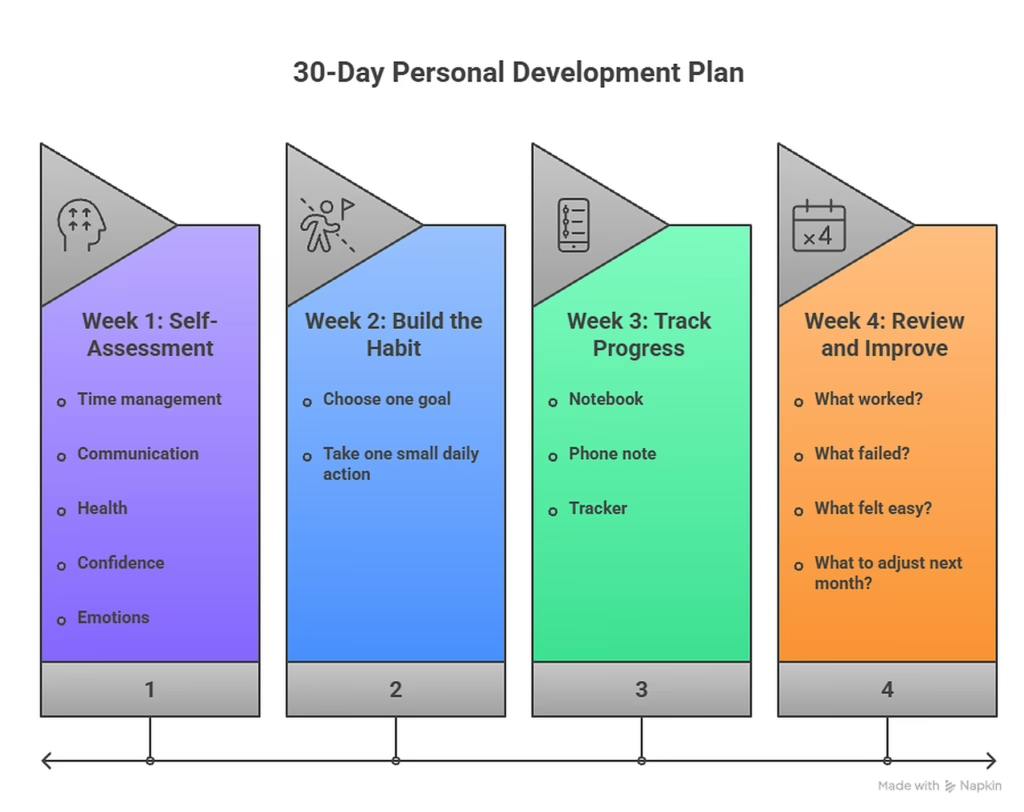
A 30-day personal development plan helps you turn your goal into daily action. It gives you a simple structure to follow for one month. This is useful because personal growth can feel confusing when you do not have a clear plan. With a 30-day plan, you know what to focus on each week.
You do not need to change your whole life in 30 days. The purpose is to start small, build consistency, and understand yourself better. When you repeat small actions every day, they slowly become habits. This is how real personal development begins.
-
Week 1: Self-Assessment
In the first week, look at your life honestly. Ask yourself what feels stuck, stressful, or unbalanced right now. Maybe you struggle with time management, communication, health, confidence, or emotions. This week is not about judging yourself; it is about understanding where you are. When you know your starting point, you can choose the right goal with more clarity.
-
Week 2: Build the Habit
In the second week, choose one personal development goal and take one small action every day. Do not try to work on five goals at the same time. If your goal is better time management, plan your top three tasks each morning. If your goal is better health, start with a short daily walk. Small actions are easier to repeat, and repetition helps the habit grow.
-
Week 3: Track Progress
In the third week, start tracking your progress. Use a simple notebook, phone note, or goal tracker. Measure your effort, not only the final result. For example, track how many days you practised, how many tasks you completed, or how many journal entries you wrote. Tracking helps you see your improvement and keeps you motivated.
-
Week 4: Review and Improve
In the fourth week, review what happened during the month. Ask yourself: Which actions worked? Where did you struggle? Which parts felt easy? Where did the plan feel difficult? Then decide what you should change next month. This step is important because personal development is not about doing everything perfectly. It is about learning, adjusting, and improving.
Small steps become powerful when you repeat them. A 30-day plan gives you a simple path to follow, but your consistency gives it real value. Start with one goal, stay patient, and keep moving forward.
Common Mistakes When Setting Personal Development Goals
Setting personal development goals is a powerful way to grow, but many people make mistakes that stop their progress. These mistakes are common, and they do not mean you are lazy or incapable. They usually happen because the goal is not clear, realistic, or easy to follow.
The good news is that you can avoid these mistakes with simple planning. When your goal is clear and your action steps are small, it becomes easier to stay consistent. Personal growth does not happen by changing everything overnight. It happens when you choose one goal, take steady action, and keep learning from your progress.
Setting Too Many Goals
One common mistake is setting too many goals at the same time. You may want to improve your health, career, confidence, communication, and routine all at once. But when you try to change everything, your mind can feel overwhelmed. It is better to start with one or two important goals first. Once those become easier, you can slowly add more.
Choosing Vague Goals
A vague goal sounds good, but it does not give you clear direction. For example, “I want to be better” is too general. It does not tell you what action to take or how to measure success. A better goal would be, “I will read 10 pages every night for 30 days.” Clear goals are easier to follow because you know exactly what to do.
Not Tracking Progress
Many people set goals but do not track their progress. Without tracking, it is hard to know whether you are improving or not. You may forget your small wins and feel like nothing is changing. A simple tracker can help you record daily actions, completed tasks, habits, or lessons learned. When you see progress, you feel more motivated to continue.
Setting Unrealistic Deadlines
Another mistake is setting deadlines that are too difficult. For example, trying to completely change your lifestyle in one week can create pressure and disappointment. A good deadline should challenge you, but it should still feel possible. Personal development takes time, so give yourself enough space to learn and adjust. Realistic deadlines help you stay committed without feeling defeated.
Copying Someone Else’s Goals
It is easy to copy goals from friends, influencers, or successful people. But their goals may not match your life, values, or current needs. A goal should solve your real problem, not someone else’s. Before choosing a goal, ask yourself, “Does this truly matter to me?” When your goal feels personal, you are more likely to stay consistent.
Giving Up Too Early
Many people give up when they do not see quick results. But personal growth often takes time before it becomes visible. You may not notice big changes in the first few days, but every small action still matters. Instead of quitting, review what is not working and make small changes. Progress becomes stronger when you keep going through the slow days.
The biggest mistake is trying to change everything at once. Start with one goal. Build trust with yourself. Then add more when you are ready. Personal development is not a race; it is a steady journey toward a better version of yourself.
Personal Development Goals for Different People
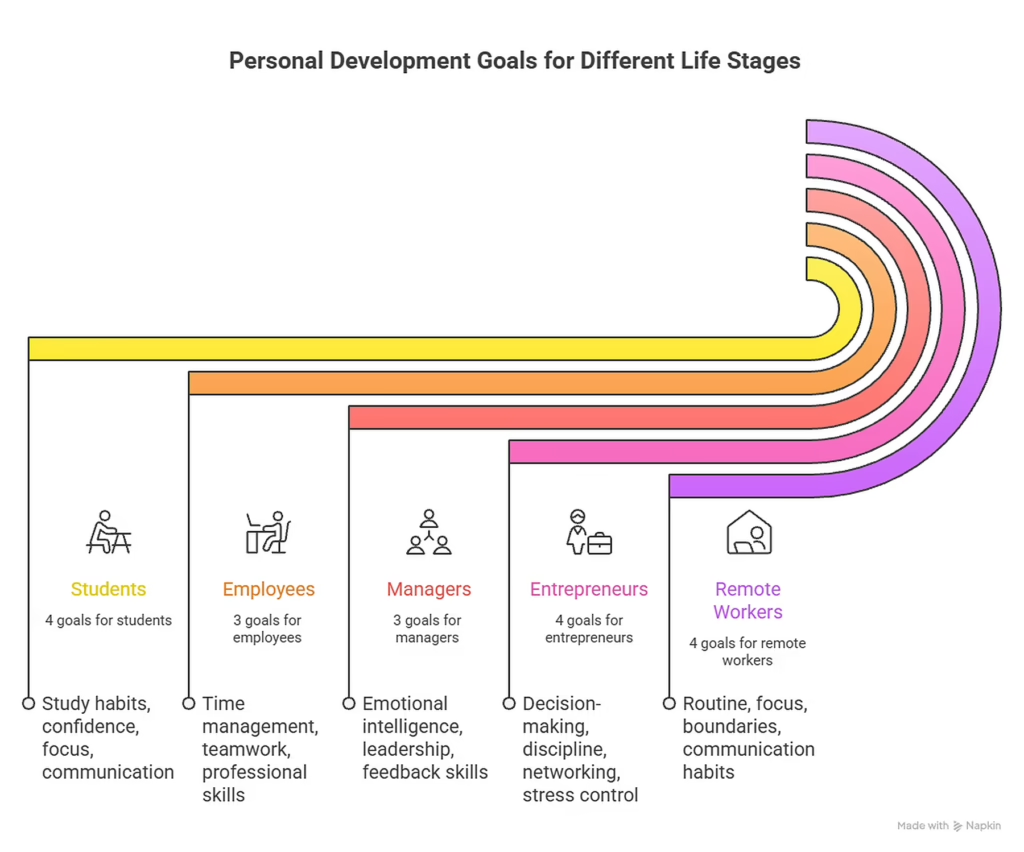
Different people need different personal development goals because every life stage has different challenges. For example, a student may need better focus, while a manager may need stronger leadership skills. Similarly, an entrepreneur may need discipline and decision-making, while a remote worker may need better boundaries.
That is why you should not copy someone else’s goals blindly. Your goal should match your current situation, responsibilities, and future plans. When your goal fits your season of life, it becomes more useful and easier to follow.
Students: Build Study Habits, Confidence, Focus, and Communication
Students can benefit from personal development goals that improve learning and confidence. First, good study habits help them manage assignments, exams, and daily responsibilities better. In addition, focus is important because distractions can make studying harder. Finally, communication skills help students ask questions, take part in discussions, and build better relationships with teachers and classmates.
Employees: Improve Time Management, Teamwork, and Professional Skills
Employees often need goals that help them perform better at work. For instance, time management helps them complete tasks on time and reduce stress. Also, teamwork is important because most workplaces depend on cooperation and clear communication. As a result, learning professional skills can help employees grow in their careers and become more valuable at work.
Managers: Build Emotional Intelligence, Leadership, and Feedback Skills
Managers need personal development goals that help them lead people well. To begin with, emotional intelligence helps them understand their own reactions and the feelings of their team members. Moreover, strong leadership helps them guide people with confidence and fairness. At the same time, feedback skills are important because managers must correct, support, and motivate others in a respectful way.
Entrepreneurs: Improve Decision-Making, Discipline, Networking, and Stress Control
Entrepreneurs face many challenges, so their personal development goals should build inner strength. For example, good decision-making helps them choose the right direction for their business. Meanwhile, discipline helps them stay consistent even when results are slow. In addition, networking helps them build useful relationships, while stress control helps them stay calm under pressure.
Remote Workers: Build Routine, Focus, Boundaries, and Communication Habits
Remote workers need goals that help them stay productive without a traditional office structure. First, a daily routine helps them start and end work at the right time. Next, focus is important because home distractions can easily interrupt deep work. Also, boundaries help them separate work life from personal life. Finally, good communication habits keep them connected with their team.
Overall, your life stage matters. Your goal should fit your season. When you choose a goal that matches your real needs, personal development becomes more useful, meaningful, and easier to maintain.
Mini Self-Assessment Quiz
A mini self-assessment quiz helps you understand which personal development goal is right for you. Sometimes, people choose goals because they sound popular or impressive. However, the best goal is the one that matches your real life, your current problem, and your future needs.
Before you set a goal, take a few minutes to answer these questions honestly. Do not rush. Remember, there are no right or wrong answers. The main purpose is to understand yourself better.
Ask yourself:
- Which problem keeps repeating in my life?
- Do I struggle more with time, emotions, health, skills, or communication?
- Which goal would make my next 90 days easier?
- Is there a habit I keep avoiding?
- How do people usually describe my biggest improvement area?
- Which skill would help my future?
- Can I start one small action today?
- Am I choosing this goal for myself or to impress others?
After that, your answers will show you where you need to focus first. For example, missing deadlines may show that time management should be your first goal. Poor listening feedback may point to communication as your improvement area. Similarly, low energy and poor focus may mean a healthy daily routine is the right place to start.
In addition, this quiz helps you avoid copying someone else’s goals. Your personal development journey should match your own life. After all, a goal that works for another person may not be useful for you right now.
Finally, choose one goal that feels most important. Then, turn it into a SMART goal and take one small daily action. As a result, personal growth becomes easier when you know what you truly need to improve.
Final Thought
Personal development is not about becoming perfect. It is about becoming more aware, more disciplined, and more honest with yourself.
Start with one goal. Make it SMART. Track it daily. Review it weekly. Improve slowly.
And if you want guided support, our Life Coaching | Online Course can help you understand goal setting, mindset, habit building, communication, emotional intelligence, and coaching tools in a structured way.
Your future does not change because you think about growth. It changes when you practise it.

Frequently Asked Questions
What are 5 personal development goals?
Five personal development goals are improving time management, building better communication skills, learning a new skill, improving emotional intelligence, and creating a healthy daily routine. These goals improve your confidence, productivity, relationships, health, mindset, and career growth.
What is a good personal development goal?
A good personal development goal is clear, realistic, and useful for your life. For example, “I will walk 30 minutes a day, 5 days a week, for 8 weeks” is better than “I want to be healthy.”
What are personal development goals for work?
Personal development goals for work include better time management, stronger communication, emotional intelligence, leadership, problem-solving, confidence, and learning new professional skills. These goals help you perform better and build stronger workplace relationships.
What is a SMART personal development goal?
A SMART personal development goal is Specific, Measurable, Achievable, Relevant, and Time-bound. For example, “I will read 10 pages every night for 30 days” is SMART because it is clear, trackable, realistic, useful, and has a deadline.
How do I choose a personal development goal?
Choose a personal development goal by looking at your current challenge. Time management is the best first goal for people who procrastinate. Emotional intelligence can help people who feel stressed. Learning a new skill is a smart choice for anyone who feels stuck in their career.
How do I track personal development goals?
Track personal development goals with a simple table or journal. Record daily actions, progress metrics, and weekly lessons. You can track tasks completed, hours focused, workouts, pages read, journal entries, or improved conversations.
How often should I review my personal development goals?
You should review your personal development goals at least once a week. A weekly review helps you see what worked, what did not work, and what needs to change. It also keeps you focused. You can check your progress, adjust your actions, and plan the next week better.
Can personal development goals improve my career?
Yes, personal development goals can improve your career because they help you build useful habits and skills. Goals like better communication, time management, confidence, leadership, and emotional intelligence can make you more effective at work. When you improve yourself, your work performance and career opportunities often improve too.
How many personal development goals should I set at once?
It is better to start with one or two personal development goals at a time. If you set too many goals, you may feel overwhelmed and lose focus. Start small, build consistency, and track your progress. Once the first goal becomes easier, you can add another goal.
 " alt="The 6 Principles of Safeguarding: Protect Before Harm Happens" />
 " alt="TILE in Manual Handling: Meaning, Checklist & Safer Lifting Guide" />