

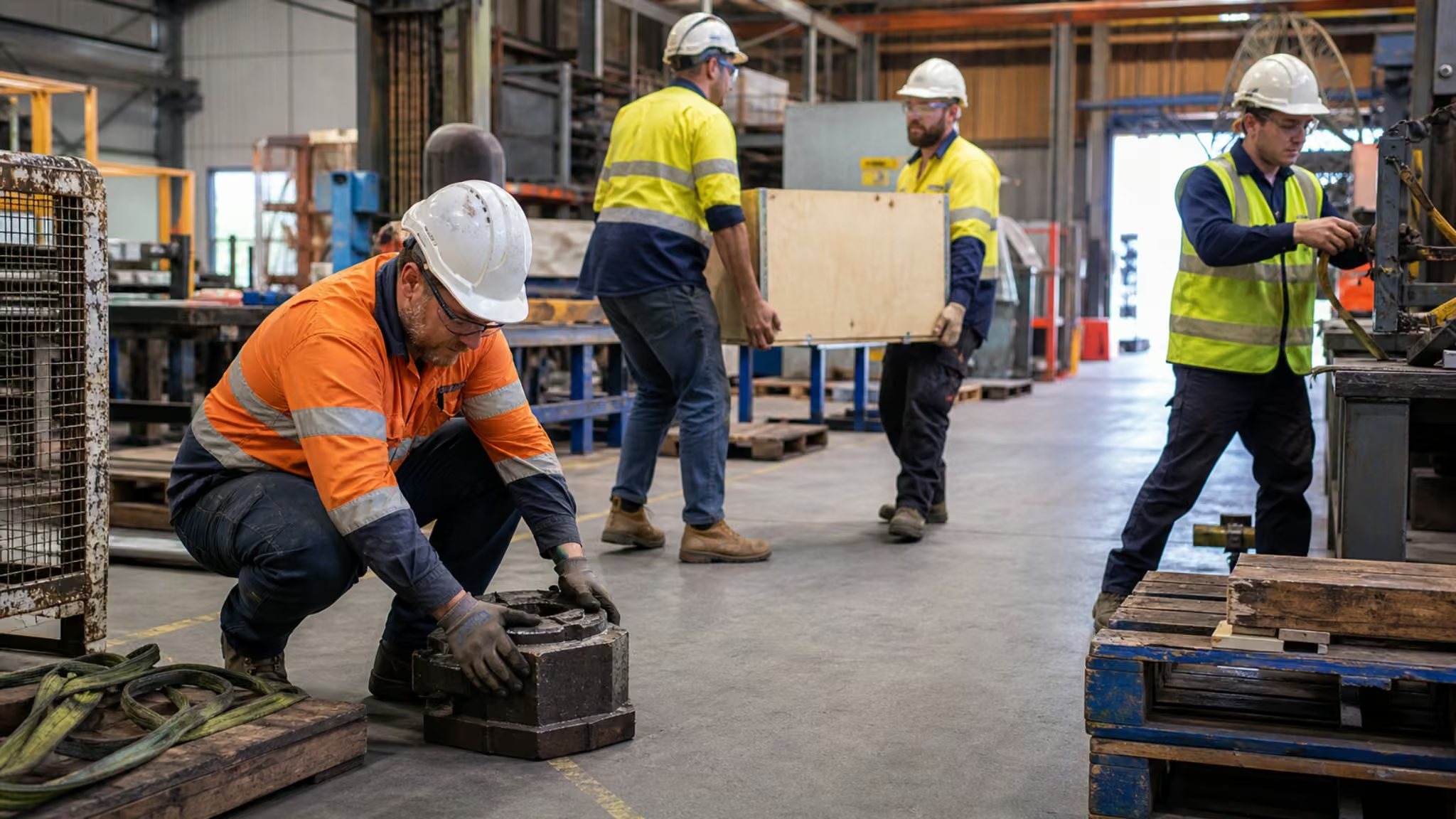
Have you ever looked at a box, trolley, patient, tool, or stack of materials and thought, “It looks manageable… but is it actually safe to move?” That small pause can prevent a serious injury. The Manual Handling Level 2 course helps workers and employers understand the TILE method before lifting, carrying, pushing, pulling, or team handling.
Manual handling is still a major workplace safety issue. In Great Britain, HSE reported 511,000 workers suffering from work-related musculoskeletal disorders (muscle, joint, and back problems) in 2024/25, and 40.1 million working days lost due to work-related illness and workplace injury. That is why a simple risk-thinking tool like TILE in Manual Handling matters.
In this guide, you will learn what TILE means, how to use it in real work situations, when it is not enough, and how it connects with legal duties, checklists, risk assessment tools, and training. You will also see practical examples you can apply before a lift, move, push, pull, or team task. Want to reduce manual handling risks with confidence? Start learning today with Manual Handling Level 2 and learn how to spot hazards before they become injuries.
This Guide Covers
- What Does TILE Stand For in Manual Handling?
- Why TILE Is Important for Manual Handling Safety
- Task: What Is Being Done?
- Individual: Who Is Doing the Handling?
- Load: What Is Being Moved?
- Environment: Where Is the Task Happening?
- TILE Manual Handling Example
- Completed TILE Risk Assessment Table
- TILE Manual Handling Checklist Before You Lift
- TILE vs LITE vs TILEO
- What Are “Other Factors” in TILEO?
- Is There a Legal Weight Limit for Manual Handling?
- TILE vs MAC, RAPP, ART and V-MAC Tools
- When Is a Basic TILE Check Not Enough?
- Using TILE for pushing, pulling and team lifting
- TILE and Team Lifting Risks
- Common TILE Manual Handling Mistakes
- How to Reduce Risk After a TILE Assessment
- TILE Examples by Industry
- Employer and Employee Responsibilities
- When Should a TILE Assessment Be Reviewed?
- Manual Handling Training and TILE
What Does TILE Stand For in Manual Handling?
TILE stands for Task, Individual, Load, and Environment. Workers use TILE as a simple manual handling method to think about safety before they move anything. Manual handling does not only mean lifting heavy boxes. It can also include lowering, carrying, pushing, pulling, holding, or moving a load by hand or body force.
The main purpose of TILE is to help workers spot risks before an injury happens. It gives you four easy questions to ask before starting the job.
First, think about the Task. What exactly does the worker need to do? Will you need to bend, twist, reach, carry the load far, or repeat the same movement many times?
Next, think about the Individual. Who is doing the handling? Have they received training? Can they manage the task safely? Are they tired, injured, pregnant, or unsure about how to move the load safely?
Then look at the Load. What will the worker move? Is it heavy, large, sharp, unstable, hot, cold, slippery, or difficult to grip?
Finally, check the Environment. Where will the worker complete the task? Check whether the floor is wet. Make sure there is enough space. Is the lighting good? Are there stairs, obstacles, or uneven surfaces?
Think of TILE as a quick safety conversation before you move something. Instead of guessing, you stop and check. These four simple areas help you understand the risk clearly and choose a safer way to lift, carry, push, or pull.
Why TILE Is Important for Manual Handling Safety
TILE is important because manual handling injuries often happen slowly, not suddenly. Most people do not get hurt because they are careless. They get hurt because workers or employers miss small risks. A worker may bend too far. Workers may struggle to hold the load. Wet floors can increase slip risks. Boxes, tools, pallets, or equipment may block the route. Repeated lifting can strain the body.
This is why TILE in manual handling is so useful. It helps workers stop for a moment and check the risk before they lift, carry, push, or pull anything. Instead of guessing, they look at the Task, Individual, Load, and Environment.
The statistics show why this matters. According to HSE, 511,000 workers in Great Britain suffered from work-related musculoskeletal disorders (muscle, joint, and back problems) in 2024/25. These include problems such as back pain, joint pain, and muscle strain. HSE also reported that 40.1 million working days were lost because of work-related illness and workplace injury in the same period. These muscle, joint, and back problems alone caused 7.1 million lost working days.
For employers, TILE also supports legal safety duties. If employers cannot avoid unsafe manual handling, they must assess the risk. and reduce it as much as reasonably possible. For workers, TILE gives a clear and simple way to speak up before a task becomes unsafe.
TILE helps prevent injuries before they happen. It turns a risky moment into a safer decision.
Task: What Is Being Done?
The first part of TILE is Task. This means looking closely at the job before anyone starts moving the load. It is not enough to ask, “Can I lift this?” A better question is, “What will my body need to do while lifting, carrying, pushing, or pulling this?”
Some tasks are simple. For example, picking up a small box from waist height and placing it on a nearby table may be low risk. But the risk increases when the movement becomes awkward. Lifting from the floor, reaching above shoulder height, twisting the back, carrying something a long distance, or repeating the same movement many times can all put stress on the body.
A safe task allows the worker to stay balanced and in control. Keep the load close to the body. Clear the route first. Do not make the worker rush, stretch too far, or bend for too long.
This is why workers must check the task before the work begins. Even a light object can become risky if the movement is poor. For example, lifting a small box once may be fine. Lifting it 100 times in a busy shift may cause pain or injury.
So before starting, ask:
- Can workers avoid this lift?
- Could the workers move the load a shorter distance?
- Would a trolley, hoist, or lifting aid help?
- Can we change the task to make it safer?
Small changes in the task can prevent big injuries.
Individual: Who Is Doing the Handling?
The second part of TILE is Individual. This means checking the person who will do the manual handling task. This is important because every worker is different. People do not all have the same strength, height, fitness, experience, or confidence.
A task that feels easy for one person may be unsafe for another. For example, a tall worker may find it easier to lift something from a high shelf, while a shorter worker may need to stretch. A trained worker may know how to move a load safely, while a new worker may not understand the risk. Someone who is tired, injured, pregnant, or has a health condition may also be at higher risk.
This is why never treat manual handling as a “one size fits all” task. Match the job to the person, not the other way around. If a worker feels unsure, weak, tired, or uncomfortable, that is a warning sign. It does not mean they are lazy. It means a supervisor or worker needs to check the task again.
Before starting, ask simple questions:
- Has the employer trained the person?
- Do they understand the task?
- Are they physically able to do it safely?
- Are they tired, stressed, or injured?
- Do they need help or equipment?
- Do they feel safe doing the task?
The Individual part of TILE reminds us that safety starts with the person. When employers support workers properly, they lower the risk of manual handling injuries.
Load: What Is Being Moved?
The third part of TILE is Load. This means checking the object, person, animal, or material that someone needs to move. Many people think the load is only about weight, but that is not true. Weight is important, but it is only one part of the risk.
A load can be light and still be unsafe to move. For example, a large empty box may not weigh much, but it may block your view. A small container may be light, but it could be slippery, sharp, hot, cold, or difficult to hold. A bag of materials may feel manageable at first, but if the weight moves around inside, it can suddenly become harder to control.
This is why workers must always check the load before manual handling starts. HSE advises workers and employers to consider both the weight and the nature of the load, including whether it is hot, sharp, slippery, unstable, or hard to grip.
Before moving anything, ask:
- Is the load too heavy?
- Is it large or awkward in shape?
- Is the weight balanced or uneven?
- Can I see clearly while carrying it?
- Are there proper handles or grip points?
- Is it sharp, hot, cold, wet, or slippery?
- Can it break, spill, or move suddenly?
- Can workers split it into smaller loads?
Workers can hold a safer load easily, keep it stable, and keep it close to the body.If the load feels awkward, use a trolley, lifting aid, or team support. In some cases, the safest choice is to reduce the size of the load before moving it.
The key point is simple: do not judge a load by weight alone. Look at the whole load before you lift.
Environment: Where Is the Task Happening?
The fourth part of TILE is Environment. This means looking at the place where the manual handling task will happen. The area around the worker can make a big difference to safety. Even if the load is not too heavy, the task can still become dangerous if the environment is poor.
For example, lifting a box in a clean and open storeroom may be simple. But the same lift can become risky in a narrow corridor, on a staircase, in a dark room, or on a wet floor. If the worker cannot stand properly, move freely, or see clearly, the chance of injury becomes higher.
Before moving anything, look around the work area. Is there enough space to lift and turn safely? Is the floor dry and even? Are there cables, boxes, tools, or other objects in the way? Is the lighting bright enough? Are there doors, steps, slopes, or tight corners on the route?
Temperature can also matter. A very hot workplace can make workers tired quickly. A very cold area can make hands stiff and reduce grip. Outdoor work can add extra risks such as rain, wind, mud, or uneven ground.
Before starting the task, ask:
- Is the route clear?
- Check that there is enough space to move safely.
- Make sure the floor is dry, clean, and level.
- Is the lighting good enough?
- Are there stairs, slopes, or tight spaces?
- Are there people, vehicles, or equipment nearby?
- Can the team change the layout to make the task safer?
Design the environment to support safe movement, not make it harder. A simple step like clearing the walkway, drying the floor, opening a door, or improving lighting can prevent an injury. In manual handling, where the task happens is just as important as what is being moved.
TILE Manual Handling Example
Imagine a warehouse worker needs to move a 20 kg box from a low shelf to a delivery pallet. At first, this may look like a normal daily task. But when we use the TILE method, we can see several risks that workers must control before starting.
- Task:
The worker has to bend down to reach the box, lift it from a low position, turn their body, and carry it to the pallet. These movements can put pressure on the back, shoulders, and knees. If the worker twists while holding the box, the risk becomes higher. The task becomes even more dangerous if the worker repeats it many times during the shift. - Individual:
The worker may be trained and experienced, but that does not remove all risk. If they are tired near the end of the day, their body may not move as safely as it did at the start of the shift. Fatigue can reduce focus, balance, and strength. If the worker has a previous injury or feels unsure, they may need help or equipment. - Load:
The box weighs 20 kg, so it may be difficult for some workers to lift safely. It also has no handles, which makes it harder to grip and control. If the weight inside the box is uneven, the load could shift while being carried. This can cause the worker to lose balance or strain their muscles. - Environment:
The aisle is narrow, so the worker does not have much space to move freely. Another pallet is blocking part of the route, which may force the worker to twist, step around it, or carry the box further than needed. Poor space can make even a simple lift unsafe. Clear the route before the task begins.
A safer method would be to raise the box to waist height before lifting, so the worker does not need to bend deeply. Use a trolley or pallet truck to reduce carrying distance. Clear the blocked aisle, and share or rotate the task if it happens often. If the box feels too heavy or awkward, the worker should ask for help instead of forcing the lift.
Completed TILE Risk Assessment Table
A TILE risk assessment table helps you turn your safety check into clear action. It does not need to be long or complicated. The aim is to look at the task, spot the risk, and decide what workers can do to make the job safer.
In this example, a worker is moving a 20 kg box from a low shelf to a delivery pallet. At first, it may seem like a normal lifting job. But when we look at it using TILE, we can see a few risks. The worker may need to bend, twist, carry a heavy box, and move through a blocked aisle. These small issues can increase the chance of back pain, muscle strain, slips, or loss of balance.
The table below shows how workers can check each TILE factor. It also shows simple safety steps that can reduce the risk. This is the real value of TILE. It helps workers and employers move from “What could go wrong?” to “What can we do to make it safer?”
TILE Factor | Risk Found | Safer Control |
Task | The worker has to bend and twist when lifting from a low shelf. | Raise the storage height where possible and encourage the worker to turn their feet instead of twisting their back. |
Individual | The worker may be tired, especially near the end of a shift. | Rotate tasks, allow short breaks, and check whether the worker needs support. |
Load | The box weighs 20 kg and has no handles. | Use smaller boxes, reduce the load weight, or add safe grip points. |
Environment | Another pallet blocks the aisle. | Clear the route before moving the box and keep walkways free from obstacles. |
The best TILE assessment is simple, honest, and easy for workers to use.
TILE Manual Handling Checklist Before You Lift
Before you lift anything, take a moment to pause and check the situation. This short checklist can help you avoid strain, back pain, slips, and other manual handling injuries. It also makes the TILE method easier to use in real work, because it turns safety thinking into a simple daily habit.
- Can the lift be avoided?
The safest lift is often the one you do not need to do. Before lifting, ask whether workers can move the load another way. A trolley, pallet truck, hoist, conveyor, or delivery change may remove the need for manual lifting. If workers can avoid the task, they reduce the risk straight away. - Do I know where the load is going?
Never lift first and decide later. You should know exactly where you need to place the load before you pick it up. This helps you plan your movement and avoid walking around while holding the load. It also reduces the chance of twisting, dropping the item, or making sudden movements. - Is the route clear?
Check the path before you move. Look for boxes, cables, wet floors, steps, doors, people, or vehicles in the way. A blocked route can make you stop suddenly or move awkwardly while carrying the load. Clearing the route first makes the whole task safer and easier. - Can I hold the load safely?
Look at the shape, surface, and grip points of the load. If it is slippery, sharp, hot, unstable, or has no handles, it may be hard to control. A poor grip can cause the load to slip or pull your body into an unsafe position. If you cannot hold it properly, use equipment or ask for help. - Is it too heavy or awkward?
Do not judge the load by weight alone. A light item can still be risky if it is large, unbalanced, or blocks your view. If the load feels too heavy, too wide, or difficult to control, do not force the lift. You may need to split it into smaller parts or move it with a lifting aid.
- Do I need a trolley, hoist, or second person?
Some tasks are not safe for one person to handle alone. If the load is heavy, bulky, or difficult to carry, using equipment can make the job much safer. A second person may also help, but only if the team plans the lift properly. The goal is not to prove strength; the goal is to move the load safely.
- Am I twisting, reaching, or rushing?
Twisting, overreaching, and rushing are common causes of manual handling injuries. Try to keep the load close to your body and move your feet instead of twisting your back. Do not stretch above shoulder height or bend for too long. If you feel rushed, pause and reset the task before continuing.
This simple checklist supports the Manual Handling Level 2 course because it helps learners use TILE in real situations. It is not just theory. It is a practical habit that can protect workers every day.
TILE vs LITE vs TILEO
In manual handling training, you may hear three similar terms: TILE, LITE, and TILEO. These terms can feel confusing at first, but workers and employers use them for the same main purpose. They help workers and employers think about manual handling risks before lifting, carrying, pushing, pulling, or moving a load.
The main difference is the word order and whether the method includes “Other factors.” TILE and LITE use the same four areas, but in a different order. TILEO adds one extra area to help cover risks that do not fit neatly into Task, Individual, Load, or Environment.
- TILE: Task, Individual, Load, Environment
TILE is one of the most common ways to remember manual handling risk factors. It starts by looking at the task, then the person, the load, and the place where the task happens. This method is easy to follow because it looks at the whole situation step by step. It helps workers stop and ask the right questions before they move anything. - LITE: Load, Individual, Task, Environment
LITE uses the same four key areas as TILE, but the order is different. It starts with the load first, which can be useful when the main concern is weight, size, shape, or grip. For example, if a box is heavy, unstable, or hard to hold, LITE helps you focus on that risk straight away. Even though the order changes, the safety message is still the same. - TILEO: Task, Individual, Load, Environment, Other factors
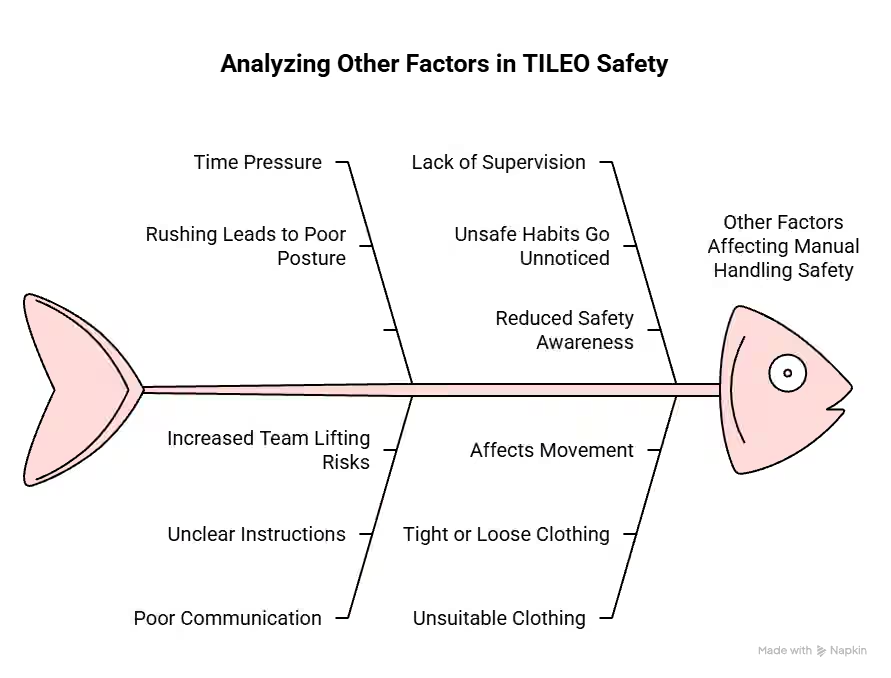
TILEO adds “Other factors” to the standard TILE method. This is useful because some risks do not fit perfectly into the first four areas. These may include time pressure, poor communication, unsuitable clothing, lack of supervision, or stress. TILEO gives a wider view of the task and helps make the assessment more complete.
Term | Full Meaning | Main Focus | When It Is Useful |
TILE | Task, Individual, Load, Environment | Looks at the full manual handling situation | Useful for general manual handling risk checks |
LITE | Load, Individual, Task, Environment | Uses the same areas but starts with the load | Useful when the load itself is the biggest concern |
TILEO | Task, Individual, Load, Environment, Other factors | Adds extra risks that may affect safety | Useful for more detailed manual handling safety checks |
The order may change, but the aim stays the same: spot the risk before someone gets hurt.
What Are “Other Factors” in TILEO?
In TILEO, the letter “O” stands for Other factors. These are extra things that may affect manual handling safety but may not fit clearly under Task, Individual, Load, or Environment. This is why TILEO gives a fuller picture of the risk.
Other factors can include time pressure, poor communication, lack of supervision, unsuitable clothing, personal protective equipment, vibration, stress, distractions, or poor planning. These may seem small, but they can make a manual handling task much more dangerous.
- Time pressure
Time pressure can make workers rush the task. When people hurry, they may lift too much, skip checks, or use poor posture. A job that could be safe with enough time can become risky when someone feels pushed to finish quickly. Managers should give workers enough time to move loads safely. - Poor communication
Poor communication is a big risk, especially during team lifting. If workers do not agree on when to lift, move, stop, or lower the load, someone may take more weight than expected. This can lead to strain, dropped loads, or loss of balance. Give clear instructions before the task starts. - Lack of supervision
Without proper supervision, unsafe manual handling habits can continue unnoticed. New or inexperienced workers may not know the safest way to move a load. They may also be afraid to ask for help. Good supervision helps workers follow safe systems. - Unsuitable clothing
Clothing can affect how safely a person moves. Loose clothing may get caught on equipment or objects. Tight clothing may limit movement and make bending or lifting harder. Workers should wear clothing that allows safe and comfortable movement. - Personal protective equipment
PPE can protect workers, but it can also affect manual handling if it is not suitable. For example, gloves may protect the hands but reduce grip if they are too thick or slippery. Safety boots may protect the feet but should still allow stable movement. PPE should fit properly and support the task. - Vibration
Vibration can make manual handling harder on the body. Workers who use vibrating tools or equipment may experience tired hands, reduced grip, or muscle fatigue. This can make lifting or carrying more difficult afterward. Breaks, task rotation, and suitable tools can help reduce the risk. - Stress
Stress can affect focus, judgement, and body movement. A stressed worker may rush, forget safety steps, or ignore warning signs from their body. Stress can also make people less likely to ask for help. A calm and well-managed workplace supports safer manual handling. - Distractions
Distractions can cause workers to lose focus during a manual handling task. A phone, noise, people walking nearby, or sudden interruptions can lead to mistakes. Even a short distraction while carrying a load can cause slips, trips, or dropped items. Workers should stay focused until the task is complete. - Poor planning
Poor planning often leads to unsafe manual handling. If the route is blocked, equipment is missing, or workers do not know the plan, the task becomes harder and more dangerous. Plan the task before anyone moves the load. A clear plan saves time and reduces risk.
For example, a worker may wear gloves to protect their hands. But if the gloves are too thick or slippery, they may reduce grip and make the load harder to hold. This increases the chance of dropping the load or straining the body.
Time pressure is another common factor. If workers are rushing to meet a deadline, they may skip safety checks, carry too much at once, or move in an awkward way. A task that could be safe with proper planning may become risky when people feel hurried.
Communication is also important, especially during team lifting. If workers cannot hear each other because the area is noisy, they may lift or lower the load at different times. This can cause one person to take more weight than expected.
Poor planning can also create problems. If workers do not check the route, prepare the equipment, or choose a task leader, the risk increases.
The “Other factors” part of TILEO reminds us that real workplaces are not always simple. Manual handling safety is not only about the load or the person lifting it. It is about the whole situation. By checking these extra factors, workers and employers can make better decisions and reduce the chance of injury.
Is There a Legal Weight Limit for Manual Handling?
No, there is no single legal weight limit for manual handling in the UK. This means the law does not say that a worker can only lift a certain number of kilograms. HSE explains that the weight of the load is important, but there is no fixed legal maximum weight for lifting, carrying, pushing, or pulling.
This surprises many people because they expect a simple number. But manual handling safety is not that simple. A load may be safe in one situation and unsafe in another. It depends on the full task.
For example, a 10 kg box may seem light. But it can become risky if a worker has to lift it from the floor, twist while carrying it, or move it again and again during a long shift. On the other hand, a heavier load may be safer if it is moved with a trolley, hoist, or other lifting equipment.
This is why TILE is so useful. It helps you look beyond the weight. You need to think about the Task, Individual, Load, and Environment. Who is doing the lifting? How far will the load be carried? Check whether the load is awkward. Look at the floor condition. Has the worker been trained?
So, the better question is not only, “How heavy is it?” The better question is, “Is the whole job safe?”
A safe manual handling decision should always look at the full situation, not just the number on the load.
TILE vs MAC, RAPP, ART and V-MAC Tools
TILE is a simple way to check manual handling risks before work starts. It helps workers think about the Task, Individual, Load, and Environment. This is useful for everyday manual handling tasks. However, some jobs are more complex and need a more detailed assessment.
HSE provides different tools for different types of manual handling work. These tools help employers look more closely at the level of risk. They are especially useful when the task is heavy, repeated often, difficult to control, or already causing pain or complaints.
- TILE
TILE is a quick risk-checking method. It helps workers and employers think about the main things that can make manual handling unsafe. It is easy to remember and simple to use before lifting, carrying, pushing, or pulling. TILE is best for everyday awareness and basic manual handling checks. - MAC Tool
MAC stands for Manual Handling Assessment Charts. It is used for lifting, carrying, and team handling tasks. This tool gives a more detailed look at risk factors such as weight, posture, grip, distance, and frequency. It is useful when a task is too risky or too complex for a basic TILE check. - RAPP Tool
RAPP stands for Risk Assessment of Pushing and Pulling. It is used when workers push or pull loads, such as trolleys, cages, pallet trucks, or wheeled equipment. It looks at things like force, floor condition, wheels, slopes, and distance. This tool is helpful because pushing and pulling can still cause strain, even when no lifting is involved. - ART Tool
ART stands for Assessment of Repetitive Tasks. It is used for jobs that involve repeated movements of the arms, hands, shoulders, or upper body. These tasks may not involve heavy loads, but they can still cause pain over time. ART is useful in workplaces where workers repeat the same movement many times during a shift. - V-MAC Tool
V-MAC stands for Variable Manual Handling Assessment Chart. It is used when manual handling tasks involve loads of different weights. This can happen in delivery, warehousing, retail, manufacturing, or parcel handling. V-MAC helps assess tasks where the weight changes too often for a simple one-load assessment.
Tool | Full Name | Best Used For | Main Purpose |
TILE | Task, Individual, Load, Environment | Everyday manual handling checks | To quickly spot basic risks before handling |
MAC | Manual Handling Assessment Charts | Lifting, carrying, and team handling | To assess higher-risk lifting and carrying tasks |
RAPP | Risk Assessment of Pushing and Pulling | Trolleys, cages, carts, and wheeled loads | To assess pushing and pulling risks |
ART | Assessment of Repetitive Tasks | Repeated hand, arm, or upper-body movements | To assess repetitive strain risks |
V-MAC | Variable Manual Handling Assessment Chart | Tasks with changing load weights | To assess manual handling where loads vary |
In simple words, use TILE for quick safety thinking. Use MAC, RAPP, ART, or V-MAC when the task needs a deeper and more detailed risk assessment.
When Is a Basic TILE Check Not Enough?
A basic TILE check is useful for spotting simple manual handling risks. It helps workers think about the Task, Individual, Load, and Environment before they lift, carry, push, or pull. But sometimes a quick check is not enough. If the task is more risky, more detailed assessment may be needed.
HSE explains that some low-risk manual handling tasks may not need a formal written assessment. However, higher-risk tasks may need more detailed tools, checklists, and safety steps. This helps employers understand the risk properly and choose safer ways of working.
- The task is repeated many times.
Repeating the same movement again and again can put stress on the body. Even a light load can cause pain if it is lifted or moved hundreds of times in one shift. Workers may start safely but become tired as the task continues. In this case, a deeper assessment is needed to look at repetition, rest breaks, task rotation, and better equipment. - Loads are heavy or unstable.
A heavy load can increase the risk of back, shoulder, and arm injuries. An unstable load can move suddenly and make the worker lose balance. This is especially risky if the load has no handles or the weight is uneven. A detailed assessment can help decide whether the load should be split, secured, or moved with lifting equipment. - Workers report pain or fatigue.
Pain and fatigue are warning signs that should never be ignored. If workers say they feel sore, tired, or uncomfortable after a task, the work may not be safe. Fatigue can also make people lose focus and use poor posture. A proper assessment can help find the cause and reduce the risk before an injury becomes serious. - The task involves pushing, pulling, or team lifting.
Manual handling is not only about lifting. Pushing and pulling trolleys, cages, or equipment can still cause strain, especially on poor floors or slopes. Team lifting can also be risky if workers do not move together or communicate clearly. These tasks may need specialist assessment tools, such as RAPP for pushing and pulling or MAC for team handling. - The environment changes often.
A task may be safe in one place but risky in another. For example, moving a load in a clear storeroom is different from moving it through a busy corridor, wet floor, or outdoor area. Changing environments can bring new risks such as poor lighting, obstacles, weather, or uneven ground. A basic TILE check may miss these changing hazards, so a fuller assessment is needed. - There has been an incident or near miss.
If someone has already been injured, or nearly injured, the task must be reviewed properly. A near miss is a warning that something could go wrong next time. It may show that the task, equipment, training, or workplace layout is not safe enough. A detailed assessment helps find what went wrong and prevents the same problem from happening again.
When in doubt, assess properly. A few extra minutes of checking can prevent pain, injury, lost work time, and bigger problems later.
Using TILE for Pushing, Pulling and Team Lifting
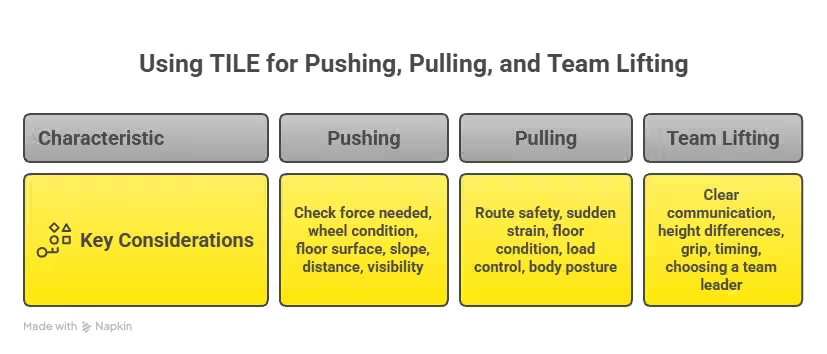
Manual handling is not only about lifting a box from the floor. It also includes pushing, pulling, carrying, lowering, holding, and moving loads by hand or body force. The TILE method can still be used for these tasks. The questions stay the same, but the risks may look different.
- Using TILE for pushing
When pushing a load, look at how much force is needed to start and keep it moving. Check the task, the person, the load, and the environment before starting. A trolley with poor wheels, a heavy load, or a rough floor can make pushing harder and unsafe. The worker should be able to see clearly, keep good posture, and avoid pushing too fast. If the load is too hard to move, use better equipment or ask for help. - Using TILE for pulling
Pulling can be risky because it may put strain on the back, shoulders, arms, and knees. Before pulling, check whether the load moves smoothly and whether the route is clear. Slopes, wet floors, tight corners, and damaged wheels can make the task more dangerous. The worker should avoid sudden jerks and should not twist while pulling. If pulling feels difficult, it may be safer to push, use equipment, or reduce the load. - Using TILE for team lifting
Team lifting should always be planned before anyone touches the load. Check who is involved, whether they understand the task, and who will lead the lift. Workers should agree on clear instructions, such as when to lift, move, stop, and lower. Differences in height, strength, grip, and timing can create risk. A team lift is only safe when everyone moves together and communicates clearly.
TILE and Team Lifting Risks
Team lifting may seem safer because more than one person is sharing the load. But it can also create new risks if the task is not planned properly. People may move at different speeds, use different levels of strength, or lose grip at different times. This is why team lifting should never be treated as “just grab a side and go.”
- Who leads
One person should be chosen to lead the lift. This person gives clear instructions to the team. They should decide when to lift, move, stop, and lower the load. Without a leader, workers may move at different times and increase the risk of injury. - Where the load is going
Everyone should know where the load needs to be placed before lifting starts. This helps the team move in the same direction. It also prevents confusion while carrying the load. The route should be checked and cleared before the task begins. - What words will be used
The team should agree on simple words such as “lift,” “move,” “stop,” and “lower.” These words must be clear and easy to hear. This is especially important in noisy workplaces. Clear commands help everyone act at the same time. - When to lift, move, and lower
Timing is very important in team lifting. If one person lifts too early or lowers too late, another person may gain more weight. This can cause strain or loss of balance. The team should move together from start to finish. - What to do if someone struggles
The team should know what to do if someone feels pain, loses grip, or becomes tired. They should stop safely instead of trying to continue. No one should feel forced to keep going. Good team lifting means protecting every person involved.
Common TILE Manual Handling Mistakes
TILE is a simple and useful method, but it only works when people use it properly. The biggest mistake is treating TILE like a form to complete instead of a real safety tool. It should be used before the task starts, not after someone gets injured. When workers take TILE seriously, they can spot risks early and choose a safer way to work.
- Only checking weight
Many people think manual handling risk is only about how heavy the load is. But weight is just one part of the risk. A light load can still be dangerous if it is awkward, slippery, sharp, or hard to grip. TILE reminds us to look at the full situation, not just the number on the box. - Ignoring the route
The route is often forgotten during manual handling tasks. A worker may focus on lifting the load but not check where they need to walk. Wet floors, cables, steps, narrow spaces, or blocked paths can all create danger. The route should always be checked before the load is moved. - Forgetting worker fatigue
A task may be safe at the start of a shift but risky later in the day. Tired workers may lose focus, move poorly, or struggle to control the load. Fatigue can increase the chance of strains, slips, and mistakes. TILE should always consider how the worker feels at the time of the task. - Rushing because the task is “quick”
Many injuries happen during small jobs that people think will only take a moment. When workers rush, they may bend badly, twist, or skip safety checks. A quick task can still cause serious pain if done the wrong way. It is always better to pause and move safely. - Using team lifting when equipment is better
Team lifting is not always the safest option. People may move at different speeds or take uneven weight. If a trolley, hoist, or pallet truck is available, it may reduce the risk more effectively. The aim is not to use more people, but to use the safest method. - Not reviewing the assessment after changes
A TILE assessment should not stay the same forever. If the load, route, worker, equipment, or work area setup changes, the risk may also change. Old assessments can become unsafe if they are not reviewed. Regular checks help keep manual handling controls effective. - Giving training but not changing unsafe work design
Training is important, but it cannot fix a badly designed task on its own. If workers still have to lift from the floor, carry too far, or work in cramped spaces, the risk remains. Safe systems should be supported by better equipment, layout, and planning. TILE works best when training leads to real changes.
How to Reduce Risk After a TILE Assessment
A TILE assessment only works when it leads to real action. Workers and employers should not treat it as a form they complete and forget. TILE helps both sides spot risks and choose a safer way to complete the task.
Start by asking whether workers can avoid the manual handling task. If workers do not need to lift, carry, push, or pull the load by hand, they reduce the risk straight away. For example, employers can redesign the task so deliveries arrive closer to the point of use. In some workplaces, automation or mechanical equipment can remove most manual handling.
If workers cannot avoid the task, they should reduce the risk. They can use handling aids such as trolleys, pallet trucks, hoists, conveyors, or lift trucks. These tools reduce strain on the body and make the task safer.
Workers and employers can also change the load. They can split large or heavy loads into smaller parts. Better handles or packaging can improve grip. If the load feels unstable, workers should secure it before anyone moves it.
Employers should improve the work area setup where possible. They can adjust shelves so workers do not lift from the floor or reach above shoulder height. They can shorten carrying distances, keep floors dry, clean, and even, and improve lighting so workers can see clearly.
Work routines may also need changes. Employers can rotate tasks, plan breaks, and train workers in safe handling methods. If workers report pain, tiredness, or difficulty, supervisors should review the task immediately.
In simple terms, a TILE assessment should lead to safer choices. Spot the risk, change the task, use the right equipment, and support the worker. Better action prevents injuries before small problems become serious workplace injuries.
TILE Examples by Industry
TILE can be used in almost every workplace because manual handling happens in many different ways. The load may change from one industry to another, but the safety questions stay the same. Workers still need to think about the Task, Individual, Load, and Environment before moving anything. Here are some simple examples of how TILE can apply in different industries.
- Construction
In construction, workers may need to move cement bags, tools, plasterboard, bricks, pipes, or awkward materials. These loads can be heavy, sharp, dusty, or difficult to grip. The environment can also change often because construction sites may have uneven ground, stairs, scaffolding, or poor weather. TILE helps workers check whether the load can be moved safely or whether equipment, team lifting, or better planning is needed. - Healthcare
In healthcare, manual handling may include moving equipment, laundry bags, medical supplies, or supporting people safely. The task can be sensitive because patients or service users may move unexpectedly or need special care. Workers also need to think about their own posture, training, and the space around beds, chairs, or corridors. TILE helps healthcare staff reduce risk while protecting both themselves and the person they are supporting. - Retail
In retail, workers often handle stock cages, delivery boxes, shelves, displays, and storage items. These tasks may happen quickly during busy periods or delivery times. A box may not be very heavy, but repeated lifting, reaching high shelves, or carrying items through crowded areas can increase risk. TILE helps retail workers plan stock movement more safely. - Warehousing
In warehousing, manual handling may involve pallets, parcels, picking, packing, loading, and unloading. The work may be repeated many times during a shift. Loads can vary in size, shape, and weight, which makes checking each task important. TILE helps workers decide when to use trolleys, pallet trucks, conveyors, or team support. - Hospitality
In hospitality, workers may move barrels, food supplies, furniture, cleaning products, and waste bags. These tasks often happen in tight spaces such as kitchens, cellars, storage rooms, or busy service areas. Wet floors, heat, and time pressure can also increase risk. TILE helps hospitality workers slow down, check the area, and move items safely.
Employer and Employee Responsibilities
Manual handling safety is not only one person’s job. It is a shared responsibility between employers and employees. Both sides have an important role in preventing injuries and keeping the workplace safe.
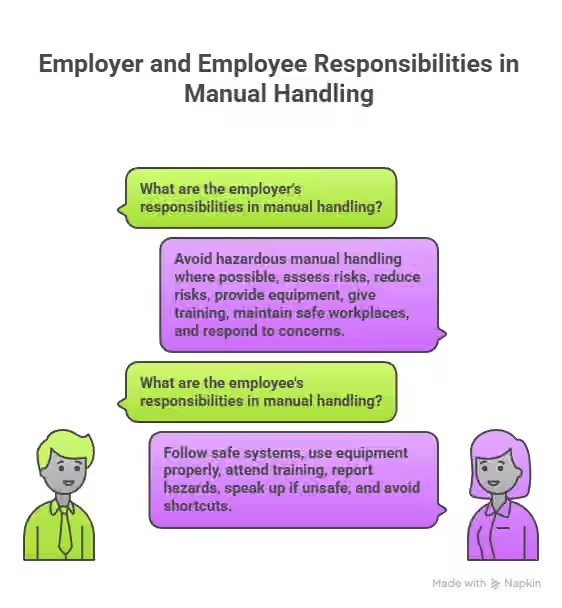
Employers must protect workers from unsafe manual handling risks. This means they should not expect workers to lift, carry, push, or pull unsafe loads without proper planning. Where possible, employers should avoid unsafe manual handling altogether. For example, they may redesign the task, use lifting equipment, reduce the weight of loads, or change the work area setup.
If manual handling cannot be avoided, employers should assess the risk properly. They need to look at the task, the individual, the load, and the environment. This is where the TILE method becomes very useful. It helps employers see what could go wrong and decide what controls are needed.
Employers should also provide suitable equipment, clear instructions, safe systems of work, and proper manual handling training. They should listen when workers report pain, tiredness, hazards, or unsafe tasks. A safe workplace is not created by paperwork alone. It is created by action.
Employees also have responsibilities. Workers should follow the safe methods they have been taught. They should use trolleys, hoists, or other equipment correctly. Shortcuts, rushing, and unsafe lifting put them at risk.
Workers should also report hazards, damaged equipment, blocked routes, or loads that are too heavy or awkward. If a task feels unsafe, they should speak up before starting. Asking for help is not a weakness. It is part of working safely.
As a whole, employers must provide safe conditions, and employees must follow safe practices. Manual handling safety works best when everyone takes it seriously. Safety is not just a poster on the wall. It is a daily habit shared by the whole workplace.
When Should a TILE Assessment Be Reviewed?
Review a TILE assessment when something changes. That could mean a new load, new worker, new layout, new equipment, new delivery route, new work speed, or new injury report.
Also review after accidents, near misses, complaints, or signs of fatigue. If workers are breathing heavily, sweating, complaining of tiredness, or avoiding a task, HSE says these can be warning signs to look out for.
A good review keeps the assessment alive.
Manual Handling Training and TILE
Manual handling training is important because it helps workers understand how injuries happen and how to prevent them. But training should not be only about watching a video or reading a handout. It should help people use safety knowledge in real work situations.
HSE explains that training can raise awareness and reduce risk. However, training alone is not enough if the task itself is poorly designed. For example, if workers still have to lift heavy loads from the floor, carry items too far, or work in cramped spaces, the risk may still remain. Safe manual handling also depends on good planning, suitable equipment, and regular checks.
This is where TILE becomes useful. TILE helps workers look at the Task, Individual, Load, and Environment before they start. It teaches them to pause, ask better questions, and choose a safer way to work.
The Manual Handling Level 2 course focuses on essential understanding. It helps learners spot risks before they lift, carry, push, pull, or move a load.
Good training changes what people notice. Great training changes what people do.
Final Thought
TILE in Manual Handling is simple, but it is powerful. It teaches one key habit: pause before you move. Look at the task. Think about the person. Check the load. Study the environment. Then choose the safest way.
Manual handling injuries can affect work, income, confidence, and daily life. But better planning, better training, and better conversations can reduce many risks.
Ready to make manual handling safer? Start with Manual Handling Level 2 and turn every lift into a smarter decision.
Frequently Asked Questions
1. What does TILE stand for in manual handling?
TILE stands for Task, Individual, Load and Environment. It is a simple risk assessment framework used before lifting, carrying, pushing or pulling. The idea is to check what the job involves, who is doing it, what is being moved, and whether workplace conditions make injury more likely at work.
2. Why is TILE important in manual handling?
TILE is important because it helps workers and employers identify risks before an injury happens. Instead of only asking whether something is heavy, TILE looks at the full situation: the task, person, load and surroundings. This makes manual handling safer, more practical and easier to assess properly in real workplaces.
3. Is TILE a legal requirement?
TILE itself is not named as a legal requirement, but it supports manual handling risk assessment. HSE guidance says employers should assess unsafe manual handling that cannot be avoided and consider the task, load, working environment and what the worker can safely do. So TILE is a useful method for meeting those duties.
4. What is the difference between TILE and LITE?
TILE and LITE use the same four risk factors, but in a different order. TILE means Task, Individual, Load and Environment. LITE means Load, Individual, Task and Environment. Both are used to guide manual handling risk assessment and help people identify hazards before handling work begins.
5. What does TILEO mean in manual handling?
TILEO means Task, Individual, Load, Environment and Other factors. The extra “O” covers additional risks such as equipment, PPE, time pressure, team handling, communication, supervision or unusual working conditions. TILEO is useful when a manual handling task is more complex than a simple lift or carry.
6. Is there a maximum legal weight for manual handling?
There is no single legal maximum weight for manual handling. A lighter load can still be risky if it is awkward, unstable, lifted repeatedly, carried far or handled in a poor environment. HSE guidance focuses on assessing the full risk, not relying only on weight limits.
7. What should be checked under “Task” in TILE?
Under Task, check how the work is performed. Look for twisting, stooping, reaching, lifting from floor level, carrying long distances, repetition, pushing, pulling or sudden movement. Also consider how often the task happens and whether the worker has enough time, space and support to complete it safely.
8. What should be checked under “Individual” in TILE?
Under Individual, consider the person doing the handling task. Check their training, experience, strength, fitness, fatigue, injury history and any medical conditions. Some workers may need extra support, different equipment or adjusted duties, especially if the task is physically demanding or their capability has changed.
9. What should be checked under “Load” in TILE?
Under Load, check more than weight. Consider whether the object is large, unstable, difficult to grip, sharp, hot, cold, slippery or likely to block the worker’s view. A load may be light but still high risk if its shape or condition makes safe handling difficult.
10. What should be checked under “Environment” in TILE?
Under Environment, check whether the workplace makes handling harder or more dangerous. Look for poor lighting, uneven floors, slippery surfaces, stairs, narrow spaces, cluttered routes, temperature extremes or outdoor weather. Even a manageable load can become risky when the route or working conditions are unsafe.
 " alt="The 6 Principles of Safeguarding: Protect Before Harm Happens" />
 " alt="Personal Development Goals: 5 Meaningful Examples That Work" />
 " alt="TILE in Manual Handling: Meaning, Checklist & Safer Lifting Guide" />