

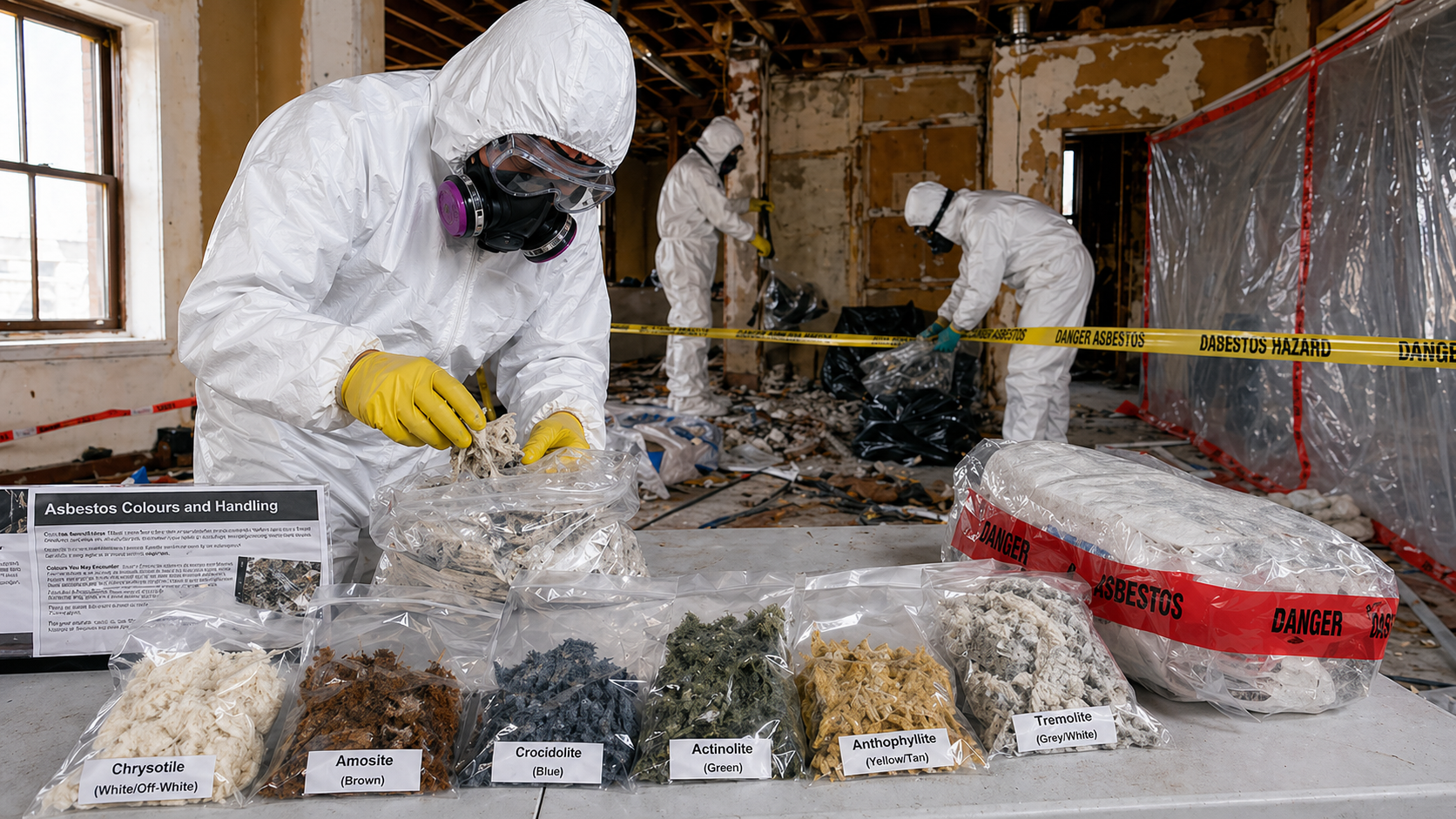

Have you ever lifted an old ceiling tile, drilled near an old pipe, or moved broken boards and thought, “Could this be asbestos?” The honest answer is: you cannot safely judge asbestos by colour alone. That is where better safety awareness and safer work habits matter. A Manual Handling Level 2 course helps you plan lifting, moving, and handling tasks more safely, so you are less likely to damage risky materials while working.
In Great Britain, asbestos is still a major workplace danger. HSE’s 2025 asbestos disease statistics report around 5,000 deaths caused by asbestos diseases each year, including mesothelioma(a cancer linked to asbestos), lung cancer, and asbestosis( lung scarring caused by asbestos). It also recorded 2,218 mesothelioma(a cancer linked to asbestos) deaths in 2023. These diseases often take decades to appear, so today’s deaths reflect past exposure.
In this guide, you will learn what asbestos is, what the main asbestos colours mean, why colour can mislead you, where asbestos may be found, what to do before renovation, and how to respond if you disturb a suspect material. You will also see when to leave it, test it, encapsulate it, or call a professional.
Build safer workplace habits today. Start with Manual Handling Level 2 and learn how better planning, safer lifting, and careful movement can reduce avoidable damage, injury, and exposure risks.
This Blog Covers-
- Asbestos Basics and Main Types
What asbestos is; Six types of asbestos; White, brown and blue asbestos explained; White vs brown vs blue asbestos comparison table. - Asbestos Colours and Identification Limits
Can asbestos be identified by colour? Why asbestos colours are misleading; Asbestos colour chart by material type; Can asbestos be black, grey, green or yellow? - Common Asbestos Materials and Risk Factors
Common asbestos-containing materials; Risk by material, not just colour; Which asbestos colour is most dangerous? - Health Risks and Building Safety Context
Health risks of asbestos exposure; UK asbestos ban timeline and pre-2000 buildings; Room-by-room asbestos guide; Asbestos lookalikes. - Pre-Renovation Asbestos Checks
Pre-renovation checklist; Testing and asbestos surveys; Leave, test, encapsulate or remove decision tree. - Safe Handling and Emergency Response
Safe handling basics; What to do in the first 10 minutes after accidental disturbance; When to call a professional. - Disposal and Legal Responsibility
Basic disposal and responsibility guidance.
Asbestos Colours and Handling: What You Need to Know First
The first thing you need to know about asbestos colours and handling is, you cannot confirm asbestos by colour alone. Many people think asbestos can be identified just by looking at it, but this is not safe. Asbestos-containing materials can be painted, sealed, mixed with cement, covered in dust, or hidden behind other materials. This means a material may look white, grey, brown, black, yellow, or even another colour and still may or may not contain asbestos.
For example, old floor tiles may look like normal vinyl. A ceiling board may look like ordinary plasterboard. Pipe insulation may look like dusty old wrapping. The problem is that asbestos fibres are not always visible. You cannot rely on your eyes to know whether a material is safe.
This is especially important in older buildings. If a building was built or refurbished before the year 2000, there is a higher chance that asbestos-containing materials may be present. In these cases, suspicious materials should be treated with caution. HSE guidance says dutyholders should presume materials contain asbestos unless there is strong evidence that they do not.
The safest approach is to stop and check before touching, cutting, drilling, sanding, breaking, or removing any unknown material. Do not guess. Do not disturb it. If you are unsure, arrange proper testing or ask a competent asbestos professional.
When it comes to Asbestos Colours and Handling, the key message is clear: colour may raise suspicion, but only testing can confirm asbestos.
What is Asbestos ?
Asbestos is a group of natural minerals made up of very small fibres. These fibres are strong, flexible, and resistant to heat, fire, and many chemicals. Because of these qualities, asbestos was used for many years in buildings, factories, homes, schools, hospitals, and other workplaces.
In the past, asbestos was seen as a useful material. It was added to insulation, ceiling boards, wall panels, floor tiles, roof sheets, cement products, pipe lagging, textured coatings, and fire-resistant materials. It helped make products stronger and more resistant to heat. This is why asbestos can still be found in many older buildings today.
The real danger begins when asbestos-containing materials are damaged or disturbed. This can happen during drilling, cutting, sanding, breaking, scraping, or removal work. When disturbed, tiny asbestos fibres can be released into the air.
These fibres are dangerous because they are too small to see or smell. A person may breathe them in without knowing. Once inside the lungs, the fibres can stay there for many years and may cause serious illness later in life.
Asbestos-related diseases do not usually appear straight away. They can take many years, sometimes decades, to develop. This is why asbestos must always be treated with care.
In simple words, asbestos is dangerous when its fibres become airborne. If you suspect a material may contain asbestos, do not disturb it. Stop, keep others away, and arrange proper advice or testing.
Six Types of Asbestos
There are six recognised types of asbestos: chrysotile, amosite, crocidolite, tremolite, anthophyllite, and actinolite. These minerals contain tiny natural fibres. When damaged materials release these fibres into the air, people can breathe them in, which can cause serious health risks. Builders and manufacturers used some types more often than others in buildings and products. People commonly call chrysotile, amosite, and crocidolite white, brown, and blue asbestos.
Chrysotile
People often call chrysotile white asbestos. Builders and manufacturers used chrysotile more than any other asbestos type in many countries. They commonly used it in cement sheets, roof materials, floor tiles, textured coatings, brake linings, and insulation products. Some people describe chrysotile as less dangerous than other types, but this creates a false sense of safety. Chrysotile can still harm people, so no one should ever treat it as safe.
Amosite
People commonly call amosite brown asbestos. Manufacturers often used it in insulation boards, ceiling tiles, pipe insulation, and fire protection materials. Experts consider this type highly dangerous because its strong fibres can damage health when people breathe them in. Builders widely used amosite in buildings, especially in areas that needed heat resistance and fire protection. If workers find suspected amosite, they must not disturb it.
Crocidolite
People call crocidolite blue asbestos. Experts often consider it one of the most dangerous asbestos types because it has thin, sharp fibres. Manufacturers used crocidolite in some spray coatings, insulation products, cement materials, and pipe lagging. Even a small disturbance can release fibres into the air when the material has damage. For this reason, trained professionals must always handle suspected blue asbestos.
Tremolite
Manufacturers did not use tremolite as widely as white, brown, or blue asbestos. However, tremolite can contaminate other minerals and materials. Inspectors may find it in some insulation, talc products, or older building materials. Like all asbestos types, tremolite can harm people when disturbed materials release fibres and people breathe them in. Although people discuss it less often, workers must still take it seriously.
Anthophyllite
Anthophyllite is another less common asbestos type. Manufacturers used it only in limited amounts compared with chrysotile, amosite, and crocidolite. Inspectors may find anthophyllite in some older insulation materials, cement products, or contaminated minerals. The main risk comes when disturbance releases fibres and people breathe them in. Since anthophyllite belongs to the asbestos group, workers must treat it as hazardous.
Actinolite
Actinolite is also a recognised asbestos type, but manufacturers did not commonly use it in commercial products. Inspectors may sometimes find it as contamination in other minerals or natural materials. Its fibres can still harm people when they become airborne. People cannot identify actinolite safely by colour or appearance alone. If workers suspect actinolite asbestos, they need testing and professional advice.
OSHA lists asbestos as chrysotile, amosite, crocidolite, tremolite, anthophyllite, and actinolite. Chrysotile is often called white asbestos, amosite is commonly called brown asbestos, and crocidolite is widely called blue asbestos. The other three types receive less attention in everyday building safety, but they still create serious health risks.
What are white, brown, and blue asbestos?
White, brown, and blue asbestos are the three best-known asbestos colour names. Trainers often use these names in asbestos training because they help learners remember the different types more easily. However, the colour name does not guarantee that the material will look that colour in real life. Manufacturers often mixed asbestos with other materials, and later work may have painted, sealed, or covered it with dust. For this reason, workers must never identify asbestos by colour alone.
White asbestos
White asbestos usually means chrysotile. Builders and manufacturers used chrysotile more than any other asbestos type in building products. They often used it in asbestos cement, textured coatings, roofing sheets, floor tiles, gaskets, and some insulation materials. Even though trainers call it white asbestos, chrysotile may not look white after manufacturers mix it into a product. White asbestos can still harm people when damaged materials release fibres and people breathe them in.
Brown asbestos
Brown asbestos means amosite. Manufacturers often used amosite in asbestos insulation boards, ceiling tiles, thermal insulation, pipe insulation, and fire protection products. This type became popular because it handled heat well and helped protect buildings from fire. Experts consider brown asbestos very hazardous, especially when workers damage or disturb the material. If you suspect brown asbestos, do not touch, break, drill, or remove it yourself.
Blue asbestos
Blue asbestos means crocidolite. Manufacturers used crocidolite in some sprayed coatings, insulation products, cement products, and pipe lagging. Experts often describe blue asbestos as one of the most dangerous asbestos types because it has very fine fibres that people can easily breathe in after release. Like brown asbestos, blue asbestos belongs to the amphibole group, which GOV.UK describes as more hazardous to health. Workers must leave any suspected blue asbestos alone and ask a competent professional to check it.
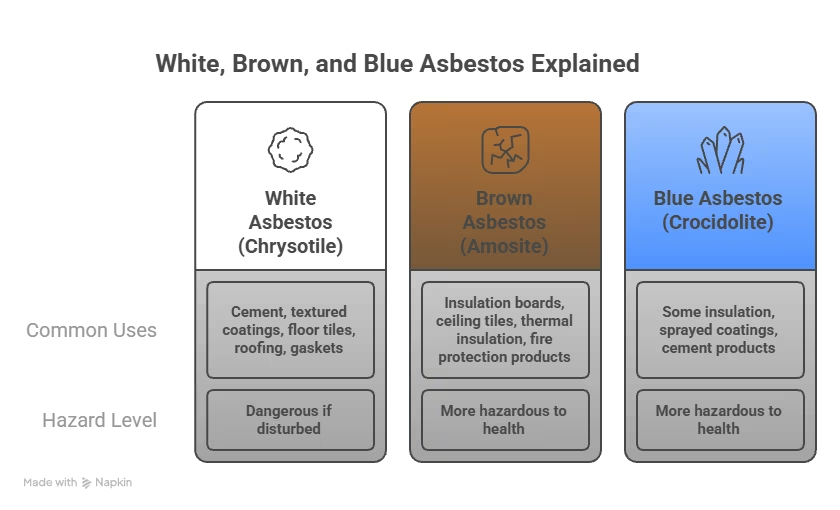
White vs Brown vs Blue Asbestos Comparison Table
White, brown, and blue asbestos are the most common colour names people use when talking about asbestos. These names help learners understand the main asbestos types, but no one should use them to identify asbestos by sight. In real buildings, manufacturers often mixed asbestos with other materials, and later work may have painted, sealed, or covered it with dust. This means the material may not look white, brown, or blue at all.
White asbestos
White asbestos is the common name for chrysotile. Builders and manufacturers used chrysotile in many building materials, including cement sheets, roof products, textured coatings, floor tiles, and gaskets. They used chrysotile more widely than any other asbestos type, so inspectors may still find it in many older buildings. Even though many people see it as the “common” type, it can still cause danger when damaged materials release fibres into the air.
Brown asbestos
Brown asbestos is the common name for amosite. Manufacturers often used amosite in insulation boards, ceiling tiles, pipe insulation, and fire protection materials. Experts classify this type as a higher-risk fibre because it can seriously harm people when workers disturb it. If workers find suspected brown asbestos, they must not touch, break, or remove it without professional advice.
Blue asbestos
Blue asbestos is the common name for crocidolite. Manufacturers used crocidolite in some sprayed coatings, insulation materials, pipe lagging, and cement products. Experts often view it as one of the most dangerous asbestos types because its very fine fibres can harm people when they breathe them in. Workers must treat any suspected blue asbestos with extreme caution and ask a competent professional to check it.
Colour Name | Mineral Name | Common Use | Main Concern |
White asbestos | Chrysotile | Cement, tiles, roofing, textured coatings, gaskets | Common and widely used in older buildings |
Brown asbestos | Amosite | Insulation board, ceiling tiles, pipe insulation, fire protection | Higher-risk fibre type if disturbed |
Blue asbestos | Crocidolite | Sprayed coatings, insulation, pipe lagging, cement products | Often viewed as highly dangerous |
Can asbestos be identified by colour alone?
No, you should not identify asbestos by colour alone. Colour can sometimes give a clue, but it cannot confirm whether a material contains asbestos. Many asbestos-containing materials look completely normal from the outside. They may be painted, sealed, dirty, aged, damaged, or mixed with other building materials.
This is why asbestos can be so difficult to spot. A floor tile that contains asbestos may look like an ordinary vinyl tile. An asbestos insulating board may look like a normal wall or ceiling board. A textured coating with asbestos may look like regular decorative plaster. Even pipe insulation or cement sheets can look harmless until they are tested.
The danger is that asbestos fibres are usually hidden inside the material. You cannot see, smell, or feel these tiny fibres in a safe way. If the material is drilled, sanded, cut, broken, or removed, fibres may be released into the air. Once airborne, they can be breathed in and may cause serious health problems many years later.
So, if you find suspicious material, do not rely on colour or appearance. Ask yourself: Was the building built or refurbished before 2000? Is the material damaged? Will the work disturb it? If the answer is yes, stop and get proper advice.
If you are unsure, do not touch it. Arrange asbestos testing or speak to a competent professional before any work continues.
Why are Asbestos Colours Misleading?
Asbestos colours can be misleading because the material you see is often not pure asbestos. In most buildings, asbestos was mixed with other materials to make useful products. It may be combined with cement, adhesive, bitumen, resin, plaster, insulation, or decorative coating. Because of this, the final product may not show the natural colour of the asbestos fibres inside it.
For example, “white asbestos” may be hidden inside grey cement sheets or patterned floor tiles. “Brown asbestos” may be inside a painted insulation board. “Blue asbestos” may be mixed into sprayed coating or pipe insulation that no longer looks blue at all. This is why colour names can help with learning, but they should not be used for identification.
Age can also change the appearance of asbestos-containing materials. Dust, dirt, paint, damp, heat, sunlight, and old repairs can all affect colour. A material that once looked light may now look dark. A surface that was once smooth may now look stained, cracked, or weathered.
This is why asbestos should never be judged by colour alone. A material may look harmless and still contain asbestos. Another material may look suspicious but be asbestos-free.
The most important aspect is to look at the full risk. Think about the age of the building, the type of material, its condition, and whether the work will disturb it. If there is any doubt, stop work and arrange proper asbestos testing. Colour can raise a question, but only testing can give a reliable answer.
Asbestos Colour Chart by Material Type
An asbestos colour chart can help you understand what suspicious materials may look like, but it should never be used as proof. Asbestos-containing materials can appear in many colours because asbestos was often mixed with other products. It may be hidden inside cement, vinyl, adhesive, insulation, board, or textured coating.
This means colour is only a weak clue. For example, asbestos cement may look grey or off-white. Vinyl floor tiles may look brown, black, cream, or patterned. Textured coating may look like normal painted plaster. Pipe lagging may look dusty, white, or grey. In many cases, the material may look ordinary from the outside.
The age and condition of the material can also change how it looks. Paint, dust, damp, heat, wear, and old repairs can all affect colour. That is why asbestos should never be identified by appearance alone.
Use the chart below as a warning guide, not a testing method. If the building is older, especially built or refurbished before 2000, and the material may be disturbed, stop and arrange proper asbestos testing before work continues.
|
Material Type |
Possible Appearance |
Colour Clue Reliability |
|
Asbestos cement |
Grey, off-white, weathered, or dirty |
Low |
|
Vinyl floor tiles |
Brown, black, cream, patterned, or mixed colours |
Low |
|
Textured coating |
White, cream, painted, or decorative finish |
Very low |
|
Pipe lagging |
White, grey, dusty, rough, or wrapped |
Low |
|
AIB board |
Grey, beige, painted, or board-like |
Low |
|
Bitumen adhesive |
Black, dark brown, sticky, or hardened |
Low |
If you are not sure, do not disturb it. Testing is the only reliable way to confirm asbestos.
Can Asbestos Be Black, Grey, Green or Yellow?
Yes, asbestos-containing materials can appear black, grey, green, yellow, cream, brown, white, or almost any colour. This is one of the main reasons asbestos is difficult to identify by sight. Many people expect asbestos to have one clear colour, but in real buildings, it is often mixed with other materials.
For example, black adhesive found under old floor tiles may contain asbestos. Grey cement sheets on roofs, garages, sheds, or old walls may also contain asbestos. Some older tiles, boards, coatings, and insulation materials may appear green, yellow, cream, or brown because of paint, glue, surface coating, dust, age, or damage.
The colour you see is often not the colour of the asbestos fibres themselves. It may come from the product around the asbestos. It may also come from years of dirt, damp, repairs, or weathering. This means a material can look harmless but still contain asbestos.
That is why Asbestos Colours and Handling should always focus on caution, not visual confidence. You should never say, “It is not asbestos because it is black,” or “It is safe because it is grey.” Colour is only a clue. It is not proof.
If the building was built or refurbished before 2000 and the material looks suspicious, do not touch, drill, sand, cut, break, or remove it. Stop work and arrange proper asbestos testing. If you are unsure, treat it as asbestos until proven otherwise.
Common Asbestos-Containing Materials
Many older building materials can contain asbestos, especially in buildings built or refurbished before 2000. Builders and manufacturers used asbestos because it offered strength, heat resistance, and fire protection. HSE lists examples such as rope seals, gaskets, textured coatings, asbestos insulating board, partition walls, asbestos cement water tanks, vinyl floor tiles, bitumen adhesive, boiler and pipe lagging, and old electrical equipment.
The problem comes from the fact that many of these materials look normal from the outside. That makes asbestos difficult to identify without proper testing. Workers must not disturb suspected asbestos. When unsure, stop work and arrange testing.
Ceiling Tiles
Old ceiling tiles may contain asbestos, especially in offices, schools, shops, and public buildings. They may look like normal ceiling panels, so colour and appearance do not provide reliable signs. The risk increases when workers break, drill, remove, or damage the tiles with water. If ceiling tiles look old or suspicious, ask a competent person to check them before work starts.
Floor Tiles
Some older vinyl floor tiles may contain asbestos. The adhesive underneath may also contain asbestos, especially black bitumen adhesive. These tiles may look like ordinary flooring and may appear brown, black, cream, or patterned. Do not scrape, sand, break, or lift old floor tiles without checking whether the material contains asbestos.
Pipe Insulation
Pipe insulation creates one of the more serious asbestos risks in older buildings. Inspectors may find it around heating pipes, hot water pipes, or service pipes. Damaged, dusty, or crumbling insulation can release fibres into the air. Workers must leave suspected asbestos pipe insulation alone and ask a competent professional to check it.
Boiler Insulation
Old boilers and heating systems may contain asbestos insulation. Manufacturers used asbestos in these areas because it resisted heat. The insulation may sit around the boiler, pipes, seals, or panels. If boiler insulation looks old, damaged, or dusty, do not touch or remove it without professional advice.
Fire Doors
Some older fire doors may contain asbestos inside the door core or panels. From the outside, these doors may look like normal wooden or metal doors. Cutting, drilling, sanding, or damaging the door can increase the risk. If an old fire door needs repair or removal, ask a competent person to check it first.
Roof Sheets
Builders commonly used asbestos cement roof sheets on garages, sheds, warehouses, and farm buildings. These sheets often look grey, weathered, or corrugated. Cracking, breaking, drilling, or pressure washing the sheets increases the risk. Never cut, break, or clean suspected asbestos roof sheets with high-pressure tools.
Bath Panels
Some older bath panels may contain asbestos insulating boards or asbestos cement. They may look like ordinary panels, especially after someone paints or covers them. Removing, cutting, or breaking the panel during bathroom work increases the risk. If the property is old, check the panel before starting renovation.
Textured Coatings
Textured coatings on ceilings and walls may contain asbestos. These coatings can look like normal decorative plaster or painted surfaces. Sanding, scraping, drilling, or removing them increases the risk. In an older building, arrange testing before disturbing the coating.
Old Fuse Boxes
Old fuse boxes and electrical panels may contain asbestos parts, such as flash guards or insulating boards. Manufacturers used asbestos because it resisted heat and fire. These materials can sit hidden inside the equipment, so workers may not see them easily. Plan electrical work around old fuse boxes carefully and ask competent people to check the equipment first.
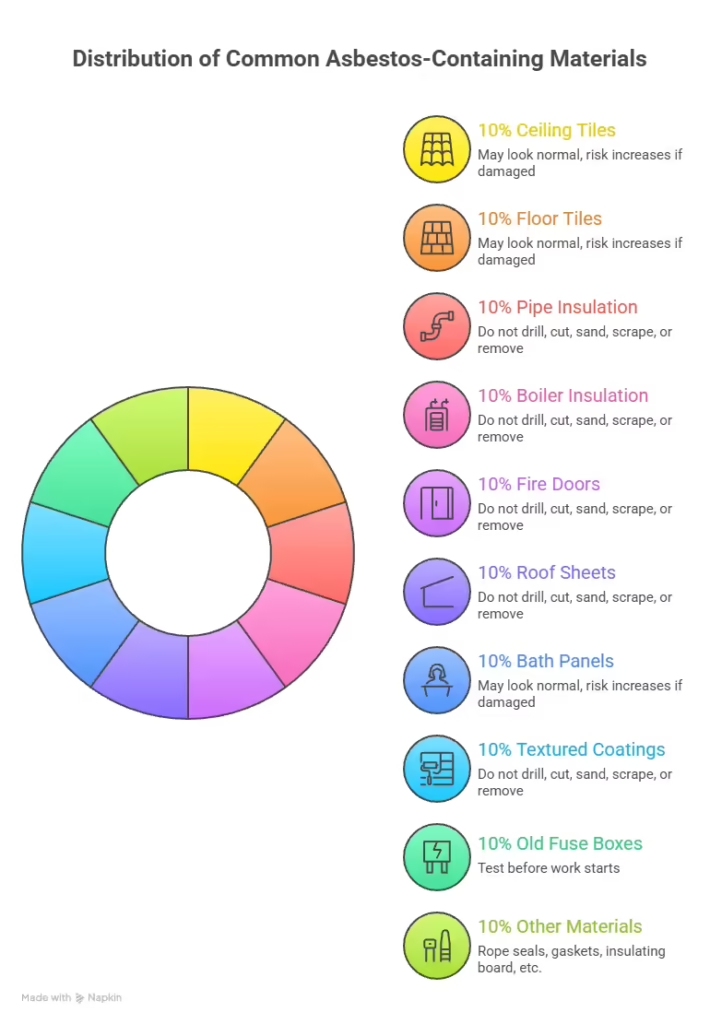
Asbestos Risk Depends on the Material, Not Just the Colour
The risk from asbestos depends more on the type of material and its condition than its colour. Many people focus on whether asbestos looks white, brown, blue, grey, or black. But colour alone does not tell you how dangerous the material is. The bigger question is whether the material can release asbestos fibres into the air.
Some asbestos-containing materials are more likely to release fibres when disturbed. For example, loose-fill insulation, sprayed coatings, pipe lagging, and asbestos insulating board can be higher risk because the fibres may come loose more easily. If these materials are damaged, broken, drilled, cut, or removed, they can release harmful fibres into the air.
Other materials, such as asbestos cement, are usually more tightly bonded. This means the fibres are held more firmly inside the material. However, asbestos cement can still become dangerous if it is cracked, drilled, sanded, pressure washed, or broken.
So, instead of asking only, “What colour is it?”, ask better safety questions: What material is it? Where is it located? Is it damaged? Will the work disturb it? Could fibres be released?
|
Material Type |
Fibre Release Risk |
Why It Can Be Risky |
|
Loose-fill insulation |
Very high |
Fibres can become airborne very easily if disturbed. |
|
Sprayed coatings |
Very high |
Often soft or dusty and may release fibres when damaged. |
|
Pipe lagging |
High |
Can break down with age and release fibres if touched or removed. |
|
Asbestos insulating board |
High |
Can release fibres when drilled, cut, or broken. |
|
Asbestos cement |
Lower when intact |
Usually bonded, but risky if broken, drilled, or sanded. |
|
Vinyl floor tiles |
Lower when intact |
Risk increases when tiles are lifted, scraped, or broken. |
Judge the risk by material, condition, and possible disturbance — not colour alone.
Which Asbestos Colour Is Most Dangerous?
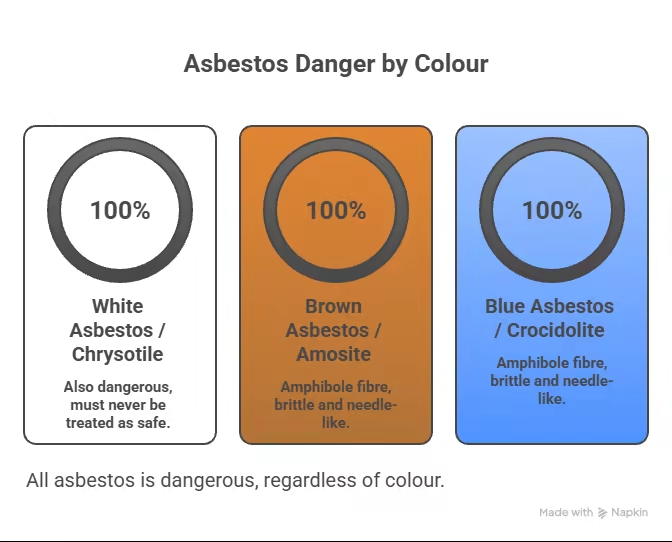
All types of asbestos are dangerous. There is no “safe” asbestos colour. White, brown, and blue asbestos can all harm health when damaged materials release fibres into the air and people breathe them in.
However, experts often view blue asbestos and brown asbestos as more hazardous. Blue asbestos means crocidolite, and brown asbestos means amosite. These two types belong to the amphibole group. GOV.UK explains that amphibole fibres can break easily and form tiny rod-like or needle-like shapes, which makes them more hazardous to health.
Experts often view blue asbestos as one of the most dangerous types because it has very fine and sharp fibres. Brown asbestos also creates high risk, and manufacturers often used it in insulation boards, ceiling tiles, and fire protection products. If workers damage, drill, cut, or remove these materials, fibres may become airborne.
But this does not make white asbestos safe. White asbestos means chrysotile. Manufacturers widely used chrysotile in many building materials, such as cement, textured coatings, floor tiles, roofing, and gaskets. If workers disturb it, chrysotile can also release harmful fibres.
The safest approach to asbestos is simple: avoid all exposure. Do not rely on colour to decide whether something looks safe. A material may hide its true asbestos colour because paint, sealant, other materials, or dust may cover it.
So, instead of asking, “Which colour is safe?” ask, “Could this material contain asbestos, and could it release fibres?” If you feel unsure, stop work and arrange proper testing or professional advice.
Health Risks of Asbestos Exposure
Asbestos exposure can cause serious health problems. The danger starts when asbestos fibres become airborne and are breathed in. These fibres are very small, so you may not see them, smell them, or notice them at the time. But once they enter the lungs, they can stay in the body for many years.
The main health risks linked to asbestos include mesothelioma, lung cancer, cancer of the larynx, cancer of the ovary, asbestosis, and pleural thickening. GOV.UK states that asbestos can cause mesothelioma and cancers of the lung, larynx, and ovary. HSE also links asbestos exposure to asbestosis and pleural thickening.
One of the most serious things about asbestos is the delay. A person may breathe in asbestos fibres and feel completely fine for a long time. Symptoms may not appear until many years, or even decades, later. By the time illness is found, the damage may already be serious.
This is why prevention is so important. You should never drill, cut, sand, break, or remove suspected asbestos without proper checks. If you are unsure, stop work and arrange testing or professional advice. With asbestos, avoiding exposure is always the safest choice.
Room-by-Room Asbestos Guide
Older buildings can hide asbestos in many places, especially buildings built or refurbished before 2000. The difficult part comes from the fact that asbestos materials often look normal. Paint, covers, boxing, dust, or other building products can hide them. This makes a room-by-room check useful before renovation, repair, drilling, sanding, or removal work.The aim is not to identify asbestos by sight. The aim is to know where asbestos may exist. If any material looks suspicious, do not disturb it. Stop work and arrange asbestos testing or professional advice before continuing.
Kitchen
In a kitchen, inspectors may find asbestos in old floor tiles, black bitumen adhesive, wall panels, boiler cupboards, and pipe lagging. Older kitchens often included heat-resistant materials around boilers, cookers, or service areas. Floor tiles may look like normal vinyl, but the tile or adhesive underneath may contain asbestos. If you plan to lift flooring, remove panels, or work near old pipes, check first. Do not scrape, sand, drill, or break suspicious materials without proper testing.
Bathroom
In a bathroom, inspectors may find asbestos in bath panels, ceiling coatings, floor tiles, old water tanks, and pipe boxing. Renovation work often disturbs hidden asbestos in bathrooms. A bath panel may look simple, but older panels may contain asbestos insulating board or cement-based materials. Ceiling coatings can also create risk when workers scrape, sand, or drill them. Before starting bathroom work, check the age of the property and arrange testing if needed.
Loft
In a loft, asbestos may appear in insulation, cement water tanks, boards, old flues, and pipe materials. Lofts can create higher risk because dust, damage, or stored items may hide materials. Old flue pipes and cement tanks may contain asbestos, especially in older homes. Boards around tanks, pipes, or roof spaces may also need checking. Avoid disturbing old insulation or breaking unknown boards until a competent person checks them.
Garage or Shed
Garages and sheds often contain asbestos cement products, especially roof sheets, wall panels, gutters, and downpipes. These materials may look grey, weathered, corrugated, or cracked. Asbestos cement usually holds fibres more tightly than some other asbestos materials, but it can still release fibres when someone breaks, drills, cuts, or pressure washes it. Never clean suspected asbestos roofing with high-pressure water. If the roof or panels look damaged, get professional advice before repair or removal.
Offices and Shops
In offices and shops, inspectors may find asbestos in ceiling tiles, partition walls, fire doors, service risers, floor tiles, and plant rooms. Builders often used these materials for fire protection, insulation, and sound control. Ceiling panels and partitions may look modern, but older materials behind them may still contain asbestos. Plant rooms can create higher risk because they often contain old pipe lagging, boilers, and insulation. Before maintenance or refurbishment, check the asbestos register or arrange a survey.
Asbestos Lookalikes
Many materials can look like asbestos, even when they are safe. This can make people confused during renovation, repair, or maintenance work. For example, plasterboard, modern fibre cement, mineral wool, non-asbestos vinyl tiles, and ordinary textured coating may all look suspicious at first glance.
At the same time, real asbestos-containing materials can look completely harmless. An old floor tile may look like normal vinyl. A ceiling board may look like standard plasterboard. A textured coating may look like simple decorative plaster. This is why you should never rely on photos, colour, or appearance alone.
The real risk depends on what the material is made from, how old it is, and whether the work will disturb it. If a building was built or refurbished before 2000, extra caution is needed. Drilling, sanding, cutting, scraping, or breaking unknown materials can release asbestos fibres if asbestos is present.
If the material may contain asbestos and your work could disturb it, stop before starting. Do not guess. Do not remove it yourself. Arrange proper asbestos testing or ask a competent professional for advice.
With asbestos lookalikes, it is better to check first than regret later.
UK Asbestos Ban Timeline and Pre-2000 Buildings
The UK did not ban asbestos all at once. The government banned blue asbestos and brown asbestos first because experts already knew they carried serious danger. Later, the UK also banned white asbestos. By 1999, the UK had banned all asbestos types.
This is why buildings built or refurbished before 2000 need extra care. Many older homes, schools, offices, shops, factories, garages, and public buildings may still contain asbestos materials. These materials may hide in floor tiles, ceiling panels, pipe insulation, roof sheets, textured coatings, fire doors, or old electrical equipment.
However, this does not mean every pre-2000 building contains asbestos. It simply means asbestos has a higher chance of being present. So, before anyone drills, sands, cuts, scrapes, removes, or refurbishes materials, they should check them first.
If the building has an asbestos register, read it before work starts. If no clear record exists, arrange an asbestos survey or testing. Never assume a material is safe just because it looks normal.
The safest rule is simple: if the building is older and the work may disturb the material, stop and check first. This small step can prevent dangerous asbestos fibres from entering the air.
Pre-Renovation Checklist
Before any renovation work starts, stop and check for possible asbestos risks. This matters especially in older buildings. Renovation work can disturb hidden materials in walls, floors, ceilings, pipes, panels, and insulation. A few simple questions before work begins can prevent a serious safety problem later.
Before renovation, ask these questions:
Was the building built or refurbished before 2000?
Buildings built or refurbished before 2000 may contain asbestos materials. This does not mean the building definitely contains asbestos, but it does mean the risk increases. Older floor tiles, ceiling boards, roof sheets, pipe insulation, and textured coatings may contain asbestos. If the building dates from before 2000, treat unknown materials with caution.
Is there an asbestos register?
An asbestos register shows the location of known asbestos-containing materials. It may also show the condition of the material and whether workers need to monitor it. Before renovation starts, workers and contractors should check this register. If no register exists, arrange further checks before work begins.
Has a survey been done?
An asbestos survey helps identify asbestos-containing materials before work begins. This matters because asbestos often hides behind walls, under floors, or inside service areas. A competent person should carry out the survey. The survey gives clear information so the team can plan the work safely.
Will the work disturb walls, floors, ceilings, pipes, panels, or insulation?
Renovation work often involves drilling, cutting, sanding, lifting, or removing materials. These actions can release asbestos fibres if the material contains asbestos. Before any dusty or destructive work starts, check which materials the work may affect. If anyone has doubts, stop and test first.
Are contractors trained and competent?
Anyone working in older buildings should understand asbestos risks. Contractors should know how to avoid disturbing suspicious materials. They should also know what to do if they find asbestos unexpectedly. Competent workers reduce the chance of unsafe shortcuts.
Has the material been tested?
Testing gives the only reliable confirmation that a material contains asbestos. Colour, age, and appearance do not provide enough proof. A competent person should take the sample safely and send it to a suitable laboratory. Do not disturb the material while waiting for results.
Is there a plan if asbestos is found?
The team should always have a clear plan before work begins. Workers should know who to contact, how to stop work, and how to keep people away from the area. The plan may include testing, sealing, removal, or specialist advice.
Never start dusty work first and ask questions later.
Safe Handling Basics
Safe asbestos handling starts with one simple rule: do not disturb it. If you think a material may contain asbestos, do not drill, cut, saw, sand, scrape, sweep, break, or remove it. These actions can release tiny asbestos fibres into the air. Once airborne, the fibres can be breathed in and may cause serious illness many years later.
You should also never use a normal vacuum cleaner on asbestos dust. This can spread fibres further and make the area more dangerous. If suspected asbestos is damaged or disturbed, stop work, keep people away, and report it to the responsible person.
If you need to move other items near suspected asbestos, plan the task carefully. Make sure you do not knock, scrape, or damage the material. Move slowly and avoid creating dust. This is where Manual Handling Level 2 can support safer lifting and moving decisions around old or fragile materials.
However, asbestos itself needs asbestos-specific training, controls, and competent advice. Manual handling training helps with safe movement, but it does not replace asbestos awareness or professional asbestos work procedures.

What to Do in the First 10 Minutes After Accidental Disturbance
If suspected asbestos is disturbed, stay calm and act quickly. The first few minutes are important because they can help stop asbestos fibres from spreading.
First, stop work immediately. Do not keep moving, cutting, drilling, sweeping, or touching the material. The more it is disturbed, the greater the chance that fibres may become airborne.
Next, move people away from the area. Anyone who does not need to be there should leave calmly. Try not to walk through dust or spread it to other areas.
Then, isolate the space if possible. Close doors, put up a warning sign, and prevent others from entering. If safe to do so, switch off fans or anything that may move dust around.
Do not sweep, dust, or use a normal vacuum cleaner. These actions can spread fibres further and make the situation worse.
After that, report the incident to the responsible person, manager, landlord, or site supervisor. They should arrange professional advice, testing, and safe clean-up.
Do not try to clean or remove the material yourself. If asbestos may be present, trained and competent professionals should deal with it safely.
Testing and Asbestos Surveys
Testing is the only reliable way to confirm whether a material contains asbestos. You should never depend on colour, texture, age, or appearance alone. A material may look safe but still contain asbestos fibres. It may also look suspicious but be asbestos-free.
A competent asbestos surveyor can inspect the building and check areas where asbestos may be present. This may include ceilings, floors, walls, pipe insulation, roof sheets, boiler rooms, service areas, and old panels. If needed, the surveyor can take samples safely and send them to a laboratory for analysis.
HSE says that, in most cases, dutyholders need a management survey carried out by a competent asbestos surveyor. This type of survey helps identify asbestos-containing materials and checks their condition. It also helps decide whether the material should be left alone, monitored, repaired, sealed, or removed.
An asbestos survey is not just paperwork. It is a safety tool. It helps workers, contractors, landlords, and building managers understand where asbestos may be located before work starts. This reduces the chance of someone drilling, cutting, sanding, or breaking asbestos by mistake.
Before renovation or maintenance work, a more detailed survey may be needed. This is because hidden asbestos can be disturbed during building work.
In simple words, testing gives answers. Surveys help people plan safely. If there is any doubt, stop work and arrange proper asbestos testing before touching the material.
Leave, Test, Encapsulate or Remove Decision Tree
The key question is simple: will this material be damaged or disturbed?When the answer is yes, stop and get professional advice before work continues. Unsure what the material is? Arrange asbestos testing or an asbestos survey. After testing confirms asbestos, trained people may manage a stable material safely or seal it, depending on expert advice.
Use this simple decision guide:
Is the material damaged or likely to be disturbed?
Stop work and get professional advice.
Is it in good condition and unlikely to be touched?
It may be safer to leave it in place and manage it.
Are you unsure what the material is?
Test it before starting any work.
Can it be sealed safely by competent people?
Encapsulation may be a suitable option.
Is it high risk, damaged, dusty, loose, or blocking planned work?
Removal by a licensed asbestos professional may be needed.
The most important rule is this: do not handle suspected asbestos yourself. This is especially important with pipe insulation, sprayed coatings, and asbestos insulating board, because these materials can release fibres more easily if disturbed.
A careful decision can prevent a dangerous mistake. With asbestos, it is always better to stop, check, and get the right help before taking action.
Situation | Best Next Step |
Material is in good condition and will not be disturbed | Leave it in place and manage it safely |
Material is unknown and work may disturb it | Arrange asbestos testing or a survey |
Material is asbestos but stable | Encapsulate or manage it if suitable |
Material is damaged or high risk | Stop work and call a professional |
Work involves insulation, sprayed coating, or insulating board | Seek licensed asbestos advice |
Accidental disturbance has happened | Stop, isolate the area, report it, and arrange testing |
The goal is not always removal. Sometimes careful management is safer than disturbing the material unnecessarily.
When to Call a Professional
You should call a professional when the material is damaged, dusty, loose, unknown, high risk, or likely to be disturbed. This is not the time to guess or “just check it quickly.” If asbestos fibres are released into the air, they can be breathed in and may cause serious illness many years later.
You should also get professional help before refurbishment, demolition, or repair work in older buildings, especially if no asbestos survey is available. Older buildings may contain asbestos in places you cannot easily see, such as behind panels, under floors, inside pipe insulation, above ceilings, or around boilers.
Some asbestos materials are more dangerous than others when disturbed. These include pipe lagging, sprayed coatings, and asbestos insulating board. HSE states that Licensed contractors must carry out most higher-risk asbestos work.
A competent asbestos professional can inspect the material, arrange testing, give advice, and decide the safest next step. This may mean leaving it in place, sealing it, managing it, or removing it safely.
If you feel unsure, stop and ask for help. With asbestos, caution is not overreacting. It is the safest decision.
Basic Disposal and Responsibility Guidance
Never treat asbestos waste like normal waste. You cannot place it in a regular bin, general skip, or ordinary rubbish bag. Once someone removes or breaks asbestos, the material becomes hazardous waste, and workers must handle it carefully from start to finish.
Workers need to seal, label, transport, and dispose of asbestos waste correctly. Even small pieces of asbestos material can release dangerous fibres if someone damages them or handles them badly. The main aim is to stop fibres from spreading and protect workers, cleaners, waste handlers, and anyone nearby.
If old equipment or building materials contain asbestos, take them to a permitted asbestos waste facility. You may also need the correct paperwork, such as a consignment note. In many cases, a licensed asbestos removal contractor offers the safest option, especially when the material looks damaged, dusty, or high risk.
Dutyholders also have clear responsibilities. They must manage asbestos risks, keep records, check the condition of known asbestos, and give information to anyone who may disturb it during work.
Do not bag, move, or throw away asbestos waste without proper advice. Plan, control, and carry out asbestos disposal safely. With asbestos, careless disposal can turn one small problem into a much bigger risk.
Final Thought
Asbestos is not something to guess about. Colour can guide your suspicion, but it cannot give you certainty. A material may look safe and still contain asbestos. It may look dangerous and be asbestos-free. The only safe mindset is: stop, check, test, and get competent help.
If your role involves lifting, moving, storing, or working near old materials, Manual Handling Level 2 can help you build safer handling habits. But remember this clearly: asbestos work needs asbestos-specific knowledge, controls, and professional support.
The best decision is often the simplest one: do not disturb what you do not understand.
Frequently Asked Questions
1. What colour is asbestos?
People commonly describe asbestos as white, brown, or blue. These colour names link to chrysotile, amosite, and crocidolite. However, asbestos-containing materials may look grey, black, painted, dusty, or mixed with other materials. Colour can help explain asbestos types, but never use colour as proof of asbestos.
2. Can you identify asbestos by colour?
No. You cannot reliably identify asbestos by colour or appearance. EPA says only a qualified laboratory can confirm whether a material contains asbestos. Test suspect materials before renovation or when you find damage.
3. What are the three main asbestos colours?
The three main asbestos colours are white asbestos, brown asbestos, and blue asbestos. These names refer to chrysotile, amosite, and crocidolite. HSE lists these as the three main asbestos types builders used in buildings, especially older homes, workplaces, and construction materials.
4. Which asbestos colour is most dangerous?
Experts often consider blue and brown asbestos more hazardous because they belong to the amphibole fibre group. However, all asbestos types can harm people when fibres become airborne and people inhale them. The safest message is simple: no asbestos colour is “safe,” especially when someone damages, cuts, drills, or disturbs the material.
5. Where is asbestos commonly found?
You may find asbestos in older building materials such as ceiling tiles, pipe insulation, boilers, sprayed coatings, cement sheets, textured coatings, and insulation boards. HSE says builders widely used asbestos in homes and other buildings until 1999, so buildings built before 2000 may still contain it.
6. Is asbestos dangerous if left alone?
According to the EPA, asbestos in good condition usually does not present a health risk when no one disturbs it. The danger increases when damage or disturbance releases fibres into the air and people inhale them. In many cases, managing asbestos in place creates less risk than unnecessary removal.
7. What should I do if I accidentally disturb asbestos?
Stop work immediately, leave the area, prevent others from entering, and avoid sweeping, vacuuming, or creating dust. HSE’s Asbestos Essentials gives guidance on accidental disturbance, risk assessments, wetting materials, PPE, cleaning, and asbestos waste. Ask a competent asbestos professional to assess the situation.
8. Can asbestos be black, grey, green or yellow?
Yes. Asbestos-containing materials can appear black, grey, green, yellow, off-white, or painted because manufacturers often mixed asbestos with binders, cement, adhesives, insulation, or coatings. That makes colour-based identification unreliable. Testing gives the only dependable confirmation.
9. Should I remove asbestos myself?
Do not remove suspected asbestos yourself unless you have proper training and the law allows you to do the work. EPA recommends using a trained asbestos contractor, and HSE provides strict control guidance for asbestos work. Poor handling can release fibres and increase exposure risk.
10. When should asbestos be tested?
Test asbestos when a suspect material looks damaged, crumbling, fraying, or likely to face disturbance during renovation, drilling, sanding, or demolition. EPA recommends that a properly trained and accredited asbestos professional take samples and send them to a qualified laboratory for analysis.
 " alt="The 6 Principles of Safeguarding: Protect Before Harm Happens" />
 " alt="Personal Development Goals: 5 Meaningful Examples That Work" />
 " alt="TILE in Manual Handling: Meaning, Checklist & Safer Lifting Guide" />