



Blog 4 minutes read

The Role of HACCP in Preventing Foodborne Illness

Learn how the HACCP system protects UK consumers by controlling food safety hazards — and why managers need Level 3 training to stay compliant.


IT

Isla Thompson

Published December 11, 2025

The Role of HACCP in Preventing Foodborne Illness
arrow

Introduction – Why HACCP Matters More Than Ever

Each year, over 2.4 million cases of foodborne illness are reported in the UK, costing the economy billions and putting public health at risk.
The most effective tool for preventing such incidents is the HACCP system (Hazard Analysis and Critical Control Point) — a scientific method for identifying and controlling risks before they cause harm.

For UK food businesses, HACCP isn’t just good practice — it’s a legal requirement under the Food Hygiene (England) Regulations 2013 and retained EU Regulation (EC) No 852/2004.
Learning how to apply HACCP principles through accredited training is essential for anyone responsible for food safety.

Gain the knowledge you need with:
Food Hygiene Level 3 Training (CPD Accredited) or
Certificate in Food Hygiene and Safety at QLS Level 3

What Is HACCP and Why Is It Important?

HACCP is a preventive approach to food safety that focuses on controlling hazards — not just reacting to them.
It helps food businesses identify biological, chemical, physical, and allergenic risks in their processes and apply controls to prevent contamination.

This system protects consumers from illness and helps businesses prove compliance to Environmental Health Officers (EHOs).

Common Hazards Controlled by HACCP

  • Biological: Salmonella, E. coli, Listeria
  • Chemical: Cleaning agent residues or pesticides
  • Physical: Glass, metal, or plastic fragments
  • Allergenic: Cross-contact from nuts, gluten, or milk

By managing these risks at every stage of production, HACCP stops hazards before they reach the customer.

The 7 Principles of HACCP for Preventing Foodborne Illness

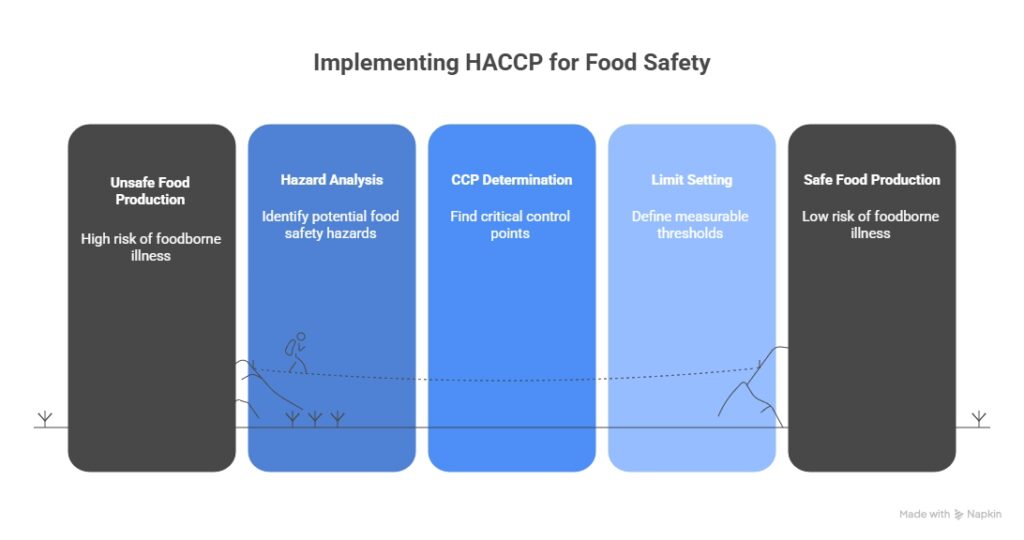
  • Conduct a Hazard Analysis – Identify where and how food safety hazards may occur.
  • Determine Critical Control Points (CCPs) – Find steps where control is essential.
  • Set Critical Limits – Define measurable thresholds (e.g., cooking to 75 °C).
  • Monitor CCPs – Regularly check temperatures and procedures.
  • Establish Corrective Actions – Take immediate steps when limits are breached.
  • Verify the System – Review records and processes to confirm effectiveness.
  • Keep Documentation – Maintain logs and reports for inspections.

Following these principles ensures food remains safe from production to plate and demonstrates legal compliance.

How HACCP Prevents Foodborne Illness

HACCP reduces the risk of foodborne diseases by ensuring each step in the food chain is controlled and verified.
By monitoring critical points like cooking, cooling, storage, and transport, businesses can stop bacterial growth and prevent cross-contamination.

This systematic approach also builds a culture of safety — where staff understand their roles and are empowered to act immediately if something goes wrong.

Training – The Key to Effective HACCP Implementation

Fast-Track Your Food Safety Knowledge

With Apex Learning’s Fast-Track Option, you can complete your Level 3 Food Hygiene course in just 4–6 weeks, studying 100% online at your own pace.

You’ll gain lifetime access to learning resources, interactive HACCP modules, and expert tutor support — plus earn a CPD-Accredited or QLS-Endorsed certificate that’s widely recognised across the UK food industry.

For those looking to build advanced compliance and audit skills, you can also enrol in the Certificate in Food Hygiene and Safety at QLS Level 3 — the perfect next step for managers and supervisors who want to strengthen their HACCP knowledge and ensure full regulatory compliance.

External Resources

Conclusion: Compliance Protects Your Business

The HACCP system is the foundation of safe food production in the UK. By identifying risks and controlling them at critical points, businesses can dramatically reduce the incidence of foodborne illness.

Investing in accredited training not only protects your customers but also strengthens your reputation and legal compliance.
Stay ahead of regulations and build a culture of safety with:

Because prevention through education is the best protection against foodborne illness.

FAQs

1. What is the role of HACCP in preventing foodborne illness?

HACCP prevents foodborne illness by identifying and controlling hazards such as bacteria, allergens, or chemicals at every stage of food production.

2. Why is HACCP important for UK food businesses?

It’s a legal requirement under UK food hygiene laws and ensures safe, compliant operations that protect customers and maintain your FSA rating.

3. Who needs HACCP training?

All food handlers need HACCP awareness, while managers and supervisors should complete Level 3 Food Hygiene training to implement and monitor safety systems.

4. What hazards does HACCP control?

It controls biological, chemical, physical, and allergenic hazards — from bacteria like E. coli to cross-contamination and cleaning chemical residues.

5. How is HACCP different from food hygiene?

HACCP is a management system for hazard prevention, while food hygiene covers daily practices like cleaning, storage, and temperature control.

Our Blogs

Latest blog posts

The Role of HACCP in Food Manufacturing and Processing" alt="The Role of HACCP in Food Manufacturing and Processing" />

HACCP in food manufacturing and processing explained. Learn how HACCP improves food safety, compliance, and careers in the UK food industry.

HACCP in Catering and Hospitality: A Complete Guide" alt="HACCP in Catering and Hospitality: A Complete Guide" />

Learn how HACCP applies to catering and hospitality in the UK. Discover compliance steps, training, and best practices to ensure food safety and customer trust.

Cross-Contamination in Food: Risks and Prevention" alt="Cross-Contamination in Food: Risks and Prevention" />

Cross-contamination is one of the biggest causes of food borne illness in the UK. Learn the risks, prevention steps and training you need to stay compliant.