



Food safety is non-negotiable in modern food manufacturing and processing. With increasing regulatory scrutiny, higher consumer expectations, and zero tolerance for contamination, businesses must adopt structured systems that prevent risks before they occur. This is where HACCP (Hazard Analysis and Critical Control Points) plays a central role.
HACCP is not just a best-practice framework — it is a legally expected approach across UK food operations. Whether you operate a food production line, manage a catering facility, or oversee hygiene standards, understanding HACCP is crucial for ensuring compliance, maintaining quality control, and promoting long-term business sustainability.

HACCP is a preventive food safety management system that identifies, evaluates, and controls hazards throughout the food production process. Instead of reacting to problems after contamination occurs, HACCP focuses on anticipating risks and implementing controls at critical stages.
In food manufacturing and processing, hazards typically fall into three categories:
- Biological hazards – bacteria, viruses, moulds, and pathogens
- Chemical hazards – cleaning agents, allergens, additives
- Physical hazards – foreign objects such as glass, metal, or plastic
By systematically analysing each stage of production — from raw material sourcing to final distribution — HACCP ensures food is safe, traceable, and compliant with UK food safety legislation.
HACCP in Food Manufacturing: Where It Fits
Food manufacturing environments are complex. Multiple ingredients, machinery, staff, and processes increase the risk of contamination. HACCP acts as the backbone of food safety management by:
- Identifying Critical Control Points (CCPs) where risks must be controlled
- Setting critical limits (e.g. temperature, time, storage conditions)
- Establishing monitoring procedures to ensure compliance
- Defining corrective actions when standards are not met
- Maintaining documentation and records for inspections and audits
For manufacturers, HACCP is not optional — it underpins Food Safety Management Systems (FSMS) and is routinely assessed during inspections by UK authorities.
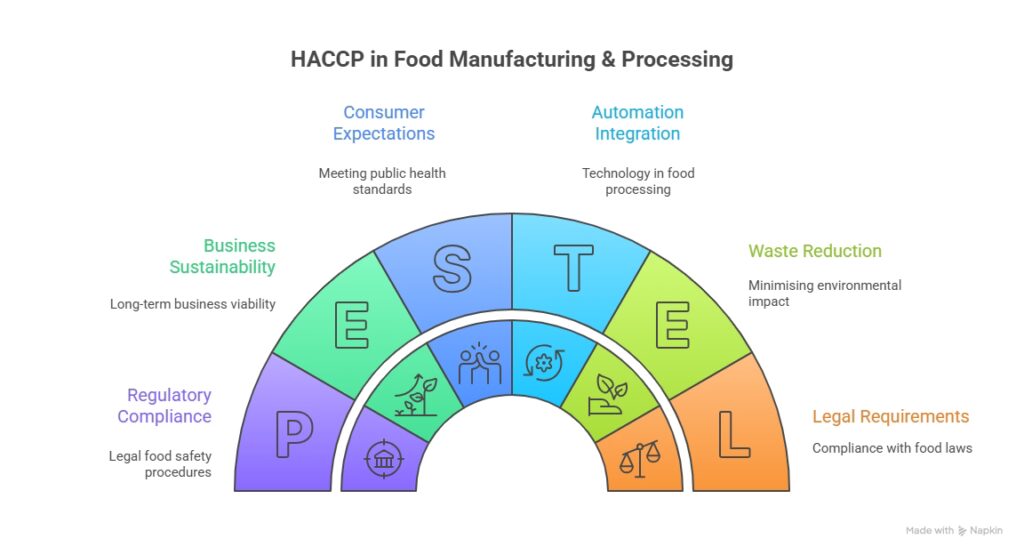
HACCP in Food Processing: Protecting Quality at Scale
Food processing often involves high-volume production, automation, and supply chains that stretch across regions or countries. In this context, HACCP protects both consumer health and brand reputation.
Effective HACCP implementation in processing environments helps to:
- Prevent cross-contamination during preparation and packaging
- Control allergens in multi-product facilities
- Ensure safe cooking, cooling, freezing, and storage practices
- Reduce food waste caused by safety failures
- Demonstrate due diligence during audits and legal checks
Professionals working in food processing roles are increasingly expected to understand HACCP principles, documentation, and supervision responsibilities — particularly at Level 3 and above.
Legal and Regulatory Importance of HACCP in the UK
UK food businesses are legally required to have food safety procedures based on HACCP principles. Regulatory bodies such as the Food Standards Agency clearly state that all food businesses must put in place, implement, and maintain HACCP-based systems.
Failure to comply can lead to:
- Enforcement notices or fines
- Temporary or permanent business closure
- Loss of consumer trust
- Damage to professional reputation
For supervisors, managers, and food safety officers, formal HACCP training is often essential to meet legal and professional expectations.

How Level 3 Food Hygiene Training Supports HACCP Compliance
HACCP is not an isolated concept — it is deeply integrated into advanced food hygiene and safety training. Courses such as Food Hygiene Level 3 and Food Hygiene and Safety at QLS Level 3 are specifically designed to build HACCP competence.
Through structured learning, professionals gain:
- A clear understanding of food safety legislation
- Practical knowledge of hazard identification and risk control
- Insight into FSMS and HACCP documentation
- The ability to supervise staff and enforce hygiene standards
- Confidence to manage inspections, audits, and compliance checks
If you are responsible for food safety decisions, Level 3 training is widely recognised as the appropriate standard.
Fast-Track Your Food Safety Knowledge
If you’re looking for a flexible and efficient way to gain HACCP-focused food safety skills, online training offers a practical solution.
By enrolling in a CPD-accredited programme such as Food Hygiene Level 3 or Certificate in Food Hygiene and Safety at QLS Level 3, you can:
- Study 100% online at your own pace
- Learn HACCP principles aligned with UK legislation
- Strengthen your CV with a CPD-accredited certificate
- Refresh your knowledge anytime with lifetime access
With consistent study, many learners complete their training within weeks — without disrupting work or personal commitments. Choosing the right course allows you to meet compliance requirements while advancing your career in food manufacturing, processing, or safety management.
External Authoritative Sources on HACCP
- Food Standards Agency
- World Health Organisation systems
- Codex Alimentarius Commission
- Health and Safety Executive
- Chartered Institute of Environmental Health
Why HACCP Knowledge Improves Career Prospects
HACCP expertise is highly valued across the food industry. Employers actively seek candidates who can demonstrate knowledge of food safety systems, supervision, and compliance.
Roles that strongly benefit from HACCP training include:
- Food Safety Manager
- Hygiene Supervisor
- Quality Assurance Officer
- Food Production Supervisor
- Food Safety Consultant
As regulations tighten and inspections become more rigorous, HACCP competence is no longer a “nice to have” — it is a professional necessity.
Final Thoughts
HACCP plays a critical role in safeguarding food quality, protecting public health, and ensuring legal compliance in food manufacturing and processing. Whether you are supervising staff, managing operations, or preparing for inspections, a strong understanding of HACCP is essential.
By combining HACCP-based knowledge with recognised Level 3 food hygiene training, you position yourself as a competent, compliant, and career-ready professional in the UK food industry.
If you’d like, I can now:
- Optimise this blog further for featured snippets & AI Overviews
- Add internal anchor-text mapping for Apex course pages
Create a conversion-focused CTA section tailored to Apex Learning
Conclusion – Safe Service Builds Stronger Businesses
HACCP is the backbone of food safety in food manufacturing and processing. It moves businesses away from reactive problem-solving towards proactive risk prevention, protecting consumers, staff, and brand reputation. In the UK, HACCP-based procedures are not optional — they are a legal and operational expectation across all food operations.
By developing a strong understanding of HACCP through Food Hygiene Level 3 and Food Hygiene and Safety at QLS Level 3 training, professionals gain the confidence to manage hazards, supervise staff effectively, pass inspections, and maintain consistently high hygiene standards. For anyone responsible for food safety decisions, HACCP knowledge directly improves compliance, employability, and long-term career progression in the food industry.
FAQs
What does HACCP stand for in food manufacturing?
HACCP stands for Hazard Analysis and Critical Control Points. It is a systematic approach used in food manufacturing and processing to identify, assess, and control biological, chemical, and physical hazards that could compromise food safety.
Is HACCP legally required in the UK?
Yes. UK food businesses are legally required to have food safety management procedures based on HACCP principles, as outlined by the Food Standards Agency. This applies to manufacturers, processors, caterers, and food retailers.
What level of training covers HACCP properly?
HACCP is covered in depth in Food Hygiene Level 3 and Food Hygiene and Safety at QLS Level 3 courses. These levels are suitable for supervisors, managers, and anyone responsible for implementing or overseeing food safety systems.
Who needs HACCP training?
HACCP training is essential for:
- Food manufacturing and processing supervisors
- Food safety managers
- Hygiene supervisors
- Quality assurance and compliance officers
- Food business owners and managers
Anyone making food safety decisions benefits from formal HACCP education.
How does HACCP reduce food contamination risks?
HACCP reduces contamination by identifying Critical Control Points in the production process and applying strict controls such as temperature limits, hygiene procedures, monitoring systems, and corrective actions before food reaches consumers.
Can HACCP be learned through online courses?
Yes. CPD-accredited online courses allow learners to study HACCP principles flexibly, at their own pace, while still meeting UK food safety training standards. Online learning is widely accepted across the food industry.
Does HACCP help with food safety inspections?
Absolutely. Businesses with documented HACCP procedures are better prepared for inspections, audits, and enforcement visits. Inspectors expect clear evidence of hazard analysis, monitoring records, and corrective actions.
Is HACCP useful for career progression?
Yes. HACCP knowledge significantly improves employability and career progression in roles such as Food Safety Manager, Hygiene Supervisor, Quality Assurance Officer, and Food Safety Consultant.
 " alt="The 6 Principles of Safeguarding: Protect Before Harm Happens" />
 " alt="Personal Development Goals: 5 Meaningful Examples That Work" />
 " alt="TILE in Manual Handling: Meaning, Checklist & Safer Lifting Guide" />