


Introduction – Safety That Serves Everyone
In the fast-paced world of catering and hospitality, food safety defines your reputation. Every plate that leaves the kitchen must be safe, hygienic, and compliant with UK law. That’s where HACCP (Hazard Analysis and Critical Control Point) comes in.
HACCP provides a step-by-step approach to preventing food contamination. It’s a legal requirement under the Food Hygiene (England) Regulations 2013 and a best practice standard recognised by the Food Standards Agency (FSA).
Whether you manage a restaurant, hotel, café, or catering company, understanding HACCP ensures compliance, protects customers, and strengthens your brand’s credibility.
What Is HACCP and Why Does It Matter in Hospitality
HACCP is a preventive food safety management system that identifies, evaluates, and controls hazards that could compromise food safety.
In the UK catering industry, it helps:
- Prevent contamination at every stage — from storage to service
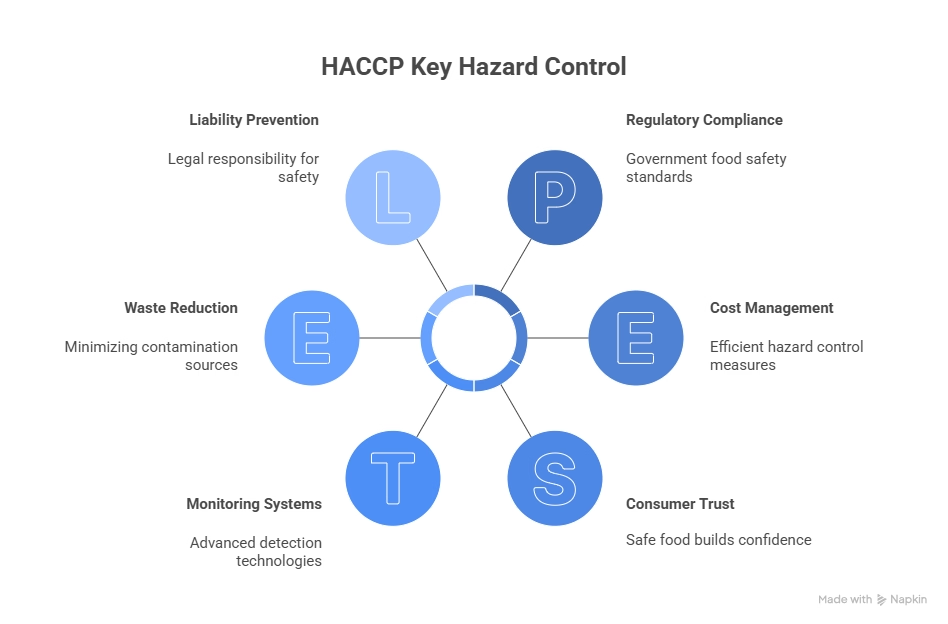
- Maintain food hygiene ratings
- Reduce legal and financial risks
- Build customer confidence
Every catering and hospitality business, regardless of size, must have a HACCP plan in place.
Key Hazards Controlled by HACCP
- Biological Hazards – Bacteria like Salmonella or Listeria from raw or undercooked food.
- Chemical Hazards – Residues from cleaning agents or pest control chemicals.
- Physical Hazards – Foreign objects like glass, hair, or packaging fragments.
- Allergenic Hazards – Traces of nuts, gluten, or dairy can cause allergic reactions.
Recognising and managing these hazards through HACCP ensures that every meal is safe for consumption.
The 7 Principles of HACCP in Catering and Hospitality
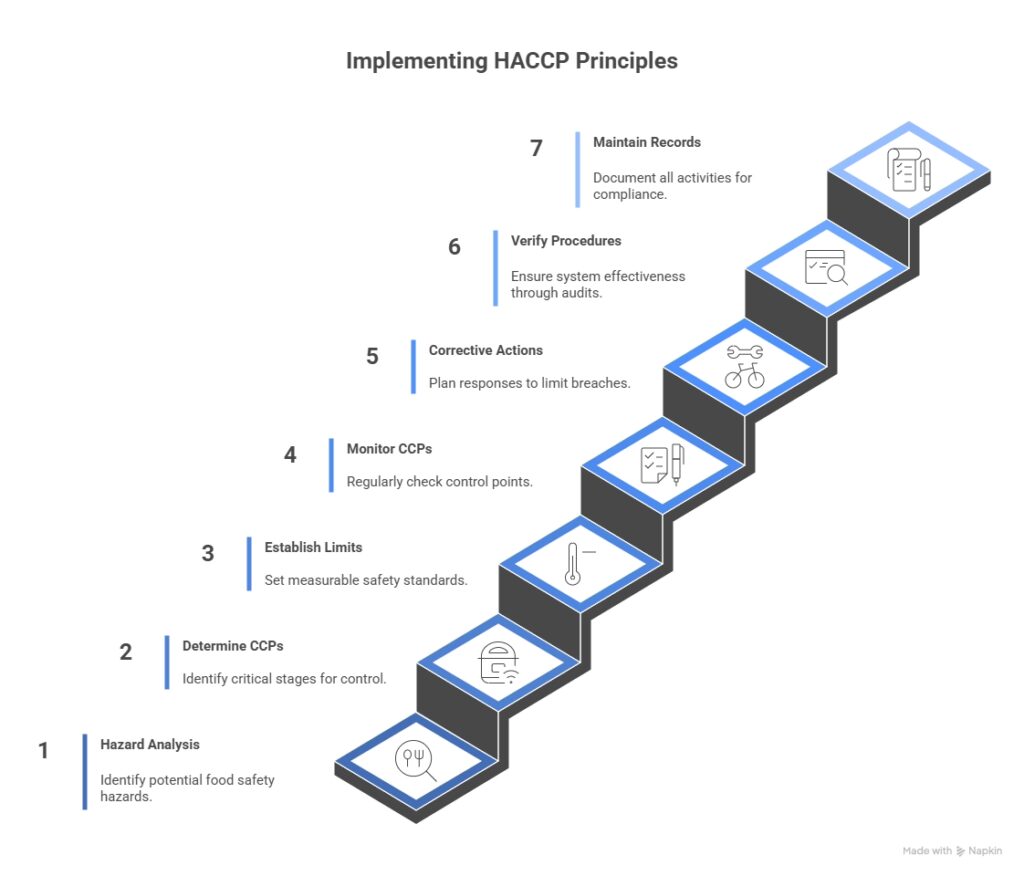
- Conduct a Hazard Analysis – Identify potential hazards during food handling.
- Determine Critical Control Points (CCPs) – Stages where control is crucial, such as cooking or cooling.
- Establish Critical Limits – Set measurable standards like minimum cooking temperatures.
- Monitor CCPs – Regularly record and check each control point.
- Establish Corrective Actions – Plan what to do when a limit isn’t met.
- Verify Procedures – Ensure your system works through audits and inspections.
- Maintain Records – Document everything to prove compliance.
Implementing HACCP in a Hospitality Business
- Assess Your Food Flow – From ingredient delivery to service.
- Write a HACCP Plan – Document hazards, controls, and responsibilities.
- Train Your Team – All staff must understand their hygiene duties.
- Monitor Performance – Keep records and review them regularly.
- Update When Needed – Revise plans after menu or process changes.
Courses like the Food Hygiene Level 3 Training (CPD Accredited) and Certificate in Food Hygiene and Safety at QLS Level 3 give managers the skills to build and maintain a compliant HACCP system.
Benefits of HACCP for Catering and Hospitality Businesses
- Ensures legal compliance with UK regulations
- Prevents costly foodborne illness outbreaks
- Boosts FSA food hygiene ratings
- Enhances staff accountability and efficiency
- Builds trust with customers and inspectors
Fast-Track Your Food Safety Knowledge
With Apex Learning’s Fast-Track Option, you can complete your Level 3 HACCP and Food Hygiene certification in just 4–6 weeks.
Study 100% online with lifetime access, interactive lessons, and expert tutor support. Upon completion, you’ll earn a CPD-accredited or QLS-endorsed certificate recognised across the UK catering and hospitality sector.
Explore:
External References
Conclusion – Safe Service Builds Stronger Businesses
HACCP isn’t just a requirement — it’s a reputation safeguard. By applying its principles, you protect your customers, strengthen compliance, and boost operational excellence.
Get started today and take your business to the next level of food safety with:
Because in hospitality, trust is served with every meal.
FAQs
1. What is HACCP in catering and hospitality?
HACCP (Hazard Analysis and Critical Control Point) is a preventive food safety system used to identify, monitor, and control risks in food handling, preparation, and service. It ensures compliance with UK food hygiene laws.
2. Is HACCP mandatory for catering businesses in the UK?
Yes. All catering and hospitality businesses must follow HACCP-based procedures under the Food Hygiene (England) Regulations 2013 and EC Regulation 852/2004.
3. Why is HACCP important for restaurants and hotels?
HACCP helps prevent foodborne illnesses, maintain hygiene ratings, reduce waste, and prove compliance during FSA inspections — protecting both customers and your business reputation.
4. Who should receive HACCP training?
All food handlers, supervisors, and managers in catering and hospitality should complete recognised food hygiene courses such as
Food Hygiene Level 3 Training (CPD Accredited)
or
Certificate in Food Hygiene and Safety at QLS Level 3.
5. Can HACCP training be done online?
Yes. With Apex Learning, you can study HACCP and food hygiene 100% online, with access, support, and certification recognised across the UK.
6. What are the benefits of HACCP certification?
It improves food safety management, boosts FSA ratings, reduces contamination risks, and enhances employability in the UK catering and hospitality sector.
7. How often should HACCP systems be reviewed?
HACCP plans should be reviewed at least annually or whenever there are changes in the menu, process, or legislation to ensure continuous compliance.
8. What is the best Level 3 HACCP course in the UK?
The Food Hygiene Level 3 Training (CPD Accredited) and the Certificate in Food Hygiene and Safety at QLS Level 3 are ideal for managers, supervisors, and hospitality professionals seeking UK-recognised HACCP certification.
" alt="The Role of HACCP in Food Manufacturing and Processing" />
" alt="Cross-Contamination in Food: Risks and Prevention" />