


In the UK food industry, HACCP (Hazard Analysis and Critical Control Point) is more than just a system — it’s a legal requirement and the foundation of every compliant food operation. Whether you manage a café, catering business, or food factory, having a documented HACCP plan ensures you identify, monitor, and control risks before they affect your customers.
The Food Standards Agency (FSA) states that all food businesses must implement a HACCP-based food safety management system. Without one, you risk non-compliance, fines, or closure.
If you’re unsure where to start, this guide will walk you through how to create a HACCP plan step by step, and how accredited training can help you do it right the first time.
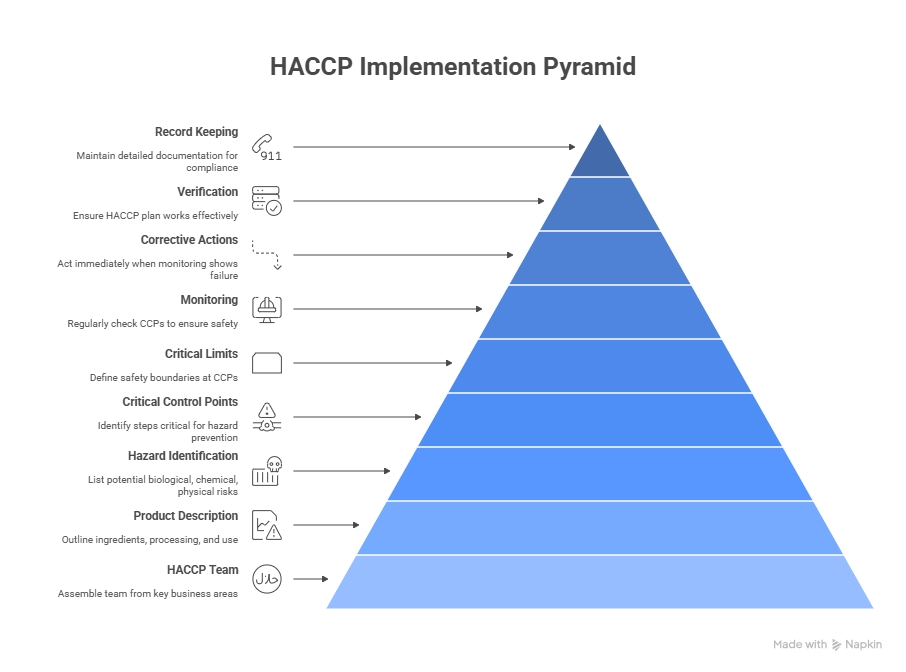
Step 1: Build Your HACCP Team
A HACCP plan isn’t a solo project — it requires collaboration.
Assemble a team with members from all key areas of your business, including management, kitchen staff, quality control, and maintenance. Each member should understand their role in maintaining food safety.
Tip: If your team lacks HACCP knowledge, consider taking a recognised course such as the Food Hygiene Level 3 Training (CPD Accredited) or the QLS Level 3 Certificate in Food Hygiene and Safety.
Step 2: Describe the Product and Its Use
Clearly outline the product you handle — including its ingredients, processing methods, packaging, storage, and distribution.
Define how and where it will be consumed (e.g. ready-to-eat, reheated, or cooked). This information forms the foundation of your HACCP analysis.
Step 3: Identify Potential Hazards
List all possible biological, chemical, physical, and allergenic hazards that could affect food safety at each stage of production or handling.
Examples include:
- Biological: Salmonella, Listeria, or E. coli contamination
- Chemical: cleaning agents or residues
- Physical: metal, glass, or hair
- Allergenic: undeclared nuts or gluten
Step 4: Determine the Critical Control Points (CCPs)
Identify which steps in your process are critical for preventing or eliminating hazards.
Typical CCPs include:
- Cooking temperatures (e.g. poultry at 75 °C)
- Cooling and storage procedures
- Allergen labelling and segregation
- Each CCP must have a specific monitoring and corrective action plan.
Step 5: Establish Critical Limits
- Critical limits define the safety boundaries at each CCP. For instance:
- Fridge temperature must be below 5 °C
- Hot-holding food must stay above 63 °C
- Cooking time must achieve the target core temperature
Exceeding these limits indicates a food safety risk that must trigger corrective action.
Step 6: Monitor Each CCP
Regularly check your critical control points to ensure they stay within safe limits.
Use tools such as:
- Temperature probes
- Monitoring checklists
- Digital logs or HACCP software
- Document all findings accurately — they’re vital for inspections and audits.
Step 7: Establish Corrective Actions
When monitoring shows a failure, you must act immediately.
Corrective actions may include:
- Discarding unsafe food
- Re-cooking to safe temperatures
- Re-training staff to prevent recurrence
- The goal is to protect the customer and prevent the issue from repeating.
Step 8: Verify the HACCP System
Verification ensures your HACCP plan actually works. This may involve:
- Reviewing monitoring records
- Conducting internal audits
- Reassessing procedures after menu or process changes
- Regular verification demonstrates due diligence to local authorities.
Step 9: Keep Detailed Records
Documentation is proof of compliance. Keep written or digital records of:
- Monitoring logs
- Corrective actions
- Equipment calibration
- Staff training certificates
During an FSA inspection, these records show your commitment to food safety and help you maintain a high hygiene rating.
Fast-Track Your HACCP Certification
If you want to implement a HACCP plan quickly, choose Apex Learning’s Fast-Track Option. Complete your Level 3 Food Hygiene and Safety or QLS Certificate in as little as 4–6 weeks, studying 100 % online at your own pace.
You’ll gain lifetime access, tutor support, and a recognised certificate that boosts both compliance and career potential.
External Resources for Reference
Conclusion: Your Plan, Your Protection
Creating a HACCP plan step by step helps ensure your business stays safe, compliant, and inspection-ready. It protects your customers, staff, and brand reputation — and it’s a legal must-have for any UK food business.
Gain the knowledge and confidence to design a compliant plan through accredited training with Apex Learning:
FAQs
1. What is a HACCP plan, and why is it important?
A HACCP plan (Hazard Analysis and Critical Control Point) is a structured system that identifies and controls potential hazards in food production. It ensures your business complies with UK law, prevents contamination, and demonstrates due diligence during FSA inspections.
2. Who needs a HACCP plan in the UK?
Every food business in the UK — including restaurants, caterers, cafés, and manufacturers — must have a HACCP plan in place under the Food Hygiene (England) Regulations 2013 and EU Regulation (EC) No 852/2004. It’s a legal requirement for compliance and customer safety.
3. What are the seven principles of HACCP?
The seven HACCP principles are:
- Conduct a hazard analysis
- Identify critical control points (CCPs)
- Establish critical limits
- Monitor CCPs
- Take corrective actions
- Verify the HACCP system
- Keep detailed records
These steps ensure full control over food safety at every stage of production.
4. How do I start creating a HACCP plan?
Begin by forming a HACCP team, describing your products, and mapping out your food process from start to finish. Then, identify hazards, set critical limits, and document everything.
If you’re new to HACCP, take a structured course such as the Food Hygiene Level 3 Training (CPD Accredited) to learn how to build a compliant plan.
5. Do I need formal training to create a HACCP plan?
While small businesses can use FSA templates, formal training is highly recommended — especially for supervisors and managers. Completing a Level 3 Food Hygiene or QLS Food Safety course equips you with the knowledge to create, implement, and verify HACCP plans correctly.
6. How often should a HACCP plan be reviewed?
The Food Standards Agency (FSA) recommends reviewing your HACCP plan at least annually or whenever there’s a change in menu, process, or legislation. Regular updates ensure continuous compliance and safe operations.
7. Can I create a HACCP plan online?
Yes. You can learn the full process online through Apex Learning’s accredited courses. The CPD Level 3 Food Hygiene Course and QLS Level 3 Certificate in Food Hygiene and Safety provide flexible, online modules with tutor support and lifetime access.
" alt="The 6 Principles of Safeguarding: Protect Before Harm Happens" />
" alt="Personal Development Goals: 5 Meaningful Examples That Work" />
" alt="TILE in Manual Handling: Meaning, Checklist & Safer Lifting Guide" />