

When it comes to keeping food safe in the UK, two terms frequently appear: HACCP and Food Hygiene. Many business owners and catering professionals use them interchangeably, but they’re not the same.
Both are essential parts of your legal food safety responsibilities — yet they serve very different purposes.
If you manage a restaurant, café, catering company, or food production facility, understanding how HACCP and food hygiene work together is critical to compliance and customer safety.
To ensure your team meets UK food standards, consider enrolling in:
Food Hygiene Level 3 Training (CPD Accredited)
Certificate in Food Hygiene and Safety at QLS Level 3
What Is HACCP?
HACCP stands for Hazard Analysis and Critical Control Point — a structured, preventive food safety system that identifies, monitors, and controls risks in food handling and production.
It focuses on preventing problems before they happen by assessing biological, chemical, physical, and allergenic hazards throughout the food process.
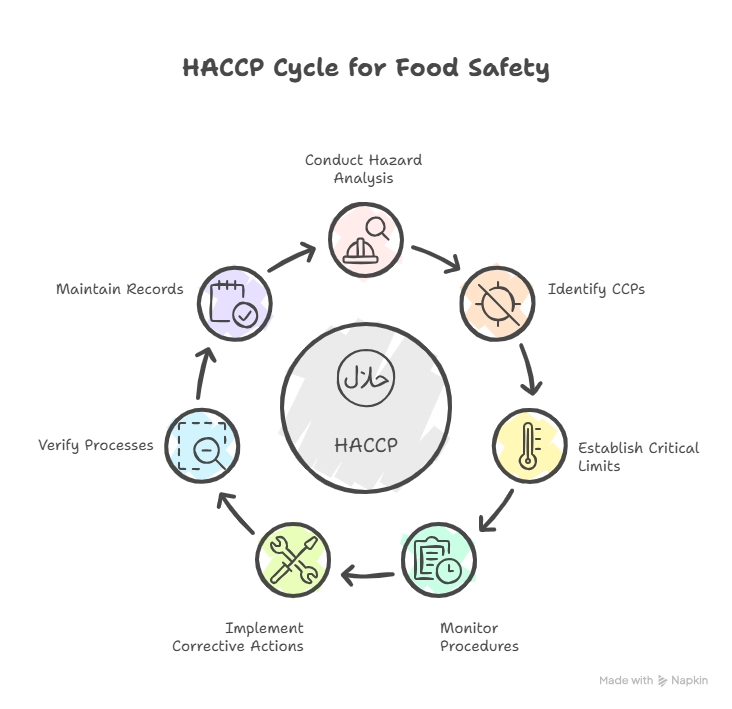
Key HACCP Principles Include:
- Conducting a hazard analysis
- Identifying critical control points (CCPs)
- Establishing critical limits (e.g. cooking temperatures)
- Monitoring procedures
- Corrective actions
- Verification processes
- Record keeping
In short, HACCP ensures your business has a documented, step-by-step plan for managing risks — a legal requirement under the Food Hygiene (England) Regulations 2013 and EU Regulation (EC) No 852/2004.
What Is Food Hygiene?
Food hygiene is the daily practice of handling, storing, and preparing food safely to prevent contamination and illness. It’s the behavioural side of food safety — everything from washing hands to cleaning equipment and managing temperature control.
Good Food Hygiene Involves:
- Proper personal hygiene for food handlers
- Effective cleaning and disinfection routines
- Safe storage and temperature control
- Preventing cross-contamination between raw and cooked foods
- Maintaining accurate hygiene records
In the UK, food hygiene practices are assessed through FSA hygiene inspections, which determine your Food Hygiene Rating (0–5).
HACCP vs Food Hygiene: Key Differences at a Glance
Aspect | HACCP | Food Hygiene |
Definition | A systematic, documented approach to identifying and controlling food hazards | Everyday food handling, cleaning, and storage practices to maintain safety |
Purpose | To prevent contamination and ensure legal compliance | To maintain cleanliness, reduce risk, and ensure safe preparation |
Legal Requirement | Mandatory for all UK food businesses | Mandatory for all food handlers |
Focus | Hazard identification and prevention | Personal, environmental, and operational hygiene |
Who Uses It | Managers, supervisors, and food safety officers | All staff handling or preparing food |
Training Needed | Level 3 Food Hygiene or HACCP Training | Level 1–3 Food Hygiene Training |
Why You Need Both HACCP and Food Hygiene Training
UK law doesn’t just require safe practices — it requires proof of competence.
Training your staff in both HACCP and food hygiene ensures:
- Full compliance with UK legislation
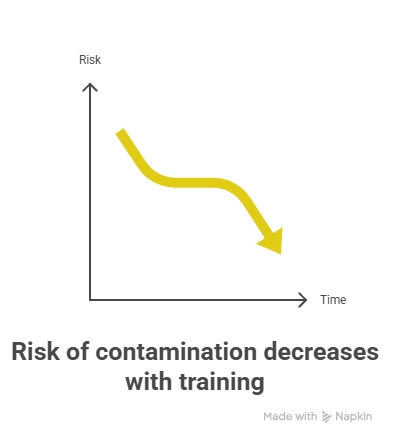
- Reduced risk of contamination and foodborne illness
- Better FSA hygiene ratings
- Improved staff accountability and confidence
If you supervise or manage food operations, you’re legally responsible for ensuring your team understands HACCP principles and hygiene standards.
A Level 3 qualification gives you the skills to lead confidently and pass audits without stress.
👉 Enrol today in the Food Hygiene Level 3 Training (CPD Accredited) or the Certificate in Food Hygiene and Safety at QLS Level 3 to strengthen compliance and career growth.
Fast-Track Your Certification
Apex Learning’s Fast-Track Option lets you complete your Level 3 course in just 4–6 weeks. Study entirely online, at your own pace, with tutor support and lifetime access.
You can take your assessment whenever you’re ready — ideal for busy professionals who need to meet compliance quickly.
External Resources for Reference
Conclusion: Two Sides of the Same Safety Coin
In the UK food industry, HACCP and food hygiene go hand in hand. HACCP creates the structure to manage risks, while food hygiene ensures those safety standards are applied every day.
Ignoring either puts your customers — and your business — at risk.
By completing Level 3 Food Hygiene and HACCP-based training, you’ll gain the skills, confidence, and certification to lead safe, compliant, and trusted food operations.
Start your journey today:
Because in food safety, knowledge isn’t optional — it’s protection.
FAQs
1. What is the difference between HACCP and food hygiene?
HACCP (Hazard Analysis and Critical Control Point) is a structured food safety management system designed to identify and control risks throughout the food process.
2. Do UK food businesses need both HACCP and food hygiene training?
Yes. Every UK food business must follow HACCP-based systems and ensure staff are trained in food hygiene practices.
Supervisors and managers should complete advanced courses such as the Food Hygiene Level 3 Training (CPD Accredited) or the Certificate in Food Hygiene and Safety at QLS Level 3 to ensure full compliance and effective hazard management.
3. Which comes first — HACCP or food hygiene?
Food hygiene comes first as the foundation of safe food handling. Once basic hygiene practices are in place, a HACCP plan builds on them by identifying and monitoring specific hazards. Together, they form a complete food safety framework for UK catering and hospitality operations.
4. Is HACCP training mandatory in the UK?
Yes. The Food Hygiene (England) Regulations 2013 and retained EU Regulation (EC) No 852/2004 require all UK food businesses to implement a HACCP-based safety management system.
Proper training ensures staff understand their responsibilities and can apply HACCP principles effectively.
5. Who should take Level 3 Food Hygiene training?
Level 3 training is ideal for supervisors, managers, head chefs, and catering business owners responsible for overseeing food safety. It provides advanced knowledge of HACCP, UK regulations, and inspection readiness.
6. How often should HACCP and food hygiene training be renewed?
The Food Standards Agency (FSA) recommends updating both HACCP and food hygiene training every three years, or sooner if processes, menus, or legislation change. Regular refreshers help businesses remain compliant and inspection-ready.
7. Can I complete HACCP and food hygiene training online?
Absolutely. Apex Learning offers flexible, 100 per cent online courses that are CPD QS Accredited and QLS Endorsed, allowing you to study at your own pace and earn certificates recognised across the UK.
" alt="The 6 Principles of Safeguarding: Protect Before Harm Happens" />

" alt="Personal Development Goals: 5 Meaningful Examples That Work" />

" alt="TILE in Manual Handling: Meaning, Checklist & Safer Lifting Guide" />