


Some common strengths you can mention include communication skills, problem-solving, and adaptability. On the flip side, weaknesses like perfectionism or public speaking can work in your favour when framed as areas of improvement.
This blog explores 10 examples of strengths and weaknesses you can use to stand out in interviews. By the time you’re done reading, you’ll know exactly how to handle this question with confidence. Ready to turn a tricky moment into your time to shine? Let’s explore all the deets!
Why Interviewers Ask About Strengths and Weaknesses
Understanding the Question:
So, why do interviewers ask about strengths and weaknesses? It’s not just to put you on the spot, though it can feel like it. They’re trying to see if you’re self-aware.
They try to navigate through questions like- Do you really know what you’re good at? And just as important—do you know where you could improve? According to the National Careers Service, employers are not looking for perfection. They want honesty. A bit of humility. And proof that you’re willing to grow.
What They’re Looking For:
The problem is that your responses must be appropriate for the position. Emphasising teamwork as a strength is effective when seeking for a leadership role. However, it doesn’t really tell them anything if you say something ambiguous like “I’m a hard worker,” does it?
And for weaknesses, they’re not looking for deal-breakers. Show them you’ve got a plan. Maybe public speaking isn’t your strong suit, but you’re working on it. That’s what they want to hear.
The bottom line is these questions are a chance to show you’re self-aware, realistic, and always improving.
Tips for Answering Questions About Strengths
Answering questions about your strengths is your time to shine, just keep it relevant, authentic, and backed by examples. That’s what interviewers are looking for!
1. Focus on Relevance:
Pick strengths that match the job description. If the role requires teamwork, mention your collaboration skills. Applying for a leadership role? Highlight your ability to motivate and guide a team. Relevance is key.
2. Back It Up with Examples:
Saying “I’m a great communicator” isn’t enough. Share a specific example. Did you successfully lead a meeting or resolve a conflict? Employers love real-life stories, they make your strengths feel more credible and relatable.
3. Be Confident but Genuine:
Own your strengths without bragging. It’s a fine line, but humility goes a long way. Instead of “I’m the best at solving problems,” try “I’m great at thinking on my feet, which has helped me tackle some tough challenges at work.”
4. Use the STAR Method:
Structure your answer with STAR: Situation, Task, Action, and Result. For example, explain a time when your problem-solving skills helped your team meet a tight deadline. This keeps your answer clear and impactful.
5. Curate Your Answer for the Role:
Every job is different, so customise your response. Think about what the employer values most and show how your strengths align with their needs.
5 Examples of Strengths for Job Interviews
Highlighting these strengths with specific examples not only makes your answers credible but also shows how your skills can benefit the company. Here’s a list:
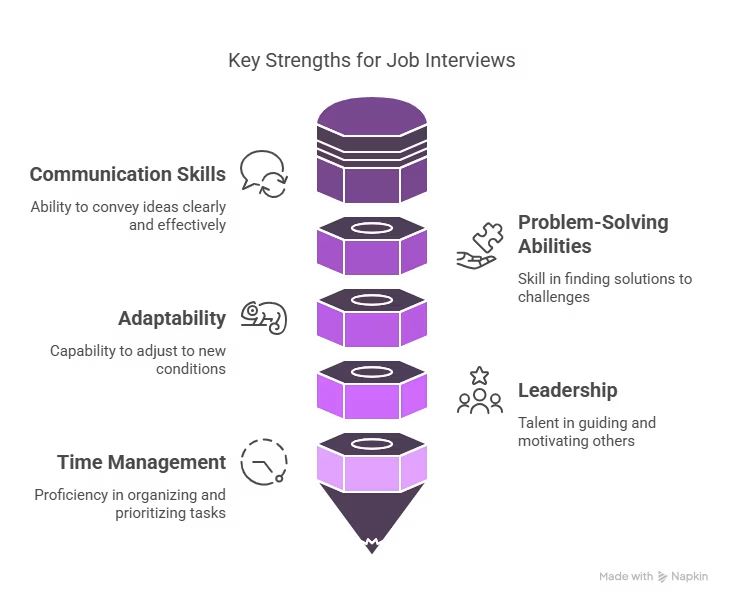
1. Communication Skills
Example:
“I’m great at breaking down complex ideas into simple, actionable steps. In my previous role, I led weekly team meetings and ensured everyone was on the same page, which improved our project delivery timelines by 15%.”
2. Problem-Solving Abilities
Example:
“I thrive under pressure and enjoy finding solutions to tough challenges. For instance, when a client project faced delays, I identified alternative resources and adjusted timelines, ensuring we met the deadline without compromising quality.”
3. Adaptability
Example:
“I adjust quickly to new environments and changes. When my company transitioned to remote work, I helped my team adapt by introducing digital tools, boosting our productivity despite the shift.”
4. Leadership
Example:
“I enjoy motivating others and leading by example. In my last role, I mentored three junior team members, helping them improve their skills and achieve their personal targets, which contributed to our team’s overall success.”
5. Time Management
Example:
“I’m skilled at prioritising tasks to meet deadlines. While managing multiple projects, I used tools to keep everything organised, delivering all assignments on time and exceeding client expectations.”

Tips for Answering Questions About Weaknesses
1. Be Honest but Strategic:
Employers are aware that no one is flawless. Select a real weakness, but make sure it doesn’t conflict with the role. For instance, if your employment involves meeting deadlines, don’t bring up bad time management.
2. Show Growth:
Transform your shortcomings into a story of progress. If you’re not good at public speaking, explain how you’ve started taking classes or offering to give speeches to improve. This demonstrates your initiative and growth readiness.
3. Avoid Overused or Cliché Answers:
If you don’t describe how your perfectionist characteristics affect your work and how you’re managing them, saying “I’m a perfectionist” can come out as forced. To make your response stand out, make it distinct and relatable.
4. Keep It Relevant but Low-Impact:
Talk about a shortcoming that isn’t essential to the position. For example, you might demonstrate self-awareness without raising red flags by claiming that you’re strengthening your Excel skills if the position doesn’t include numbers.
5. End on a Positive Note:
Finish by concentrating on your growth or lessons learnt. For instance, “My team’s productivity has significantly increased as a result of my efforts to delegate tasks more effectively.”
5 Examples of Weaknesses for Job Interviews
These examples show self-awareness and a proactive approach to growth, turning weaknesses into opportunities to demonstrate your ability to improve and adapt.
1. Public Speaking
Example:
“I’ve always found public speaking challenging, but I’m actively working to improve. I’ve started taking online courses and volunteering to lead small team presentations. It’s still a work in progress, but I’m getting more confident.”
2. Delegation
Example:
“I used to take on too much myself, thinking it was faster. However, I’ve learned the importance of delegation and now make an effort to assign tasks based on team members’ strengths, which has improved productivity.”
3. Perfectionism
Example:
“I can be overly focused on getting everything just right, which sometimes slows me down. To address this, I’ve started setting stricter deadlines for myself and focusing on delivering great results instead of perfect ones.”
4. Taking on Too Much
Example:
“I sometimes say yes to too many tasks, which can make it hard to prioritise. I’ve been working on setting boundaries and learning to assess what I can realistically take on, which has helped me manage my workload better.”
5. Technical Skills Gap
Example:
“I noticed that my Excel skills weren’t as strong as I wanted for data-heavy projects. To improve, I’ve been taking online courses and practicing regularly. It’s made a big difference, and I feel more confident now.”
FAQ
1. What is your strength and weaknesses’ best answer?
My ability to solve problems is my strongest suit since I like taking on tasks effectively. Although public speaking is one of my weaknesses, I’m actively working on it through workshops and brief presentation assignments.
2. What are your top 5 strengths and weaknesses examples?
Communication, leadership, flexibility, problem-solving, and time management are some of my strong points. However, my shortcomings include impatience, perfectionism, public speaking, delegation, and limitations in technical skills.
3. What are your top 3 strengths and weaknesses?
Time management, flexibility, and problem-solving are my strongest suit. Perfectionism, delegating, and public speaking are some of my faults.
4. What are 5 of your weaknesses?
Five weaknesses I acknowledge are public speaking, perfectionism, delegation, impatience, and gaps in certain technical skills.
Conclusion
It’s crucial to prepare your interview strengths and shortcomings. Spend some time thinking, rehearsing your responses, and using the examples we’ve given to create responses that are impactful and feel real. You will appear more polished and assured if you are well-prepared.
Prepare to make an impression! You can make a lasting impression and stand out in your next interview with careful planning and a little practice.
" alt="Personal Development Goals: 5 Meaningful Examples That Work" />

" alt="TILE in Manual Handling: Meaning, Checklist & Safer Lifting Guide" />
" alt="Manual Handling & Asbestos: Safe Lifting Starts Before the Load" />