





Introduction
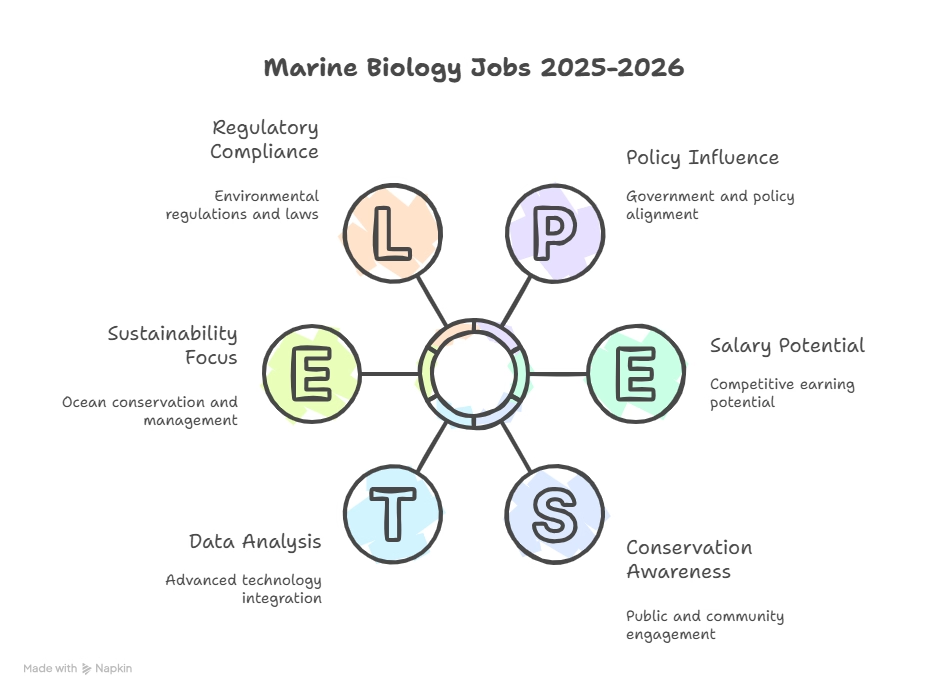
Marine biology is a captivating field that explores the diverse life forms and ecosystems beneath our oceans. For those passionate about marine life and environmental conservation, a career in marine biology offers both personal fulfilment and excellent earning potential. In 2025-2026, the demand for skilled marine biology professionals continues to grow across research, conservation, education, policy, and industry sectors. From data scientists analysing vast ocean datasets to marine engineers designing offshore structures, the range of high-paying jobs is vast and varied. This guide highlights the top 15 best-paying marine biology jobs, detailing their roles, required qualifications, and salary expectations in both the UK and the US. Whether you are just starting your career or seeking to advance in this exciting field, understanding these opportunities will help you make informed decisions to achieve professional success. Dive in to discover which marine biology careers can lead you to both a rewarding and lucrative future.
🎁 FREE COURSE! 🎁
Health, Safety & Laws at Workplace | CPD Accredited Course (Free Today!)
Recommended Courses to Start a High-Income Career
Many of the highest-paying roles require recognised training. These online courses provide practical skills to help you move into high-demand careers faster.
High demand • Practical skills • Flexible online study


Why Marine Biology Careers Are Booming in 2025-2026
In 2025, marine biology careers are thriving due to the urgent global need for ocean conservation, climate change mitigation, and sustainable resource management. Rising sea temperatures, habitat degradation, and overfishing have intensified demand for experts in marine science, environmental policy, and ecological restoration. Governments and organisations are investing heavily in marine research, offshore renewable energy, and blue biotechnology—creating diverse, well-paying roles across public, private, and academic sectors. Technological advancements such as remote sensing, GIS, and underwater robotics have expanded the field’s reach, attracting professionals with interdisciplinary skills. As a result, marine biology careers now offer strong earning potential, global relevance, and opportunities to make meaningful contributions to the planet’s future. With growing public awareness and policy support, 2025-2026 marks a pivotal year for marine professionals to lead in sustainability and innovation.
1. Data Scientist (Marine Applications)
Data Scientists specialising in marine applications play a vital role in using big data, machine learning, and geospatial analysis to monitor and protect marine environments. They interpret extensive datasets from satellites, ocean buoys, and autonomous submersibles to track trends in ocean temperatures, fish stock changes, and events like coral bleaching. These insights support evidence-based decision-making for marine policy, climate adaptation, and ecosystem management.
In the UK, marine-focused data scientists frequently collaborate with institutions such as the Met Office, DEFRA, and major academic research groups at universities like Plymouth and Southampton. A strong academic foundation in computer science, marine science, or data analytics is essential, alongside technical fluency in Python, R, and GIS software.
According to sector-wide reports and job benchmarking (as seen on Prospects.ac.uk), marine data analysts in the UK earn approximately £82,000 annually, particularly in roles with government agencies and climate research institutions. This salary reflects the increasing demand for professionals who can transform complex environmental data into impactful solutions for marine sustainability.
2. Marine Biology Professor
Marine Biology Professors in the UK are at the forefront of education, research, and policy development in marine science. They deliver lectures to undergraduate and postgraduate students, supervise PhD candidates, and contribute original research in areas such as marine biodiversity, coastal resilience, and climate impact on oceans. Professors often work at leading marine institutions such as the University of Southampton, Bangor University, and the Scottish Association for Marine Science.
To become a marine biology professor, candidates typically require a PhD in marine biology or a closely related field, followed by several years of postdoctoral research and a strong publication record. Professors are often awarded competitive grants and collaborate on international research, influencing both academic advancement and UK marine policy.
According to Prospects UK, senior lecturers and professors in marine science earn £65,000 or more, depending on their academic standing, research output, and institutional affiliation. These roles are intellectually rewarding and offer opportunities to shape future marine scientists while contributing to real-world conservation and environmental management.
🎁 FREE COURSE! 🎁
Health, Safety & Laws at Workplace | CPD Accredited Course (Free Today!)
3. Marine Scientist (Senior Researcher)
Senior Marine Scientists play a pivotal role in advancing research on critical marine issues such as ecosystem health, coastal erosion, ocean acidification, and sustainable aquaculture practices. They lead large-scale field expeditions, manage teams of research assistants, and provide expert advice to government agencies and environmental organisations on marine policy and conservation strategies. Their leadership is crucial for shaping effective responses to climate change impacts and preserving marine biodiversity.
These scientists often work with prestigious institutions like the National Oceanic and Atmospheric Administration (NOAA) in the US, the UK Centre for Environment, Fisheries and Aquaculture Science (CEFAS), and Australia’s Commonwealth Scientific and Industrial Research Organisation (CSIRO). A PhD in marine science or a related discipline is typically required, alongside a strong record of academic publications and research grants, reflecting expertise and leadership in the field.
According to the NOAA 2025 Compensation Report, the average salary for Senior Marine Scientists in the US is approximately $93,377 annually. In the UK, government scientists employed by organisations such as DEFRA or Natural England can earn around £61,000 or more, depending on experience and seniority, as reported by Prospects UK.
4. Marine Engineer
Marine Engineers are essential to the design, construction, operation, and maintenance of maritime systems and infrastructure. Their work spans a wide range of responsibilities, from designing ships, submarines, and underwater robotics to maintaining offshore platforms, desalination plants, and wind turbines. With the growing emphasis on sustainability, marine engineers are increasingly involved in developing green technologies, such as hybrid propulsion systems and offshore renewable energy solutions.
Marine Engineers are typically employed by organisations such as the Royal Navy, offshore oil and gas companies, renewable energy firms, shipbuilding companies, and environmental engineering consultancies. A bachelor’s degree in marine engineering, mechanical engineering, or systems engineering is usually required. Engineers working in this field must also have a solid understanding of naval architecture, thermodynamics, and systems integration.
According to the UK Engineering Council, the average salary for marine engineers in the UK is approximately £60,500, depending on experience and sector.

5. Environmental Consultant (Marine Focus)
Marine-focused Environmental Consultants play a critical role in evaluating the ecological impact of coastal and offshore development projects. They work on a wide range of initiatives, including port expansions, oil and gas drilling, underwater cabling, and offshore wind farms. Their primary responsibilities involve conducting Environmental Impact Assessments (EIAs), developing mitigation strategies to minimise ecological damage, and ensuring projects comply with national and international environmental regulations.
These consultants often collaborate with engineering firms like AECOM, Jacobs, and government regulatory bodies such as the Environment Agency (UK) or the U.S. Environmental Protection Agency (EPA). A strong academic background in marine biology, environmental science, or oceanography is required, along with an in-depth understanding of key legislation such as the UK’s Marine and Coastal Access Act or the National Environmental Policy Act (NEPA) in the US.
According to the Environmental Careers Organisation (UK), marine environmental consultants in the UK earn an average salary of £52,000, with potential increases depending on seniority and sector.
6. Marine Policy Analyst
Marine Policy Analysts serve as vital intermediaries between scientific research and governmental decision-making. Their primary role is to analyse marine data and research findings, then translate these insights into actionable policy recommendations. These policies can cover a wide range of areas, including marine conservation, fisheries management, climate change adaptation, shipping regulations, and coastal zone planning. Their work ensures that ocean governance is informed by evidence-based science and remains aligned with sustainable development goals.
Policy analysts are often employed by organisations such as the Marine Stewardship Council, DEFRA (UK’s Department for Environment, Food & Rural Affairs), and the NOAA in the United States. A strong academic background in environmental law, marine science, or public policy is typically required, along with an understanding of international marine treaties and regulatory frameworks like the UN Convention on the Law of the Sea (UNCLOS).
According to the Environmental Policy Careers Survey 2025, marine policy analysts in the United States earn an average annual salary of $85,122. In the UK, government advisors and consultants working in marine policy roles earn approximately £58,000, particularly in senior advisory capacities within departments like DEFRA and the Scottish Government.
7. Environmental Planner (Coastal/Marine)
Coastal and Marine Environmental Planners play an essential role in managing sustainable development along shorelines and in marine environments. They coordinate complex projects such as the creation of marine protected areas, offshore energy infrastructure, coastal housing developments, and harbour expansions. Their main responsibility is to ensure that these projects align with environmental regulations, planning laws, and sustainability goals.
These professionals work closely with ecologists, civil engineers, urban developers, and community stakeholders to balance development needs with conservation priorities. Advanced knowledge of Geographic Information Systems (GIS) is often required to assess environmental constraints, analyse land-use data, and support strategic decision-making.
Environmental Planners are typically employed by local councils, environmental regulatory agencies, and private planning consultancies. In the UK, the Royal Town Planning Institute (RTPI) reports that marine and coastal planners earn an average annual salary of £60,000, with senior professionals earning significantly more depending on region and sector. Reflecting the growing need for specialised expertise in coastal resilience and climate-adaptive infrastructure.
8. Aquatic Veterinarian
Aquatic Veterinarians are specialised professionals who diagnose, treat, and prevent diseases in marine and freshwater species. They work across diverse environments such as public aquariums, marine parks, wildlife rehabilitation centres, research institutions, and aquaculture operations. Their responsibilities include conducting health assessments, performing surgeries, administering treatments, and advising on water quality and welfare protocols for marine mammals, fish, reptiles, and invertebrates.
These vets also collaborate with marine biologists, aquarists, and environmental scientists to ensure holistic care of aquatic life. Many are involved in conservation and rehabilitation work, especially concerning endangered species like sea turtles, dolphins, or seals. They also help design biosecure aquaculture systems and develop health management plans to prevent disease outbreaks.
To practise as an aquatic vet, one typically needs a Doctor of Veterinary Medicine (DVM) or Membership of the Royal College of Veterinary Surgeons (MRCVS) in the UK, along with additional training in aquatic medicine or marine pathology.
In the UK, the British Veterinary Association (BVA) reports average salaries of approximately £63,000, depending on experience and employer.
🎁 FREE COURSE! 🎁
Health, Safety & Laws at Workplace | CPD Accredited Course (Free Today!)
9. Marine Conservationist
Marine Conservationists are dedicated professionals who work to protect and restore marine ecosystems, such as coral reefs, seagrass beds, and coastal habitats. Their work involves a variety of activities—from tracking sea turtle migration and managing marine protected areas (MPAs) to coordinating beach clean-ups, developing sustainable fishing strategies, and restoring damaged marine habitats. Conservationists also engage in public education, campaign development, and policy advocacy to influence national and international marine legislation.
These professionals are typically employed by non-governmental organisations (NGOs) like the Marine Conservation Society, government bodies such as DEFRA, and global institutions including WWF UK. A degree in marine biology, conservation science, or environmental management is common, often coupled with hands-on fieldwork experience and stakeholder engagement skills.
Marine Conservationists collaborate closely with communities, scientists, policymakers, and corporate partners to develop sustainable practices that benefit both people and the planet. They also contribute to reports and environmental impact assessments that guide decision-making on climate resilience and biodiversity protection.
According to the WWF UK Salary Benchmark Report (2025), the average salary for a Marine Conservationist in the UK is approximately £54,000, with senior conservation officers and project leads earning even more depending on experience and project scope.

10. Marine Ecologist
Marine Ecologists play a crucial role in understanding and protecting marine ecosystems by studying how marine organisms—such as fish, corals, and marine mammals—interact with their physical and biological environments. Their work includes assessing biodiversity, monitoring species distribution, and identifying the impact of climate change, overfishing, and pollution on marine life. Many also contribute to marine spatial planning, coastal development assessments, and the implementation of sustainable fishing and tourism practices.
Marine Ecologists are employed across a wide range of sectors, including universities, environmental NGOs, and government agencies like Natural England, CEFAS, or Marine Scotland. They are often involved in long-term ecological monitoring programmes and collaborative research projects. Fieldwork in remote marine locations is common, as is the use of statistical modelling, remote sensing, and Geographic Information Systems (GIS).
A degree in marine biology, ecology, or environmental science is typically required, with many professionals holding a Master’s or PhD. According to Prospects UK, Marine Ecologists in the UK earn an average of £48,000, with salaries increasing based on project scope, institutional affiliation, and geographic location—particularly in areas such as Scotland’s west coast or marine-protected regions.
11. Marine Biotechnologist
Marine Biotechnologists harness the potential of marine organisms—such as algae, sponges, bacteria, and molluscs—to develop innovative products across sectors like pharmaceuticals, cosmetics, bioplastics, and nutraceuticals. Their work involves isolating bioactive compounds, studying enzymatic properties, and engineering sustainable materials derived from marine life. Applications range from anti-inflammatory drugs and cancer therapies to biodegradable marine-based polymers.
In the UK, Marine Biotechnologists typically work in academic research institutions, marine labs, or biotech companies such as those supported by Innovate UK, Biotechnology and Biological Sciences Research Council (BBSRC), or Marine Biotech Europe initiatives. They also contribute to sustainable blue economy goals and collaborate with environmental and pharmaceutical sectors to reduce ecological impact while promoting innovation.
A degree in marine biotechnology, biochemistry, molecular biology, or marine pharmacology is essential, and many professionals hold a Master’s or PhD. Practical lab skills, bioinformatics, and knowledge of marine ecosystems are key.
According to Nature Careers UK and biotech salary surveys reported by Prospects.ac.uk, Marine Biotechnologists in the UK earn an average of £59,000, with higher salaries in industry-led R&D and applied pharmaceutical development roles.
12. Commercial Diver (Research & Repair)
Commercial Divers are essential to both the marine research and industrial sectors, performing tasks such as deploying scientific instruments, collecting seabed samples, inspecting subsea pipelines, and maintaining underwater infrastructure. In the UK, commercial divers support work in marine construction, offshore energy (including wind and oil), salvage operations, and underwater archaeology. Some also assist with ecological surveys in collaboration with marine biologists and engineers.
To become a professional commercial diver in the UK, individuals must undergo specialist training and obtain certification through the Health and Safety Executive (HSE)—the governing body for diving operations in the UK. This includes comprehensive instruction in diving physics, safety protocols, equipment handling, and emergency procedures, followed by rigorous physical fitness assessments.
The career is physically demanding, with long hours in challenging underwater conditions, but it offers excellent earning potential and opportunities for international work. According to the HSE Diving Industry Reports (2025) and job benchmarking data from Prospects UK, commercial divers in the UK earn an average of £42,000, with higher salaries available in the North Sea oil sector, offshore renewables, or specialist salvage and inspection roles.
13. Marine Research Assistant
Marine Research Assistants play a crucial role in supporting scientific investigations into marine ecosystems, biodiversity, and climate-related ocean changes. They assist senior scientists and researchers with both lab-based and fieldwork duties. Typical responsibilities include preparing and maintaining instruments, collecting water and biological samples, conducting basic chemical or genetic analyses, and contributing to data entry and interpretation. They are also often involved in the drafting of reports and scientific publications, making this an ideal stepping-stone into long-term research or postgraduate studies.
These positions are common at universities, government bodies like CEFAS and Natural England, and marine research centres such as Plymouth Marine Laboratory. Experience with sampling techniques, GIS, R or Python, and scientific writing are highly regarded.
Marine Research Assistant roles typically require at least a bachelor’s degree in marine biology, oceanography, environmental science, or a related discipline. Some roles may also seek candidates with fieldwork or lab experience gained through internships or research projects.
According to Prospects UK and industry employment data, entry-level Marine Research Assistants in the UK earn around £29,000, with potential for rapid progression to more senior scientific roles or specialised academic research positions.
14. Fisheries Scientist
Fisheries Scientists are vital to the sustainable management of fish stocks and aquatic ecosystems. They conduct biological assessments, perform population modelling, and advise on catch quotas, fishing regulations, and conservation strategies. Their research supports government policy, marine conservation efforts, and international agreements on sustainable fishing.
In the UK, Fisheries Scientists are typically employed by organisations such as the Centre for Environment, Fisheries and Aquaculture Science (CEFAS), Marine Scotland, Natural Resources Wales, and academic marine science departments. Responsibilities include collecting data at sea, conducting laboratory analysis of fish samples, and using statistical software to model fish population dynamics. They also engage in stakeholder consultations with the fishing industry, policymakers, and environmental NGOs to balance ecological sustainability with economic needs.
A degree in marine biology, fisheries science, oceanography, or ecology is typically required, with many roles favouring postgraduate qualifications and experience in field-based research or ecological modelling.
According to CEFAS UK recruitment data and Prospects.ac.UK, Fisheries Scientists in the UK earn an average salary of £49,000, depending on experience, region, and scope of work—particularly in high-impact roles that support national and international fisheries policy development.
15. Oceanographer (Biological/Physical)
Oceanographers explore and analyse the physical, chemical, and biological properties of the oceans. Biological oceanographers focus on marine organisms and ecosystems, while physical oceanographers study ocean currents, waves, temperature, and salinity to understand how oceans influence weather systems, climate change, and marine biodiversity.
Their work underpins critical global initiatives such as climate modelling, pollution monitoring, marine forecasting, and coastal protection planning. In the UK, oceanographers are employed by agencies such as the National Oceanography Centre (NOC), UK Met Office, British Antarctic Survey (BAS), and Natural Environment Research Council (NERC). They may also collaborate internationally on marine monitoring programmes, including GOOS (Global Ocean Observing System).
Oceanographers often have a degree in oceanography, marine science, or environmental physics, and many progress into roles with a master’s or PhD, particularly for research-focused or academic careers. Skills in GIS, data modelling, and remote sensing are highly valued in this field.
According to UKRI/NERC career data and job profiles from Prospects.ac.uk, biological and physical oceanographers in the UK earn an average of £55,000, with higher salaries in senior research or climate analysis positions.
Conclusion
Marine biology offers a unique blend of purpose-driven work and competitive earning potential in 2025-2026. From data science and environmental consultancy to field-based conservation and academic research, the career paths within this field are as diverse as the oceans themselves. These roles not only contribute to global environmental sustainability but also allow professionals to engage with cutting-edge technology, policy-making, and hands-on ecological restoration.As climate change and biodiversity loss remain urgent global concerns, marine biology continues to grow in relevance. Whether your passion lies in protecting endangered species, exploring oceanic ecosystems, or driving innovation in marine engineering, there’s a fulfilling path available. To thrive, aspiring marine professionals should focus on developing specialist knowledge, gaining field experience, and staying up to date with marine policy and technological tools. With the right skills and dedication, a career in marine biology can be both personally and financially rewarding—making a real difference to our planet’s future.
FAQs
What is the highest-paying marine biology job in 2025-2026?
The highest paying role in marine biology for (2025-2026) is a Data Scientist specialising in marine applications, earning an average of $124,341 annually in the US (source). These professionals combine data analysis, programming, and marine science to provide critical insights for research and conservation.
Do I need a degree to become a marine biologist?
While not always mandatory, a bachelor’s degree in marine biology or related fields is highly recommended for most marine biology roles (source). Advanced positions, especially in research or academia, often require a master’s or a PhD.
How can I progress my career in marine biology?
Career progression typically involves gaining field experience, pursuing higher education such as a master’s or PhD, specialising in areas like marine ecology or biotechnology, and developing technical skills like GIS or molecular analysis (source). Networking and publishing research also improve prospects.
Is marine biology a stable career choice for the future?
Marine biology remains a growing field with increasing focus on ocean conservation and climate change research. Demand for specialists like environmental consultants, marine engineers, and data scientists is expected to rise through 2025-2026 and beyond (source).
What skills are important for marine biology jobs?
Key skills include field research techniques, data analysis, proficiency with scientific software, laboratory skills, and strong communication. Many roles also require physical fitness and safety training, especially for fieldwork or diving (source).
Can I work in marine biology without experience?
Entry-level roles like Marine Research Assistant offer opportunities to gain practical experience. Volunteering, internships, and certifications can help build your resume and lead to higher-paying roles (source).
What sectors employ marine biologists?
Marine biologists work in academia, government agencies, NGOs, private research firms, marine parks, biotech companies, and environmental consulting firms (source).
Are marine biology jobs geographically limited?
Marine biology roles are available worldwide, with major hubs in coastal regions such as the UK and parts of Europe. Remote data science and policy roles can sometimes offer flexibility (source).
 " alt="The 6 Principles of Safeguarding: Protect Before Harm Happens" />
 " alt="Personal Development Goals: 5 Meaningful Examples That Work" />
 " alt="TILE in Manual Handling: Meaning, Checklist & Safer Lifting Guide" />