





Introduction
In 2025, a biology degree is more than just a path to the lab — it’s your ticket to a high-paying, impactful career across healthcare, biotech, environmental science, and research. Whether you’re passionate about saving lives, protecting ecosystems, or leading scientific innovation, biology offers a wide range of rewarding job opportunities both in the UK and globally. With the biological sciences sector growing 5–15% faster than average according to the UK Office for National Statistics (ONS) and the U.S. Bureau of Labour Statistics (BLS), now is the perfect time to explore how your degree can translate into real-world success.
This guide breaks down the top 15 highest-paying jobs you can pursue with a biology degree in 2025-2026. From NHS consultants and dentists in London to biotech researchers and pharmaceutical sales executives in New York, we’ll cover salary expectations, qualifications needed, growth trends, and tips to maximise your earning potential. Whether you hold a BSc or are considering an MSc, PhD, or even an MBA to boost your career, this article will help you find the biology-based role that best fits your ambitions — and your salary goals.
Explore the list, compare UK vs US earnings, and start building your future in biology today.


Why Choose a Career with a Biology Degree?
A biology degree isn’t just about studying cells, organisms, or ecosystems—it’s a passport to some of the highest-paying and most impactful careers in 2025 and beyond. As one of the most versatile sciences, biology connects directly to the healthcare sector, pharmaceutical industries, biomedical innovation, environmental management, and even data science. In a world where public health, climate change, food security, and medical advancements dominate global priorities, professionals with a biology background are more vital than ever.
Whether your passion lies in diagnosing disease as a doctor, researching genetic mutations, developing sustainable food systems, or conserving endangered wildlife, a biology degree can lead you there. What makes this path especially attractive in 2025-2026 is its remarkable combination of job security, career diversity, and strong earning potential.
According to the U.S. Bureau of Labour Statistics (BLS), employment in life, physical, and social science occupations is projected to grow 7% between 2022 and 2032—faster than the average for all occupations. Roles such as biostatisticians (+30%), genetic counsellors (+16%), and medical scientists (+10%) are in especially high demand. In the UK, similar trends are reflected across the NHS, research councils, and private-sector employers in the biotech and pharmaceutical sectors.
Moreover, biology graduates can transition into various fields, including business, management, law, and education, thereby expanding their opportunities and salary range further. With options for postgraduate specialisations (MSc, PhD) or cross-disciplinary credentials (e.g., MBA), biology continues to be a future-proof degree—ideal for anyone looking to combine passion, purpose, and a high income.
1. Medical Doctor (NHS Consultant / U.S. Physician)
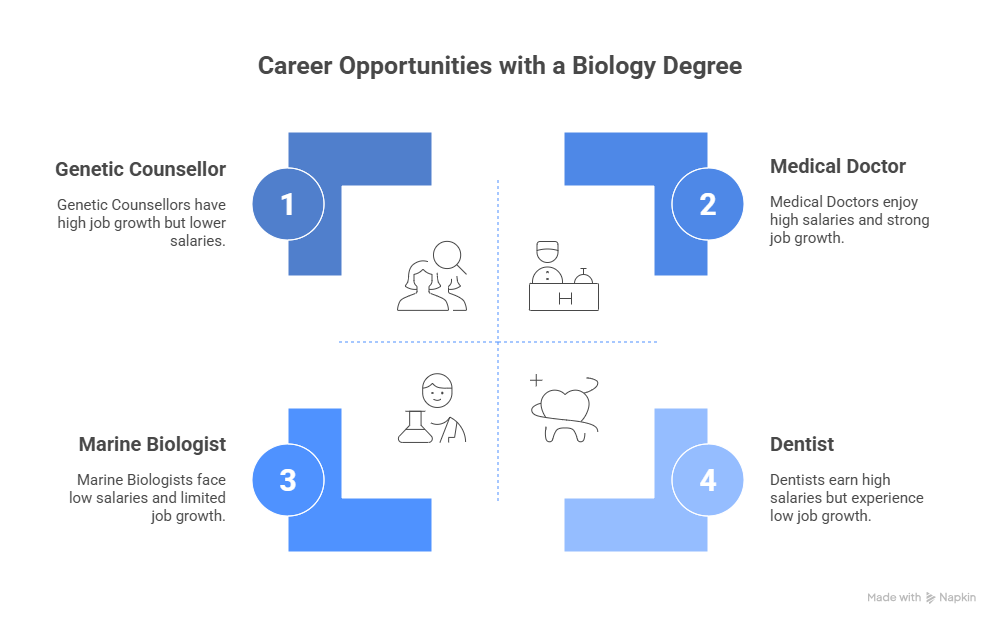
Medical Doctors continue to lead the list of highest-paying careers for biology graduates in 2025-2026, both in the UK and globally. With a strong foundation in biology, students can pursue medicine and eventually specialise in high-demand areas like surgery, cardiology, or anesthesiology.
In the United Kingdom, NHS Consultants earn a basic salary ranging from £109,725 to £145,478 per year, depending on experience and years of service. Those who achieve Clinical Excellence Awards or hold additional responsibilities often surpass £161,000 annually. Senior consultants with private practice commitments can earn substantially more.
In the United States, the Bureau of Labour Statistics (BLS) reports that the median annual wage for physicians and surgeons in 2024 is over $239,200, with significant variations by speciality. For example:
- Pediatric Surgeons: $450,810
- Cardiologists: $432,490
- Anesthesiologists: $336,640
- Internal Medicine Physicians: $262,710
To become a medical doctor, students typically begin with a biology-related undergraduate degree before entering medical school (MBBS or MD), followed by foundation training and speciality training. This rigorous path takes several years but offers long-term job security, high earning potential, and a rewarding impact on public health.
For biology graduates interested in making a difference while earning top-tier salaries, medicine remains the gold standard in 2025.


2. Dentist
Dentistry remains one of the most lucrative and respected professions for biology graduates in 2025-2026, offering high earnings, flexible work options, and strong job security across both the UK and international markets.
In the United Kingdom, NHS-employed dentists typically fall under Band 8a to Band 9, earning between £50,952 and £114,949 per year depending on experience, location, and specialisation ( Glassdoor UK). Those in private practice often earn significantly more, with self-employed general dental practitioners reporting incomes exceeding £140,000+ annually, especially in high-demand urban areas such as London and Manchester.
In the United States, dentistry is among the top-paying healthcare careers. According to the American Dental Association (ADA) and Bureau of Labour Statistics (BLS), the median annual salary for general dentists is approximately $210,000. Specialists such as orthodontists and oral surgeons can earn even more—well above $250,000 annually—depending on geographic location, patient base, and practice ownership.
To become a dentist, a biology-related undergraduate degree is often the first step, followed by a Bachelor of Dental Surgery (BDS) or Doctor of Dental Surgery (DDS/DMD), and registration with the General Dental Council (GDC) in the UK or licensure in the US.
For biology graduates seeking high earnings, flexible schedules, and a direct role in improving patient health, dentistry is one of the top career choices in 2025.
3. Pharmacist
Pharmacists play a crucial role in healthcare, combining biology, chemistry, and patient care to dispense medications, advise on treatments, and support public health. For biology graduates, pharmacy offers a stable, well-compensated, and highly respected career path in 2025-2026.
In the United Kingdom, NHS pharmacists typically start their careers in Band 6, earning between £37,338 and £43,742. With experience and further qualifications, they can progress into Band 7 and Band 8a, where salaries range from £44,398 up to £62,215. In high-cost areas such as London, additional weighting can increase annual earnings to £70,000–£90,000+, especially for senior or specialist pharmacists working in hospital settings or clinical roles.
In the United States, pharmacists are among the highest-paid professionals in healthcare outside of physician-level roles. According to the Bureau of Labour Statistics (BLS), the mean annual wage for pharmacists is approximately $123,000. Those working in hospitals, pharmaceutical manufacturing, or management-level positions can earn significantly more, with salaries reaching $140,000+ depending on location and role.
To become a pharmacist, students typically pursue a biology or science-related undergraduate degree followed by a Master of Pharmacy (MPharm) and registration with the General Pharmaceutical Council (GPhC) in the UK or a Doctor of Pharmacy (Pharm.D.) and state licensure in the US. Pharmacy is an ideal profession for biology graduates who enjoy patient interaction, scientific precision, and job stability.
4. Veterinarian
Veterinary medicine is a rewarding and financially competitive career path for biology graduates with a passion for animal health. Veterinarians diagnose and treat medical conditions in animals—from pets and livestock to exotic species—making it one of the most diverse and emotionally fulfilling biology-based professions.
In the United Kingdom, newly qualified veterinarians typically start with salaries around £35,000, with earnings increasing significantly based on experience, specialisation, and practice type. According to the Royal College of Veterinary Surgeons (RCVS) and industry surveys, senior veterinarians and those in referral or specialist practices can earn £80,000 to over £110,000 annually, especially in urban or high-demand areas.
In the United States, veterinary salaries are consistently strong. Based on data from the American Veterinary Medical Association (AVMA) and the Bureau of Labour Statistics (BLS), the average annual wage for veterinarians is approximately $110,000. However, specialists (e.g., veterinary surgeons or dermatologists) and those in private practice can earn significantly more, often exceeding $150,000, depending on location and caseload. To become a licensed veterinarian, biology graduates typically go on to study veterinary medicine (BVetMed/DVM) and register with professional bodies—RCVS in the UK and state veterinary boards in the US.
Veterinary careers offer an ideal blend of biology, medicine, and compassion—making them highly respected and well-paid roles in the biological sciences field.
5. Biomedical Engineer
Biomedical engineering is where biology meets cutting-edge technology. It’s an exciting, high-paying career path for biology graduates interested in medical innovation. Biomedical engineers design and develop devices such as prosthetics, imaging machines, surgical tools, and even artificial organs—contributing directly to healthcare advancement and patient recovery.
In the United Kingdom, biomedical engineers typically earn between £40,000 and £85,000, especially when employed in medical device firms, NHS innovation teams, or private healthcare consultancy roles. Salaries at the higher end are found in senior engineering, R&D, or regulatory positions within multinational medical tech firms.
In the United States, biomedical engineers enjoy even higher compensation. According to the U.S. Bureau of Labour Statistics (BLS), the median annual salary for biomedical engineers is approximately $100,730, with those in pharmaceuticals, research, and medical manufacturing often earning upwards of $120,000.Most employers require a biology or life sciences undergraduate degree, followed by a master’s in biomedical engineering or a related discipline. Combining biology expertise with technical and mathematical skills—such as programming, CAD design, or biomechanics—is highly advantageous.
As AI, robotics, and wearable tech revolutionise healthcare, biomedical engineers are more essential than ever. For biology graduates who want to be at the forefront of innovation and earn a strong salary, this role offers both purpose and long-term growth.
6. Genetic Counsellor
Genetic counselling is a high-growth, emotionally fulfilling field that blends biology, genetics, healthcare, and psychology. Genetic counsellors help individuals and families understand inherited conditions, assess risks, interpret DNA test results, and guide them through critical health decisions—especially around pregnancy, cancer, and rare disorders.
In the United Kingdom, genetic counsellors typically begin on NHS Band 7, earning between £47,810 and £54,710. With progression into Bands 8a–9, salaries can rise substantially—up to £70,417 at Band 8b, £83,571 at Band 8c, and over £125,637 for senior Band 9 roles in clinical leadership or research (source: Prospects.ac.uk, NHS Agenda for Change Pay Scales).
In the United States, the median annual salary for genetic counsellors is approximately $72,000, though professionals in specialised oncology or prenatal clinics can earn significantly more. Urban hospital systems and private genetics labs also tend to offer higher pay, sometimes exceeding $100,000, depending on experience and certification (source: NSGC – National Society of Genetic Counsellors).
To enter the field, biology graduates typically pursue a Master’s in Genetic Counselling, followed by registration with the UK Genetic Counsellor Registration Board (UKGCRB) or certification by the American Board of Genetic Counselling (ABGC) in the US.
With increasing demand driven by advancements in genomics and personalised medicine, genetic counselling offers biology graduates a stable, respected, and impactful career with clear progression routes.
7. Biostatistician
Biostatistics is one of the most in-demand and high-paying career paths for biology graduates who enjoy data analysis, clinical trials, and public health.
In the UK, biostatisticians working in pharmaceutical companies, public health agencies, and research institutes typically earn between £55,000 and £100,000 annually, depending on experience, sector, and location. Senior roles in global drug development firms, NHS-linked research, or academic medicine may command salaries at the upper end of that scale.
In the US, according to the Bureau of Labour Statistics (BLS), the average salary for biostatisticians is around $98,300 per year, with top earners in biotech, pharma, and epidemiological research making over $120,000.
To qualify, most employers require a bachelor’s in biology or statistics and a master’s or PhD in biostatistics, epidemiology, or public health.
With healthcare becoming increasingly data-driven, biostatisticians play a vital role in drug approvals, vaccine trials, and predictive modelling—making it one of the most future-proof jobs in science.
8. Medical Scientist
Medical scientists are at the forefront of biological research, conducting lab experiments, clinical trials, and disease studies to improve human health.
In the UK, medical scientists employed in research institutions such as Cancer Research UK (CRUK) or the Wellcome Trust typically earn between £40,000 and £95,000 per year, depending on qualifications, grant funding, and the nature of their research.
In the US, the Bureau of Labour Statistics (BLS) reports an average salary of $107,000 per year for medical scientists, with higher salaries available in pharmaceutical and academic research roles. Senior research scientists or those managing clinical trials can exceed $130,000 annually, particularly in NIH-funded labs or biotech firms.
A career as a medical scientist typically requires a biology or life sciences degree, followed by a PhD or MD, and hands-on research experience in a laboratory or hospital setting.
Medical scientists make direct contributions to medical breakthroughs—developing new treatments, vaccines, and diagnostic tools. It’s a respected, intellectually stimulating career with excellent salary growth for biology graduates committed to innovation and public health.
9. Marine Biologist
UK Salary: £35,000–£80,000
US Salary: $80,100/year
Marine biology is one of the most fascinating fields in life sciences. As a marine biologist, you’ll study the behaviour, physiology, and ecosystems of marine organisms—from microscopic plankton to large mammals like whales. Professionals in this field often engage in research, conservation, environmental assessment, and advocacy work aimed at protecting marine biodiversity.
In the UK, marine biologists are typically employed by government bodies (like DEFRA), environmental consultancies, conservation NGOs, and research institutions like the Marine Biological Association. Entry-level roles start around £25,000–£30,000, but with postgraduate qualifications and field experience, professionals can command salaries of £35,000 to £80,000, especially in leadership roles or high-impact conservation projects. Marine research funded by grants or industry partners (like offshore wind companies) also pays competitively.
In the US, the Bureau of Labour Statistics (BLS) places marine biologists within the zoologists and wildlife biologists category, earning an average of $80,100 annually. Government agencies like NOAA, academic institutions, or private environmental contractors offer the most employment opportunities.
As climate change continues to affect marine ecosystems, demand for marine biologists is expected to remain stable or slightly grow. Specialising in areas like marine conservation, pollution control, or marine biotechnology can increase your career prospects and income potential. Postgraduate qualifications such as an MSc or PhD in Marine Biology are often essential for higher-level roles.
10. Wildlife Ecologist
UK Salary: £32,000–£70,000
US Salary: $73,800/year
Wildlife ecologists are crucial in today’s push for biodiversity conservation, sustainable land use, and environmental management. They study how animal species interact with each other and their environment, working to protect wildlife from threats like deforestation, pollution, and climate change. Their work often includes conducting field surveys, habitat restoration, species population monitoring, and contributing to conservation policy.
In the UK, many wildlife ecologists are employed by government agencies like Natural England or DEFRA, as well as NGOs such as the RSPB and The Wildlife Trusts. Typical starting salaries fall around £25,000–£32,000, but with experience and fieldwork leadership, earnings can rise to £70,000 or more, particularly in consultancy roles or biodiversity leadership positions. Advanced degrees in ecology, conservation biology, or environmental science significantly boost employability.
In the US, the Bureau of Labour Statistics (BLS) reports a median annual wage of $73,800 for wildlife ecologists and zoologists. Roles in state and federal government agencies, as well as private environmental consulting firms, offer steady career growth and attractive benefits.
Field experience is critical. Ecologists often travel to remote locations for data collection and may use GIS (Geographic Information Systems) and statistical modelling tools. Demand is stable, especially with global attention on sustainable development and climate resilience. Those who combine ecological expertise with project management or policy development skills are well-positioned for senior roles.
11. Food Scientist
UK Salary: £38,000–£85,000
US Salary: $85,700/year
Food scientists use their understanding of biology, chemistry, and nutrition to analyse food properties, improve quality, enhance shelf life, and develop innovative food products. This multidisciplinary field is vital for ensuring food safety, sustainability, and global food security—making it highly relevant and in demand.
In the UK, food scientists are employed by regulatory bodies like the Food Standards Agency (FSA), large food manufacturers (e.g., Nestlé, Unilever), supermarkets, and food innovation labs. Starting salaries range from £30,000 to £38,000, but professionals with 5+ years of experience in product development, quality assurance, or R&D can earn between £60,000 to £85,000. Those in senior leadership roles (e.g., Head of Innovation) can exceed this range, especially with MSc/PhD qualifications or experience in regulatory science.
In the US, the BLS pegs the average salary of agricultural and food scientists at approximately $85,700 annually. Professionals working in government, biotech, or corporate food labs often command even higher salaries.
This role suits biology graduates with a strong interest in applied science, nutrition, and sustainability. Many universities offer conversion MSc programs in Food Science for biology majors. Specialisations like food microbiology, packaging innovation, and biotechnology can open doors to niche, high-paying roles.
With the global food system facing pressure from climate change and population growth, food scientists play a key role in developing healthy, safe, and sustainable food systems. Career prospects are strong, and cross-disciplinary expertise is increasingly valued.
12. Microbiologist
UK Salary: £35,000–£70,000
US Salary: $64,600/year
Microbiologists play a vital role in healthcare, biotechnology, pharmaceuticals, food safety, and environmental monitoring. They study microscopic organisms such as bacteria, viruses, fungi, and algae to understand how these microbes affect humans, animals, plants, and the environment. Their work directly supports public health, infection control, vaccine development, and antimicrobial resistance research.
In the UK, microbiologists commonly work in NHS pathology labs, pharmaceutical companies, universities, and research institutes. According to NHS Agenda for Change pay bands, junior microbiologists often start in Band 5 (£28,407–£34,581), with experienced professionals advancing to Band 6–7 (£35,000–£50,000). In private laboratories and senior consultancy roles, salaries can exceed £70,000, especially with advanced qualifications (e.g., MSc or PhD) and clinical microbiology certifications from the Health and Care Professions Council (HCPC).
In the US, the Bureau of Labour Statistics (BLS) reports a median annual salary of around $64,600 for microbiologists. However, professionals in pharmaceutical manufacturing, federal government agencies (e.g., CDC, FDA), or biotech R&D can earn significantly more—sometimes exceeding $90,000/year with experience.
The demand for microbiologists has increased post-pandemic, with a growing emphasis on vaccine development, laboratory testing, and food and water safety. Fields like clinical microbiology, bioproduction, and immunology research offer particularly high growth opportunities.
Graduates aiming for top roles should consider postgraduate degrees and lab internships, especially in clinical, pharmaceutical, or industrial microbiology. Microbiology is a stable and expanding career path for biology graduates passionate about health, disease, and diagnostics.
13. Pharmaceutical Sales Representative
UK Salary: £40,000–£85,000
US Salary: ~$70,900/year
Pharmaceutical Sales Representatives (often called medical reps) serve as the crucial link between pharmaceutical companies and healthcare professionals. With a biology background, these professionals leverage their scientific knowledge to explain the benefits, usage, and side effects of prescription drugs and medical devices to GPs, pharmacists, and hospitals.
In the UK, base salaries range from £30,000 to £50,000, but with experience and sales success, total compensation (including commission and bonuses) can exceed £85,000 annually. Top performers often work in niche pharmaceutical segments such as oncology or rare diseases, which pay higher commissions. Many reps receive additional perks like a company car, laptop, and travel allowance. Employers often prefer candidates with a biology, pharmacology, or life sciences degree, alongside strong interpersonal and communication skills.
In the US, the Bureau of Labour Statistics (BLS) reports an average base salary of around $70,900, with total compensation frequently topping $100,000/year due to performance-based bonuses and incentives. Pharmaceutical reps in specialised therapeutic areas or working for top-tier pharma brands tend to earn at the higher end.
The pharmaceutical sales field offers biology graduates a dynamic, high-paying career outside the lab. It blends science, business, and relationship-building, making it ideal for those with a mix of technical knowledge and persuasive communication. An MBA or training in business development can further enhance career growth.
14. Toxicologist
UK Salary: £42,000–£90,000
US Salary: ~$85,000/year
Toxicologists specialise in studying the adverse effects of chemicals, drugs, and environmental agents on living organisms. Their work supports drug development, environmental safety, regulatory affairs, and forensic investigations. A biology degree provides the ideal foundation for entering this multidisciplinary field.
In the UK, toxicologists are employed in pharmaceutical companies, public health agencies (e.g. Public Health England), the Environment Agency, contract research organisations (CROs), and universities. Entry-level toxicologists start at around £30,000–£42,000, with senior roles in regulatory affairs, clinical research, or toxicology consulting reaching up to £90,000. Those with MSc or PhDs in Toxicology or Pharmacology, especially with registration from the British Toxicology Society, are in higher demand and enjoy better pay.
In the US, toxicologists earn around $85,000/year, but specialists in clinical toxicology or regulatory roles at organisations like the EPA or FDA can earn $100,000+. With increasing global focus on environmental protection, drug safety, and chemical regulations (REACH, CLP), job growth in toxicology is expected to rise steadily.
Toxicology is an excellent path for biology graduates interested in blending laboratory work with real-world impact. Experience in risk assessment, GLP, or regulatory frameworks significantly boosts employability. Postgraduate study and certifications are highly recommended for those seeking advancement or niche specialisation.
15. Forensic Scientist
UK Salary: £35,000–£70,000
US Salary: $65,000–$90,000/year
Forensic scientists apply biology, chemistry, and analytical methods to criminal investigations. Using evidence such as blood, hair, DNA, or tissue samples, they help law enforcement solve crimes and support legal proceedings. Their work is crucial for criminal justice, from analysing crime scene evidence to presenting expert testimony in court. In the UK, forensic biologists typically start at £28,000–£35,000 in government or police labs, with experienced professionals earning between £50,000 and £70,000, especially in supervisory roles or with specialisation in DNA forensics, toxicology, or ballistics. Many positions are found within agencies like the Forensic Science Service, the Met Police, or private forensic consultancies.
In the US, salaries range from $65,000 to $90,000/year, depending on region, agency, and area of focus. Forensic toxicologists and DNA analysts, especially those working in federal agencies like the FBI, can command higher wages.
To enter the field, candidates usually require a biology degree followed by a master’s in forensic science or criminology. Practical lab experience and familiarity with analytical tools like PCR, spectrometry, and chromatography are crucial. Employers often look for strong attention to detail and excellent written communication, as court reporting is often part of the job.
Forensic science remains a compelling career path for biology graduates who are detail-oriented, analytical, and passionate about justice.
How to Stand Out & Maximise Earnings
- Further Degrees (MSc/PhD): Pushes research roles and medical-science salaries upward (~+30%).
- Certifications: GPhC (pharmacists), HCPC (clinical scientists), UKGCRB/ABGC for genetic counsellors.
- Business Qualifications (MBA/BBA): Accelerates paths to leadership roles.
- Location Matters: UK London postings add 15–20% due to high-cost area supplements; US rates vary significantly by speciality and region.
- Experience & Extra Duties: Clinical Excellence Awards, private practice, or extra shifts can boost UK consultant pay into £160K‑£170K+ doximity.comprospects.ac.ukupGrad+1prospects.ac.uk+1healthcareers.nhs.uk.
Healthy Demand: Healthcare roles forecast >4% growth for physicians; healthcare occupations overall projected to grow faster than average (~1.9 M openings per year in U.S.) Bureau of Labor Statistics+1Bureau of Labor Statistics+1.
How to Stand Out in Biology-Based Careers?
- Pursue a Master’s or PhD in a Specialisation
- Obtain Professional Certifications
- Combine Biology with Business Education
- Strengthen Your Soft Skills
- Gain Practical Experience
FAQs
Q: What’s the highest-paying job with a biology degree in the UK?
A: Medical Doctor and Dentist roles top the chart, often earning £100,000+ annually with experience.Q: Can I get a high-paying job with just a bachelor’s degree in biology?
A: Yes, but top-tier roles like doctors, scientists, and specialists usually require further education or training.Q: Should I get an MBA if I have a biology degree?
A: An MBA complements your science degree, offering career flexibility, leadership roles, and business acumen, especially in pharma, biotech, and management.Q: Is biology in demand in the UK job market?
A: Yes, biology is in strong demand across the UK, especially in healthcare, research, pharmaceuticals, biotechnology, and environmental sectors. Roles in the NHS, private healthcare, and life sciences industry are actively recruiting qualified biology graduates due to rising healthcare needs and scientific innovation.Q: What postgraduate courses boost a biology career?
A: The most valuable postgraduate qualifications include MSc in Biomedical Science, Genetics, Microbiology, Toxicology, and Bioinformatics. Alternatively, pursuing a PhD or an MBA can open doors to leadership, academia, or biotech entrepreneurship.Q: Which countries offer the highest salaries for biology-related careers?
A: The United States, Switzerland, Australia, and Germany consistently rank among the top-paying countries for biology professionals. In the US, roles like physicians, biotech managers, and medical scientists often exceed $100,000–$200,000 annually.Q: What are the best entry-level jobs for biology graduates in 2025?
A: Top entry-level roles include research assistant, clinical trials coordinator, lab technician, regulatory affairs associate, and environmental officer, with salaries ranging from £25,000–£40,000 and strong growth potential.Q: Is biology a good degree for future-proof careers?
A: Absolutely. Biology is aligned with high-growth fields like biotechnology, genomics, climate science, and public health. These sectors are projected to expand significantly through 2032, offering long-term job security and advancement.
Conclusion
Absolutely—pursuing a biology degree in 2025 is not only a smart academic choice but also a strategic career move. As science and technology continue to shape global priorities—ranging from public health and medical innovation to environmental conservation and biotechnology—demand for biology-trained professionals is stronger than ever. This guide has highlighted 15 of the highest-paying jobs available to biology graduates, with salaries ranging from £35,000 to well over £150,000 in the UK and even higher globally. Whether you aim to become a medical doctor, biostatistician, genetic counsellor, or environmental scientist, the career opportunities are both diverse and financially rewarding. In addition to competitive pay, biology careers offer job security, flexibility across industries, and the potential to make a real-world impact. Many roles are future-proofed, growing faster than average due to technological advancements, healthcare demand, and environmental urgency.
To truly maximise your biology degree’s value, consider pursuing postgraduate qualifications (MSc, PhD), certifications (GPhC, HCPC, etc.), or even complementing your science background with a business degree like an MBA. These steps not only boost your employability but also open doors to leadership, consultancy, and global positions. Whether you’re in the UK, the US, or planning an international career, a biology degree is a powerful foundation for building a high-paying and purpose-driven future. The opportunities are vast—your next move is to choose your path and prepare to excel.

 " alt="The 6 Principles of Safeguarding: Protect Before Harm Happens" />
 " alt="Personal Development Goals: 5 Meaningful Examples That Work" />
 " alt="TILE in Manual Handling: Meaning, Checklist & Safer Lifting Guide" />