





Nursery nurse interview questions often test how you keep children safe, support play and work with families. A strong answer shows what you would do and why, rather than just naming a childcare rule.
Use these nursery nurse interview questions and answers to practise aloud. Each response is a model, not a script you need to learn by heart. If you have never worked in a nursery, use honest examples from study, volunteering or another job.
The statutory examples below relate to England. Check the local rules if your interview is elsewhere in the UK.
Want to practise as you read? Try the interview flashcards.
Want more to talk about in your nursery interview?
Build your early years knowledge before you apply.
Was £419Save 95%
What do nursery employers look for?
Employers want to hear how you would care for children safely and help them learn. Read the job description before you practise. Look for the skills it names, such as patience, teamwork and observation. Prepare one real example for each skill, even if your experience comes from outside childcare.
For Level 3 nursery nurse interview questions, check the qualification named in the vacancy. The DfE qualification checker helps establish whether an award counts towards staffing rules in England. Read about the early years educator Level 3 routes if you are unsure which training you need.
The Nursery Nurse and Childcare Complete Bundle covers child development, care, safety and creative play. Use those topics to spot gaps in your knowledge before an interview.
20 nursery nurse interview questions to practise
Practise with flashcards
Answer each question aloud first, then compare with the model answer.
Take a moment to say your own answer before you reveal ours.
Model answer
Start with the questions about your background. Then move on to situations where you must make a safe choice. The sample answers show how to explain your thinking in plain words. Adapt them to your skills and never claim that you have done a task you have not actually performed.
1. Why do you want to work in a nursery?
I enjoy helping children learn through small daily experiences. I like the idea of supporting a child as they build confidence. I also understand that nursery work involves care routines, cleaning and teamwork, not just fun activities.
2. Why have you applied to our nursery?
I read about your approach to outdoor learning and liked the emphasis on exploration. I would enjoy learning how your team plans activities around children’s interests. I would also like to find out how you support new staff during their first weeks.
3. What experience can you bring to the role?
My experience in customer service taught me to listen and stay calm when people need help. I have not worked in a nursery yet. I would bring those skills to the team and ask for guidance when learning new care tasks.
4. What is one area you want to improve?
I want to become more confident at recording children’s learning. I would ask a senior colleague to show me examples of useful observations. Then I would practise writing clear notes and ask for feedback on what I could improve.

5. What do you understand about the EYFS?
The Early Years Foundation Stage sets standards for early learning and care in England. I would use the current EYFS statutory framework alongside the nursery’s procedures. I would support play, watch children’s progress and follow the team’s safety routines.
6. How would you plan a learning activity?
I would start with what the children enjoy and choose suitable materials. For example, a picture book about animals could lead to a matching game. I would watch how children respond, adapt the activity and share useful observations with the room leader.
7. How would you support a child’s language development?
I would talk with the child during play and give them time to reply. If they pointed to a bus, I might name it and describe its colour. I would listen to their response and avoid turning each conversation into a test.
8. How would you record a child’s progress?
I would write down what the child actually did or said. I would keep the note short and avoid guesses about their ability. I would follow the setting’s recording process and discuss possible next steps with the child’s key person.
9. What does safeguarding mean to you?
Safeguarding means keeping children safe from harm and supporting their wellbeing. I would learn the nursery’s reporting process and know who leads on safeguarding. If I noticed a concern, I would report it promptly rather than wait for someone else to act.
10. What would you do if a child told you something worrying?
I would stay calm, listen and take the child seriously. I would not ask leading questions or promise secrecy. Following DfE guidance on raising a concern, I would record the facts and report promptly through the correct route. If there were immediate danger, I would seek urgent help.
11. What would you do if the room had too few staff?
I would alert the room leader straight away and keep children supervised. I would not leave the room without a safe handover. I would follow management instructions to restore safe staffing and escalate any concern that was not resolved.
12. What would you do if a child had an accident?
I would make the area safe, call for trained first aid help and follow the nursery’s emergency process. I would stay within my training. Once the child was safe, I would help record what happened and follow the rules for informing their family.
13. How would you respond if two children wanted the same toy?
I would stay close and help both children feel heard. I might offer another toy or help them agree on turns. I would avoid shaming either child and show them simple words they can use to ask for a turn.
14. How would you support a child with additional needs?
I would find out what helps the child take part. I might offer quieter space, visual choices or a different way to use materials. I would follow their agreed support plan and ask the family and relevant colleagues for advice.
15. What would you do if a child cried at drop-off?
I would offer a calm welcome and follow the child’s agreed settling routine. I would acknowledge their feelings rather than rush them. I would work with their familiar adult and share a suitable update with their family through the nursery’s normal process.
16. How would you manage behaviour that challenges you?
I would look for what the child might need, such as rest, space or help communicating. I would keep everyone safe and use the setting’s agreed approach. I would ask a senior colleague for support if the situation continued.
17. Tell us about a time you worked in a team.
In a previous job, two colleagues needed help during a busy shift. I checked which tasks were urgent and agreed how to share them. We kept each other updated. I learned that a quick conversation can prevent confusion when work gets busy.
18. How would you handle a disagreement with a colleague?
I would speak to the colleague calmly and away from children. I would listen to their view and focus on the child’s needs. If the concern involved safety or remained unresolved, I would raise it with the appropriate senior member of staff.
19. How would you communicate with a parent who was upset?
I would listen without becoming defensive and check that I understood the concern. I would share facts within my role and avoid discussing other children. If the issue needed a manager’s input, I would arrange that through the setting’s process.
20. How would you protect children’s private information?
I would use the nursery’s approved systems and only share information with people who need it for their work. I would not post children’s images or records on my own accounts. If information was shared wrongly, I would report it promptly.
How to adapt your answers using STAR
Use the National Careers Service STAR method for early years practitioner interview questions that ask for a real example. STAR means situation, task, action and result. It helps you keep your answer focused. Choose a situation you remember well, then explain what you did and what you learned.
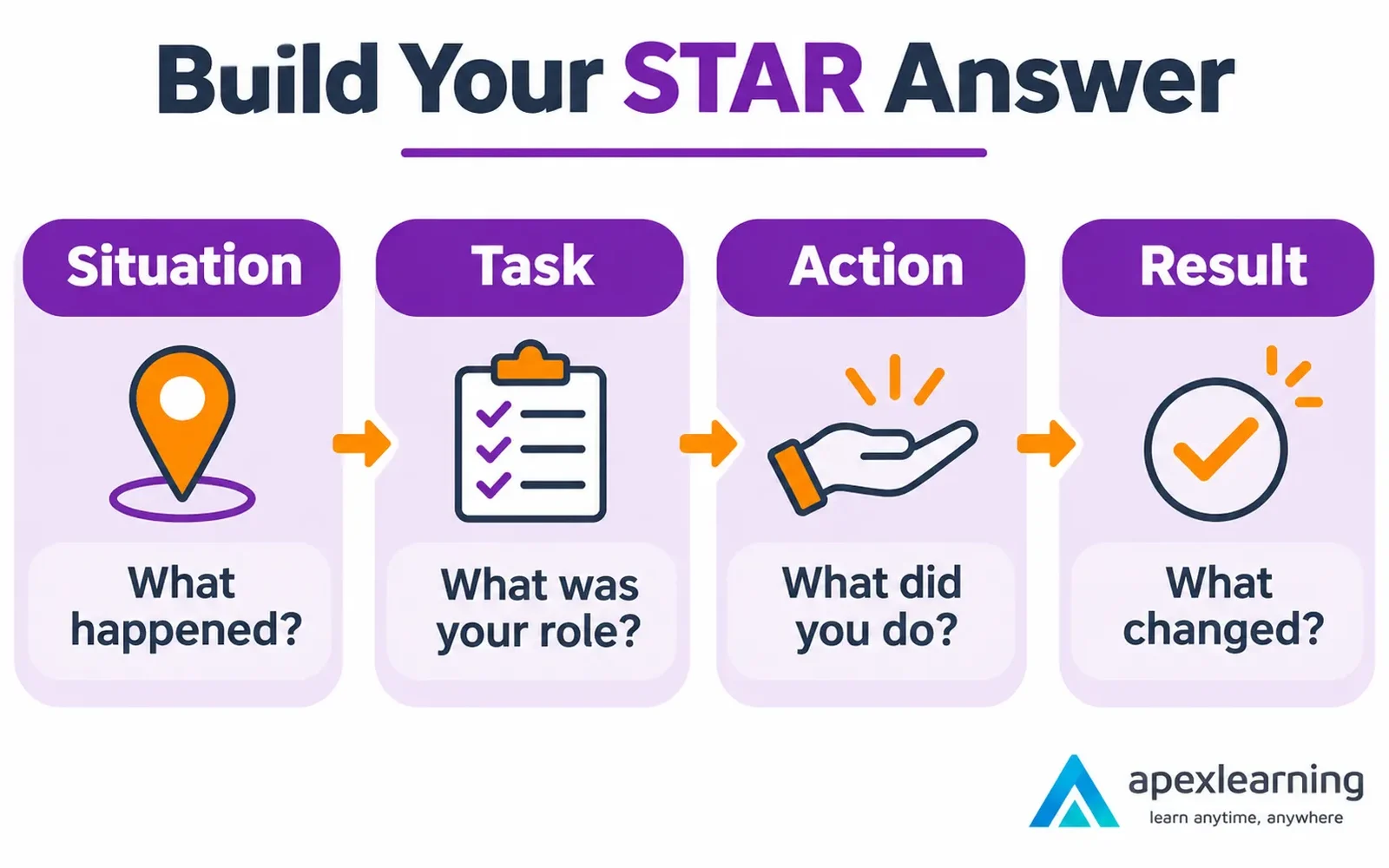
For example, a learner might describe a group project where a teammate missed a deadline. Their task was to finish a shared presentation. They arranged a short meeting and split the remaining work. The group finished on time, and the learner understood why early communication matters.
Keep your own example short enough for the interviewer to ask a follow-up question.
Nursery nurse interview tips for the day
Preparation is about more than practising answers. Bring the documents the employer requests and check the journey in advance. Read the setting’s website and think about how your experience fits its approach. Write down questions you want to ask about induction, training and support for new staff.
Review childcare ratios before answering staffing scenarios. The Safeguarding Children Level 3 course includes learning on responding to disclosures and reporting concerns.
Revise the key person approach so you can discuss settling in and family communication. Apex Learning’s Early Years Practitioner course includes learning on child development and EYFS teaching techniques.

Use this quick checklist before you leave:
- Check your interview time and travel route.
- Bring requested evidence of training and identity.
- Practise two examples of your own skills.
- Prepare one safeguarding scenario.
- Ask how new staff receive support and feedback.
For nursery interview questions UK employers ask, the exact format can vary. Listen carefully before answering. It is fine to ask for a question to be repeated.
Prepare for your next early years interview
Build your knowledge with Apex Learning’s self-paced online training in early years development, teaching techniques and welfare. Successful completion leads to a CPD QS Accredited Certificate. CPD study does not replace an approved qualification for statutory staffing roles.
Walk into your nursery interview prepared
Study child development, EYFS teaching techniques and welfare online, at your own pace.
Was £419Save 95%
Frequently asked questions
What is the EYFS interview question?
An EYFS interview question checks your understanding of the Early Years Foundation Stage in England. You may be asked how you support children’s learning through play or keep children safe. Explain the purpose of the framework, then give a simple example of how you would use it at work.
How to be a good nursery nurse?
A good nursery nurse is patient, reliable and attentive to children’s needs. You can develop these qualities by listening carefully, following safe routines and asking for feedback. Learn how to work with families and colleagues, and seek support when a task is outside your experience or training.
What are the main duties of a nursery assistant?
A nursery assistant helps supervise children, prepare activities and support daily care routines. Duties may include tidying play spaces, helping at meals and sharing observations with more experienced staff. The exact tasks depend on the job description, the nursery’s procedures and the assistant’s qualifications and experience.
What skills do you need to be a nursery nurse?
Nursery nurses need clear communication, patience, good observation and the ability to work with others. You should also understand safe care and know how to report a concern. In an interview, use genuine examples to show these skills rather than simply saying you are good with children.
What is a 30-second introduction?
A 30-second introduction is a short summary of who you are, what you bring to the role and why you applied. Mention one relevant strength and an example from work or study. Keep it natural and focused on the nursery job, rather than listing your entire work history.
 " alt="Key Person Approach: What It Means for Your Nursery Role" />
 " alt="Schemas in Play: 9 Types You Can Spot in Your Nursery" />