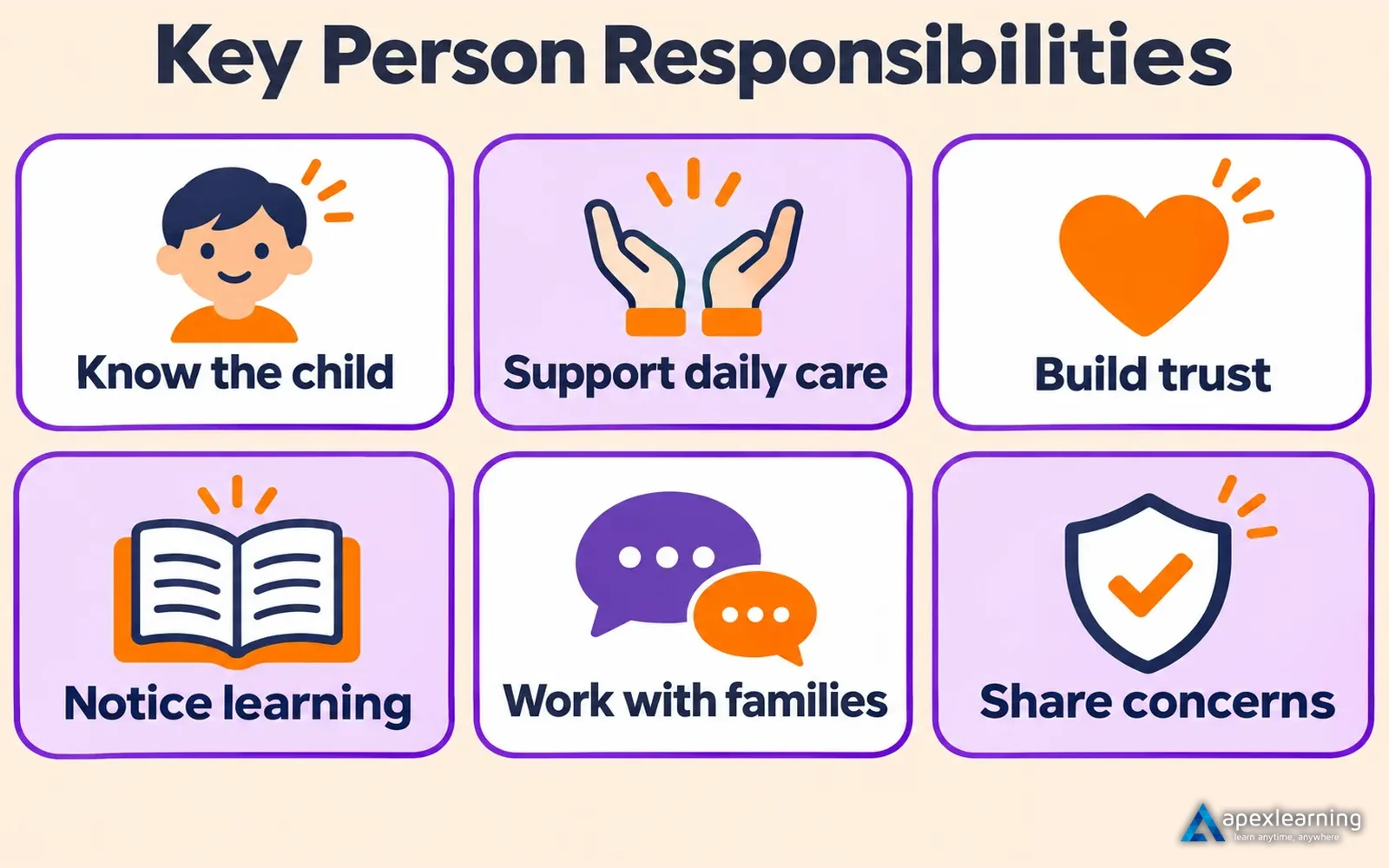


The key person approach is a way of giving each child a familiar adult who knows them well. This adult helps the child settle, supports their learning and builds a trusting relationship with their family.
In England, every child in an early years setting covered by the EYFS must have a key person. You might take on this role when you join a nursery, with support from an experienced colleague.
Being someone’s key person is about much more than filling in a learning record. It means noticing the small things that help a child feel safe and ready to explore.
Ready to support young children with confidence?
Study child development, teaching techniques and working with families online.
Was £419Save 95%
What is the key person approach in early years?
The key person approach in early years gives a child someone they know within a team. The named adult learns the child’s routines, interests and ways of showing feelings. Other practitioners still care for the child, so the approach supports shared care rather than creating an exclusive relationship.
Imagine a toddler who brings a soft toy to nursery each morning. Their key person knows when the toy helps and when the child feels ready to put it down. A new member of staff might not yet recognise these signals.
The Birth to 5 Matters guidance on attachment describes the role as a relationship that extends beyond records and daily tasks. The aim is to help children feel secure while supporting growing independence.
If you are exploring the early years educator level 3 route, ask how your placement supports you in building these relationships.
How does the key person approach fit the EYFS?
The Early Years Foundation Stage, or EYFS, sets legal standards for early years provision in England. Under paragraph 3.42 of the current statutory framework for group and school-based providers, every child must have a key person. That adult helps shape care around the child and connects the setting with their family.
When applying the key person approach, EYFS rules cover the relevant settings in England. Scotland, Wales and Northern Ireland have their own early years arrangements. Check the guidance for the nation where you work.
The nursery should introduce families to their named practitioner. It should explain who steps in when that adult is away.
The law does not mean the same adult must carry out every task.
Ask your manager who will help you if you are new to the role. You should understand the setting’s care policies before taking on duties alone.
Everyday key person responsibilities
A key person role in nursery care involves knowing the child as an individual. Here are practical ways to put the role into action during an ordinary working day.
Learn about the child
Find out how the child likes to be greeted, what they enjoy and how they show discomfort. Ask the family about familiar words, routines and comfort objects.
Keep health and care information up to date through the setting’s approved process. Never rely on memory alone for important details such as allergies.
Support daily care and build trust
Explain what you are about to do before helping with personal care. Give the child time to respond. Follow the nursery’s policies and respect their privacy.
Make room for conversation, even during a busy routine. A child may enjoy choosing their own cup or finding their coat. These small choices show that you listen to them.
Notice learning and share observations
Watch what a child does without turning every play session into a test. A child who tries to fit a shape into a box may be exploring size and space. Offer another suitable shape when they show interest.
Write useful notes in the agreed system. Focus on what you saw.
Talk with the team and family about what to try next.
Work with families and share concerns
Listen to parents and carers, even when their view differs from yours. If a child needs extra help, discuss this with the relevant staff member. The family may need support from a specialist.
The DfE safeguarding guidance makes clear that keeping children safe is everyone’s responsibility. Report concerns promptly using your setting’s procedures. Do not investigate possible abuse yourself or promise to keep a disclosure secret.
Why do secure relationships matter to children?
A child who trusts a familiar adult can turn to them when something feels difficult. With calm support, the child may then feel ready to try again. The key person approach helps children build this bond. They can still make friends and get to know other adults.
The DfE guidance on relationships offers practical ways to build trust, including using familiar objects and learning about a child’s interests.
For example, a child may cry when a parent leaves. Sit nearby, acknowledge the feeling and offer a familiar activity. Avoid telling them that there is nothing to be upset about. Let them approach you at their own pace.
Some children prefer less noise or more space. Others seek a chat or a hug. Ask what helps. Give them time to show you. Read about transitions in early years for ways to prepare for changes.
Working with parents and carers
Families know things about their children that nursery staff may never see. The DfE advice on working with parents encourages a two-way exchange about children’s experiences. Make space for families to ask questions and share what works at home.
Try these questions during an introductory conversation:
- What helps your child feel comfortable in a new place?
- How does your child tell you they need help?
- Which words or songs are familiar at home?
- What would you like us to know about your family’s routines?
At collection time, share a specific detail rather than saying only that the child had a good day. You might describe how they asked a friend to join a game. Ask whether the family has noticed something similar at home.
Offer a private conversation for sensitive matters. Use approved channels for messages and photos. If a family needs language support, ask your manager about a suitable way to provide it.
A day in the life of a nursery key person
Consider this fictional example. A new practitioner named Jo supports a child who is learning to manage a busy nursery routine.
At arrival, Jo greets the child and checks with their carer about any changes at home. Later, she notices that the child prefers a quiet corner for puzzles. She shares this with her room leader so the team can keep the space available.
At lunchtime, Jo follows the child’s agreed care instructions. During afternoon play, she encourages the child to ask for help when a toy is out of reach. Before collection, she notes one useful observation and passes on relevant information.
For a broader introduction, the Early Years Practitioner course covers child development and working with families.
The Child Care course explores child development and safe care. It can help you build background knowledge for these everyday situations.
Managing absences and professional boundaries
Children should know more than one trusted adult. Introduce a familiar colleague who can offer care when you take leave or attend training. Share agreed routines and relevant information through the nursery’s handover process.
Warm care does not mean becoming a child’s substitute parent. Keep contact with families professional. Ask your manager for supervision if you find a situation emotionally difficult or need advice about boundaries.
The Childminder & Nursery Worker course introduces early years care and learning support.
If you are preparing for employment, practise nursery nurse interview questions using examples of how you would work with a team.
The Birth to 5 Matters bibliography offers further reading on the ideas behind this way of working.
Develop your confidence in supporting young children
Apex Learning’s Early Years Practitioner course covers early years development, teaching techniques and working with families. Its online learning supports professional development and leads to a CPD QS Accredited Certificate on successful completion. CPD training does not replace an approved qualification needed for a regulated staffing role.
Ready to support young children with confidence?
Study child development, teaching techniques and working with families online.
Was £419Save 95%
Frequently asked questions
What are the roles and responsibilities of a key person?
A key person gets to know a child and helps provide care that meets their needs. They support settling in, notice development and build relationships with parents or carers. They also work with colleagues to keep care consistent and help families access specialist support when appropriate.
What is Peter Elfer's key person approach in nursery care?
Peter Elfer’s work on the key person approach highlights the value of close, dependable relationships in group childcare. It recognises that caring for young children involves emotional as well as practical work. Practitioners need support from their colleagues and leaders to provide sensitive care over time.
Who developed the key person approach?
The key person approach grew from the work of several early years thinkers and staff. Peter Elfer, Elinor Goldschmied and Dorothy Selleck helped explain and develop its use in early years settings. Their work draws on wider ideas about bonds and care rather than a single invention.
What is attachment theory in early childhood?
Attachment theory considers how children form emotional bonds with familiar caregivers. These relationships can offer comfort when a child feels distressed and a sense of security when they explore. In nursery care, the theory helps explain why predictable, responsive adults matter to young children’s daily experiences.
What is Bowlby's attachment theory?
John Bowlby’s attachment theory describes the importance of children’s emotional bonds with caregivers. It considers how children seek closeness and reassurance, especially when they feel threatened or upset. Early years practitioners can draw on these ideas without trying to diagnose a child’s attachment pattern from everyday behaviour.
" alt="20 Nursery Nurse Interview Questions With Model Answers" />
" alt="Key Person Approach: What It Means for Your Nursery Role" />
" alt="Schemas in Play: 9 Types You Can Spot in Your Nursery" />