



Workplace accidents can happen when you least expect them—but would you know how to respond? If you’ve been searching what is first aid at work training UK, you’re likely trying to understand whether this training is necessary and how it fits into real workplace situations.
First aid at work training in the UK is designed to teach individuals how to respond to emergencies, provide immediate care, and support safety in the workplace. It plays an important role in helping employers meet their responsibilities under guidelines from the Health and Safety Executive, ensuring staff are prepared to act when it matters most.
In this guide, you’ll learn:
- What first aid at work training actually involves
- Why it matters in UK workplaces
- What skills and knowledge you’ll gain
- Who needs this training
- How to get started with confidence
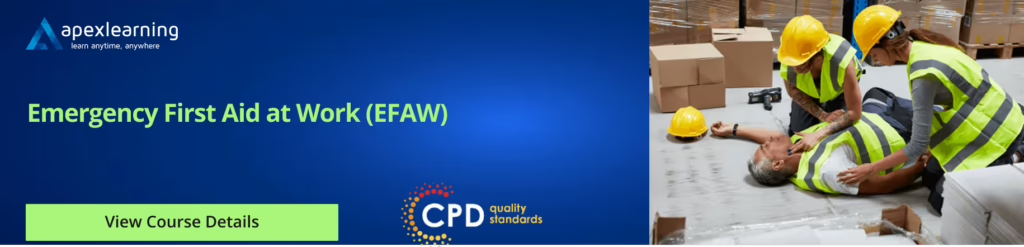
What is First Aid at Work Training in the UK?
First Aid at Work training in the UK is structured training that equips employees with the knowledge to respond to workplace emergencies and provide immediate support until professional help arrives.
It focuses on workplace emergency response, helping individuals recognise incidents, assess situations quickly, and take appropriate action in cases such as injuries, sudden illness, or accidents. The aim is to ensure that someone on-site can act promptly and responsibly during critical moments.
Within the UK safety system, this training plays a key role in supporting employer responsibilities set by the Health and Safety Executive (HSE). Employers are expected to assess risks and ensure appropriate first aid arrangements are in place, including having staff who understand how to respond effectively.
This becomes clearer when you look at how training is delivered in different formats, especially in a First Aid at Work Online Course UK – Training Guide, where theory-based learning is often the starting point.
Why First Aid Training is Important in the UK Workplace
First aid training is essential for protecting people and ensuring workplaces can respond effectively when emergencies occur.
In the UK, employers have a legal duty of care to safeguard their staff, guided by the Health and Safety Executive. This means having appropriate first aid arrangements in place is a key part of meeting workplace safety obligations.
- Legal responsibility
Employers must assess risks and ensure suitable measures are in place to deal with potential incidents - Employee safety
Trained individuals can respond quickly to injuries or illness, helping reduce harm before professional help arrives - Confidence in emergencies
Instead of uncertainty, training gives people a clear understanding of how to act calmly and responsibly
Expectations aren’t always the same across industries, which is why understanding Workplace First Aid Requirements UK helps put this into context.
What Does First Aid at Work Training Cover?
First Aid at Work training covers the essential knowledge needed to recognise emergencies and respond appropriately in a workplace setting.
- CPR awareness
Learn when CPR is required, the basic steps involved, and how it helps support someone until professional help arrives - Injuries and illness response
Understand how to deal with common workplace situations such as cuts, burns, bleeding, choking, fainting, and minor fractures - Emergency procedures
Learn how to assess a situation quickly, prioritise actions, and follow structured steps during an incident - Risk awareness
Identify workplace hazards and understand how accidents can occur and be prevented - Health & safety basics
Gain awareness of workplace responsibilities, including hygiene, reporting incidents, and following proper protocols
The depth of training varies depending on the level you choose, particularly when comparing EFAW vs FAW Explained and how responsibilities differ.
Types of First Aid Training in the UK
First aid training in the UK is available at different levels, depending on workplace needs and the responsibilities of the role.
- First Aid at Work (FAW)
This is a more comprehensive level of training, typically suited for higher-risk environments or roles with greater responsibility. It covers a wider range of emergency situations and prepares individuals to take a leading role in workplace first aid - Emergency First Aid at Work (EFAW)
A shorter and more focused course, designed for lower-risk workplaces. It provides essential knowledge to respond to common emergencies and support someone until further help arrives - Awareness training
Basic training that builds general understanding of first aid principles and workplace safety. Often used as a starting point for those new to first aid
Choosing the right option often comes down to role requirements, which are clearly outlined in EFAW vs FAW Explained.
Who Needs First Aid at Work Training in the UK?
First aid at work training is relevant for a wide range of people, depending on their role and the level of responsibility within a workplace.
- Employers
Responsible for ensuring appropriate first aid arrangements are in place and that staff are prepared to respond to emergencies - Employees
Benefit from understanding basic first aid, especially in environments where accidents or health incidents may occur - Managers and supervisors
Often expected to take a more active role in maintaining workplace safety and coordinating responses - High-risk roles
Particularly important in industries such as construction, manufacturing, or healthcare, where the likelihood of incidents is higher
This becomes more relevant when you look at Who Needs First Aid Training UK, where requirements vary depending on job role and environment.
Step-by-Step: How First Aid at Work Training Works
First aid at work training follows a clear, structured process that helps individuals build knowledge and apply it effectively in workplace situations.
- Identify workplace risk
Start by understanding the level of risk in your environment. Different workplaces require different levels of first aid preparation depending on hazards and staff size - Choose the right training type
Select a course that matches your role, whether it’s basic awareness, emergency first aid, or more comprehensive workplace training - Complete the training
Work through the course content, which typically covers emergency response, safety procedures, and first aid principles - Learn key procedures
Focus on understanding how to assess incidents, respond appropriately, and follow structured steps during emergencies - Gain certification
After completing the course, you’ll receive a certificate that shows you’ve built foundational first aid knowledge - Apply in the workplace
Use what you’ve learned to improve safety awareness and respond more confidently in real situations
Online vs In-Person First Aid Training UK
Choosing between online and in-person first aid training depends on how you plan to use the training and what your role requires.
- Online training → flexible, theory-based
Online courses focus on building knowledge of emergency response, workplace safety, and first aid principles. They allow you to learn at your own pace, making them ideal if you need flexibility or want to build a strong foundation before applying it in real situations - In-person training → practical-focused
Classroom or workplace training includes hands-on elements, where you practise techniques under supervision. This is often required for roles where demonstrating practical competence is essential - When to choose each
Online training is suitable for beginners, awareness, or preparation. In-person training is more appropriate when your role requires formal workplace first aider responsibilities
What Certificate Do You Get?
The type of certificate you receive depends on the level and format of training you complete.
- CPD certificate (knowledge-based)
Online or awareness courses typically provide a CPD-style certificate, showing you’ve gained an understanding of first aid principles and workplace safety - Practical certification
More advanced or in-person training may include practical assessment, leading to certification that reflects hands-on competence - Employer recognition
Employers generally value both types, depending on the role. A CPD certificate shows initiative and awareness, while practical certification may be required for designated first aider positions
Another key factor is how long your certification lasts, which is explained in detail in First Aid Certificate Validity UK.
Do You Need Experience to Start?
No, you don’t need any prior experience to start first aid at work training in the UK.
These courses are designed to be beginner-friendly, introducing key concepts step by step without assuming any background knowledge. Whether you’re completely new or just want to build confidence, the learning is structured to be easy to follow and practical to understand.
First aid training is also highly accessible, making it a common starting point for people across different industries. Many learners begin with basic awareness and gradually build their knowledge as their role or responsibilities grow.
Starting without experience is normal—the focus is simply on learning how to respond safely and effectively when it matters most.
UK Legal Requirements for First Aid Training
First aid requirements in the UK are based on employer responsibility and a risk-based approach rather than a fixed rule for every workplace.
Under guidance from the Health and Safety Executive (HSE), employers must ensure that appropriate first aid arrangements are in place. This includes assessing workplace risks, providing suitable equipment, and ensuring staff are prepared to respond to emergencies.
- Employer responsibility
Businesses are required to provide adequate first aid support based on the nature of their workplace - Risk-based system
The level of training needed depends on factors such as hazards, number of employees, and work environment - Training expectations
Some roles may require basic awareness, while others need more advanced or practical training depending on responsibility
Because requirements vary by risk level, it’s important to understand the full breakdown in Workplace First Aid Requirements UK.
Benefits of First Aid Training for Your Career
First aid training can strengthen your career by adding practical value that employers recognise across many industries.
- Employability
Having first aid knowledge shows initiative and responsibility, helping you stand out in job applications - Workplace value
Being able to respond in emergencies makes you a more dependable team member, especially in roles where safety is a priority - Confidence
Training gives you a clear understanding of how to act in critical situations, reducing hesitation and uncertainty - Safety awareness
You become more aware of workplace risks and how to prevent incidents, contributing to a safer environment overall
Even at a basic level, this training enhances your profile while making a real difference in everyday workplace situations.
Start Your First Aid Training Today
Getting started with first aid training doesn’t have to be complicated or time-consuming.
You don’t need prior experience or a long-term commitment to take the first step. Many people begin by building a basic understanding of workplace safety and emergency response, then decide how far they want to progress based on their role.
If you’ve been unsure where to begin, starting with a simple, structured course can make everything feel clearer and more manageable. It’s a practical way to build confidence and understand what’s expected before stepping into real situations.
Taking action now means you’ll be better prepared when it matters most—for yourself and those around you.
Common Questions About First Aid at Work Online Course UK
Is online first aid training valid in the UK?
Yes, online first aid training is valid for building knowledge and awareness. However, roles involving designated first aider responsibilities may still require practical, in-person assessment to meet workplace requirements.
Do employers accept it?
Many employers accept online training as a starting point, especially for low-risk roles or general awareness. For higher-responsibility roles, they may require additional practical certification.
Can I study online?
Yes, first aid courses can be completed online at your own pace. This makes them a flexible option for learning essential safety knowledge alongside work or other commitments.
Do I need practical training?
It depends on your role. If you are expected to act as a designated first aider, practical training is often required; otherwise, online learning may be sufficient for awareness.
How long does it take?
Most online first aid courses can be completed within a few hours to a couple of days. The exact time depends on the course structure and your learning pace.
Is it beginner-friendly?
Yes, online first aid training is designed for beginners with no prior experience. It explains key concepts step by step, making it accessible for anyone.
Can I do a first aid at work course online?
Yes, many learners start with an online course to understand first aid principles. Some roles may later require additional practical training for full workplace certification.
Which 3-month course is best?
For most learners, shorter, focused courses are more effective than long programmes. A concise course covering core first aid principles is usually the most practical starting point.
Is there a free online first aid course?
Yes, free resources are available, but structured paid courses typically offer clearer guidance, better learning structure, and recognised certification.
Is first aid valid for 2 or 3 years?
In UK workplaces, most recognised first aid certifications are valid for around three years. Renewal is recommended before expiry to maintain compliance and confidence.
 " alt="The 6 Principles of Safeguarding: Protect Before Harm Happens" />
 " alt="Personal Development Goals: 5 Meaningful Examples That Work" />
 " alt="TILE in Manual Handling: Meaning, Checklist & Safer Lifting Guide" />