

Introduction
Have you ever wondered what teaching assistants really do in UK schools? With over 280,000 TAs currently employed in England (Department for Education), they are one of the most vital parts of the education workforce. But not all teaching assistant roles are the same — responsibilities can vary from general classroom support to specialist SEN positions.
In this guide, we’ll break down the different types of teaching assistant roles, what each involves, and how you can qualify for them. Whether you’re looking to start a new career or progress into SEN support, this step-by-step overview will show you the opportunities available.
General Classroom Teaching Assistant
A classroom teaching assistant (TA) is the most common role in UK schools. Their main responsibility is to support teachers in delivering lessons and ensuring pupils stay engaged.
Key duties include:
- Helping with lesson preparation and organisation.
- Supporting pupils in literacy and numeracy.
- Supervising small groups or one-to-one learning.
- Assisting with classroom behaviour management.
👉 To prepare for this role, you can enrol in a Level 3 Teaching Assistant Diploma online course such as the Complete Teaching Assistant Diploma (SEN, Autism, ADHD & Dyslexia).
SEN (Special Educational Needs) Teaching Assistant
An SEN teaching assistant works specifically with children who have additional learning needs. This can include pupils with:
- Autism Spectrum Disorder (ASD)
- ADHD (Attention Deficit Hyperactivity Disorder)
- Dyslexia or other literacy challenges
- Emotional, social, or behavioural difficulties
Typical responsibilities:
- Delivering targeted interventions and support strategies.
- Helping SEN pupils access the curriculum.
- Working closely with the school SENCO to implement learning plans.
- Supporting with assistive technology or tailored learning resources.
SEN-trained TAs are in very high demand in the UK, and salaries for SEN roles are often higher, averaging £20,000–£28,000/year (Tes Jobs).
👉 A great way to gain SEN expertise is through an SEN-focused TA course, such as the Teaching Assistant Level 3 Diploma with SEN modules.
Higher Level Teaching Assistant (HLTA)
A Higher Level Teaching Assistant (HLTA) takes on greater responsibility, often covering classes in the absence of a teacher.
Core responsibilities:
- Leading small group lessons.
- Supporting assessment and pupil progress monitoring.
- Assisting with planning and delivering learning activities.
- Acting as a mentor for new TAs.
This role usually requires additional training beyond Level 3, but it offers career progression and higher pay, with many HLTAs earning £26,000+ per year.
👉 To move towards HLTA status, gaining a comprehensive TA qualification such as the Complete Teaching Assistant Diploma is the ideal first step.
Early Years Teaching Assistant
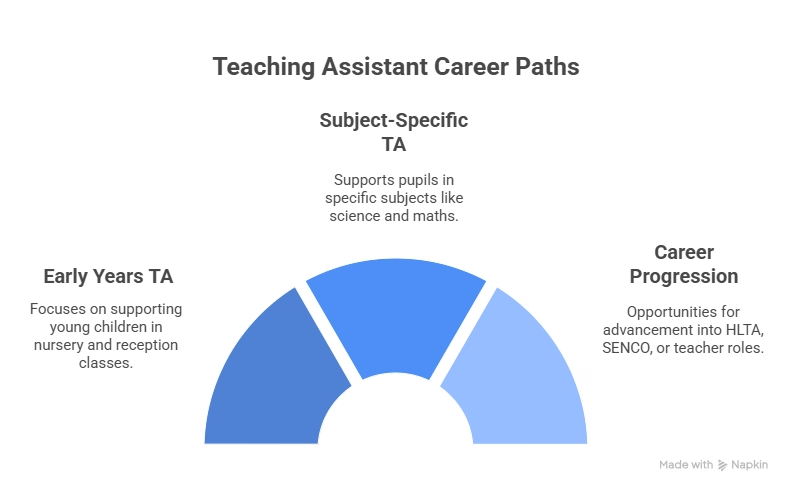
For those passionate about working with younger children, an Early Years TA role focuses on supporting pupils in nursery and reception classes.
Responsibilities include:
- Encouraging early literacy and numeracy skills.
- Supporting play-based learning.
- Monitoring developmental milestones.
- Ensuring safeguarding and well-being.
Early Years roles often require patience, creativity, and specialist training in child development.
Subject-Specific Teaching Assistant
Some secondary schools employ TAs with knowledge in specific subjects such as science, maths, or ICT. These roles involve:
- Supporting pupils in subject-specific lessons.
- Assisting teachers with practical tasks (e.g., science labs).
- Helping pupils prepare for exams.
This path is ideal for those with subject knowledge who want to support learners without going into full-time teaching.
Career Progression for Teaching Assistants
Teaching assistants can progress into:
- HLTA roles with more responsibility.
- SENCO positions after further training.
- Teacher training (QTS) for those who want to qualify as teachers.
With continuous professional development (CPD), you can shape your career to suit your interests and goals.
Fast-Track Options
If you’re eager to qualify quickly and access these roles, online training is the best route. The Teaching Assistant Level 3 Diploma (online, CPD-accredited) offers self-paced learning that can be completed in as little as 8–12 weeks. This flexible course prepares you for general classroom support and includes SEN training, making you highly employable in the UK.
Conclusion
Teaching assistants are the backbone of UK schools, providing essential support to teachers and pupils alike. From general classroom roles to SEN specialists, HLTAs, and early years assistants, there’s a pathway for every passion and career goal.
By gaining a recognised qualification such as the Complete Teaching Assistant Diploma Level 3, you’ll build the skills, confidence, and employability needed to succeed in this fast-growing sector. With thousands of vacancies opening each year, there’s never been a better time to start your TA journey.
Sources: National Careers Service, Tes Jobs
FAQs
- What are the different types of teaching assistant roles in the UK?
The main teaching assistant roles include general classroom TAs, SEN (Special Educational Needs) TAs, Higher Level Teaching Assistants (HLTAs), early years assistants, and subject-specific TAs. Each role varies in responsibility, from classroom support to one-to-one SEN interventions. - Do I need qualifications to become a teaching assistant?
Most schools prefer candidates with a recognised qualification, such as a Level 2 or Level 3 Teaching Assistant course. A programme like the Teaching Assistant Level 3 Diploma (online, CPD accredited) provides both classroom and SEN training, making you job-ready. - What does an SEN teaching assistant do?
An SEN teaching assistant supports pupils with additional needs, including Autism, ADHD, Dyslexia, and behavioural difficulties. They adapt lessons, provide one-to-one support, and work with the SENCO to implement learning plans tailored to each child. - How is a Higher Level Teaching Assistant (HLTA) different from a TA?
An HLTA has more responsibility than a standard TA, often leading small group lessons, covering classes, and assisting in planning and assessment. This role usually requires additional training and offers higher pay, often £26,000+ per year. - Can teaching assistants specialise in certain subjects?
Yes. In secondary schools, some TAs work in subject-specific roles such as science, maths, or ICT. They assist with lessons, practical work, and exam preparation, supporting both teachers and pupils in specialised areas. - Are teaching assistants in demand in the UK?
Absolutely. According to the Department for Education, there are over 35,000 new TA vacancies created each year. Demand is particularly high for SEN-trained TAs, as schools need skilled staff to provide inclusive learning. - 7. What is the career progression for teaching assistants?
With experience and CPD, TAs can move into HLTA roles, SENCO positions, early years leadership, or even teacher training (QTS). Many TAs use the role as a stepping stone to a long-term career in education.
" alt="Manual Handling & Asbestos: Safe Lifting Starts Before the Load" />
" alt="TILE in Manual Handling: What Every Worker Needs to Know" />
" alt="Data Protection Act 2018: Is Your Business Ready for 2026?" />