




Introduction
In the UK, over 1.5 million pupils are identified as having special educational needs (SEN) (Department for Education, 2024). To ensure these children receive the right support, schools increasingly rely on SEN Teaching Assistants (TAs). These professionals play a vital role in creating inclusive classrooms, supporting pupils with learning difficulties, autism, ADHD, dyslexia, and other additional needs. If you’re passionate about education and making a difference, becoming an SEN TA could be the ideal career path.
What Is an SEN Teaching Assistant?
An SEN Teaching Assistant is a classroom professional who supports children with additional needs to access learning effectively. Unlike general TAs, SEN TAs are trained to deliver specialist strategies for children with autism, ADHD, dyslexia, or behavioural and emotional needs. They provide tailored support that enables pupils to thrive both academically and socially.
What Does an SEN Teaching Assistant Do?
The responsibilities of an SEN Teaching Assistant can vary depending on the school and the individual needs of pupils, but their role is always centred on providing tailored support. They often work one-to-one or with small groups of children, adapting lesson resources to suit different learning styles and helping with literacy, numeracy, and communication challenges. SEN TAs also assist with behaviour management, using positive reinforcement to encourage progress, while promoting emotional wellbeing and building pupils’ confidence. In addition, they collaborate closely with teachers, SENCOs, and parents to put learning plans into action. By combining academic support with social and emotional guidance, SEN Teaching Assistants play a vital role in making education more accessible and inclusive for every child.
Why SEN Teaching Assistants Are in High Demand
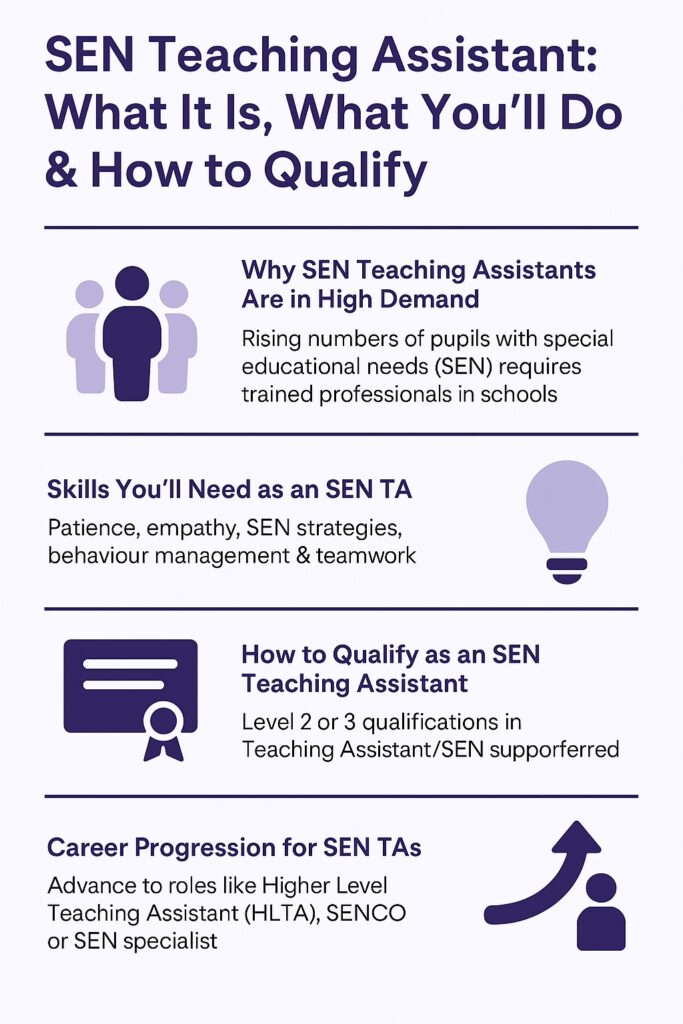
The demand for SEN Teaching Assistants in the UK has grown significantly, with schools facing rising numbers of pupils requiring additional learning support. According to the Department for Education, more than 1.5 million children are identified as having special educational needs (SEN), making trained professionals essential in every classroom. An SEN TA not only provides practical help with reading, writing, and numeracy but also delivers specialist strategies for autism, ADHD, dyslexia, and behavioural needs. This dual focus on academic and emotional support ensures pupils feel confident, included, and able to progress. For aspiring professionals, completing a recognised qualification such as the Level 3 Teaching Assistant Diploma with SEN, Autism, ADHD & Dyslexia is the fastest way to enter this rewarding career. By gaining these skills, you position yourself as a highly employable candidate ready to meet the growing demand for inclusive education.
Skills You’ll Need as an SEN TA
To be successful as an SEN Teaching Assistant, you’ll need a combination of professional skills and personal qualities that allow you to support pupils effectively. Patience and empathy are essential for building trust and creating a positive learning environment, while strong communication and listening skills help you understand and respond to each child’s needs. Knowledge of SEN strategies and inclusive teaching methods ensures that lessons are accessible for every learner, and the ability to manage behaviour calmly helps maintain a safe, supportive classroom. Just as importantly, SEN TAs must work well as part of a team, collaborating closely with teachers, SENCOs, and parents to provide consistent support. Together, these skills enable SEN teaching assistants to make a lasting difference in both the academic and personal development of children with additional needs.
How to Qualify as an SEN Teaching Assistant
There are no strict entry requirements, but most schools look for candidates with Level 2 or Level 3 qualifications in Teaching Assistant or SEN support. Completing a recognised qualification such as the Level 3 Teaching Assistant Diploma with SEN, Autism, ADHD & Dyslexia gives you the practical strategies and CPD-accredited certification employers expect.
Some schools may also require GCSEs in English and Maths, while additional safeguarding and first aid training can strengthen your CV.
Career Progression for SEN TAs
Starting as an SEN Teaching Assistant can open the door to a wide range of exciting career opportunities within education. With experience and additional qualifications, you could progress to become a Higher Level Teaching Assistant (HLTA), taking on more responsibility in lesson delivery and pupil support. Many SEN TAs also move into leadership positions such as SEN Coordinator (SENCO), where they oversee SEN provision across the school. Others choose to specialise further, working as Autism Support Workers, Behaviour Mentors, or other SEN specialists. For those who want to take their career even further, SEN TA experience provides an excellent foundation for moving into teaching or childcare roles, supported by the right training. This progression pathway not only enhances earning potential but also allows you to make an even greater impact on inclusive education in the UK.
Salary Expectations
SEN TAs in the UK typically earn between £18,000 and £26,000 per year, depending on location, experience, and school type. With progression to HLTA or SENCO roles, salaries can rise significantly, reflecting the responsibility and expertise required.
Source
According to Prospects.ac.UK, SEN training and qualifications greatly improve employability, as schools prioritise staff who can provide specialist support to children with additional needs.
Fast-Track Options
If you want to start working as an SEN Teaching Assistant quickly, the best route is to choose a flexible online qualification. With self-paced study, the Level 3 Teaching Assistant Diploma with SEN, Autism, ADHD & Dyslexia can be completed in as little as 3 to 6 months, depending on your availability and dedication.
This fast-track pathway allows you to balance training with work or family commitments while still earning a CPD-accredited, employer-recognised certificate. Once qualified, you’ll be ready to step into roles such as SEN Teaching Assistant, Learning Support Assistant, or Autism Support Worker. By choosing an accelerated online course, you can gain the skills schools need most and begin making a difference in inclusive education sooner than you think.
Conclusion
An SEN Teaching Assistant is far more than classroom support — they are a lifeline for children with additional needs, ensuring that every pupil has the chance to learn, grow, and thrive. By providing tailored strategies, emotional reassurance, and academic guidance, SEN TAs create inclusive learning environments where children feel valued and supported.
For those considering this career, the pathway is both accessible and rewarding. With the right training — such as the Level 3 Teaching Assistant Diploma with SEN, Autism, ADHD & Dyslexia — you can develop the professional skills and confidence schools are actively seeking. This qualification not only prepares you for entry-level SEN roles but also opens doors to progression opportunities like Higher Level Teaching Assistant (HLTA) or SENCO.
Whether you’re starting fresh or specialising further, becoming an SEN TA offers career stability, personal fulfilment, and the opportunity to make a lasting difference in the lives of pupils across UK schools.
FAQs
- Do I need qualifications to become an SEN Teaching Assistant?
You don’t need a degree, but most schools prefer candidates with a Level 2 or Level 3 Teaching Assistant qualification. Completing the Level 3 Teaching Assistant Diploma with SEN, Autism, ADHD & Dyslexia gives you a CPD-accredited certificate that makes you stand out to employers. - What’s the difference between a Teaching Assistant and an SEN Teaching Assistant?
A general TA supports all pupils and helps with classroom tasks, while an SEN TA provides specialist support for children with additional needs such as autism, ADHD, or dyslexia. They use tailored strategies to ensure every child can access learning. - How much do SEN Teaching Assistants earn in the UK?
On average, SEN TAs earn between £18,000 and £26,000 per year, depending on experience, location, and school type. With progression to roles like HLTA or SENCO, salaries can rise significantly. - Can I work as an SEN TA without prior experience?
Yes. Many schools welcome new entrants if they show passion, empathy, and commitment. However, gaining a recognised qualification will boost your chances of employment and progression. - 5. What career progression opportunities are there for SEN TAs?
With experience and further study, SEN TAs can advance to Higher Level Teaching Assistant (HLTA), SEN Coordinator (SENCO), or specialist roles such as Behaviour Mentor or Autism Support Worker.
" alt="The 6 Principles of Safeguarding: Protect Before Harm Happens" />
" alt="Personal Development Goals: 5 Meaningful Examples That Work" />
" alt="TILE in Manual Handling: Meaning, Checklist & Safer Lifting Guide" />