


Whether you’re telling a story, giving a lecture, or repurposing blog content, it’s not the act of repeating that causes people to tune out—it’s the lack of variation in how it’s delivered.
Scientific research supports this: our brains are naturally drawn to novelty and surprises. Repetition without freshness reduces emotional response and attention. But when you present familiar information in a new format, with a different tone or perspective, you reignite curiosity—even with the same core message.
Let’s explore how repetition affects attention, why familiar messages lose impact, and how to say something new without changing the story itself.
Why Repetition Feels Stale
Our minds are wired to pay more attention to what’s new and unexpected. A study published in Current Opinion in Neurobiology found that novelty activates the brain’s reward system, increasing focus and emotional engagement. This is why rewatching a film or hearing a speech for the second time often lacks the excitement of the first.
So what’s really happening? It’s not the message—it’s the unchanged delivery. When your tone, rhythm, structure, and phrasing stay the same, your audience stops processing actively. But if you shift the angle, update the language, or reframe the perspective, the message feels alive again—even if it’s fundamentally the same.
What the Research and Data Say
The Novelty Effect
Studies confirm that repeated exposure to identical content leads to cognitive habituation—a psychological process where the brain automatically pays less attention to familiar stimuli.
Engagement Drops Without Change
Marketing data shows that repeated ads or content formats lose engagement after just 2–3 exposures—unless the creative delivery is refreshed.
Learning Retention Improves With Variation
According to the National Training Laboratories’ learning pyramid, retention improves dramatically when concepts are delivered in varied formats rather than through repetition alone.
This is why educators, speakers, and marketers increasingly rely on creative reframing, storytelling techniques, and even AI tools to help repackage messages for maximum impact.
How to Make an Old Story Feel New
Here are three expert-backed strategies to revive old stories and ideas so they feel fresh every time:
1. Reframe the Perspective
When repeating a story or concept, change how it’s told:
- Switch the emotional lens (e.g. from humour to reflection)
- Tell it from another person’s point of view
- Emphasise a different outcome or takeaway
This subtle reframing gives the listener or reader a new mental entry point, which reignites interest.
2. Add Updated Data or Descriptive Details
Enriching your content with new statistics, vivid imagery, or current events adds layers of depth—even if the story remains the same.
Instead of reusing a claim like “This tool boosts productivity,” say:
“A recent study found that automation tools reduce manual work by 45%, improving task completion time by over 60% in digital teams.”
Data brings credibility. Detail brings colour.
3. Change the Tone, Style, or Format
Sometimes, all it takes is a shift in tone or structure:
- Convert formal to conversational (or vice versa)
- Use storytelling instead of direct explanation
- Switch from text to visual (carousel, video, voiceover)
- Add humour, suspense, or rhetorical hooks
Even AI can help. You can use the AI Summarizer’s Paragraph Rewriter as it’s free with almost no limitations. Give your old content to the paragraph rewriter, and it will shuffle the words in a way that the tone will change dramatically. And you will have old content in an entirely new style. You can make this tool a companion when you have to say something new, even if you are repeating the same story.
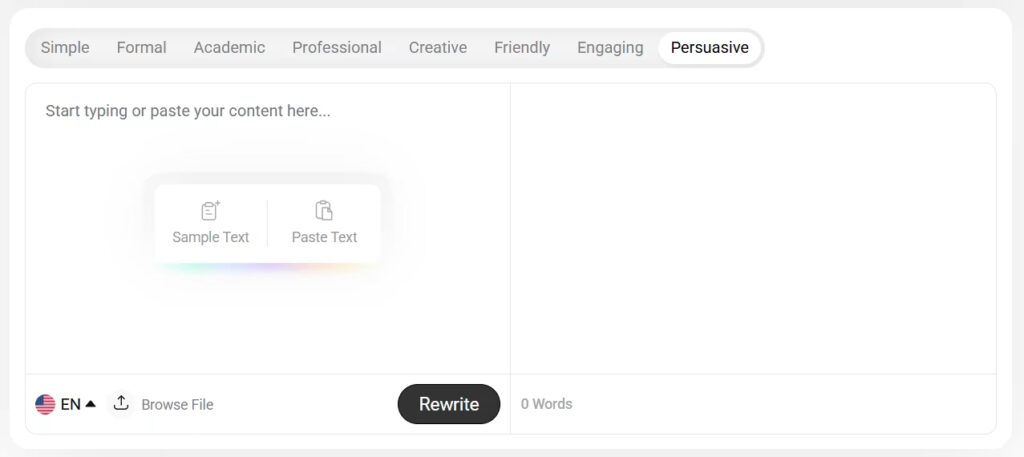
Address: https://www.summarizer.org/paragraph-rewriter
Such tools are quite handy, especially when you are addicted to posting a lot of content on your social media handles.
Final Thoughts
Repetition isn’t the problem—monotony is.
If you want your message to stay sharp, engaging, and impactful—even when you repeat it—the secret is creative reinvention.
Before repeating your next story, blog, campaign, or presentation, ask:
- Can I frame this differently?
- Can I update it with new data or details?
- Can I vary the tone or format to spark new engagement?
Because the best communicators aren’t afraid to repeat themselves. They just know how to repeat with purpose, freshness, and strategy.
FAQ
Why does repeated content feel boring?
Repeated content feels boring when it’s delivered in the same tone, format, and structure, causing the brain to lose interest due to a lack of novelty.
Is repetition bad for content marketing?
No. Repetition strengthens message recall, but only when the delivery is refreshed with new angles, formats, or perspectives.
How can you say something new without changing the message?
By reframing the perspective, updating examples or data, or changing the tone or format while keeping the core message the same.
Why does novelty increase engagement?
Novelty activates the brain’s reward system, improving attention, emotional response, and content engagement.
How often should content be refreshed?
Content should be refreshed after 2–3 exposures to maintain engagement and avoid audience fatigue.
Does variation improve learning retention?
Yes. Delivering the same concept in different formats improves understanding and long-term retention.
How can old content be made engaging again?
Old content can be refreshed by updating statistics, changing tone, or presenting it in a new format.
Can AI tools help refresh repeated content?
Yes. AI rewriting tools help change tone and phrasing, making old content feel new and engaging.
Is changing tone enough to refresh content?
Yes. A tone shift alone can make familiar content feel fresh and relevant.
What is the biggest mistake in repeating content?
Repeating content without changing the delivery, structure, or perspective.
 " alt="The 6 Principles of Safeguarding: Protect Before Harm Happens" />
 " alt="Personal Development Goals: 5 Meaningful Examples That Work" />
 " alt="TILE in Manual Handling: Meaning, Checklist & Safer Lifting Guide" />