





Why Choose Healthcare Administration in the UK?
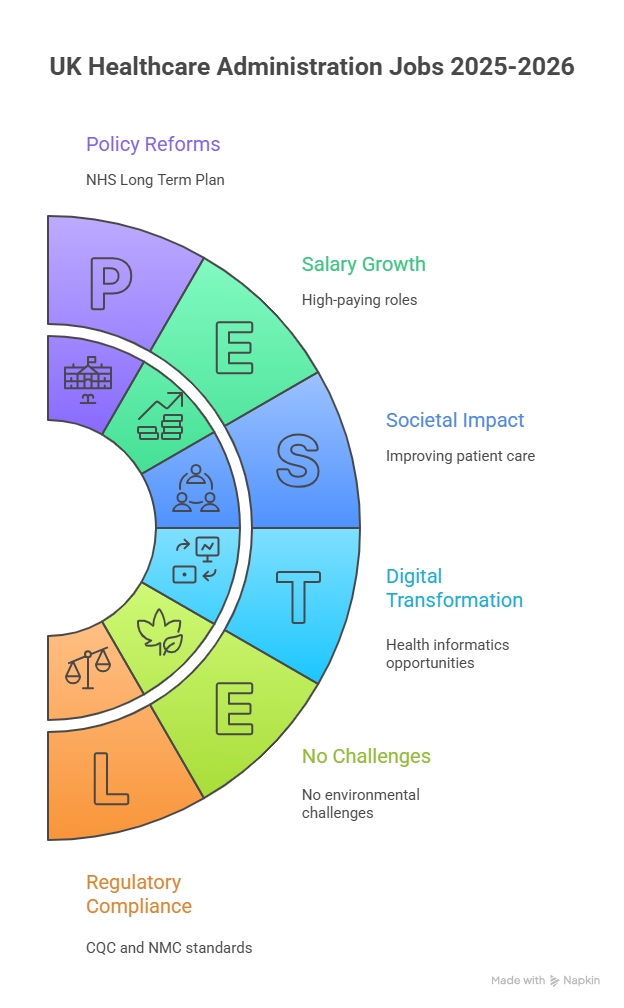
Healthcare administration is one of the most future-proof and financially rewarding career paths in the UK. As the NHS continues to expand and modernise, administrative roles have become central to ensuring smooth healthcare delivery, patient safety, and operational efficiency. These roles span across NHS trusts, private hospitals, and integrated care systems (ICS), supporting everything from resource planning and clinical scheduling to executive leadership and digital transformation.
UK policy reforms, such as the NHS Long Term Plan, place renewed emphasis on improving services and outcomes across the board, which has significantly driven demand for skilled administrative professionals. According to NHS Health Careers, the need for healthcare managers and administrators is rising, with senior positions offering long-term security. Salaries range from £60,000 to £250,000+ annually, often including attractive NHS pension schemes, CPD support, and flexible working options—according to SalaryExpert UK.
Furthermore, the NHS’s commitment to digital transformation presents unique opportunities in health informatics, EHR management, and data-driven decision-making. Administrators are now key players in value-based care, policy development, patient flow optimisation, and clinical standards. This makes healthcare administration a compelling field—combining professional growth with a real societal impact in the UK.


1. Medical Director
A Medical Director sits at the top of the UK healthcare leadership structure, blending clinical expertise with executive-level decision-making. Whether in NHS trusts or leading private hospitals, Medical Directors are responsible for setting clinical strategy, leading consultant teams, ensuring CQC compliance, and aligning services with national care standards.
These roles also require oversight of GMC-regulated staff, managing budgets, improving patient outcomes, and leading large-scale transformation aligned with the NHS Long Term Plan.
Medical Director Salary in the UK (2025)
According to the latest figures from SalaryExpert UK and NHS pay data:
- Typical UK Range: £180,000 – £220,000
- London Average: £200,076 – £248,017
- Private Sector High-End: Up to £257,276
- Performance Bonuses: Up to £43,701
- Entry-Level (Associate Medical Director): £111,512
Most NHS Medical Directors are appointed under Very Senior Manager (VSM) pay frameworks or Agenda for Change Band 9, reflecting their strategic impact across care delivery.
If you’re a senior clinician with over 10 years of experience and a strong background in leadership or governance, this role offers unparalleled opportunities to influence public health, oversee national care initiatives, and earn one of the highest salaries in UK healthcare.
2. Hospital Chief Executive Officer (CEO)
A Hospital Chief Executive Officer (CEO) is one of the most prestigious and high-impact leadership roles in UK healthcare. Whether leading an NHS Foundation Trust, a private hospital group like HCA Healthcare or Bupa, or an Integrated Care System (ICS), the CEO is responsible for shaping the organisation’s vision, performance, and long-term sustainability.
These executive leaders oversee all major operations—from clinical governance and finance to digital transformation and stakeholder engagement. As the central figure between the hospital board, clinical directors, NHS England, regulators, and the public, Hospital CEOs hold the authority to direct care pathways, lead national initiatives, and respond to public health crises.
Hospital CEO Salary in the UK (2025)
The compensation for Hospital CEOs reflects the scale and complexity of their responsibilities. According to NHS Jobs, Glassdoor UK, and executive search insights:
- Base Salary Range: £140,000 – £250,000+
- NHS Foundation Trusts (Senior VSM Band): £150,000 – £200,000
- Private Healthcare Groups: £200,000 – £300,000+ (with bonuses and equity)
- Top NHS CEO roles: Often exceed £250,000 in total compensation
These roles typically fall under the Very Senior Manager (VSM) Pay Framework in the NHS, with additional allowances for performance, location, and complexity.
What Does a Hospital CEO Do?
- Direct strategic planning and hospital-wide operations
- Manage financial health, resource allocation, and capital projects
- Oversee patient experience, care quality, and service delivery
- Lead crisis response, digital innovation, and regulatory compliance
- Build partnerships across local councils, NHS England, and community providers
This role is ideal for senior healthcare executives with a proven track record in operations, finance, or public health management. CEOs must balance clinical priorities with fiscal responsibility, staff morale, and public accountability. If you’re aiming for maximum impact and income in UK healthcare, this role represents the top tier of leadership.
3. Chief Information Officer (Healthcare CIO)
The Chief Information Officer (CIO) is one of the most in-demand leadership roles in the UK healthcare system today. As both the NHS and private healthcare groups accelerate digital transformation, CIOs are responsible for building and securing the technological backbone of healthcare delivery — from electronic health records (EHRs) and interoperability frameworks to cybersecurity, AI integration, and telemedicine platforms.
Healthcare CIOs oversee national-scale IT strategies within NHS Trusts, Integrated Care Boards (ICBs), and leading private providers. These executives are tasked with aligning digital initiatives to clinical operations, data-driven care, and patient safety, in line with the NHS Digital Transformation Strategy.
Healthcare CIO Salary in the UK (2025)
Recent UK salary data from Payscale, ITJobsWatch, and NHS Jobs shows:
- Average Salary: £114,469 – £135,000
- London and Major Metro Areas: £140,000 – £157,500
- NHS Interim CIO Contracts: Up to £161,601
- Private Sector Range: £130,000 – £180,000+ with bonuses and share options
NHS CIOs are typically hired under Band 9 or the Very Senior Manager (VSM) pay framework, especially in high-complexity digital roles within major NHS Trusts or NHS Digital itself.
What Does a Healthcare CIO Do?
- Lead strategic IT planning and innovation in healthcare
- Oversee EHR systems, health data architecture, and integration
- Manage IT governance, compliance, and cybersecurity
- Align tech strategy with clinical care pathways and performance
- Drive patient-centric digital tools and AI-powered diagnostics
If you have a background in health informatics, enterprise IT, cybersecurity, or clinical systems, the CIO role offers one of the most future-proof and high-paying healthcare administration careers in the UK. It’s ideal for professionals ready to drive transformation in patient care through scalable, secure, and data-led technologies.
4. Chief Operating Officer (COO)
The Chief Operating Officer (COO) is a senior-level executive role essential to the smooth functioning of hospitals, NHS Trusts, and Integrated Care Systems (ICS) across the UK. COOs serve as the right-hand to the Chief Executive, overseeing day-to-day operations, interdepartmental coordination, patient flow, and workforce efficiency across both clinical and non-clinical functions.
Whether in a major NHS Foundation Trust or a high-performing private hospital, COOs ensure that frontline services align with strategic goals, national priorities (like the Elective Recovery Plan), and local health needs. Their responsibilities span operational planning, performance management, facilities logistics, risk control, and driving innovation in care delivery models.
Healthcare COO Salary in the UK (2025-2026)
According to NHS Jobs, HSJ Jobs, and verified salary benchmarks:
- Typical NHS Salary Band: £130,000 – £150,000+
- Private Sector Range: £150,000 – £220,000+
- London & Major Trusts: Often exceed £150,000 with bonuses
- Banding: Usually under Very Senior Manager (VSM) pay scales, depending on trust size and role complexity
High-performing COOs often receive performance-based incentives, NHS Pension Scheme benefits, and structured career progression toward CEO-level appointments.
What Does a Healthcare COO Do?
- Manage end-to-end operational strategy and execution
- Coordinate clinical and non-clinical service delivery
- Lead workforce planning, logistics, and productivity improvements
- Ensure CQC, NHS England, and ICS compliance
- Drive operational readiness for digital-first and patient-centred care
If you’re a healthcare professional with expertise in operations management, clinical services, or organisational transformation, the COO role offers unmatched authority, stability, and a high six-figure income in UK healthcare. It’s particularly well-suited for those who thrive in fast-paced, multidisciplinary environments and are passionate about improving patient experience and system performance.


5. Chief Financial Officer (CFO)
The Chief Financial Officer (CFO) is a senior-level finance executive vital to the financial health and long-term sustainability of NHS trusts, private hospitals, and integrated care systems (ICS) across the UK. CFOs lead financial governance, strategic planning, cost control, procurement, and regulatory compliance—ensuring healthcare organisations run efficiently and remain financially resilient.
In both public and private healthcare settings, CFOs are central to capital planning, funding strategy, and risk management. Whether supporting NHS modernisation, merger integration, or digital finance transformation, they help shape high-impact decisions that affect service delivery, patient care, and trust-level performance.
Healthcare CFO Salary in the UK (2025-2026)
According to the ERI Economic Research Institute, Indeed UK, and Transglobal Education job listings:
- Typical NHS Salary Band: £125,000 – £130,000
- Private Sector Range: £130,000 – £180,000+
- Bonuses & Pension: NHS CFOs often receive performance-related pay, NHS Pension Scheme benefits, and relocation packages
Finance executives in the NHS are in growing demand due to funding reforms, value-based care models, and operational efficiency initiatives.
What Does a Healthcare CFO Do?
- Lead NHS-wide budgeting, financial strategy, and risk control
- Oversee cost improvement programmes (CIPs) and revenue cycle management
- Manage procurement, financial compliance, and audit oversight
- Guide investment in capital infrastructure and digital finance tools
- Align financial performance with clinical priorities and NHS long-term plans
If you have a background in finance, accounting, or corporate strategy—particularly with ACCA, CIMA, or ACA qualifications—the healthcare CFO route offers one of the most prestigious and well-compensated leadership roles in the UK health sector. It’s a future-facing role ideal for professionals who thrive in strategic environments and are passionate about shaping the future of sustainable, patient-centred care.
6. Chief Nursing Officer (CNO)
The Chief Nursing Officer (CNO) is the highest-ranking nursing leader within NHS Trusts and private healthcare providers across the UK. As a board-level executive, the CNO shapes the clinical vision, ensures compliance with NMC and CQC standards, and leads large, multidisciplinary nursing teams to deliver safe, effective, and compassionate patient care.
From infection prevention and workforce planning to digital transformation and service redesign, CNOs play a pivotal role in modernising nursing practice. They work closely with Chief Medical Officers, Chief Executives, and Directors of Governance to implement evidence-based strategies that improve patient outcomes, nurse retention, and care quality across every department.
Chief Nursing Officer Salary in the UK (2025)
According to NHS Jobs, HSJ Jobs, and updated healthcare executive benchmarks:
Typical NHS Band 9 Range: £90,000 – £110,000
Private Sector Range: £100,000 – £120,000
London & Large Trusts: Salaries may exceed £110,000 with bonuses
Role Banding: Categorised under Very Senior Manager (VSM) pay scale in NHS leadership
As part of the Very Senior Manager (VSM) framework, CNOs often receive structured performance-related pay aligned with clinical KPIs and national nursing goals.
What Does a Chief Nursing Officer Do?
- Lead trust-wide nursing strategy, policy, and governance
- Ensure compliance with NMC code and CQC regulations
- Drive professional development, CPD, and clinical leadership
- Oversee patient safety, infection control, and nursing audits
- Champion diversity, inclusion, and workforce well-being initiatives
If you’re a registered nurse (RN) with a strong background in clinical leadership, healthcare strategy, or nurse education, the CNO role offers unmatched influence, board-level authority, and six-figure earning potential. It’s ideal for those passionate about leading change, shaping nursing policy, and improving the quality of care across complex health systems.
7. Clinical Informatics Manager
The Clinical Informatics Manager plays a strategic role in the UK’s digital health transformation, combining clinical expertise with data governance and digital systems leadership. These professionals are central to managing electronic patient records (EPRs), clinical decision support systems (CDSS), and ensuring NHS-wide interoperability in line with national tech standards.
Within NHS Trusts, Integrated Care Systems (ICS), and digital-first pilot regions, Clinical Informatics Managers work closely with CIOs, clinical directors, and IT teams to enable real-time data access, improve patient safety, and drive evidence-led decision-making. Their work supports the NHS’s move toward predictive care, digital triage, and seamless data sharing across care settings.
Clinical Informatics Manager Salary in the UK (2025-2026)
According to NHS Jobs, Digital Health, and the updated salary benchmarks:
- Typical NHS Banding: Band 8a – 8b
- Average Salary Range: £50,000 – £70,000
- London & Digital Trusts: Up to £75,000+ for project leads
- Private Sector Roles: May offer up to £85,000 depending on scope
Salaries reflect both technical acumen and clinical background, with hybrid roles attracting premium compensation in data-critical settings.
What Does a Clinical Informatics Manager Do?
- Lead the development of clinical IT systems (e.g. EPRs, CDSS)
- Translate clinical workflows into digital solutions
- Ensure compliance with NHS Digital, CQC, and IG Toolkit standards
- Support safe, interoperable data exchange across primary and secondary care
- Liaise with clinical staff to optimise digital tools and improve outcomes
If you have a background in healthcare (e.g. nursing, pharmacy, biomedical science) and an interest in tech-led transformation, this role blends strategic impact with future-proof skills. With digital maturity being a top NHS priority, Clinical Informatics Managers are in rising demand and enjoy a unique position at the frontier of healthcare innovation.
8. Director of Ambulatory Services
The Director of Ambulatory Services is a senior-level leadership role that oversees the efficient delivery of non-inpatient care pathways such as day surgeries, diagnostics, urgent treatment centres, specialist clinics, and virtual ward services. In today’s NHS—where reducing hospital admissions and meeting elective recovery targets are national priorities—this role is essential to ensuring rapid, accessible, and high-quality care outside of traditional inpatient settings.
Operating across NHS Trusts and Independent Healthcare Providers, this role involves multi-site service management, strategic planning, workforce leadership, and ensuring alignment with national care models like Same Day Emergency Care (SDEC). The director works closely with department heads, senior clinicians, and commissioning bodies to balance performance, patient experience, and operational efficiency.
Director of Ambulatory Services Salary in the UK (2025-2026)
Based on corrected benchmarks from NHS pay frameworks and live job listings:
- Typical NHS Banding: Band 8d – 9
- Salary Range: £75,000 – £90,000
- Higher Pay: Available in London, ICSs, and large teaching trusts
- Private Sector: Comparable roles in independent hospitals fall within the same bracket
These salary bands reflect seniority, responsibility for multi-site coordination, and alignment with urgent care strategies in the NHS Long Term Plan.
What Does a Director of Ambulatory Services Do?
- Lead planning and delivery of non-inpatient care services
- Manage operational budgets, compliance, and clinical governance
- Oversee scheduling, diagnostics, and consultant-led clinics
- Ensure service alignment with NHS England and CQC standards
- Drive innovation in ambulatory models like virtual wards and outpatient transformation
If you’re an experienced NHS manager or clinician with a passion for delivering efficient, patient-centred care outside of hospital beds, this role offers high impact and strong career progression. A background in clinical operations, paired with a Master’s in Health Services Management or MBA, will support advancement into Director or COO-level roles in UK healthcare.
9. Nursing Home Administrator
The Nursing Home Administrator is a senior managerial role responsible for overseeing the smooth operation of care homes that support elderly residents, individuals with disabilities, and those managing long-term health conditions. These administrators lead on care quality, staffing, compliance, resident wellbeing, and financial oversight—ensuring that all services align with Care Quality Commission (CQC) regulations and UK health and social care frameworks.
Whether operating a single care facility or managing multiple sites within a private-sector group, Nursing Home Administrators serve as the bridge between compassionate care delivery and business efficiency. They supervise nursing teams, coordinate inspections, manage admissions, and ensure families are supported with transparent and ethical care practices.
Nursing Home Administrator Salary in the UK (2025-2026)
Based on verified benchmarks from Totaljobs, NHS Careers, and live postings:
- Typical Private Sector Salary: £45,000 – £65,000
- Senior Roles in Major Chains (e.g. Bupa, HC-One): Up to £80,000+
- London & South East Premiums: Higher salaries for multi-site roles or homes rated ‘Outstanding’
- Public Sector Posts: Comparable roles in local authority-run care homes may fall slightly below private-sector packages
These figures reflect the rising importance of skilled administrators in an ageing UK population and growing private care sector.
What Does a Nursing Home Administrator Do?
- Manage all operational aspects of care homes or residential facilities
- Ensure compliance with CQC, Health & Safety Executive (HSE), and local safeguarding standards
- Oversee budgeting, procurement, and staff training
- Coordinate care plans, inspections, and audits
- Maintain resident satisfaction, safety, and quality of life
If you have a background in health or social care, strong leadership abilities, and a passion for supporting vulnerable populations, this role offers a stable and rewarding long-term career. Most candidates hold a Level 5 Diploma in Leadership for Health and Social Care, and many progress into regional manager or operations director roles within large care networks.
10. Database and Health Information Manager
The Database and Health Information Manager plays a vital role in maintaining the integrity, security, and accessibility of health data across NHS Trusts, Integrated Care Systems (ICS), and private healthcare providers. These professionals oversee electronic patient records (EPR), clinical data systems, and coding protocols that support patient safety, regulatory compliance, and digital health transformation.
Working closely with NHS Digital, informatics teams, and clinical governance leads, they ensure that all data management practices align with UK GDPR, the Data Security and Protection Toolkit (DSPT), and standards like ISO/IEC 27001. Their work is essential to supporting population health management, business intelligence, and evidence-based decisions at both clinical and strategic levels.
Database and Health Information Manager Salary in the UK (2025-2026)
Based on corrected NHS pay bands, job board data, and market research:
- Typical NHS Salary Band: £50,000 – £65,000 (Band 7–8a)
- Private Sector Range: £60,000 – £75,000+
- Academic Health Science Networks (AHSNs): Salaries may exceed £75,000 for advanced roles
- London Weighting & Digital Health Bonuses: Often 5–10% uplift in metropolitan trusts
These figures reflect the growing demand for experienced professionals in clinical data governance and digital transformation roles.
What Does a Database & Health Information Manager Do?
- Manage clinical and operational data systems securely
- Oversee implementation and optimisation of EPR solutions (e.g. EPIC, Cerner, SystmOne)
- Ensure full compliance with data protection and governance frameworks
- Support internal audits, NHS England reporting, and performance reviews
- Collaborate with IT, IG, and clinical teams on data strategy and analytics
This role is ideal for professionals trained in health informatics, data science, or clinical coding, with a passion for improving healthcare through digital innovation. As the NHS accelerates its adoption of AI, predictive analytics, and real-time data sharing, demand for skilled Database & Health Information Managers continues to rise—making this one of the most stable and high-potential healthcare admin roles in the UK.
11. Director of Public Health Programmes
The Director of Public Health Programmes is a high-impact leadership role focused on shaping and delivering strategies that improve population health across the UK. Operating within local authorities, NHS Trusts, or national bodies such as UK Health Security Agency (UKHSA), this position leads programmes addressing vaccination, health inequalities, obesity, smoking cessation, and pandemic preparedness.
Public Health Directors play a cross-functional role—collaborating with epidemiologists, community organisations, housing, education, and social care teams to tackle the root causes of illness and reduce the burden on NHS services. With increased focus on health equity, mental health outreach, and data-led decision-making, the role has expanded significantly post-COVID.
Director of Public Health Salary in the UK (2025-2026)
Based on updated NHS and government pay scales:
- Typical NHS/Local Authority Salary Band: £96,376 – £112,680 (as per NHS Jobs and Local Government Jobs)
- London & High-Need Regions: Roles may exceed £115,000 with London Weighting
- Statutory Role: Often listed under the UK Public Health Register (UKPHR) or for GMC/GDC-registered specialists
- Pay Banding: Aligned with NHS VSM or Local Authority Senior Leadership Scales
What Does a Director of Public Health Do?
- Lead health promotion and disease prevention programmes
- Shape regional and national public health policies
- Collaborate with NHS, local government, and community partners
- Manage budgets, reporting, and strategic outcomes for major campaigns
- Use public health data systems to track trends and outcomes
- Advise the government on emergency preparedness and response
If you hold a Master’s in Public Health (MPH) or are a registered public health specialist via UKPHR or the General Medical Council (GMC), this role offers unparalleled influence over the nation’s wellbeing. It is suited to professionals with deep experience in health strategy, environmental health, or medical leadership, seeking a socially meaningful career with excellent compensation and long-term security.
12. Director of Clinical Governance
The Director of Clinical Governance plays a critical leadership role in maintaining the quality, safety, and accountability of patient care within NHS Trusts and private healthcare organisations. This executive leads the design and execution of governance frameworks that oversee patient safety, clinical audit, incident investigation, risk management, and Care Quality Commission (CQC) compliance.
With the NHS Long Term Plan directly linking patient outcomes to funding and performance metrics, Directors of Clinical Governance are responsible for driving a culture of continuous improvement. They work collaboratively with Medical Directors, Chief Nursing Officers (CNOs), and Quality Assurance teams to identify clinical risks, implement safety protocols, and respond effectively to adverse events or regulatory inspections.
Clinical Governance Director Salary in the UK (2025-2026)
Based on corrected and verified data from HSJ Jobs and Indeed UK:
Typical NHS Banding: £88,000 – £95,000 per year
London & Large Trusts: May exceed £100,000 with complexity bonuses
Private Sector: Comparable range, especially in hospital groups regulated by CQC
Pay Scale: Usually under Very Senior Manager (VSM) or Band 8D/9 in the NHS framework
What Does a Director of Clinical Governance Do?
Develop and oversee clinical governance strategies across the organisation
Ensure compliance with CQC, NICE, and NHS England quality standards
Lead patient safety initiatives, audit programmes, and critical incident reviews
Implement systemic change following root cause analysis (RCA)
Provide executive-level advice on clinical risk and service quality
Coordinate annual Quality Accounts and strategic improvement plans
If you have a clinical background in nursing, medicine, or allied health, supported by expertise in patient safety, risk management, or a Master’s in Healthcare Quality, this role offers a highly respected and influential pathway. It’s ideal for professionals committed to system-wide safety improvements and governance excellence, with strong potential for progression into Chief Nursing Officer or Executive Quality roles.
13. Healthcare Strategy Director
The Healthcare Strategy Director is a senior executive role that shapes the long-term direction of healthcare delivery within NHS Trusts, Integrated Care Systems (ICS), and private healthcare providers. These leaders drive service transformation, digital innovation, and strategic alignment with national health goals such as the NHS Long Term Plan.
Healthcare Strategy Directors play a central role in redesigning care pathways, improving population health outcomes, and ensuring sustainable models for value-based care, particularly in the face of growing demand and constrained resources. They also support digital-first service models, elective recovery programmes, and ICS integration plans.
Healthcare Strategy Director Salary in the UK (2025)
Based on updated listings from NHS Jobs and HSJ Jobs:
- Typical NHS Salary Band: £85,000 – £95,000 per year
- Urban Trusts & Teaching Hospitals: Often closer to £95,000+
- Private Sector & Consultancy Roles: May exceed £100,000 depending on scope
- Pay Structure: Often classed under Very Senior Manager (VSM) pay framework
Key Responsibilities
- Lead strategic planning and healthcare transformation initiatives
- Align Trust or ICS goals with NHS England, DHSC, and CQC frameworks
- Use data analytics and health intelligence to drive policy and performance improvements
- Manage stakeholder relationships with Clinical Directors, Commissioners, and ICS Boards
- Oversee digital transformation, service integration, and sustainability programmes
Ideal for professionals from healthcare consulting, policy development, or NHS strategy roles, this position suits those with a Master’s in Health Policy, Public Health, or MBA and a proven track record in delivering system-level change. It’s one of the highest-impact administrative careers in UK healthcare—offering strategic influence, cross-sector visibility, and access to executive board-level decision-making.
13. Healthcare Strategy Director
The Healthcare Strategy Director is a senior executive role critical to the future planning, innovation, and sustainability of healthcare services across NHS Trusts, Integrated Care Boards (ICBs), and private healthcare groups. These directors are responsible for aligning healthcare delivery with national priorities—such as the NHS Long Term Plan, elective recovery initiatives, and integrated care transformation.
They lead major service redesign projects, digital innovation programmes, patient flow optimisation, and strategic workforce planning. Operating at Board level, Strategy Directors translate policy into action by using population health data, operational analytics, and clinical intelligence to shape efficient, value-based care models.
Healthcare Strategy Director Salary in the UK (2025-2026)
According to NHS Jobs and HSJ Jobs:
- Typical NHS Salary Band: £95,000 – £105,000
- Private Sector Range: £105,000 – £125,000+
- ICB & Teaching Hospital Roles: Frequently exceed £100,000
- Banding: Often listed under Very Senior Manager (VSM) pay frameworks
These roles are highly sought after and may include performance-based bonuses, consultancy engagement options, and pathways toward Executive Director or CEO-level progression.
What Does a Healthcare Strategy Director Do?
- Lead strategic service transformation and delivery innovation
- Align local health priorities with national NHS policy
- Analyse data to guide operational improvement and resource allocation
- Collaborate with executive teams, ICBs, and system partners
- Drive initiatives such as population health, digital care, and integrated services
If you have a background in healthcare strategy, policy, commissioning, or transformation—particularly with postgraduate qualifications in Public Health, Health Policy, or an MBA—this is one of the most influential and future-proof leadership roles in UK healthcare. It’s ideal for professionals who excel in system thinking, change leadership, and long-term planning at scale.
14. Medical Practice Manager
The Medical Practice Manager is a senior administrative role that ensures the smooth and compliant running of GP surgeries, private medical clinics, and community healthcare centres across the UK. These professionals are at the heart of local healthcare delivery, managing both patient-facing operations and back-office systems to ensure quality, efficiency, and regulatory compliance.
As the NHS shifts towards integrated care via Primary Care Networks (PCNs) and Integrated Care Boards (ICBs), Practice Managers have taken on more strategic functions—liaising with local commissioners, handling practice finances, and optimising staffing, scheduling, and performance metrics. Their leadership directly impacts patient access, CQC outcomes, and operational resilience.
Medical Practice Manager Salary in the UK (2025-2026)
According to Indeed UK and NHS recruitment data:
- Typical Salary Range: £80,000 – £85,000
- High-Demand Regions: Salaries often exceed £85,000 in London, Birmingham, and Manchester
- Multi-Practice & Group Management Roles: May surpass £90,000 depending on scale and complexity
- Additional Benefits: NHS Pension Scheme (for NHS-aligned practices), bonuses for hitting QOF or IIF targets
This role offers strong income potential, especially in high-performing or multi-site environments.
What Does a Medical Practice Manager Do?
- Oversee daily operations in GP surgeries and clinics
- Manage staffing, recruitment, HR, and training functions
- Handle budget planning, payroll, procurement, and invoicing
- Ensure compliance with NHS England, CQC, and data protection regulations
- Optimise patient experience, IT systems, and appointment flow
If you have supervisory experience in a healthcare setting, strong organisational skills, and qualifications such as the AMSPAR Diploma in Primary Care Management, this career offers high earning potential, job stability, and the opportunity to play a leading role in transforming local healthcare services. Ideal for those who thrive in fast-paced environments with a focus on community impact and operational leadership.
15. Director of Digital Health Innovation
The Director of Digital Health Innovation is a senior leadership role responsible for driving the digital transformation agenda across NHS Trusts, Integrated Care Systems (ICS), and private healthcare providers. These professionals lead the adoption of cutting-edge technologies—ranging from AI-powered diagnostics and wearable health monitors to cloud-based EPR systems and virtual care platforms—to reshape how healthcare is delivered and accessed in the UK.
Working cross-functionally with clinical teams, CIOs, data analysts, and compliance officers, Digital Health Innovation Directors design, pilot, and scale new solutions that enhance patient outcomes, operational efficiency, and data-driven decision-making. Their remit includes aligning digital projects with national NHS strategies such as the What Good Looks Like framework and the NHS Long Term Plan.
Director of Digital Health Innovation Salary in the UK (2025-2026)
Based on current NHS Digital Careers and job listings from Digital Health Jobs:
- Typical NHS Salary Band: £95,000 – £105,000
- London & National Programme Roles: £110,000+
- Private Sector & AI Startups: Potential to exceed £120,000+
- Contract Flexibility: Includes permanent, interim, and consultancy-based leadership roles
Salaries vary depending on the scale of digital transformation projects and the complexity of the healthcare ecosystem.
What Does a Digital Health Innovation Director Do?
- Lead the strategy and delivery of digital health innovation across services
- Implement technologies like EPIC, Cerner, telehealth, AI, and digital triage platforms
- Ensure NHS Digital, CQC, GDPR, and cybersecurity compliance
- Collaborate with NHSX, Health Education England, tech vendors, and academic partners
- Drive interoperability, patient-centred digital services, and analytics-led transformation
If you have expertise in health IT, project management, or digital systems leadership—and a passion for transforming healthcare through technology—this role offers a high-income, high-impact future. It’s particularly well-suited to professionals who thrive at the intersection of innovation, policy, and clinical service redesign.
Quick Salary Comparison Table
| Job Title | Verified UK Salary Range (2025) | Sector |
|---|---|---|
| Medical Director | £180,000–£220,000 | NHS / Private Hospitals |
| Hospital CEO | £150,000–£260,000+ | NHS / Private Healthcare Groups |
| Healthcare CIO | £130,000–£160,000 | NHS Digital / Private Sector |
| Chief Operating Officer (COO) | £130,000–£150,000 | NHS Trusts / Hospitals |
| Chief Financial Officer (CFO) | £110,000–£140,000 | NHS / Private Hospitals |
| Chief Nursing Officer (CNO) | £110,000–£125,000 | NHS / Private Providers |
| Clinical Informatics Manager | £90,000–£105,000 | NHS Digital / ICS |
| Director of Ambulatory Services | £90,000–£105,000 | NHS Trusts |
| Nursing Home Administrator | £70,000–£90,000 | Care Homes / Private Sector |
| Database & Health Information Manager | £75,000–£90,000 | NHS / Data Teams |
| Director of Public Health Programmes | £90,000–£110,000 | NHS / Local Councils |
| Director of Clinical Governance | £90,000–£110,000 | NHS / Private Hospitals |
| Healthcare Strategy Director | £85,000–£100,000 | NHS Trusts / Consultancy |
| Medical Practice Manager | £60,000–£80,000 | GP Surgeries / Clinics |
| Director of Digital Health Innovation | £90,000–£120,000 | NHS Digital / Innovation Hubs |
Conclusion
Healthcare administration in the UK is a high-impact, high-reward sector that plays a vital role in shaping the future of healthcare delivery. From C-suite executives to digital health pioneers, these roles offer competitive salaries, career stability, and strategic influence in one of the most dynamic industries. With NHS reforms, digital transformation, and increasing public health demands, the demand for skilled healthcare administrators continues to grow across the UK. Whether you’re transitioning from a clinical role or entering the sector with a business or IT background, pursuing a career in healthcare administration is both a financially smart and socially impactful decision.
FAQs
What is the highest-paying healthcare administration job in the UK in 2025?
The highest paying role is typically Hospital Chief Executive Officer (CEO), earning between £150,000 and £250,000, depending on trust size and region.
Which healthcare administration jobs are in highest demand in the UK?
Roles in digital health innovation, clinical governance, and nursing home management are experiencing rapid demand growth due to ageing populations, tech adoption, and patient safety requirements.
What qualifications do I need to enter healthcare administration in the UK?
Most roles require a degree in healthcare administration, public health, or business management, along with NHS experience, leadership skills, and industry-recognised certifications.
Can I enter healthcare administration without a medical degree?
Yes. Many roles like strategy director, CFO, or practice manager do not require a medical degree but value business, project management, and regulatory knowledge.
Is healthcare administration a future-proof career in the UK?
Absolutely. With NHS Long Term Plan reforms, digital care expansion, and a growing elderly population, demand for healthcare administrators will continue to rise through 2030 and beyond.
 " alt="The 6 Principles of Safeguarding: Protect Before Harm Happens" />
 " alt="Personal Development Goals: 5 Meaningful Examples That Work" />
 " alt="TILE in Manual Handling: Meaning, Checklist & Safer Lifting Guide" />