

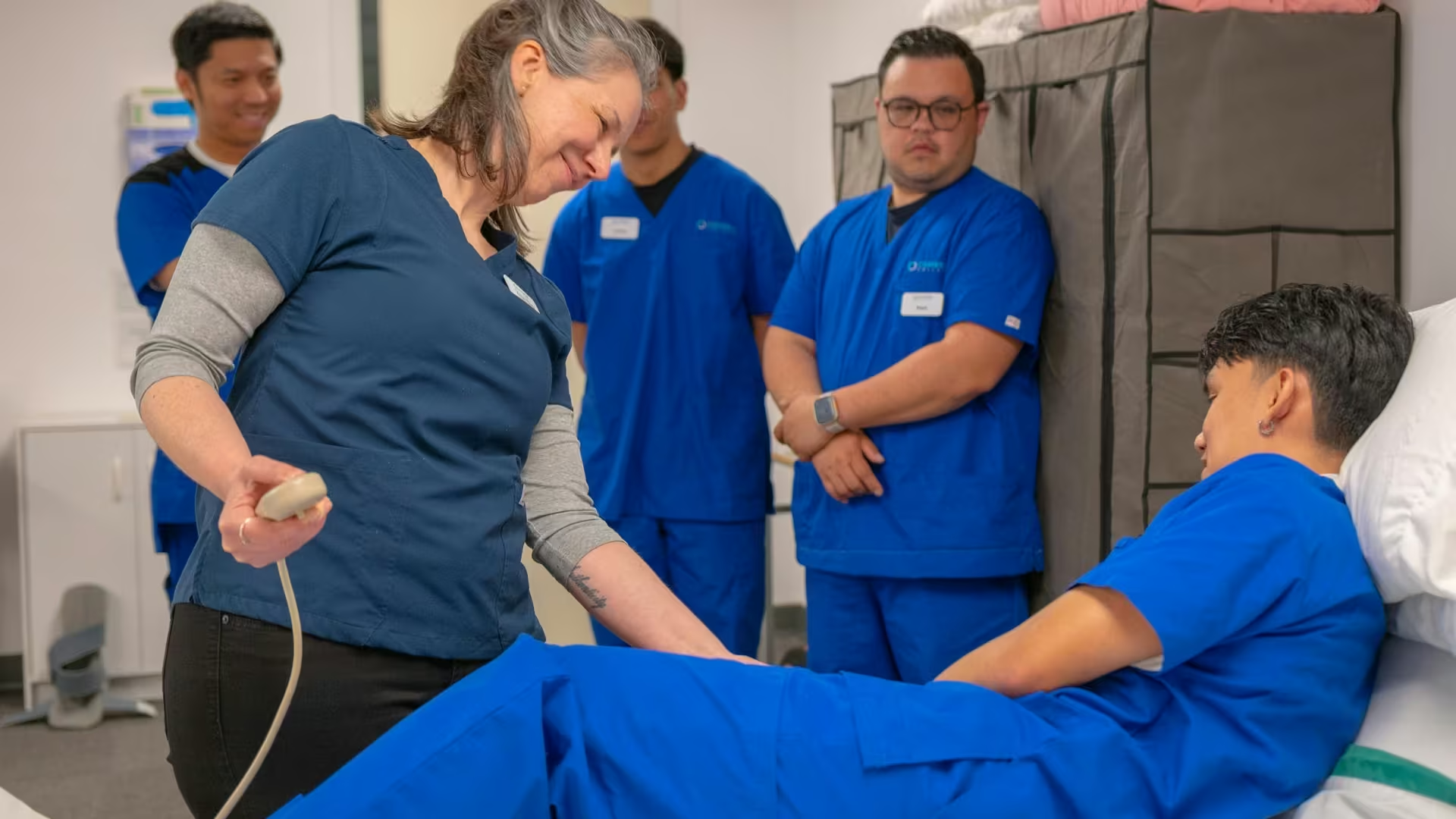

Healthcare assistant training course options in the UK are often the starting point for those looking to enter the care sector and understand how patient support works in real settings.
Most people searching for this want clear answers. What does the role involve? How do you get started? And what kind of training actually helps in the UK?
This guide breaks it all down in a simple way. You’ll learn what healthcare assistants do, the skills required, salary expectations, and how training fits into your career path.

What is a Healthcare Assistant?
A healthcare assistant supports patients with day-to-day care while working alongside nurses and other healthcare professionals.
- Helps patients with personal care and daily activities
- Supports clinical staff in delivering care
- Monitors basic patient wellbeing and reports concerns
- Assists in maintaining a clean and safe environment
- Communicates with patients, families, and care teams
Healthcare assistants work across a range of settings in the UK.
- NHS hospitals
- Residential care homes and nursing homes
- GP surgeries and community clinics
- Home care and domiciliary care settings
Their role is a key part of the UK healthcare system, helping ensure patients receive consistent support while allowing nurses and medical staff to focus on more specialised care.
What Does a Healthcare Assistant Do?
The role focuses on supporting patients while helping healthcare teams deliver safe and effective care.
- Provide day-to-day patient support, including personal care and comfort
- Assist nurses with routine tasks and care procedures
- Observe and report changes in a patient’s condition
- Help maintain hygiene standards and a clean care environment
- Follow health and safety procedures in line with UK care standards
- Communicate clearly with patients, families, and healthcare staff
Understanding these responsibilities gives you a realistic view of the role and what is expected in different care settings.
Read the full guide here: What Does a Healthcare Assistant Do
Skills Required to Become a Healthcare Assistant
Success in this role depends on a mix of personal qualities and a clear understanding of care expectations in the UK.
- Strong communication skills to interact with patients and healthcare teams
- Empathy and compassion when supporting individuals in different situations
- Attention to detail when observing and reporting changes in wellbeing
- Ability to work as part of a team in busy care environments
- Understanding of care standards, including safety, dignity, and confidentiality
These skills are essential for delivering consistent and respectful care across different healthcare settings.
If you’d like a deeper look at what employers expect, it’s worth exploring our guide on Healthcare Assistant Skills.
Healthcare Assistant Salary UK
Pay can vary depending on experience, location, and the type of employer.
- Entry-level roles typically start around £20,000 – £24,000
- With experience, salaries can increase to £24,000 – £30,000
- Senior or specialised support roles may offer £30,000+
In the NHS, salaries are usually structured under banding systems, while private care providers may offer different pay rates depending on responsibilities and setting.
If you want a clearer breakdown of pay across roles and sectors, you can explore our detailed guide on Healthcare Assistant Salary UK.
How to Become a Healthcare Assistant in the UK
Getting started is often more straightforward than many people expect.
- No formal degree is usually required to enter the role
- Building knowledge through a healthcare assistant training course can help
- Certification supports your understanding of care standards and responsibilities
- Applying for entry-level roles in hospitals, care homes, or community settings
Many learners begin by gaining a basic understanding of the role and then apply for positions while continuing to develop their knowledge.
For a step-by-step pathway, take a look at our full guide on How to Become a Healthcare Assistant in the UK.
Why Take a Healthcare Assistant Training Course?
Choosing the right training can give you a clearer understanding of what’s expected in real care environments across the UK.
- Builds a strong foundation in patient care and healthcare responsibilities
- Helps you feel more prepared when applying for entry-level roles
- Flexible online learning that fits around your schedule
- Supports recognised certification aligned with UK care standards
This type of training is often where many learners begin, especially when they want a structured introduction before stepping into the sector.
If you’re ready to take the next step, you can explore the full Healthcare Assistant Training Course here!
Career Opportunities in Healthcare
As a healthcare assistant, you can progress into roles such as nursing assistant, support worker, or senior care positions, depending on your experience and career goals.
- Healthcare Assistant
Support patients in hospitals and care settings
Salary: £24,000 – £27,000 - Nursing Assistant
Work alongside nurses in clinical environments
Salary: £24,000 – £30,000 - Support Worker
Assist individuals with daily living and independence
Salary: £22,000 – £28,000 - Senior Care Roles (e.g. Senior Healthcare Assistant)
Take on more responsibility in care delivery and supervision
Salary: £26,000 – £32,000
These roles provide a clear pathway to grow within the healthcare sector, with opportunities to move into more specialised or senior positions over time.
NHS Healthcare Assistant Jobs Guide
Healthcare assistant roles in the UK are mainly advertised through the NHS, care homes, and private healthcare providers, with consistent demand across all settings.
- Jobs are commonly listed on the NHS Jobs website, as well as care home and agency platforms
- Entry-level roles focus on patient support, teamwork, and following care procedures
- Most NHS positions fall under Band 2 or Band 3, depending on experience and responsibilities
- Ongoing demand exists due to staffing needs in hospitals, community care, and residential services
Many employers look for candidates who understand basic care standards, communication, and patient wellbeing, even at entry level.
If you want a clearer step-by-step guide on where to apply and what to expect, you can explore our detailed resource on NHS Healthcare Assistant Jobs.
Start Your Career in Healthcare
Getting started in healthcare begins with building the right knowledge and understanding of how care is delivered across different settings.
- Gain a clear understanding of patient care and healthcare responsibilities
- Build confidence before applying for roles in hospitals or care settings
- Learn at your own pace with flexible online access
- Work towards a recognised certification aligned with UK care standards
Taking the first step can make a real difference, especially when you have a structured pathway to follow.
Enrol to our Healthcare Assistant Training Course today and start your learning journey.

FAQs
What is a healthcare assistant training course?
A healthcare assistant training course helps you understand patient care, communication, and responsibilities within UK healthcare settings such as hospitals and care homes.
Do I need qualifications in the UK?
Formal qualifications are not always required, but having relevant training can improve your understanding and make you a stronger candidate when applying for roles.
Can I study online?
Yes, many learners choose online courses as they offer flexibility and allow you to build knowledge at your own pace.
Is there demand in the UK?
Yes, demand remains steady across the NHS and private care sector due to ongoing staffing needs in healthcare and support roles.
How much is a healthcare assistant’s salary in the UK?
Most healthcare assistants earn between £24,000 and £30,000, depending on experience, location, and whether they work in the NHS or private sector.
What qualifications do I need to be a healthcare assistant in the UK?
While entry-level roles may not require formal qualifications, completing a healthcare assistant training course can help you understand care standards and responsibilities.
How to apply for healthcare assistant jobs in the UK?
You can apply through NHS Jobs, care home websites, or recruitment agencies by submitting an application and demonstrating your understanding of the role.
How much is a CNA paid in the UK?
The term “CNA” is not commonly used in the UK. Similar roles, such as healthcare assistants, typically earn between £24,000 and £30,000 depending on experience.
 " alt="The 6 Principles of Safeguarding: Protect Before Harm Happens" />
 " alt="Personal Development Goals: 5 Meaningful Examples That Work" />
 " alt="TILE in Manual Handling: Meaning, Checklist & Safer Lifting Guide" />