

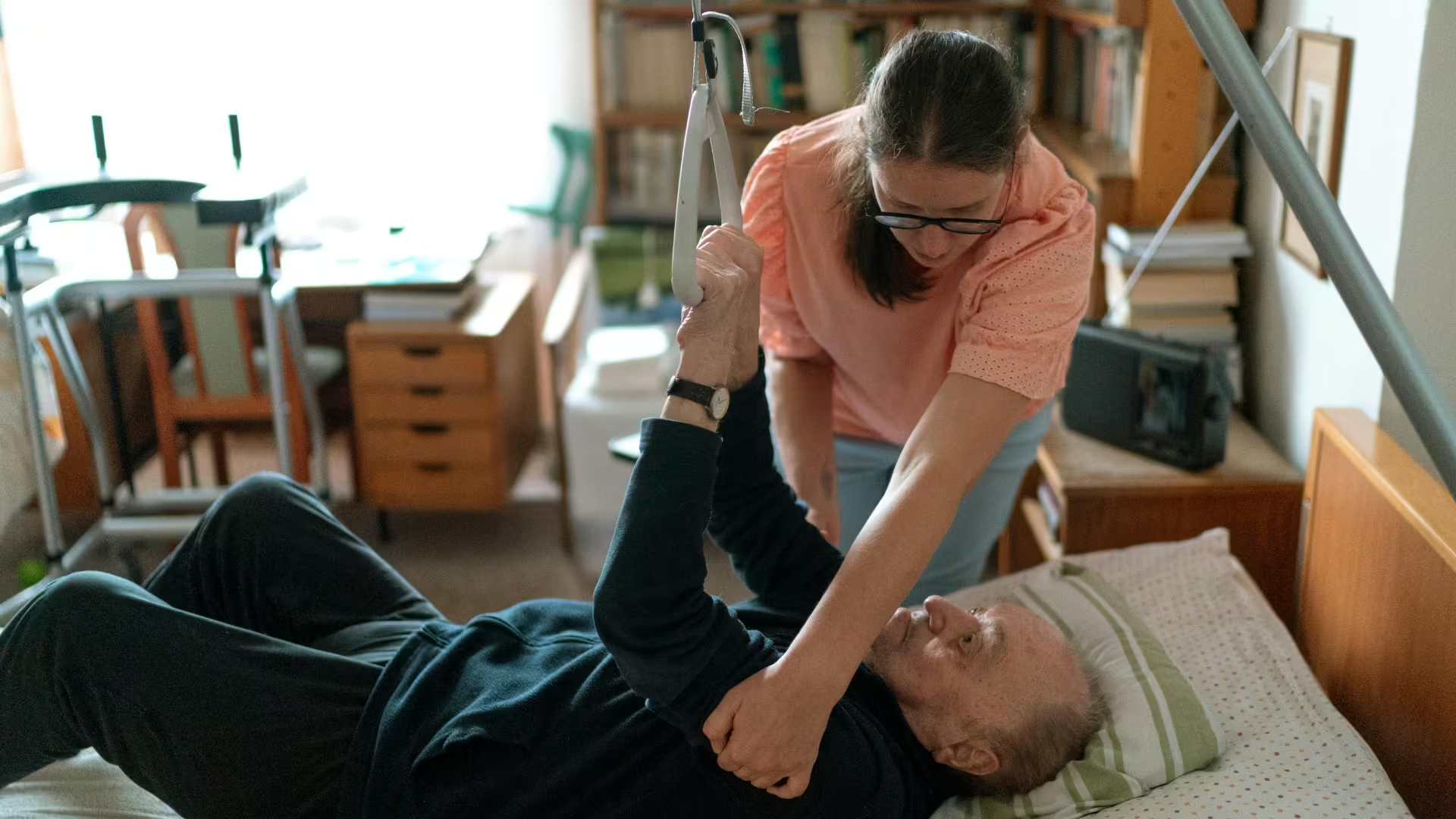

Not sure what qualifications you actually need to work in care? If you’ve been searching for care assistant qualifications UK, you’ve probably come across mixed answers—some say you need training, others say you can start straight away.
In reality, you don’t need formal qualifications to become a care assistant in the UK. Most roles are open to beginners, although basic training or a certificate can help you understand the role and improve your chances when applying.
In this guide, you’ll get a clear breakdown of what qualifications (if any) are required, what training can help you get started faster, and how to approach care roles with confidence—even if you’re starting from scratch.
What Qualifications Do You Need to Be a Care Assistant in the UK?
You don’t need formal qualifications or a degree to become a care assistant in the UK.
Most employers are open to applicants without prior academic credentials, especially for entry-level roles. While GCSEs in English and Maths can be helpful, they are not always required and will depend on the employer and the type of care setting.
What matters more is your ability to work with people, follow instructions, and handle responsibility in a care environment. Some employers may look for a basic understanding of care standards, while others are willing to train you on the job.
This means there is flexibility in how you start. Whether you apply directly or choose to build some knowledge first, there isn’t a strict qualification barrier preventing you from entering the care sector.
Do You Need Any Formal Qualifications to Start?
No—formal qualifications aren’t required to start working as a care assistant in the UK.
Many people begin with no prior qualifications at all. Employers often provide on-the-job training, showing you how to carry out tasks safely and follow care standards from day one.
This is what makes the role so accessible. Instead of needing years of study, you can enter the sector quickly and build your skills as you work. What employers usually look for is reliability, a willingness to learn, and the ability to work with people.
While training can help you feel more prepared, it’s not a barrier to getting started. The care sector is one of the few where you can begin without formal qualifications and still build a long-term career over time.
What Training Helps You Become a Care Assistant?
While formal qualifications aren’t required, the right training can make starting out much easier.
Basic care training usually covers the essentials—how to support individuals safely, communicate effectively, and follow care standards in real situations. This includes understanding personal care, infection control, health and safety, and how to respond appropriately in different scenarios.
It also helps you develop communication skills, which are a key part of working in care. Being able to listen, explain, and respond calmly can make a big difference in both patient experience and how confidently you perform your role.
Having this foundation before you apply means you’re not going in completely unfamiliar with what’s expected. It often makes interviews feel more manageable and helps you settle into the role faster once you start.
If you’re trying to see how this training fits together in practice, it’s worth looking at how a care assistant certificate is typically structured and what it prepares you for.
Care Assistant Certificate vs Formal Qualifications
A care assistant certificate and formal qualifications serve different purposes, and understanding the difference helps you choose the right starting point.
- Care assistant certificate (short, practical)
Focuses on the basics of care, such as patient support, communication, and safety. It’s designed to help you understand the role quickly and prepare for entry-level jobs - Formal qualifications (longer, structured)
These are more in-depth programmes, often required for advanced roles or career progression. They take longer to complete and usually involve assessments and practical elements
In most cases, you don’t need formal qualifications to start working in care. A certificate is often enough to build confidence and show employers you understand the role.
Formal qualifications become more relevant later, especially if you want to move into senior positions or specialised areas. Starting with a basic certificate and gaining experience is a common path for many people entering the care sector.
Skills That Matter More Than Qualifications
In many care roles, your skills often matter more than formal qualifications—especially when you’re starting out.
- Communication
Being able to speak clearly and listen carefully helps you understand needs and support individuals effectively - Empathy
Showing patience and understanding is essential when working with people in vulnerable situations - Reliability
Being consistent and dependable is important, as individuals rely on your support every day
Employers often look for these qualities first, as they reflect how you’ll perform in real care environments. While training can help you build knowledge, these skills shape how you deliver care on a daily basis.
If you’re trying to see how these skills show up in practice, it helps to look at how they play out in typical care assistant work and day-to-day situations.
Skills That Matter More Than Qualifications
In many care roles, your skills often matter more than formal qualifications—especially when you’re starting out.
- Communication
Being able to speak clearly and listen carefully helps you understand needs and support individuals effectively - Empathy
Showing patience and understanding is essential when working with people in vulnerable situations - Reliability
Being consistent and dependable is important, as individuals rely on your support every day
Employers often look for these qualities first, as they reflect how you’ll perform in real care environments. While training can help you build knowledge, these skills shape how you deliver care on a daily basis.
If you’re trying to see how these skills show up in practice, it helps to look at how they play out in typical care assistant work and day-to-day situations.
Where to Apply Without Qualifications
You can apply for care assistant roles in the UK even without qualifications by using a few common and reliable routes.
- NHS Jobs
A key platform for hospital-based roles, where many entry-level positions are open to beginners - Care homes
Residential and nursing homes regularly hire care assistants and often provide training after you start - Recruitment agencies
Agencies can help you find both temporary and permanent roles, sometimes with quicker placement
Applying through a mix of these options can increase your chances, especially if you’re open to different care settings.
If you’re focusing on NHS roles, it helps to understand how the process works in practice—seeing how people typically apply and what employers look for can make things much clearer.
Does Having Qualifications Improve Your Chances?
Yes—having qualifications or basic training can improve your chances, but they’re not strictly required to start.
When employers are choosing between candidates with similar experience, someone who already understands the basics of care often stands out. It shows preparation, awareness of responsibilities, and a clearer understanding of what the role involves.
Training also builds confidence. Instead of going into interviews unsure, you’re able to explain how care works and what’s expected, which can make a noticeable difference.
Many employers prefer candidates who have taken this extra step, as it reduces the time needed for initial training and support once hired.
If you’re trying to decide whether it’s worth it, looking at how a care assistant certificate fits into the overall path can make things clearer—and for many people, starting with a short course is simply a way to feel more prepared before applying.
Career Progression With and Without Qualifications
You can progress in a care career with or without formal qualifications, but the path may look slightly different.
- Entry-level start
Most people begin in basic care roles, gaining hands-on experience and understanding how the sector works - Experience vs education
Experience plays a major role in progression, especially early on. However, adding training or qualifications later can open more structured or higher-level opportunities - Growth opportunities
With time, you can move into senior roles, specialised areas, or even further training pathways such as nursing
In many cases, people start with experience and then build on it with training as they progress. This combination often leads to more stable and better-paying opportunities over time.
Start Your Career in Care
Starting a career in care is more accessible than most people expect. You don’t need a complicated pathway or years of study to begin—just a clear understanding of the role and a willingness to learn.
Many people start without qualifications, build experience on the job, and gradually grow into more confident and capable roles over time. The key is taking that first step rather than waiting until everything feels perfect.
If you’re feeling unsure, it often helps to start by understanding how the role works in practice. From there, moving into real opportunities becomes much easier.
If you’re ready to begin, you can explore a care assistant and support worker course to get a clearer picture and start building your confidence before applying.
Common Questions About Care Assistant Qualifications
Do I need qualifications to become a care assistant?
No, most entry-level roles do not require formal qualifications. Many employers are open to beginners.
What GCSEs are required?
GCSEs in English and Maths can be helpful, but they are not always mandatory and depend on the employer.
Can I work without training?
Yes, you can start without training, as many roles provide on-the-job learning. However, having some basic knowledge can help you feel more prepared.
Is a certificate enough?
For entry-level roles, a certificate is often enough to show that you understand the basics of care and responsibilities.
What is the quickest way to start?
The quickest way is to understand the role, gain basic knowledge, and apply for entry-level jobs while learning on the job.
What qualifications do I need to be a care assistant in the UK?
Formal qualifications are not required, but basic training or a certificate can improve your chances.
What qualifications do I need to be a caregiver in the UK?
Similar to care assistants, caregivers do not usually need formal qualifications to start.
How to get a care assistant job in the UK?
Apply through the NHS Jobs website, care home listings, or recruitment agencies, and show an understanding of the role.
Do I need IELTS to work as a healthcare assistant in the UK?
IELTS is usually only required for visa or registration purposes, not for the role itself if you already meet work eligibility requirements.
 " alt="The 6 Principles of Safeguarding: Protect Before Harm Happens" />
 " alt="Personal Development Goals: 5 Meaningful Examples That Work" />
 " alt="TILE in Manual Handling: Meaning, Checklist & Safer Lifting Guide" />