



According to The King’s Fund, over one in twelve roles in England’s adult social care sector remained vacant in 2023/24—an 8.3% vacancy rate, equal to around 131,000 unfilled posts—highlighting the escalating demand for skilled professionals. Every stage of career progression, from Level 3 right through to Level 5 Health and Social Care, plays an indispensable part in delivering high-quality, compassionate support.
Career progression after Level 3, 4, or 5 Health and Social Care enables learners to move from entry-level care roles into specialist positions, senior support roles, or managerial pathways, offering greater responsibility, recognition, and salary potential.
In this blog, you’ll discover the career opportunities available at each level, the salaries you can expect, the skills employers value, and how continuous training can open doors to advanced and rewarding roles in health and social care.
Understanding Health and Social Care Qualification Levels
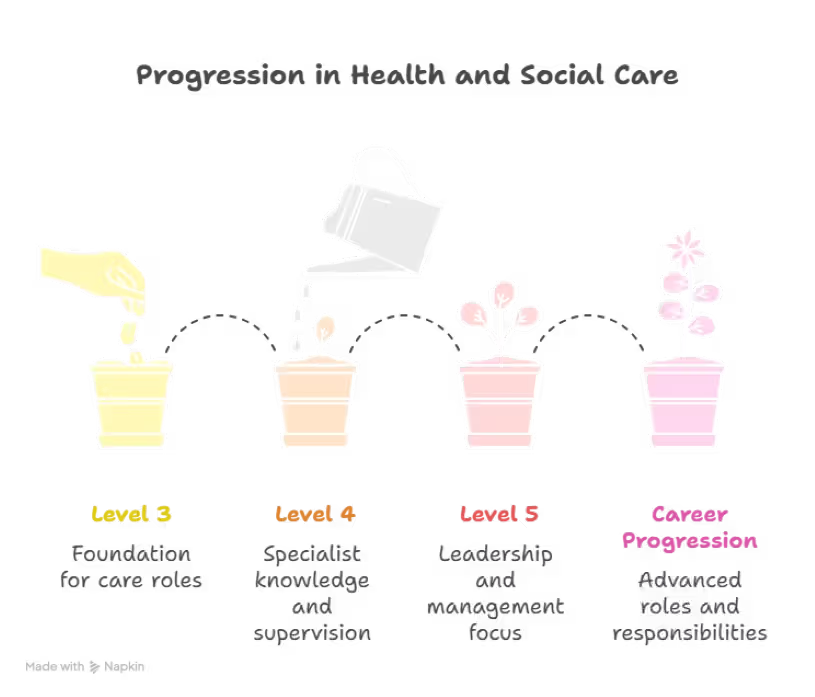
When you’re choosing a course, it helps to know what each qualification level actually means. Every stage builds on the one before and gives you the knowledge to progress in your career. Let’s break it down simply.
Level 3 is equal to an A-Level. It provides the foundation you need to start working in care. At this stage, you gain essential knowledge that supports you in roles like:
- Care Assistant
- Support Worker
- Healthcare Assistant
Level 4 takes you a step further. This level develops specialist knowledge and introduces supervisory skills. With it, you can handle more complex responsibilities and prepare for progression. Typical outcomes include:
- Senior Care Worker
- Team Leader
- Community Support Worker
Level 5 is about leadership and management. Here, the focus is on compliance, service quality, and organisational skills. With this level, you can move into positions such as:
- Deputy Manager
- Care Home Manager
- Service Manager
To make sure your certificate is respected, these qualifications are often CPD-accredited, QLS-endorsed, or recognised by Ofqual. This gives your learning credibility and reassures employers that your training meets trusted UK standards.


Career Opportunities After Level 3
Completing a Level 3 Health and Social Care qualification gives you the foundation to enter the workforce with confidence. According to Skills for Care, around 43% of the adult social care workforce in England hold a Level 3 diploma or equivalent, showing how important it is for starting out in the sector.
With Level 3, you can apply for a wide range of entry-level roles, including:
- Care Assistant
- Support Worker
- Nursing Assistant
- Residential Care Worker
You’ll also have opportunities across different environments. Many learners choose to work within the NHS, while others prefer care homes, domiciliary care, or community-based services. Each setting provides valuable experience that can strengthen your career.
In terms of salary, most Level 3 qualified care workers in the UK earn between £18,000 and £23,000 per year, although this can rise with experience, shift patterns, or specialist responsibilities. Some employers also offer additional pay for evening or weekend work.
Most importantly, Level 3 isn’t the end of your journey. It acts as a stepping stone to Level 4 Health and Social Care, where you can gain specialist knowledge and supervisory skills. This means you can grow your career steadily while keeping your options open for higher-level roles later.
Career Opportunities After Level 4
Completing a Level 4 Health and Social Care qualification takes you beyond the basics of frontline care. At this stage, you gain specialist knowledge and begin to take on supervisory responsibilities that prepare you for bigger roles.
With Level 4, you can step into positions such as:
- Senior Care Worker
- Team Leader
- Community Support Specialist
This level also opens opportunities in niche areas of care. You might work in dementia services, disability support, or mental health care. These specialisms are in high demand and give you the chance to build a strong career profile.
When it comes to pay, Level 4 roles usually offer more than entry-level positions. On average, salaries range from £22,000 to £28,000 per year, depending on your workplace and experience. With time, this can increase further as you gain responsibility.
Importantly, Level 4 also acts as a bridge to Level 5 Health and Social Care. Once you’re ready, you can move into advanced study that prepares you for management and leadership positions within the sector.

Career Opportunities After Level 5
If you start with a Level 3 qualification, you already have a strong foundation in health and social care. However, moving up to Level 4 or Level 5 can open the door to senior roles and greater responsibility. Employers often look for higher diplomas when recruiting for leadership positions.
With these advanced qualifications, you can progress into roles such as Care Manager, Team Leader, Safeguarding Lead, or Registered Manager. These positions allow you to guide teams, oversee services, and make sure care standards are consistently met.
Salary growth is another major advantage. While Level 3 roles usually start between £18,000 and £23,000, higher diplomas can lead to earnings of £35,000–£60,000, depending on the role and setting. This makes investing in further study a smart step for long-term success.
If you’re ready to progress, explore accredited pathways with Apex Learning:
- Level 3 Diploma in Health and Social Care | Online Course
- Level 4 Diploma in Health and Social Care Management
- Health and Social Care Level 5 Diploma – QLS Endorsed
By steadily moving from Level 3 to Level 5, you can grow your expertise, boost your salary, and step into roles where you make a lasting difference.

Career Progression Pathways: From Entry to Leadership
A career in health and social care is not fixed to one stage. Instead, it is a journey where each level builds your skills and opens new opportunities. With the right training, you can grow steadily from entry-level to leadership.
Here’s how the pathway typically looks:
- Level 3 → Entry into frontline care roles.
- Level 4 → Move into specialist knowledge and supervisory positions.
- Level 5 → Step into management, compliance, and leadership roles.
- Beyond → Higher qualifications such as Level 6 or nursing degrees.
Each level helps you gain transferable skills. You improve your communication, leadership, safeguarding, and problem-solving abilities as you move forward. These are skills that employers value across the entire sector.
It’s also important to see learning as a lifelong process. The care sector evolves quickly, and continuous training keeps you updated with standards and best practices. CPD courses allow you to refresh knowledge, build confidence, and stay competitive in the job market.

How to Choose the Right Level for You
Choosing the right qualification level is all about matching your current situation with your future goals. By asking the right questions, you can make a confident decision that supports both your learning and your career.
Start by thinking about:
- Your current experience in care or related fields.
- The career goals you want to achieve in the next few years.
- What employers in your area expect from new staff.
If you’re looking for flexibility, online diplomas with CPD accreditation are a smart option. These courses allow you to study at your own pace, often with the chance to fast-track your progress depending on your commitment.
Entry requirements are also straightforward. Most courses at Level 3 require basic literacy skills, while Level 4 and 5 may ask for some prior knowledge or experience. However, providers often keep routes flexible so more learners can access training.
Final Thoughts
Building a career in health and social care is a step-by-step journey. Whether you begin at Level 3, progress to Level 4, or reach Level 5, each stage strengthens your knowledge and opens new opportunities.
By choosing the right level for your goals, you position yourself for long-term success. With CPD-accredited training and continuous learning, you’ll not only grow your career but also make a lasting difference in the lives of others.
FAQ
What is the highest paying job in Health and Social Care?
The highest paying roles are usually senior management or director-level positions, such as Care Home Manager, Service Director, or Head of Social Care Services. Salaries in these roles can exceed £60,000 per year, depending on the size of the organisation and region.
How to progress in Health and Social Care?
Progression comes through gaining higher-level qualifications, building experience, and continuing with CPD training. Many people start at Level 3, move on to Level 4, and then complete a Level 5 diploma, which opens the door to management and leadership positions.
What are the benefits of Level 5 Health and Social Care?
Level 5 provides advanced knowledge in compliance, safeguarding, and leadership. It is highly respected by employers and often required for management roles. With this qualification, you gain credibility, confidence, and access to higher salaries.
What is the highest level in Health and Social Care?
The highest level is typically Level 7, which is equivalent to a master’s degree. At this stage, learners are prepared for senior leadership roles, policy-making, or further professional qualifications such as nursing or advanced healthcare management.
Can I become a nurse with a health and social care degree?
A Health and Social Care degree does not make you a qualified nurse on its own. However, it can act as a stepping stone. Many learners use it to enter a shortened nursing degree or postgraduate diploma in nursing, which then leads to registration with the Nursing and Midwifery Council (NMC).
 " alt="The 6 Principles of Safeguarding: Protect Before Harm Happens" />
 " alt="Personal Development Goals: 5 Meaningful Examples That Work" />
 " alt="TILE in Manual Handling: Meaning, Checklist & Safer Lifting Guide" />