


A diploma in health and social care is more than just a certificate. It equips you with the skills that employers value and service users need. Whether you’re completing a Level 3 Diploma in Health and Social Care, advancing through a Level 4 Diploma in Health and Social Care Management, each qualification builds your expertise step by step.
These courses give you the knowledge and confidence to meet daily challenges while preparing you for long-term career growth in the sector. Now, let’s explore the 7 essential skills you’ll gain and see how each one plays a vital role in shaping your future in health and social care.
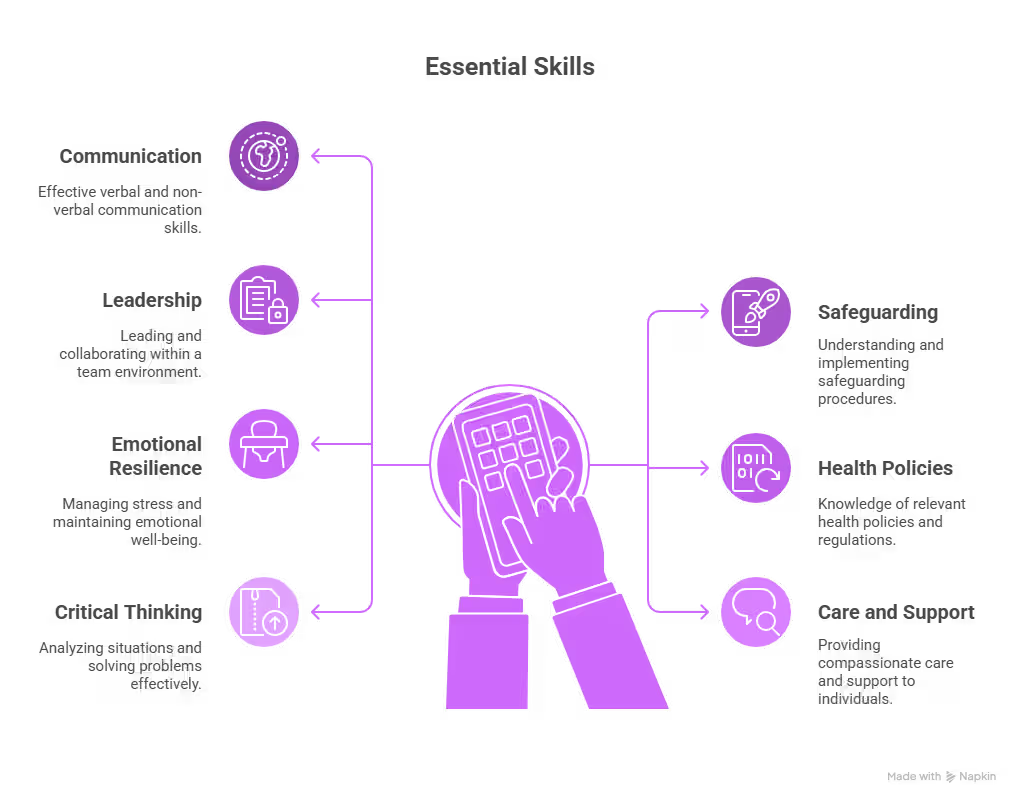
Communication and Interpersonal Skills
When working in health and social care, communication is more than just talking. You need to connect with people from different backgrounds, often at vulnerable moments in their lives. That’s why these diplomas place a strong focus on communication skills.
You will learn how to listen actively, express yourself clearly, and adapt your tone depending on the situation. These abilities help you build trust with patients, families, and colleagues. Without them, it is difficult to provide safe and effective care.
Good interpersonal skills also mean showing empathy and respect. They allow you to understand what someone is going through, even when they cannot explain it themselves. This not only improves relationships but also makes care more person-centred.
Key communication skills you’ll gain include:
- Active listening and responding with clarity
- Using body language to support verbal communication
- Explaining complex information in simple terms
- Building confidence through professional dialogue
By developing these skills, you’ll be able to support patients with compassion while working smoothly with healthcare teams. In the end, communication is the bridge that links knowledge with real care.
Understanding Safeguarding and Protection
Safeguarding is at the heart of every role in health and social care. It is about protecting vulnerable people, including children and adults, from harm, abuse, or neglect. You’ll quickly see how vital this responsibility is once you begin working in the sector.
Through a health and social care diploma, you learn how to recognise early warning signs. You are taught how to report concerns and follow correct procedures. These steps are essential because safeguarding is not just a duty—it is a legal and moral responsibility.
Protection also means creating safe environments where people feel secure. Whether it’s in a care home, hospital, or community setting, you must act with vigilance and sensitivity. This ensures that trust between staff, patients, and families remains strong.
Key safeguarding knowledge you’ll gain includes:
- Understanding safeguarding policies and frameworks
- Recognising different types of abuse and neglect
- Knowing how to raise and record concerns
- Applying confidentiality and GDPR rules responsibly
By strengthening your safeguarding skills, you become a guardian of wellbeing. It empowers you to keep people safe while promoting dignity, respect, and quality of life.
Leadership and Teamwork Skills
Health and social care is rarely a one-person job. We often work in teams made up of nurses, carers, managers, and support workers. For this reason, teamwork and leadership skills are essential in every setting.
A diploma helps you understand how to lead when needed and follow when required. You learn how to delegate tasks, motivate others, and support colleagues. At the same time, you also gain the confidence to take initiative when challenges arise.
Teamwork is not just about working side by side. It is about listening to others, respecting their roles, and sharing responsibilities. When teams collaborate well, patient care improves and stress levels reduce.
Core leadership and teamwork skills you’ll gain include:
- Time management and task prioritisation
- Effective delegation and decision-making
- Building trust within a team
- Handling conflict calmly and fairly
By developing these skills, you’ll be prepared to step into leadership positions or contribute strongly as a reliable team member. In both cases, you help create a supportive, efficient, and professional care environment.
Knowledge of Health Policies and Regulations
In health and social care, it’s not just about compassion—it’s also about working within clear rules. You need to understand policies, laws, and frameworks that guide safe and ethical care. Diplomas give you this important foundation.
You’ll learn about the NHS structure, data protection, and professional codes of practice. These rules may sound complex at first, but they protect both patients and staff. By following them, you can provide care that is safe, respectful, and legally compliant.
Important areas of policy and regulation you’ll cover include:
- Confidentiality and GDPR in handling patient records
- Equality and diversity laws that promote fair treatment
- Health and safety standards in care environments
- Care Quality Commission (CQC) guidelines for services
With this knowledge, you’ll feel confident making decisions that meet professional standards. More importantly, you’ll ensure the people you support receive care that is ethical, lawful, and based on best practice.
Emotional Resilience and Stress Management
Working in health and social care can be deeply rewarding, but it can also be challenging. You may face stressful situations, emotional conversations, and high-pressure environments. This is why resilience is one of the most valuable skills you can gain.
Through your diploma, you’ll learn practical ways to manage stress while staying professional. You’ll also discover how to keep a healthy balance between empathy and emotional boundaries. These lessons make it easier to remain calm and focused even when situations are difficult.
Key areas you’ll develop include:
- Managing stress in fast-paced care settings
- Building resilience to handle emotional challenges
- Balancing empathy with professional distance
- Practising self-care to avoid burnout
By strengthening your resilience, you not only protect your own well-being but also improve the quality of care you provide. This makes you more effective, dependable, and prepared for a long-lasting career in the sector.
Knowledge in Care and Support
Health and social care diplomas do not provide hands-on training, but they equip you with the theoretical understanding needed to support people effectively. You’ll study the principles of care, which prepare you to recognise needs and apply best practices in professional settings.
The focus is on building awareness of different care approaches. You’ll explore how to promote dignity, encourage independence, and apply person-centred values in theory. This knowledge gives you the confidence to approach care roles with a clear understanding of expectations.
Areas of care and support you’ll cover include:
- Principles of person-centred care
- Understanding physical, emotional, and social needs
- Awareness of first aid, CPR, and emergency responses in theory
- Developing knowledge of individual care planning
With this strong foundation, you’ll be ready to enter the workforce with the right awareness. Employers value this knowledge because it shows you understand the standards of safe, ethical, and respectful care.
Critical Thinking and Problem-Solving
In health and social care, you will often face situations where quick and careful decisions are needed. That is why critical thinking and problem-solving are seen as vital skills in this field. Diplomas help you build this theoretical understanding.
You’ll learn how to look at challenges from different angles and consider the best outcomes for service users. This training prepares you to make informed choices while also following policies and ethical guidelines. With practice, you’ll feel confident applying structured thinking to complex scenarios.
Key areas of problem-solving covered in your studies include:
- Analysing situations calmly before acting
- Weighing up options to find the safest solution
- Understanding risks and how to reduce them
- Applying ethical reasoning in difficult cases
By developing these skills, you’ll be able to respond to challenges with clarity and professionalism. This ability sets you apart as someone who can handle pressure while keeping the wellbeing of service users at the centre of every decision.


 " alt="The 6 Principles of Safeguarding: Protect Before Harm Happens" />
 " alt="Personal Development Goals: 5 Meaningful Examples That Work" />
 " alt="TILE in Manual Handling: Meaning, Checklist & Safer Lifting Guide" />