



Blog 11 minutes read

Who Can Become a Nursing Assistant Without a Degree?

Not sure whether to become a nursing assistant or a healthcare assistant? This guide explains the key differences to help you choose the right path in care.

AT

Amelie Thompson

Published May 11, 2026

arrow

The healthcare sector is rapidly expanding, with nursing assistant roles in high demand. According to NHS Digital, the number of healthcare assistants in the UK is expected to increase by 6% annually, reflecting the growing need for skilled workers in hospitals and care homes. This surge in demand highlights the essential role nursing assistants play in providing quality care and support to patients.

But what if you don’t have a degree? You might be surprised to know that becoming a nursing assistant without a degree is not only possible but also a highly rewarding career path. The profession offers a unique opportunity to provide hands-on patient care while building a stable and fulfilling career.

In this blog, we’ll break down everything you need to know about becoming a nursing assistant without a degree, including the training, certification, and career options available to you. Keep reading to discover how this career can align with your goals and aspirations!


Can You Become a Nursing Assistant Without a Degree?

The good news is, yes, you can become a nursing assistant without a degree. While a formal degree is not required for this career, there are still key qualifications and certifications needed to get started. You won’t need a university degree, but you will need a high school diploma or equivalent, along with completing a Certified Nursing Assistant (CNA) training program.

Most states require nursing assistants to complete a CNA training program, which combines both classroom instruction and hands-on clinical experience. This training is usually completed in a few weeks to several months, depending on the program. Upon finishing the training, you must pass a certification exam to become a CNA.

Training Requirements:

  • A high school diploma or GED is the minimum requirement.
  • Completing a state-approved CNA training program.
  • Passing a certification exam to become a Certified Nursing Assistant.


The exact requirements may vary depending on your location, but many programs are designed to get you into the workforce quickly. In fact, according to NHS Digital, over 30,000 nursing assistants were employed in the UK in 2020, reflecting the strong demand for these professionals in healthcare.

So, while you won’t need a degree, you will need the right training and certification. With the right skills, you can quickly start your career as a nursing assistant and begin making a difference in people’s lives.

Understanding the Role of a Nursing Assistant

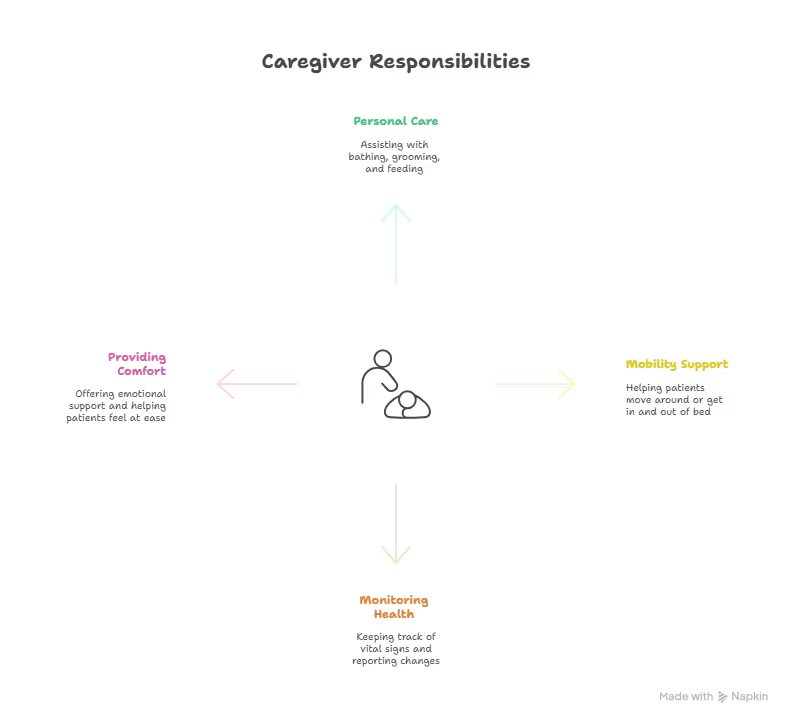
A nursing assistant helps patients with daily activities such as bathing, dressing, eating, and moving, while also monitoring vital signs like blood pressure and temperature. You’ll assist nurses and doctors by providing direct care to patients in hospitals, nursing homes, or home care settings. The work can be physically demanding, but it’s also incredibly rewarding, as you’ll play a vital part in improving patients’ well-being.

Your role extends beyond physical tasks. You’ll also offer emotional support, helping patients feel comfortable and at ease during their recovery. Being present for patients in their most vulnerable moments is key to the nursing assistant role.

As a nursing assistant, your role is fundamental to patient care. The hands-on work you do directly impacts their comfort and recovery, making your contributions deeply meaningful.

Educational Requirements

To become a nursing assistant, you don’t need a degree, but you must meet certain educational and certification requirements. The first educational requirement includes a high school diploma or GED, as this is the minimum qualification needed to enter CNA training. If you haven’t completed high school, it’s essential to get your GED, as it’s required for enrolling in most training programs.

Once you have your high school qualification, the next step is enrolling in a Certified Nursing Assistant (CNA) training program. These programs are offered at community colleges, vocational schools, and online platforms. In the UK, the Level 3 Diploma in Nursing Assistant is a common qualification that provides practical training alongside theory.

CNA programs typically cover the following areas:

  • Patient Care: Techniques for assisting patients with daily activities like bathing, feeding, and dressing.
  • Vital Signs Monitoring: How to measure blood pressure, pulse, temperature, and other vital signs.
  • Medical Terminology: Understanding key terms used in healthcare to communicate effectively with medical teams.
  • Infection Control: Basic hygiene practices and ways to prevent the spread of infections.

After completing the training, you must pass a certification exam to officially become a CNA. The exam usually includes both a written test and a practical skills test, where you demonstrate your ability to perform key nursing assistant tasks. Depending on the region, certification may need to be renewed periodically through continuing education or re-certification exams.

In some cases, employers may offer on-the-job training or provide opportunities to complete certification while working, especially if you’re already working in a healthcare setting in a support role. Make sure to check specific requirements in your area, as they can vary.

CNA Training and Certification

UK training programmes for nursing assistants often take 6 to 12 months, depending on whether you study full-time or part-time. These programmes blend classroom learning with practical experience, equipping you with the skills required to care for patients. The training focuses on topics like patient care, safety standards, and medical practices specific to the UK healthcare system.

Training Modules May Include:

  • Personal Care: Helping patients with daily tasks such as dressing, bathing, and eating.
  • Medical Terminology: Understanding common healthcare terms that will be used during patient care and in documentation.
  • Health and Safety: Training on infection control, preventing the spread of illness, and keeping both patients and yourself safe.
  • Communication: Learning how to interact with patients, families, and healthcare teams effectively.

Clinical Practice

A crucial part of your training is the clinical practice component. In the UK, training providers often have partnerships with healthcare settings like hospitals or care homes, where you can gain hands-on experience. This practice is essential because it allows you to apply theoretical knowledge to real-life patient care.

For example, during clinical practice, you might:

  • Monitor vital signs: Recording patient temperatures, pulse, blood pressure, and respiratory rates.
  • Assist with mobility: Helping patients move in and out of bed or assisting with physical therapy.
  • Offer emotional support: Engaging with patients, listening to their concerns, and offering reassurance during difficult times.

Certification Process

Once your training is complete, you will need to pass a certification exam to become officially qualified. In the UK, this certification is often associated with a Level 2 or Level 3 Diploma in Health and Social Care. These qualifications are recognised across the NHS and private healthcare sectors.

After completing your training, you’ll also be required to:

  • Complete a DBS check (Disclosure and Barring Service) to ensure you’re suitable to work with vulnerable individuals.
  • Undergo basic training in emergency procedures, such as Basic Life Support (BLS) and First Aid.

Once you’ve earned your qualification, you will be eligible to work as a nursing assistant in various healthcare environments such as NHS hospitals, private care homes, or home healthcare services.

Training and Further Education

For those looking to pursue this path, a Level 3 Diploma in Nursing Assistant course can provide you with the relevant training and skills needed to enter the field. Such courses typically cover essential areas like patient care, communication, and health and safety, helping you build a solid foundation for your career as a nursing assistant.

How Can You Gain Experience Without a Degree?

Gaining experience as a nursing assistant without a degree is absolutely possible, and there are a few ways to get started. While formal training and certification are essential, there are also plenty of opportunities to build your experience in real-world settings, even without a degree.

One way to gain experience is by volunteering at local hospitals, care homes, or community health organisations. Many healthcare settings welcome volunteers to assist with basic tasks like patient care, helping with meals, or simply offering companionship. This hands-on experience allows you to interact with patients and learn the ropes of the role before officially starting your career.

Where Can You Gain Experience in the UK?

  • NHS Trusts: Many NHS hospitals offer volunteering opportunities or support worker roles that don’t require a degree. These positions can give you valuable exposure to patient care and allow you to work alongside experienced professionals.
  • Care Homes and Nursing Homes: These facilities are often looking for healthcare assistants or care assistants, positions that don’t always require a degree. They provide on-the-job training, allowing you to develop practical skills and learn about patient care in a supportive environment.
  • Charity Organisations: Organisations such as Age UK or Alzheimer’s Society often have volunteer roles where you can work with patients in a less clinical setting. These roles give you the chance to gain experience working with specific patient groups and build interpersonal skills.
  • Home Care Services: Many home care companies, like Medi-care or Caremark, offer roles where you assist patients in their own homes. This gives you a chance to develop your care skills while learning about the challenges of working with individuals in a domestic setting.

Career Advancement Opportunities

One of the great things about becoming a nursing assistant is that it offers a clear path for career advancement. While the role itself is rewarding, there are plenty of opportunities for those looking to develop further and take on more responsibility in healthcare. Gaining experience and continuing your education will help you move forward in your career.

As a nursing assistant, you can take various routes to grow in your career. Many nursing assistants choose to specialise in certain areas or even move up to more senior roles. The healthcare sector offers numerous opportunities for those willing to put in the effort.

How to Advance Your Career:

  • Specialised Qualifications: By gaining additional qualifications, such as a Level 3 Diploma in Health and Social Care, you can specialise in areas like geriatrics, pediatrics, or mental health. These specialisms can open doors to more advanced roles and increase your earning potential.


  • Training to Become a Nurse: Many nursing assistants choose to pursue further education and become a registered nurse (RN). The NHS offers programmes such as Nursing Associate Apprenticeships, which allow you to train while you work.


  • Senior Healthcare Assistant or Supervisor Roles: With experience, you can move into supervisory roles, where you manage a team of nursing assistants and assist in day-to-day operations. This leadership role may also come with additional responsibilities, such as training new staff or overseeing patient care plans.


  • Healthcare Management: Some nursing assistants move into administrative or management positions. These roles allow you to make a bigger impact on the healthcare system and oversee patient care from a strategic level.


Career advancement in the nursing assistant field is possible with hard work, additional qualifications, and continuous learning. Whether you’re looking to specialise, move into management, or transition into nursing, the possibilities are vast.

Final Thoughts: Is Becoming a Nursing Assistant Without a Degree the Right Career for You?

Becoming a nursing assistant without a degree is a rewarding career path that allows you to make a real difference in patients’ lives. With the right training and certification, you can quickly gain hands-on experience and start working in healthcare. The role also offers plenty of opportunities for career advancement, whether through specialisation or moving into higher positions like nursing or management. If you’re passionate about helping others, this could be the perfect career for you.

FAQ

1. What is the salary of a Nursing Assistant without a degree?

 The salary of a nursing assistant without a degree typically ranges from £18,000 to £22,000 annually in the UK, depending on experience, location, and the healthcare setting. Those with further qualifications or in specialised roles can earn higher salaries.

2. Can you become a Nursing Assistant without a degree online?

While you can complete some parts of your training online, hands-on clinical experience is essential to become a nursing assistant. Many UK institutions offer flexible online courses for the theoretical components, such as Level 3 Diploma in Health and Social Care, alongside in-person practical training.

3. What is the salary of a Nursing Assistant?

 A nursing assistant’s salary in the UK typically starts at around £18,000 per year and can increase with experience, specialisation, and location. In some cases, senior roles or working in specific healthcare sectors may offer higher pay.

4. How long does it take to become a Certified Nursing Assistant?

 In the UK, becoming a certified nursing assistant typically takes 6 to 12 months. This includes completing a relevant qualification, such as a Level 3 Diploma, alongside practical training and certification exams.

5. What subjects are covered in a Nursing Assistant course?

Nursing assistant courses typically cover subjects like patient care, vital signs monitoring, infection control, medical terminology, and health and safety. These subjects provide the foundation for working with patients and understanding the healthcare environment.

Our Blogs

Latest blog posts

The 6 Principles of Safeguarding: Protect Before Harm Happens" alt="The 6 Principles of Safeguarding: Protect Before Harm Happens" />

Would you know what to do if someone showed signs of abuse or neglect? Learn the 6 Principles of Safeguarding in simple words and discover how to recognise risks, report concerns, prevent harm, and protect vulnerable people with safer, more confident decisions.

Personal Development Goals: 5 Practical Examples That Work" alt="Personal Development Goals: 5 Meaningful Examples That Work" />

Want to become more focused, confident, and organised? This guide explains 5 personal development goals that can help you improve time management, communication, emotional intelligence, skill-building, and your daily routine.

TILE in Manual Handling: Meaning, Checklist & Safer Lifting Guide" alt="TILE in Manual Handling: Meaning, Checklist & Safer Lifting Guide" />

Struggling to understand TILE in Manual Handling? This guide breaks down the meaning, checklist and safer lifting steps so you can spot risks before injuries happen.