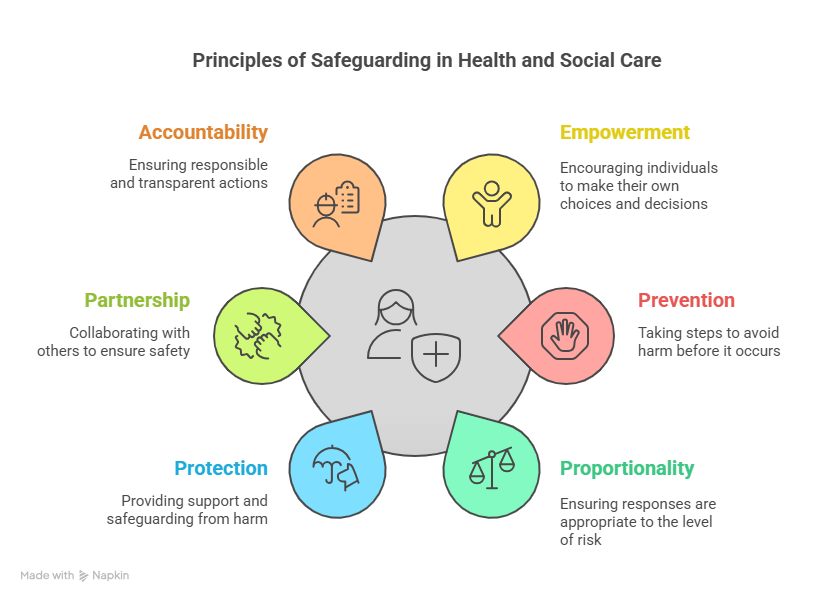


The six principles of safeguarding—empowerment, prevention, proportionality, protection, partnership, and accountability—are the foundation of effective safeguarding practices. These principles guide professionals in ensuring safety, dignity, and respect for those in their care.
In this blog, you’ll discover:
- What each of the six safeguarding principles means
- How they are applied in real-world care settings
- Why safeguarding is crucial in health and social care
- The role of professionals and organisations in implementing these principles
What is Safeguarding?
Safeguarding refers to the measures taken to protect individuals, particularly vulnerable people, from harm, abuse, and neglect. It ensures that people receiving care are treated with dignity and respect while maintaining their safety and well-being. In health and social care, safeguarding is a key responsibility of professionals, ensuring that those at risk are supported and protected.
Application of Safeguarding in Health and Social Care Settings
Implementing safeguarding practices is crucial across various environments:
- Elderly Care Facilities: Staff must be vigilant against potential abuses, such as financial exploitation, ensuring residents’ safety and well-being.
- Children’s Wards in Hospitals: Healthcare professionals should be trained to recognise signs of abuse or neglect, creating a secure environment for young patients.
Aims of Safeguarding
The primary objectives include:
- Protecting Vulnerable People: Ensuring their safety and well-being.
- Making Safeguarding Personal: Empowering individuals to make informed choices about their safety.
- Raising Public Awareness: Educating communities to recognise and respond to abuse and neglect.
- Defining Roles: Clarifying the responsibilities of individuals and organisations in safeguarding efforts.
Who is Considered Vulnerable?
Safeguarding applies to anyone who may be at risk due to age, disability, illness, or other circumstances that make them more susceptible to abuse or neglect. The main groups considered vulnerable include:
- Children and young people – Individuals under the age of 18 who may be at risk of physical, emotional, or sexual abuse, neglect, or exploitation.
- Adults with disabilities – Those with physical, learning, or cognitive disabilities who may struggle to protect themselves from harm.
- Elderly individuals – Older adults, particularly those with conditions such as dementia, who may be more vulnerable to financial exploitation, neglect, or abuse.
- People with mental health conditions – Those who may experience discrimination, coercion, or mistreatment due to their condition.
Legal Framework Governing Safeguarding in the UK
Safeguarding in the UK is governed by several key laws and policies that outline the responsibilities of care providers and professionals. These include:
- The Care Act 2014 – Sets out local authorities’ responsibilities in protecting adults at risk of abuse and neglect.
- The Children Act 1989 & 2004 – Establishes the duty to protect and promote the welfare of children.
- The Working Together to Safeguard Children (2018) – Guides multi-agency collaboration for child protection.
- The Mental Capacity Act 2005 protects individuals who may lack the capacity to make decisions about their care.
- The Safeguarding Vulnerable Groups Act 2006 regulates those working with children and vulnerable adults through the Disclosure and Barring Service (DBS).
The Six Principles of Safeguarding
Safeguarding in health and social care is guided by six key principles, ensuring that individuals are protected from harm while maintaining their rights and dignity.
1. Empowerment
Empowerment in safeguarding means giving individuals control over their own lives and decisions. It ensures that those receiving care are supported in making informed choices about their well-being and treatment.
Importance of Informed Consent and Autonomy
- People should be able to make their own decisions about their care and support.
- Informed consent ensures that individuals understand the risks and benefits of their choices.
- Respecting autonomy builds confidence and trust in care providers.
Examples of Empowerment in Practice
- A care worker explains different support options to an elderly individual, allowing them to choose what suits them best.
- A social worker involves a person with disabilities in planning their care, ensuring their preferences are respected.
2. Prevention
Prevention involves taking proactive measures to stop harm before it happens. This principle ensures that potential risks are identified and mitigated through early intervention.
Strategies to Prevent Abuse and Neglect
- Conducting regular risk assessments in care settings.
- Implementing strong safeguarding policies to address concerns before they escalate.
- Encouraging open communication so individuals feel safe reporting issues.
Role of Training and Policies in Prevention
- Staff should receive regular safeguarding training to recognise warning signs.
- Organisations should establish clear procedures for handling safeguarding concerns.
- Public awareness campaigns can educate communities about signs of abuse and how to report them.
3. Proportionality
Proportionality ensures that responses to safeguarding concerns are appropriate to the level of risk. Interventions should not be excessive or unnecessary but should effectively address the issue.
Balancing Intervention with Respect for Individual Rights
- Excessive intervention can undermine autonomy and cause distress.
- The response should match the level of risk while considering the individual’s wishes.
- Professionals should explore the least restrictive options first.
Case Studies Illustrating Proportionality
- Example 1: A care home staff member notices a resident skipping meals. Instead of forcing a medical intervention immediately, they first check in with the resident and involve a nutritionist if needed.
- Example 2: A child reports emotional distress at home. Instead of immediately removing the child from the family, social workers first engage with the parents to offer support and mediation.
4. Protection
Protection involves recognising and safeguarding those who are vulnerable to harm. People at risk include:
- Elderly individuals with cognitive impairments.
- Children experiencing neglect or abuse.
- Adults with disabilities who may be unable to defend themselves.
Measures to Protect Vulnerable Individuals
- Setting up confidential reporting mechanisms for abuse concerns.
- Providing specialist support services for at-risk groups.
- Ensuring background checks (DBS checks) for staff working with vulnerable people.
Role of Safeguarding Leads and Professionals
- Safeguarding leads ensure that policies are followed and concerns are addressed promptly.
- Healthcare workers, social workers, and law enforcement collaborate to provide a holistic safeguarding approach.
5. Partnership
No single organisation can manage safeguarding alone. Effective safeguarding relies on multiple agencies working together to ensure that individuals receive the best possible protection.
How Different Sectors Work Together (Healthcare, Social Services, Law Enforcement)
- Healthcare services identify physical or psychological signs of abuse.
- Social services assess the individual’s needs and provide the necessary support.
- Law enforcement investigates safeguarding concerns and takes legal action when needed.
Benefits of Partnerships in Safeguarding
- Improved information sharing, leading to faster interventions.
- Holistic support for individuals, addressing all aspects of their well-being.
- Stronger legal protections through coordinated efforts.
6. Accountability
Accountability in safeguarding means that individuals and organisations must take responsibility for their actions and decisions. Clear roles and responsibilities help prevent negligence or oversight.
Policies and Procedures That Promote Accountability
- Regular audits and inspections ensure compliance with safeguarding policies.
- Establishing clear reporting systems for incidents of abuse or neglect.
- Providing ongoing training to ensure staff understand their safeguarding duties.
Examples of Accountability in Action
- A care home introduces a whistleblowing policy, encouraging staff to report concerns without fear.
- A hospital conducts monthly safeguarding reviews to evaluate and improve practices.
- A local council sets up community safeguarding workshops to educate the public on recognising abuse.
Implementing Safeguarding Principles in Health and Social Care Settings
Ensuring the safety and well-being of individuals in health and social care settings is paramount. Implementing robust safeguarding principles not only protects vulnerable individuals but also fosters trust and integrity within care services. Let’s delve into how these principles can be effectively put into practice.
Training and Education for Professionals
Imagine a scenario where a care worker, due to lack of proper training, overlooks subtle signs of neglect in a patient. Such situations underscore the critical need for comprehensive training and education in safeguarding.
- Regular Training Programs: Continuous education ensures that staff are up-to-date with the latest safeguarding protocols and best practices. This proactive approach equips them to identify and address potential issues before they escalate.
- Specialised Courses: Tailored training programs cater to the specific challenges faced by different roles within the care sector. For instance, a course on safeguarding children would differ from one focused on elderly care, addressing the unique vulnerabilities of each group.
- Collaborative Learning: Encouraging interdisciplinary training sessions fosters a unified approach to safeguarding. When professionals from various sectors—such as healthcare, social services, and law enforcement—come together, it enhances communication and collaboration, leading to more effective safeguarding strategies.
For those seeking training, Safeguarding Children Training can be a good starting point.
Creating Safe Environments for Reporting Concerns
Consider a nurse who notices unusual bruising on a patient but hesitates to report it due to fear of retaliation or being ignored. Creating an environment where such concerns can be raised without apprehension is crucial.
- Clear Reporting Procedures: Establishing straightforward and accessible mechanisms for reporting ensures that concerns are addressed promptly. When staff members know the exact steps to take, it reduces hesitation and promotes a culture of vigilance.
- Supportive Culture: Cultivating an atmosphere where both staff and service users feel safe to voice concerns is vital. This involves leadership actively encouraging openness and ensuring that whistleblowers are protected and valued.
- Confidentiality Assurance: Guaranteeing that reports are handled discreetly encourages individuals to come forward without fear of exposure or backlash. This assurance is fundamental in building trust within the organisation.
FAQ
What are terminologies in nursing?
The specific medical terms used by nurses to enable efficient healthcare communication in clinical settings, accurately document patient care and communicate clearly are referred to as nursing terminology.
What is medical terminology in nursing?
The standardised language used to describe illnesses, therapies, procedures, and anatomy is known as medical terminology in nursing. It guarantees correct recordkeeping and improves patient safety.
What is Bio 100 medical terminology?
In order to assist students develop excellent nursing communication skills and comprehending common medical terminology in nursing, BIO 100 Medical Terminology is an introductory course that covers word roots, prefixes, and suffixes used in healthcare.
What is basic medical terminology?
Fundamental terms and acronyms such as BP (blood pressure), HR (heart rate), and Dx (diagnosis) are part of basic medical language and are necessary for precise documentation and effective nursing communication in the healthcare industry.
Conclusion
In a nutshell, embracing the six safeguarding principles—empowerment, prevention, proportionality, protection, partnership, and accountability—ensures that individuals receive care that respects their rights and promotes their well-being. By weaving these principles into every facet of health and social care, we create environments where safety and dignity are paramount. Let’s commit to making safeguarding a natural part of our daily practices, benefiting everyone involved.
" alt="The Role of HACCP in Food Manufacturing and Processing" />
" alt="HACCP in Catering and Hospitality: A Complete Guide" />
" alt="Cross-Contamination in Food: Risks and Prevention" />