

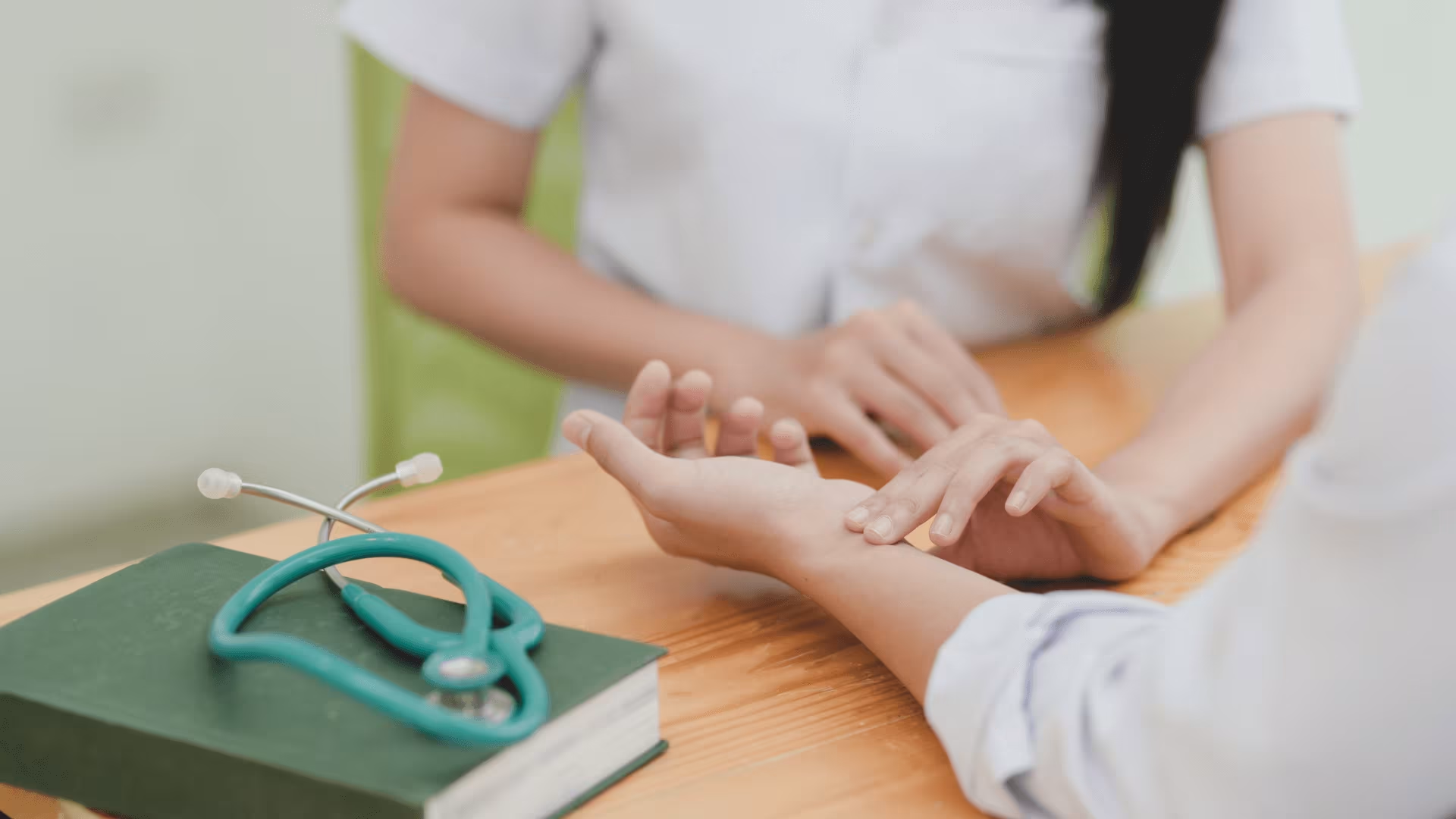

If you’re wondering what it takes to succeed in this career, this guide covers the 10 essential skills every nursing assistant needs, including communication, empathy, time management, teamwork, patience, observation, physical stamina, adaptability, infection control, and clinical knowledge.
Curious to know more about the skills in detail? This guide is just the right place to start!
10 Essential Skills for Nursing Assistant
To make it easier to understand, we’ve broken these skills down into two categories: Soft Skills and Technical Skills. Soft skills focus on interpersonal abilities, emotional intelligence, and teamwork, while technical skills involve hands-on patient care, safety practices, and clinical knowledge. Here’s a quick breakdown:
Soft Skills | Technical Skills |
Communication & Interpersonal Skills | Observation & Attention to Detail |
Empathy & Compassion | Physical Stamina & Strength |
Time Management & Organization | Adaptability & Problem-Solving |
Teamwork & Collaboration | Infection Control & Safety Awareness |
Patience & Emotional Resilience | Basic Medical Knowledge & Clinical Skills |
Soft Skills for Nursing Assistants
1. Communication & Interpersonal Skills
Given that nearly 70% of patient care errors are linked to communication breakdowns, according to the NHS, effective communication is a necessity in this profession. Good communication is the foundation of patient care. As a nursing assistant, you will interact with patients, families, and healthcare teams every day. This means listening carefully, speaking clearly, and using a reassuring tone.
Key aspects of communication include:
- Listening to patient concerns and reporting them to nurses or doctors.
- Explaining procedures in a way that patients can understand.
- Keeping accurate and clear records of patient care.
2. Empathy & Compassion
Patients often feel vulnerable or anxious, so treating them with kindness can make a big difference. A warm and caring attitude helps build trust and improves patient experiences.
Ways to show empathy:
- Being patient when answering questions or providing care.
- Offering reassurance and emotional support.
- Understanding that every patient has different needs and feelings.
3. Time Management & Organization
A nursing assistant’s shift is often busy. Balancing multiple tasks while ensuring every patient gets proper care requires strong time management.
Effective time management includes:
- Prioritizing urgent tasks, such as assisting a patient in distress.
- Keeping a schedule for routine care, like feeding and hygiene assistance.
- Staying organized to prevent delays in treatment.
4. Teamwork & Collaboration
Nursing assistants work as part of a healthcare team. They assist nurses, coordinate with doctors, and support other medical staff to provide the best patient care.
To be a great team player:
- Communicate patient needs to nurses and doctors.
- Offer help to colleagues when possible.
- Show respect and professionalism in all interactions.
5. Patience & Emotional Resilience
Caring for sick or elderly patients can be physically and emotionally demanding. Staying calm, patient, and positive makes a huge difference in providing excellent care.
Tips for building resilience:
- Take deep breaths and stay composed in stressful situations.
- Develop coping strategies for managing emotions.
- Seek support when needed, either from colleagues or mental health resources.
Technical Skills for Nursing Assistants
6. Observation & Attention to Detail
Nursing assistants often notice subtle patient changes before doctors or nurses do. Being observant helps identify health issues early.
Essential aspects of observation:
- Monitoring vital signs, such as heart rate and temperature.
- Noticing changes in patient behavior or appetite.
- Reporting any unusual symptoms to medical staff.
7. Physical Stamina & Strength
According to HSE, manual handling injuries account for nearly 25% of all workplace incidents in healthcare.The job requires assisting patients with movement, lifting, and repositioning. Proper technique prevents injuries and ensures patient comfort.
Key physical tasks include:
- Helping patients move from bed to wheelchair or bathroom.
- Using lifting equipment safely.
- Supporting patients who need mobility assistance.
8. Adaptability & Problem-Solving
No two days are the same in healthcare. CNAs must adjust to changing patient needs, unexpected situations, and new protocols.
Being adaptable means:
- Thinking quickly in emergencies.
- Adjusting to different patient care routines.
- Staying updated on the latest safety procedures.
9. Infection Control & Safety Awareness
Preventing infections protects both patients and staff. Nursing assistants must follow strict hygiene and safety procedures. With hospital-acquired infections costing the NHS an estimated £1 billion per year, infection control is a crucial responsibility.
Basic infection control includes:
- Washing hands frequently.
- Wearing protective gloves and masks when needed.
- Disinfecting medical equipment properly.
10. Basic Medical Knowledge & Clinical Skills
Understanding medical terminology, CPR, wound care, and medication administration equips CNAs with the knowledge needed to support nurses effectively.
Core clinical skills include:
- Taking vital signs like blood pressure.
- Assisting with wound dressing.
- Helping with feeding tubes and catheters.
Further Your Career with Professional Training
Success as a nursing assistant requires a balance of technical skills, compassion, and adaptability. Whether you’re just starting or looking to grow in the field, continuous learning will enhance your expertise.
For a more professional development, check out the Nursing Assistant Diploma at Apex Learning, offering accredited training to help you succeed in healthcare.
FAQ
What quality is most important in being a successful nursing assistant?
Empathy is key, as it helps build trust and improves patient care by ensuring emotional and physical needs are met.
What is your greatest strength as a nursing assistant?
Adaptability—being able to handle different patient needs, work under pressure, and adjust to changing healthcare environments.
What are the most common skills tested for CNA?
Vital signs measurement, patient mobility assistance, infection control, personal care, and effective communication.
What is the most important responsibility of a nursing assistant?
Ensuring patient safety and comfort by assisting with daily activities, monitoring health, and maintaining a clean environment.
Conclusion
Becoming a successful nursing assistant requires a balance of soft skills and technical expertise. Strong communication, empathy, and teamwork make patient interactions smoother, while hands-on skills like infection control and patient mobility ensure safety and efficiency. Mastering these skills will not only help you thrive in your career but also make a meaningful impact on patient care.

 " alt="The 6 Principles of Safeguarding: Protect Before Harm Happens" />
 " alt="Personal Development Goals: 5 Meaningful Examples That Work" />
 " alt="TILE in Manual Handling: Meaning, Checklist & Safer Lifting Guide" />