

Blog 4 minutes read

Can a Teaching Assistant Become a Teacher in the UK?

Can a Teaching Assistant Become a Teacher in the UK? Yes—see the exact routes to QTS, entry requirements, apprenticeships, funding and timelines for 2025.


IT

Isla Thompson

Published August 29, 2025

Can a Teaching Assistant Become a Teacher in the UK
arrow

Can a Teaching Assistant Become a Teacher in the UK? Yes—thousands of TAs progress to fully qualified status each year by earning QTS through approved training routes. You’ll usually need GCSEs (English and maths, plus science for primary) and a degree for postgraduate pathways. Requirements vary across the UK, so always check local guidance.

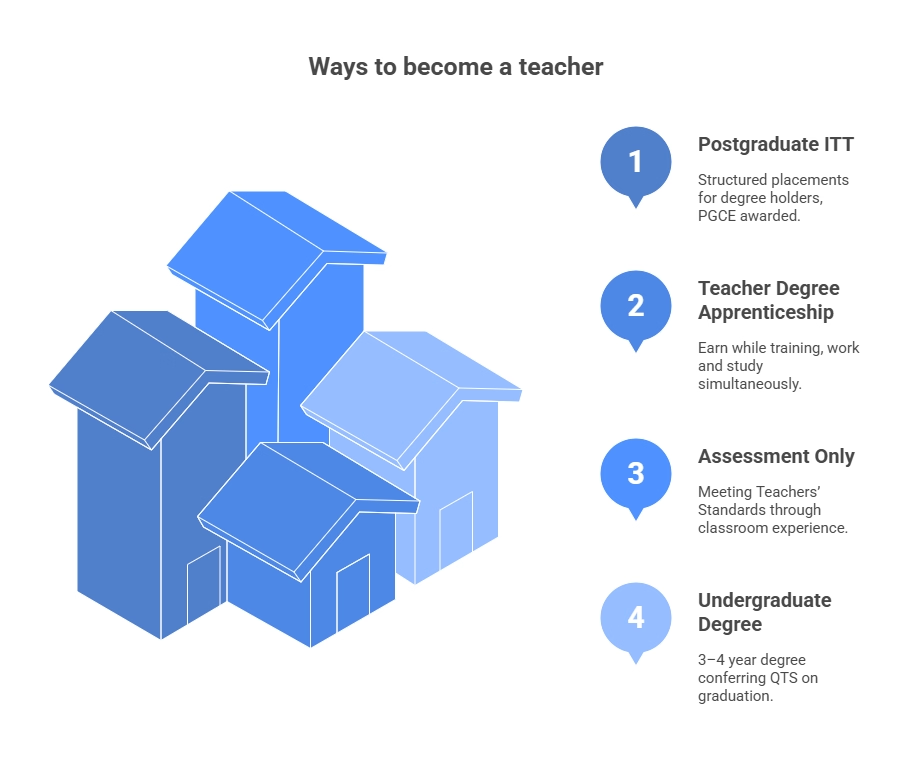
Your Main Routes (England)

  • Postgraduate ITT (University or SCITT)

         Ideal if you have a degree and want structured placements. Many courses also award a PGCE.

  • Teacher Degree Apprenticeship (TDA)
    Earn a salary while you train for over ~4 years; perfect if you prefer to work and study simultaneously.
  • Assessment
    Already meeting the Teachers’ Standards through substantial classroom experience? Get assessed without extra training.
  • Undergraduate
    Study a 3–4 year degree that confers QTS on graduation.

Why TAs Make Strong Trainee Teachers

You already understand behaviour, differentiation and SEND. That experience transfers directly into teacher training. Even better, stepping up through HLTA-level duties strengthens your interview evidence and accelerates progress on placement.

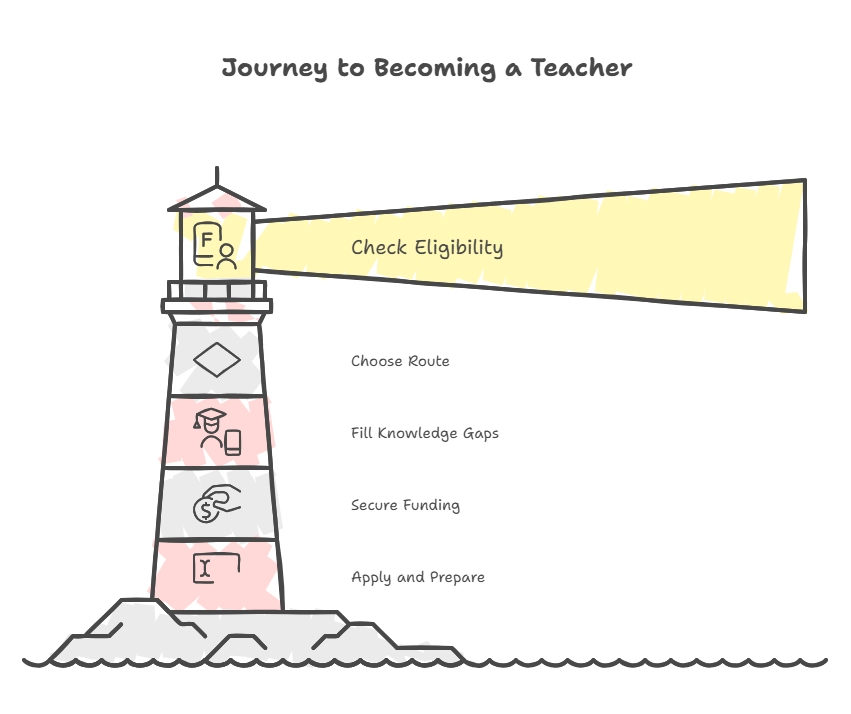
Step-by-Step: From TA to Teacher

  • Check eligibility
    GCSE grade 4/C+ in English and maths (plus science for primary). A bachelor’s degree is required for postgraduate ITT. If you’re missing GCSEs, equivalency tests may be accepted.

  • Pick the best route for you
    Prefer a traditional path? Choose University/SCITT (often with PGCE). Want to earn while training? Select the Teacher Degree Apprenticeship. Already at standard? Explore Assessment-Only QTS.

  • Close knowledge gaps
    For secondary subjects, providers may recommend a Subject Knowledge Enhancement (SKE) course—before or alongside training.

  • Sort funding early
    For priority subjects, tax-free bursaries and scholarships are available each year. Tuition fees and maintenance loans may also be available depending on your route.

  • Apply and prepare
    Use the official application service, line up references, and gather safeguarding documents. Then, prepare for interviews with examples from your TA role—especially behaviour support, SEND strategies and progress evidence.

Can You Train While Working?

Yes. Besides evening or part-time PGCE options, the Teacher Degree Apprenticeship is designed for salaried, in-school training. There are also salaried postgraduate routes with certain providers. This means you can build towards QTS without stepping away from the classroom.

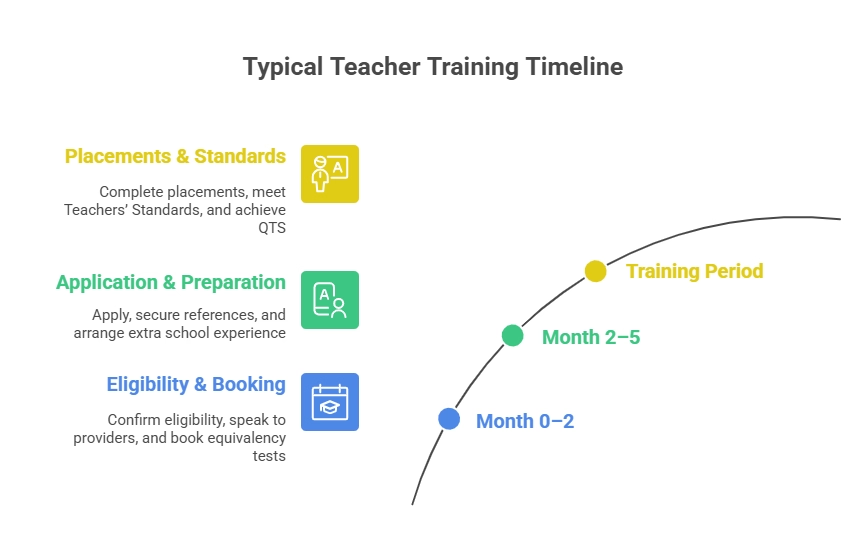
Typical Timeline

  • Month 0–2: Confirm eligibility, speak to providers, and book any equivalency tests.
  • Month 2–5: Apply for your chosen September start (or apprenticeship intake), secure references, and arrange extra school experience if needed.
  • Training period: Complete placements, meet the Teachers’ Standards, and achieve QTS (with or without PGCE, depending on course).

Application Boosters for TAs

  • SEN evidence: Show impact with autism, ADHD, dyslexia and SEMH support.
  • Whole-class delivery: If possible, gain HLTA-type experience to prove readiness.
  • Subject readiness: Use SKE where your degree isn’t closely aligned.

source: Qualifications you need to teach (England), How to become a teacher, Apply for teacher training (official service)

Conclusion

Can a Teaching Assistant become a Teacher in the UK? Yes—your classroom experience already proves you understand behaviour, inclusion and SEND, which training providers value. Choose the route that fits your life—university or SCITT (often with PGCE), Teacher Degree Apprenticeship, Assessment-Only QTS, or an undergraduate degree with QTS—and meet the Teachers’ Standards with confidence.

Ready to move? Strengthen your profile with Complete Teaching Assistant Diploma Level 3 (CPD Accredited) and SEN Teaching Assistant and SENCO Training, speak to a provider about your best path to QTS, and apply through the official service. Take the next step today and turn proven TA skills into a rewarding teaching career.

FAQs

Do I need a PGCE to teach?
No. QTS is essential; a PGCE adds academic credits and international portability.

I don’t have GCSE science—can I teach primary?
You’ll need science at grade 4/C+ for primary. Some providers accept equivalency tests—check before applying.

How fast is the Assessment-Only route?
If you already meet the Teachers’ Standards, many providers complete the assessment within a few months.

I don’t have a degree—what are my options?
Choose Undergraduate with QTS or the Teacher Degree Apprenticeship (degree + QTS while working).

Is funding available?
Yes—subject-specific bursaries/scholarships and standard student finance may apply, depending on route and eligibility.

Our Blogs

Latest blog posts

The 6 Principles of Safeguarding: Protect Before Harm Happens" alt="The 6 Principles of Safeguarding: Protect Before Harm Happens" />

Would you know what to do if someone showed signs of abuse or neglect? Learn the 6 Principles of Safeguarding in simple words and discover how to recognise risks, report concerns, prevent harm, and protect vulnerable people with safer, more confident decisions.

Personal Development Goals: 5 Practical Examples That Work" alt="Personal Development Goals: 5 Meaningful Examples That Work" />

Want to become more focused, confident, and organised? This guide explains 5 personal development goals that can help you improve time management, communication, emotional intelligence, skill-building, and your daily routine.

TILE in Manual Handling: Meaning, Checklist & Safer Lifting Guide" alt="TILE in Manual Handling: Meaning, Checklist & Safer Lifting Guide" />

Struggling to understand TILE in Manual Handling? This guide breaks down the meaning, checklist and safer lifting steps so you can spot risks before injuries happen.