


Studying a health and social care course online offers one of the most flexible and convenient ways to earn a recognised qualification. Still, it also comes with a unique challenge: staying motivated. Without the fixed timetable and peer interaction of a traditional classroom, it’s easy to procrastinate or lose focus when life gets busy. That’s why developing a clear plan and maintaining high motivation is so important.
Online learning puts you in full control of your progress — from when and where you study to how quickly you complete your course. This freedom is empowering, but it requires consistency and self-discipline to stay on track. By building good study habits, setting realistic goals, and reminding yourself of the rewarding career waiting for you at the finish line, you can stay motivated, complete your Level 3 Diploma in Health and Social Care, and unlock exciting job opportunities in the UK care sector.
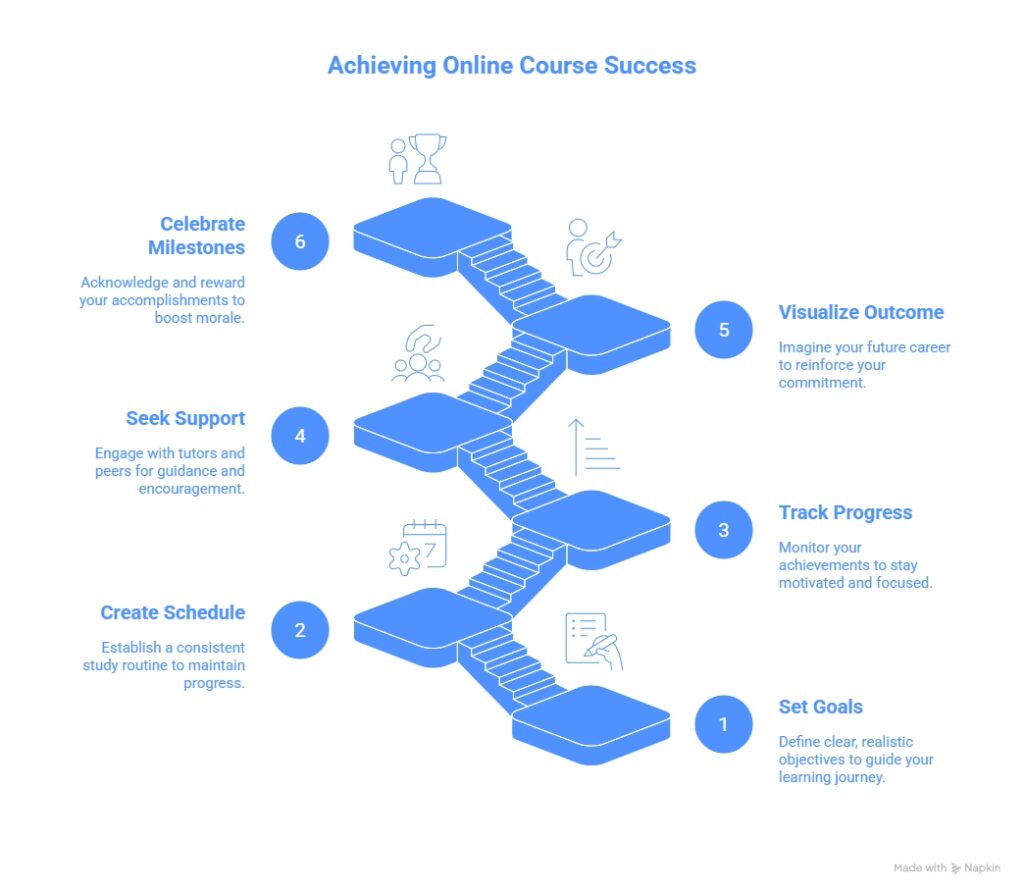
1. Set Clear, Achievable Goals
One of the most effective ways to stay motivated during an online course is to set clear, realistic goals from the very beginning. Having a defined outcome keeps you focused and gives you something to work toward, especially when life gets busy. Start by writing down exactly what you want to achieve — for example, “complete my Level 3 Diploma in Health and Social Care within six months” or “qualify for an NHS Band 2 Healthcare Assistant role before summer.”
Once you have your overall goal, break it down into smaller milestones — such as completing one module per week or passing each quiz by a set date. This approach makes the workload feel manageable, helps you see regular progress, and boosts your confidence. Each milestone you achieve becomes a mini win that keeps your momentum going until you complete the entire course and earn your certificate.
2. Create a Realistic Study Schedule
Consistency is the secret to succeeding in online learning, and the best way to stay consistent is by creating a realistic study schedule. Treat your study time like a non-negotiable appointment — just as you would a work shift or important meeting. Block out specific days and times each week for learning and stick to them as much as possible.
Even dedicating 5–7 hours per week is enough to complete your course within the standard 6–12 month timeframe. If you’re motivated to finish sooner, increase your weekly study hours and take advantage of a fast-track option to complete your Level 3 Diploma in Health and Social Care in as little as 6–8 weeks. Building your study routine into your calendar makes it easier to form habits, stay accountable, and ensure consistent progress toward your goal — without feeling overwhelmed or falling behind.
3. Track Your Progress
One of the easiest ways to stay motivated when studying online is to actively track your progress. Most e-learning platforms provide built-in dashboards or progress bars that show you how much of the course you have completed. Use these tools regularly to visualise your journey — seeing that percentage bar rise module by module is a powerful psychological boost.
Celebrate each milestone, no matter how small. Finished the safeguarding module? Treat yourself to something you enjoy. Passed a quiz with a high score? Take a moment to recognise your achievement. These small rewards create positive reinforcement and make studying more enjoyable.
You can even keep a physical checklist or journal where you tick off each completed lesson, which adds another layer of satisfaction. Tracking your progress keeps you focused on the bigger picture: completing your Level 3 Diploma in Health and Social Care and reaching your career goals.
4. Stay Connected and Seek Support
One of the best ways to stay motivated during your online course is to remember that you are not on this journey alone. Even though you’re studying from home, most reputable providers — including Apex Learning — offer dedicated tutor support, email assistance, and live chat to answer questions and guide you through challenging topics.
Engage with these resources whenever you feel stuck or need clarification. Asking for help early prevents frustration and keeps you moving forward. Many platforms also have learner forums or online communities where you can share progress, exchange tips, and celebrate milestones with others on the same path.
Having a network — whether it’s tutors, fellow students, or an accountability partner — keeps you engaged and makes the learning process more enjoyable. This level of interaction helps you stay consistent, finish your Level 3 Diploma in Health and Social Care, and step into your new career with confidence.
5. Visualise Your Career Outcome
When motivation dips, the most powerful thing you can do is remind yourself why you started this journey. Close your eyes and picture yourself in your future role — working confidently as a Support Worker, Domiciliary Carer, or Healthcare Assistant, helping people live with dignity and independence. Imagine the pride of completing your Level 3 Diploma in Health and Social Care, receiving your CPD-accredited certificate, and using it to apply for NHS Band 2–3 positions or care home roles.
Visualisation is a proven technique for building motivation because it turns an abstract goal into something tangible. You can even create a vision board with images of your dream job, salary range, or a care setting you’d love to work in. If your long-term goal is leadership, visualise yourself progressing to the Level 5 Leadership and Management for Adult Care and managing your own care team.
6. Celebrate Every Achievement
Motivation grows when you recognise how far you’ve come, not just how far you have left to go. Don’t wait until you’ve finished your entire course to celebrate — each completed module is a milestone worth acknowledging. After finishing a challenging topic like safeguarding or infection control, take a moment to reward yourself with something small, whether that’s a short break, your favourite snack, or even sharing your progress with friends and family.
Celebrating these “mini wins” keeps morale high and reframes studying as a rewarding experience rather than a chore. You can also set up a reward system — for example, after completing 50% of the Level 3 Diploma in Health and Social Care, treat yourself to something meaningful. Recognising progress helps maintain a positive mindset, reinforces consistency, and gives you the energy to push through the final modules and achieve your ultimate goal of earning your certificate.
source: Skills for Care Workforce Data, NHS Employers Pay Scales 2025, CPD Certification Service
Fast-Track Option – Get Qualified in Weeks
If you want to stay motivated and see results quickly, consider choosing a fast-track route for your qualification. Many learners complete their Level 3 Diploma in Health and Social Care in just 6–8 weeks by dedicating extra study hours each week. This accelerated pathway is perfect for those eager to change careers, meet job requirements, or start applying for NHS Band 2–3 roles as soon as possible. Because online courses are self-paced, you can log in anytime, study multiple modules per day, and take assessments as soon as you’re ready — without waiting for term dates. Fast-tracking keeps motivation high by showing visible progress quickly, helping you stay focused and engaged until you earn your CPD-accredited certificate and can start your new career with confidence.
Conclusion
Staying motivated during your health and social care course is about setting clear goals, sticking to a schedule, and keeping your eyes on the bigger picture. With self-discipline and support, you can complete your course on time, earn your CPD-accredited certificate, and start applying for NHS Band 2–3 roles or care home positions with confidence.
✅ Ready to take the first step? Enrol in the Level 3 Diploma in Health and Social Care today and stay motivated with clear progress tracking, tutor support, and 24/7 access to learning materials.
FAQs
- How many hours per week should I study to stay on track?
Most learners dedicate 5–7 hours per week, which allows them to complete the Level 3 Diploma in Health and Social Care within 6–12 months. If you want to fast-track, aim for 10–12 hours weekly to finish in as little as 6–8 weeks. - What should I do if I lose motivation halfway through?
Break your course into smaller milestones, revisit your original career goal, and use your platform’s progress tracker to reignite momentum. Joining a learner community or contacting your tutor can also encourage. - Can I work while studying online?
Yes — that’s one of the biggest benefits of online learning. You can log in anytime, study in short bursts around work shifts, and progress at your own pace without sacrificing job commitments. - How do I avoid procrastination?
Set a fixed study schedule, remove distractions, and hold yourself accountable by sharing your goals with someone who can check in on your progress. Even 30-minute sessions can add up to big results over time. - Will I still get tutor support if I study from home?
Yes. Most online providers, including Apex Learning, offer dedicated tutor support via email or chat to answer questions and keep you on track throughout your course. - How do I stay consistent when life gets busy?
Use flexible scheduling — study early mornings, evenings, or weekends — and take advantage of the pause/resume feature so you never lose your place. Consistency matters more than long study sessions.
" alt="The 6 Principles of Safeguarding: Protect Before Harm Happens" />
" alt="Personal Development Goals: 5 Meaningful Examples That Work" />
" alt="TILE in Manual Handling: Meaning, Checklist & Safer Lifting Guide" />