


The UK’s health and social care sector is experiencing unprecedented growth, with Skills for Care reporting more than 150,000 vacancies across England — a number expected to rise over the next decade. This means there has never been a better time to train for a career in this high-demand sector. Employers are actively searching for qualified candidates who have the right skills, knowledge, and commitment to meet CQC standards and deliver person-centred care.
Studying health and social care online in 2025 makes it easier than ever to get started. With flexible, self-paced modules, you can gain a recognised qualification such as the Level 3 Diploma in Health and Social Care from the comfort of your home, fitting study around your current work or family commitments. This allows you to become job-ready quickly and take advantage of the many opportunities waiting in the care sector.

1. Flexibility That Fits Your Life
One of the biggest advantages of choosing an online health and social care course is the flexibility it gives you to fit study into your busy life. Whether you’re working full-time, raising children, or making a career change, you can log in at any time — early mornings, late nights, or weekends — and complete modules at your own pace. This means you stay in control of your learning schedule instead of being tied to fixed classroom hours.
The Level 3 Diploma in Health and Social Care is completely self-paced, giving you up to 12 months of access, with the option to finish much sooner if you want to fast-track. This flexibility allows you to balance training with your personal commitments, avoid unnecessary stress, and progress consistently toward a qualification that will open doors to NHS Band 2–3 jobs and care sector opportunities.
2. Learn Faster and Get Job-Ready Sooner
If you’re eager to start working, online learning gives you the option to get into employment sooner. Many motivated learners complete the Level 3 Diploma in Health and Social Care in just 6–8 weeks by dedicating focused study time each week. Unlike classroom-based courses, you don’t have to wait for fixed term dates — you can enrol instantly, start learning the same day, and progress through the modules at your own speed.
This means you can start applying for NHS Band 2–3 Healthcare Assistant roles, care home positions, or domiciliary care jobs as soon as you complete your assessments. According to NHS Employers Pay Scales 2025, Band 2 roles start at £22,383 per year, with progression to Band 3 salaries of £24,336–£26,759 — offering excellent earning potential right after you qualify.
3. Affordable, Cost-Effective Training
One of the biggest advantages of online learning is its affordability. Studying from home removes the cost of commuting, accommodation, and classroom fees, making it one of the most cost-effective ways to gain a nationally recognised qualification. Providers like Apex Learning offer transparent pricing with no hidden exam fees, digital certificates included, and flexible payment options — including interest-free instalment plans.
When compared to the potential salary boost you’ll gain after completing your course, the return on investment is impressive. NHS Band 2 roles pay from £22,383 per year, and progression to Band 3 increases your earnings to £24,336–£26,759. By enrolling in the Level 3 Diploma in Health and Social Care, you make a small upfront investment that pays off quickly once you enter the workforce, making this one of the smartest and most affordable ways to launch your care career.
4. CPD-Accredited and Employer-Recognised
Accreditation is one of the most important factors when choosing a health and social care course. A qualification that is CPD-accredited and QLS-endorsed guarantees that it meets UK care sector standards, including CQC compliance. The Level 3 Diploma in Health and Social Care has been carefully designed to meet these requirements, ensuring it is respected by employers across NHS trusts, private care homes, and domiciliary care providers.
Having CPD-accredited training on your CV demonstrates to employers that you have undertaken high-quality, structured learning that meets professional benchmarks. According to the CPD Certification Service, CPD training helps learners stay compliant with industry regulations and keeps their skills up to date. This gives you a competitive edge when applying for jobs and shows employers you are committed to ongoing professional development — a key quality in today’s care workforce.
5. Clear Career Progression and Higher Earning Potential
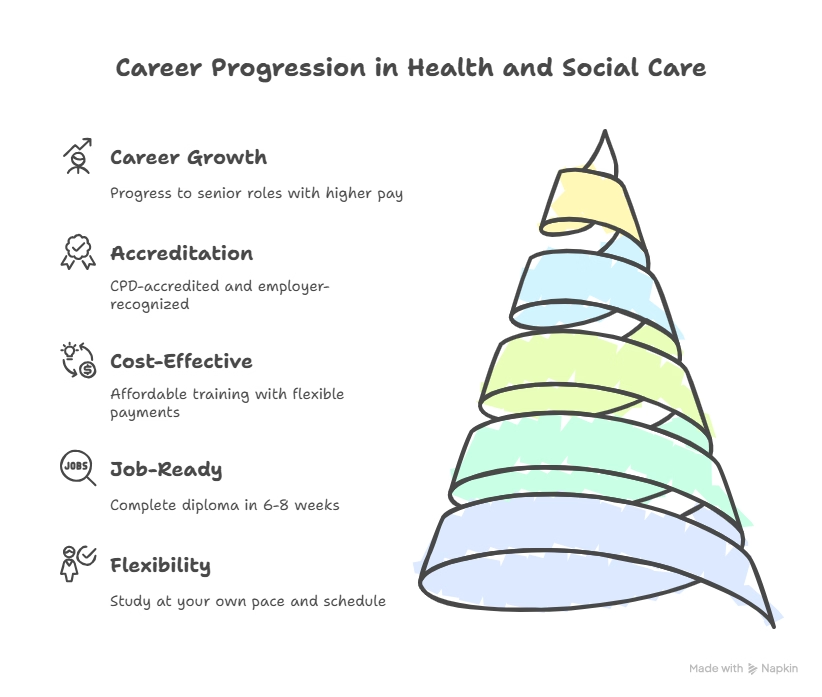
Completing your Level 3 Diploma in Health and Social Care is the first step to building a rewarding, long-term career. This qualification prepares you for roles such as Support Worker, Domiciliary Carer, Residential Care Assistant, or NHS Band 2–3 Healthcare Assistant. Once you’ve gained experience, you can progress to the Level 4 Diploma in Health and Social Care or the Level 5 Leadership and Management for Adult Care.
These higher-level qualifications prepare you for senior roles like Care Coordinator, Deputy Manager, or Registered Manager — positions that often pay £35,000–£45,000+ per year, depending on region and employer. This clear progression pathway means your initial investment continues to deliver value over time, helping you grow your income, take on leadership responsibilities, and make a real difference in shaping care services.
Fast-Track Option – Get Qualified in Weeks
If your goal is to start working sooner, a fast-track health and social care course is the perfect solution. Many learners complete the Level 3 Diploma in Health and Social Care in just 6–8 weeks by dedicating focused study time each week. Unlike traditional classroom programmes with fixed start dates, online learning allows you to enrol instantly, access modules 24/7, and complete assessments as soon as you feel ready. This means you can graduate, receive your CPD-accredited certificate, and begin applying for NHS Band 2–3 roles, care home positions, or domiciliary care work within weeks. Choosing a provider that includes the Care Certificate (15 Standards) as a free bonus gives you an even bigger advantage, as you will meet mandatory training requirements and be fully prepared to step straight into employment.
source: Skills for Care Workforce Data, NHS Employers Pay Scales 2025
Conclusion
journey in health and social care. With over 150,000 vacancies in the sector and demand projected to grow through 2035, employers are actively seeking qualified candidates. Studying online gives you flexibility, affordability, and the ability to complete your training faster — all while earning a CPD-accredited qualification that is fully recognised across the UK care industry.
Whether you want to work as a Healthcare Assistant, Support Worker, or Domiciliary Carer, or progress into leadership with Level 4 and Level 5 Leadership & Management, online learning puts you in control of your career path.
✅ Take the first step today: Enrol in the Level 3 Diploma in Health and Social Care and become job-ready in weeks, not years — with all the skills, confidence, and credibility you need to stand out to UK employers.
FAQs
- Do I need previous experience to study health and social care online?
No prior experience is required. The Level 3 Diploma in Health and Social Care is open to beginners, school leavers, and career changers. You can start with no formal qualifications and work your way into NHS or care home roles. - How long does it take to complete the course?
Most learners complete their diploma in 6–12 months, but fast-track students can finish in just 6–8 weeks by dedicating focused study time each week. - Will NHS employers accept online CPD-accredited courses?
Yes. As long as the course is CPD-accredited and meets CQC standards, NHS trusts and care providers will recognise it as valid training. - Can I work while I’m studying?
Absolutely. Online learning is designed for flexibility, allowing you to complete modules in the evenings, at weekends, or during free time alongside your job. - What jobs can I apply for after completing Level 3?
You can apply for roles such as Healthcare Assistant (NHS Band 2–3), Support Worker, Residential Care Assistant, or Domiciliary Carer. After gaining experience, you can progress to Level 4 or Level 5 Leadership and Management qualifications for senior roles like Care Coordinator or Registered Manager. - Is online study really as effective as classroom training?
Yes — in fact, many learners find online training more effective because they can study at their own pace, revisit modules, and complete assessments when they feel confident.


 " alt="The 6 Principles of Safeguarding: Protect Before Harm Happens" />
 " alt="Personal Development Goals: 5 Meaningful Examples That Work" />
 " alt="TILE in Manual Handling: Meaning, Checklist & Safer Lifting Guide" />