


Have you ever wondered who cares for our ageing population or supports families facing health challenges every day? With over 1.6 million people already working in adult social care, the demand for skilled professionals continues to rise. Every career path in this sector—whether clinical or community-based—makes a profound difference to people’s lives and wellbeing.
Yes, online health and social care courses are recognised by employers—provided they are accredited by bodies such as CPD, RQF, or Ofqual. Accreditation assures employers the training meets industry standards, making these qualifications credible and valuable for career progression.
By reading this blog, you’ll gain clear insights into how employers view online courses, what to look for when choosing accredited training, and the career opportunities that recognised health and social care courses can open up for you.
Accreditation and Recognition
When choosing an online health and social care course, the first thing you should check is accreditation. Employers want to see that your qualification meets recognised standards. Without this, your certificate may not carry much value.
So, what does accreditation actually mean? In simple terms, it proves the course content is reviewed and approved by an external body. This gives both you and employers confidence in the quality of training.
Common types of recognition include:
- CPD (Continuing Professional Development): Shows your commitment to ongoing learning.
- RQF (Regulated Qualifications Framework): Offers structured, recognised levels of study.
- Ofqual-regulated qualifications: Widely trusted and often required in care settings.
- QLS endorsement: Adds credibility to professional training courses.
With accreditation, you can apply for roles knowing your qualification is respected. Employers see these courses as a sign that you understand industry standards and are prepared for real responsibilities. Without it, you risk being overlooked, even with the right skills.


Are They Recognised by Employers?
Online health and social care courses are recognised by employers, as long as they are accredited by reputable bodies like CPD, Ofqual, or RQF.
Employers trust accredited qualifications because they provide a guarantee of quality and relevance. Accredited courses undergo rigorous review processes to ensure they meet industry standards. This reassures employers that the skills taught are up-to-date and applicable in real-world scenarios. As the health and social care sector continues to grow, qualifications that are accredited by recognised bodies give employers confidence in the competence of applicants.
Importance of Recognised Certifications for Job Applications
In a competitive job market, recognised certifications are essential for standing out. According to a report by the Health and Care Professions Council (HCPC), over 90% of employers in the UK require formal qualifications to demonstrate competency in healthcare roles (source: hcpc-uk.org). This statistic highlights the need for qualifications that employers can trust when making hiring decisions. Without recognised certifications, applicants may struggle to prove their qualifications and expertise.
How to Ensure Your Course is Recognised
To ensure your course is recognised, look for accredited qualifications that align with industry standards. For example, the Level 3 Diploma in Health and Social Care and the Level 4 Diploma in Health and Social Care Management are courses that are by employers. It’s important to verify that your course is accredited by credible bodies such as CPD or Ofqual before enrolling. Doing so will ensure that your qualification is respected and valued by employers in the sector.

Employer Expectations in Health and Social Care
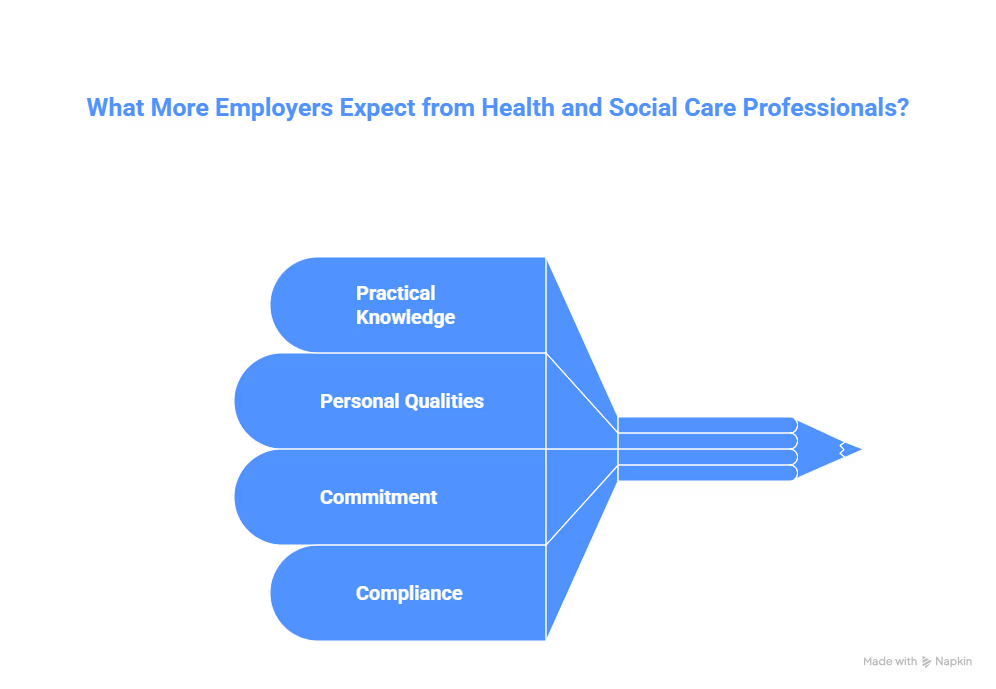
When you apply for a role in health and social care, employers are not just looking at your qualification. They also want to see the right values and skills. Your certificate may open the door, but your approach keeps it open.
Employers usually focus on a few key areas:
- Practical knowledge: Understanding of safeguarding, care planning, and communication.
- Personal qualities: Empathy, patience, and reliability.
- Commitment: Willingness to continue learning through CPD.
- Compliance: Awareness of health and safety standards.
At the same time, employers want proof that your qualification is credible. That is why accredited online health and social care courses matter so much. They show you are serious about your career and ready to meet professional expectations.
However, qualifications are only part of the picture. Employers also expect you to demonstrate confidence in applying your learning. So, when you complete a recognised online course, you can combine knowledge with the personal qualities that make a real difference.

Comparing Online and In-Person Courses
When it comes to training in health and social care, you now have two main options: online or in-person learning. Each pathway offers clear advantages. However, it is important to understand the differences before you choose.
Online courses are popular because they are flexible and affordable. You can learn at your own pace, fit study around work, and still gain an accredited qualification. This makes them accessible for people who may not have time for classroom sessions.
In-person courses, on the other hand, give direct interaction with tutors and peers. You can ask questions instantly and get feedback face-to-face. For some, this type of learning feels more personal and engaging.
Here’s a quick comparison to help you see it clearly:
- Online courses: Flexible, affordable, accessible from anywhere.
- In-person courses: Structured, classroom-based, interactive with peers.
- Blended learning: A mix of both approaches, offering balance.
So, which option is best? It depends on your goals and lifestyle. If you want flexibility with recognised accreditation, online health and social care courses are a strong choice. But if you prefer face-to-face interaction, in-person training may suit you better.
How to Identify if a Course is Recognised
When you look at online health and social care courses, it is important to check if they are recognised. A course may look attractive, but without the right accreditation, employers may not value it.
The first step is to look at the awarding body. Is the course CPD-accredited, RQF-based, or Ofqual regulated? These markers show that the course has been reviewed and approved by trusted organisations.
Here are a few simple checks you can make:
- Check the course provider’s website – trusted providers display accreditation details clearly.
- Look for logos and certificates – CPD, Ofqual, RQF, or QLS endorsements add credibility.
- Read reviews from learners – this helps you see if past students found the course useful.
- Ask employers or recruiters – they can confirm which qualifications are valued in your area.
You should also be cautious of providers that do not mention any awarding body. If recognition is missing, the course may not support your career. So, always take time to verify before you enrol.
By following these checks, you can make sure your investment leads to a qualification that employers respect. This step will not only save time but also give you confidence in your learning journey.
Career Opportunities with Recognised Courses
Completing a recognised online health and social care course can open many doors. Employers trust accredited qualifications, and that gives you the chance to apply for a wide range of roles. With the right course, you can start or advance your career confidently.
You can begin in entry-level positions such as Care Worker or Healthcare Assistant. These roles let you build practical experience while applying the knowledge gained from your course. Over time, you can progress into more responsible roles.
Some career paths available with recognised courses include:
- Support Worker – providing daily assistance to individuals and families.
- Senior Care Assistant – supervising others and ensuring quality care.
- Dementia Care Worker – specialising in support for those with memory conditions.
- Social Care Manager – leading teams and shaping care delivery.
- Team Leader in care settings – managing staff and ensuring high standards.
As you gain more qualifications and experience, your earning potential also increases. For example, healthcare assistants in the UK often earn between £19,000 and £23,000 per year. In leadership roles, salaries can rise above £30,000 depending on the setting.
So, with a recognised course, you are not just learning—you are investing in a career with long-term growth. That is why choosing accredited training matters so much for your future in health and social care.
FAQs and Common Misconceptions
What is a certificate in health and social care open university equivalent to?
A certificate in health and social care from the Open University is usually equivalent to a Level 4 qualification. This means it is higher than A-levels but below a full degree, giving you a recognised academic foundation.
What is an example of a good practice in health and social care?
Good practice often means putting people at the centre of care. For example, respecting patient choices, safeguarding vulnerable adults, and maintaining dignity during treatment are all seen as essential standards in health and social care.
What is an example of health and social care?
An example is the support given by a care assistant who helps an elderly person with daily tasks like eating, washing, and mobility. Social care also includes community support services for families, children, or people with disabilities.
What is the meaning of health and social care?
Health and social care is the combined support for people’s physical, emotional, and social needs. It covers medical care, personal assistance, and community-based services that work together to improve wellbeing and quality of life.
Conclusion and Next Steps
In summary, accredited online health and social care courses offer valuable qualifications recognised by employers. With the right training, you can advance your career and make a real impact in people’s lives.
Take the next step by choosing a recognised course that suits your goals. Research your options, ask for guidance if needed, and start building your career today!
 " alt="The 6 Principles of Safeguarding: Protect Before Harm Happens" />
 " alt="Personal Development Goals: 5 Meaningful Examples That Work" />
 " alt="TILE in Manual Handling: Meaning, Checklist & Safer Lifting Guide" />