



Have you noticed how careers in health and social care are becoming one of the UK’s fastest-growing sectors? According to Skills for Care, more than 152,000 new workers will be needed annually by 2035 to meet demand, making skilled managers more crucial than ever. Every career path, from frontline carers to senior leaders, plays an essential role in delivering safe, high-quality care.
Building on this demand, it’s important to know where qualifications fit into progression. To put it clear, yes, Level 5 in Health and Social Care is enough for a management role. This qualification is widely recognised as the benchmark for care management, meeting employer expectations and CQC standards for leadership in adult care settings.
In this blog, we’ll explore how far a Level 5 can take you in your career. You’ll discover the management opportunities it unlocks, understand potential salary expectations, and learn when advancing to higher levels may provide additional benefits.
Understanding the Role of a Care Manager
When you step into a management role in health and social care, your responsibilities shift from only providing support to leading others. As a care manager, you oversee daily operations, supervise staff, and ensure that standards of care are always met. You also carry the responsibility of safeguarding and compliance with regulations set by the CQC.
This role is not just about leadership; it’s about making sure people receive safe and compassionate care. You’ll often balance staff training, budget management, and communication with families. At the same time, you act as the bridge between frontline carers and senior leadership teams.
To give you a clearer picture, here are some common responsibilities of care managers:
- Supervising care staff and providing leadership.
- Ensuring compliance with safeguarding and health regulations.
- Managing rotas, budgets, and resources.
- Supporting residents, families, and external agencies.
- Promoting equality, diversity, and inclusive care practices.


Is Level 5 Enough for a Management Role?
Level 5 in Health and Social Care is enough for a management role. It is the standard qualification most employers look for when recruiting care managers, deputy managers, or residential leaders. The Care Quality Commission (CQC) also recognises it as the benchmark for leadership in adult care.
Before reaching Level 5, many learners complete the Level 3 Diploma in Health and Social Care, which focuses on developing core care skills, or the Level 4 Diploma in Health and Social Care Management, which builds supervisory and advanced practice knowledge. These earlier qualifications prepare professionals for frontline and mid-level roles, while Level 5 equips you for senior management responsibilities.
This means that with a Level 5, you already meet the academic requirements for stepping into management. Many professionals use it to move from hands-on roles into positions where they can supervise staff, manage compliance, and oversee day-to-day operations.
However, it’s worth noting that employers also value experience alongside qualifications. So, while Level 5 opens the door, combining it with knowledge of care environments will strengthen your chances of securing a management position.
In short, a Level 5 Diploma gives you the recognised qualification needed to progress into leadership. When supported by strong interpersonal skills and ongoing CPD, it can be your stepping stone to a successful management career in health and social care.
What Does a Level 5 in Health and Social Care Cover?
The Level 5 Diploma in Health and Social Care is designed to prepare you for leadership. It gives you the knowledge needed to manage teams, meet regulations, and provide safe, effective care. Employers view it as proof that you are ready for responsibility.
This qualification covers a wide range of topics that focus on both people and processes. You’ll learn how to supervise staff, ensure compliance with safeguarding laws, and maintain high-quality standards in care settings.
Some of the key areas included are:
- Leadership and team management.
- Safeguarding, protection, and welfare.
- Promoting equality, diversity, and inclusion.
- Managing resources, rotas, and budgets.
- Supporting individuals with complex needs.
- Ensuring compliance with CQC standards.
As you can see, the course balances leadership skills with knowledge of regulations and care quality. This mix makes it one of the most respected qualifications in the sector.
By completing Level 5, you not only gain specialist knowledge but also develop confidence to lead others. It’s a qualification that shows you can handle both the people side of care and the operational side of management.

Additional Skills Employers Look For
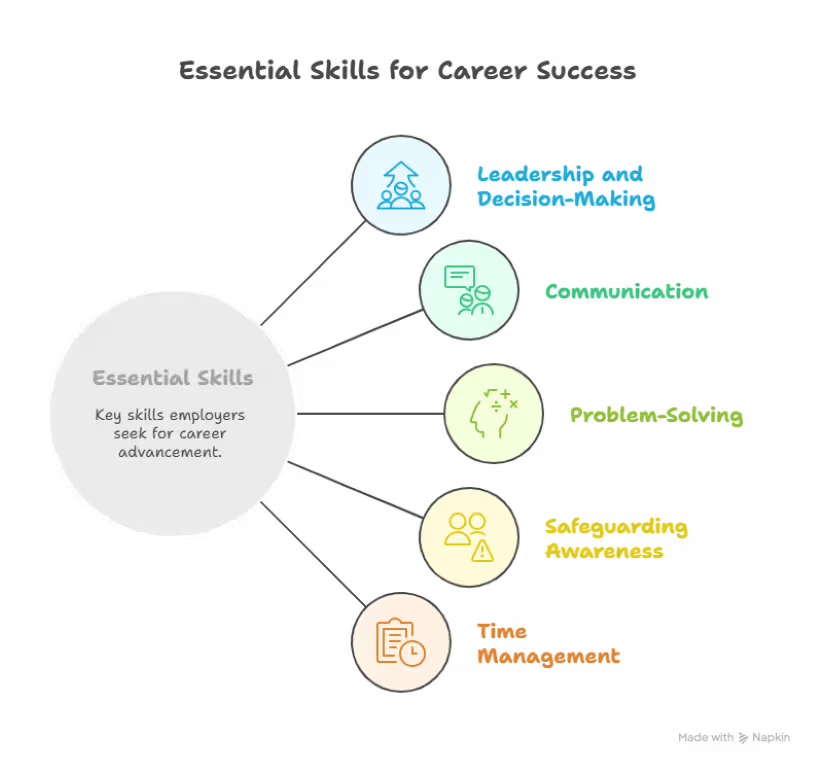
While a Level 5 in Health and Social Care is enough for a management role, employers often look for more than just a qualification. They want leaders who can inspire, communicate, and adapt in fast-changing care environments.
In addition to knowledge, you’ll need strong interpersonal and organisational skills. Managers are expected to balance people-focused care with the responsibility of meeting targets, maintaining compliance, and supporting their staff.
Some of the most valued skills include:
- Leadership and decision-making – guiding teams and making sound choices under pressure.
- Communication – listening to staff, residents, and families while keeping information clear.
- Problem-solving – handling challenges quickly and effectively.
- Safeguarding awareness – ensuring safety and wellbeing in every situation.
- Time management – organising workloads and prioritising tasks efficiently.
Employers also appreciate candidates who continue their professional development. Short CPD courses in safeguarding, medication administration, or mental health awareness can make your CV stand out and show commitment to lifelong learning.
By combining Level 5 with these skills, you’ll not only meet the qualification benchmark but also present yourself as a capable and confident leader in health and social care.

When You Might Need More Than Level 5
Level 5 in Health and Social Care is enough for many management roles. However, there are times when progressing beyond Level 5 can open even greater opportunities. Senior leadership positions often require higher-level qualifications.
For example, regional care managers or directors may prefer candidates with Level 7 qualifications or even degree-level training. These roles involve shaping policies, overseeing multiple services, and working with external regulators.
Here are situations where more than Level 5 may be expected:
- Applying for senior leadership or director-level positions.
- Managing multiple care homes or large teams.
- Working in highly specialised care environments.
- Aiming for roles that influence policy and strategy.
Therefore, while Level 5 provides a strong foundation, advancing your learning shows ambition and readiness for higher responsibility. Continuing professional development and higher-level diplomas can help you stand out in a competitive field.

Career Pathways with Level 5
Completing a Level 5 in Health and Social Care opens the door to rewarding management roles. Employers see it as the standard qualification for those ready to take charge in adult care services. With this, you can move into positions that come with higher pay and responsibility.
The career options are varied, and each role allows you to make a real difference in people’s lives. You’ll not only support staff but also ensure that care settings meet professional and legal standards.
Here are some common career pathways with Level 5:
- Care Manager – £35,000 to £50,000 per year
Oversee daily operations in care homes and lead teams to deliver safe, high-quality care. - Deputy Care Manager – £28,000 to £40,000 per year
Support the care manager by supervising staff, managing rotas, and ensuring compliance. - Residential Home Leader – £30,000 to £45,000 per year
Manage residents’ welfare while coordinating with families and regulatory bodies. - Community Support Manager – £28,000 to £42,000 per year
Lead outreach services and community-based care programmes for vulnerable groups.
With Level 5, you can confidently take the next step in your career. It shows employers that you’re prepared for leadership and committed to raising standards in health and social care.
Final Thoughts
Level 5 in Health and Social Care is widely recognised as the benchmark for management roles. It gives you the leadership knowledge and credibility employers expect while also meeting CQC standards for adult care settings.
With this qualification, you can confidently step into management, explore higher salaries, and progress your career in a meaningful way. As you grow, ongoing CPD and advanced study will keep you competitive and ready for senior leadership opportunities.
FAQ
What are the benefits of Level 5 Health and Social Care?
Level 5 Health and Social Care prepares you for management roles by giving you leadership, safeguarding, and compliance knowledge. It also increases your earning potential and helps you progress within the care sector.
What is a Level 5 in Management and Leadership equivalent to?
A Level 5 qualification in Management and Leadership is equivalent to a foundation degree or the first two years of a bachelor’s degree in the UK.
Is Level 5 a good qualification?
Yes, Level 5 is a highly respected qualification. Employers view it as the standard for management in health and social care, making it an excellent choice for career progression.
Is Level 5 equivalent to a degree?
No, Level 5 is not a full degree. It is equivalent to a foundation degree or higher national diploma (HND), which is below a full bachelor’s degree.
 " alt="The 6 Principles of Safeguarding: Protect Before Harm Happens" />
 " alt="Personal Development Goals: 5 Meaningful Examples That Work" />
 " alt="TILE in Manual Handling: Meaning, Checklist & Safer Lifting Guide" />