



Introduction
Teaching assistants (TAs) are the unsung heroes of UK classrooms. They provide the extra support that enables children to thrive academically, socially, and emotionally, while also easing the workload of teachers. According to the Department for Education, there are currently over 280,000 teaching assistants employed in England alone, and the number is growing every year. With the education sector facing increased demand for staff trained in special educational needs (SEN) support, the role of a TA has never been more important.
But here’s the question many aspiring professionals ask themselves: Is a TA role right for me? Choosing a career as a teaching assistant is not just about working in a classroom — it’s about having the right qualities, skills, and passion for helping children. In this blog, we’ll explore the traits that make a good TA, what employers are looking for, and how to determine whether this career path is a good match for you.
What Does a Teaching Assistant Do?
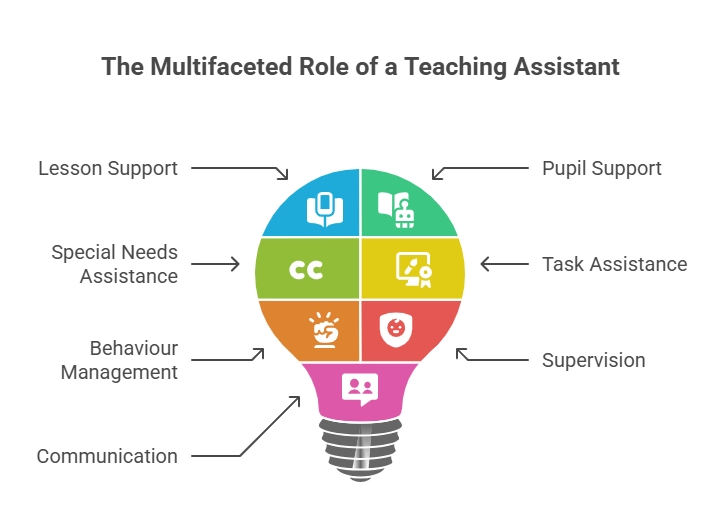
Before deciding if this is the right role for you, it’s helpful to understand what teaching assistants actually do daily. A TA’s responsibilities can vary depending on the school, year group, and whether they work in mainstream or SEN settings. Common duties include:
- Supporting the teacher in lesson delivery and classroom organisation.
- Providing one-to-one or small group support to pupils who need extra help.
- Assisting children with autism, ADHD, dyslexia, or other learning difficulties.
- Helping with literacy, numeracy, and ICT-based tasks.
- Managing behaviour and promoting positive learning environments.
- Supervising pupils during activities, trips, or playtime.
- Communicating effectively with teachers, parents, and SEN professionals.
In short, a teaching assistant is both a guide and a support system for students — a role that demands patience, empathy, and adaptability.
Signs a Teaching Assistant Role Might Be Perfect for You
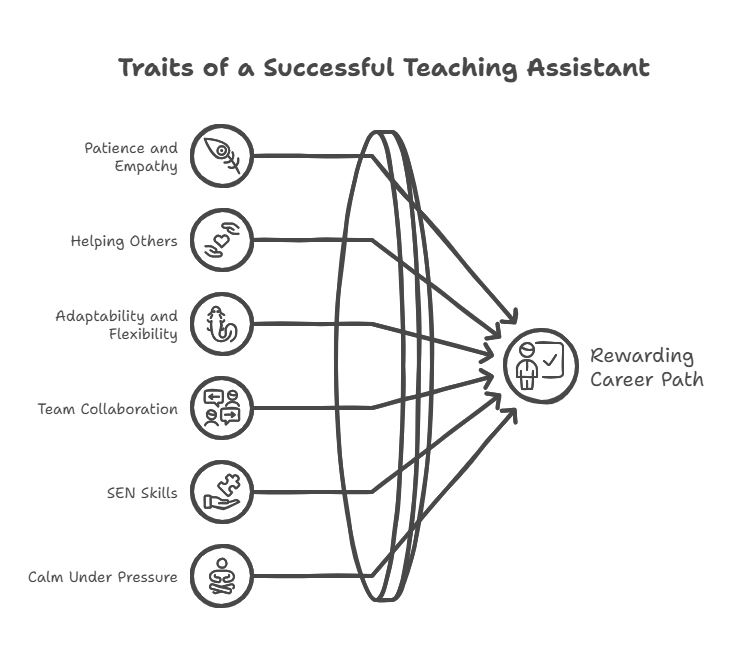
Not everyone is suited to becoming a teaching assistant, but if the following qualities sound like you, it could be the ideal career choice:
- You’re patient and empathetic, with a genuine interest in children’s wellbeing.
- You enjoy helping others succeed and find fulfilment in supporting growth.
- You’re adaptable and flexible — able to adjust to the needs of different pupils.
- You work well in a team and thrive in collaborative environments.
You’re keen to develop specialist skills in SEN support, including autism, ADHD, and dyslexia. - You can stay calm under pressure and constructively manage behaviour.
If these traits describe you, then a TA role could be both a rewarding and practical career path.
The Skills and Qualifications Employers Look For
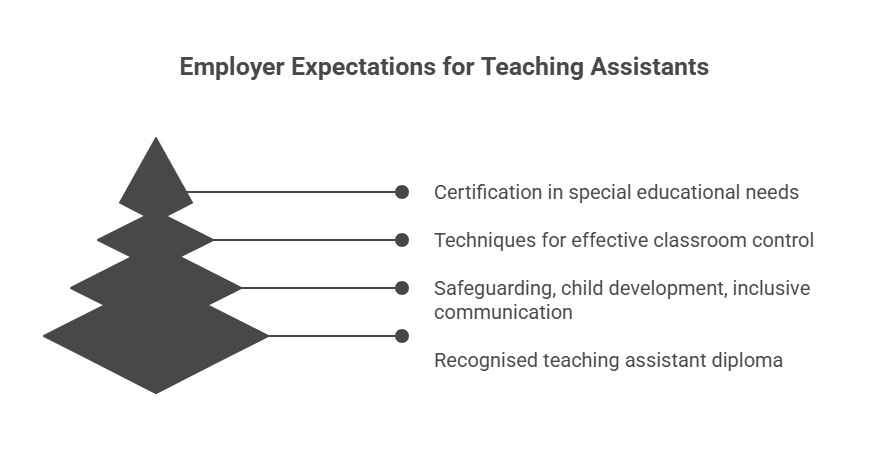
While personality traits are essential, employers also want to see qualifications and skills that prove you are classroom-ready. Schools across the UK commonly look for candidates who have:
- A recognised qualification, such as a Level 2 or Level 3 Teaching Assistant Diploma.
- Training in safeguarding, child development, and inclusive communication.
- Knowledge of classroom management techniques.
- Experience or certification in special educational needs (SEN).
Completing a CPD-accredited programme such as the Complete Teaching Assistant Diploma Level 3 (TA, SEN, Autism, ADHD & Dyslexia) can give you the edge in job applications. Not only does it provide essential training, but it also signals to employers that you’re committed to professional development.
Why a TA Career Is Rewarding
Choosing to become a teaching assistant isn’t just about finding steady employment — it’s about building a career that’s meaningful and impactful. Here’s why many people find the role so rewarding:
- Job Growth: With over 35,000 new vacancies opening each year, opportunities are plentiful.
- Variety: TAs work in primary schools, secondary schools, nurseries, and specialist SEN environments.
- Career Progression: With experience, you can advance to roles such as Higher Level Teaching Assistant (HLTA) or even train to become a teacher.
- Personal Impact: Every day, you’ll be making a real difference in children’s education and emotional well-being.
- Flexibility: Many TA roles offer school hours, making this career particularly attractive for parents and caregivers.
Challenges You Should Be Ready For
While being a TA is rewarding, it’s not without challenges. It’s important to be realistic about what the role involves:
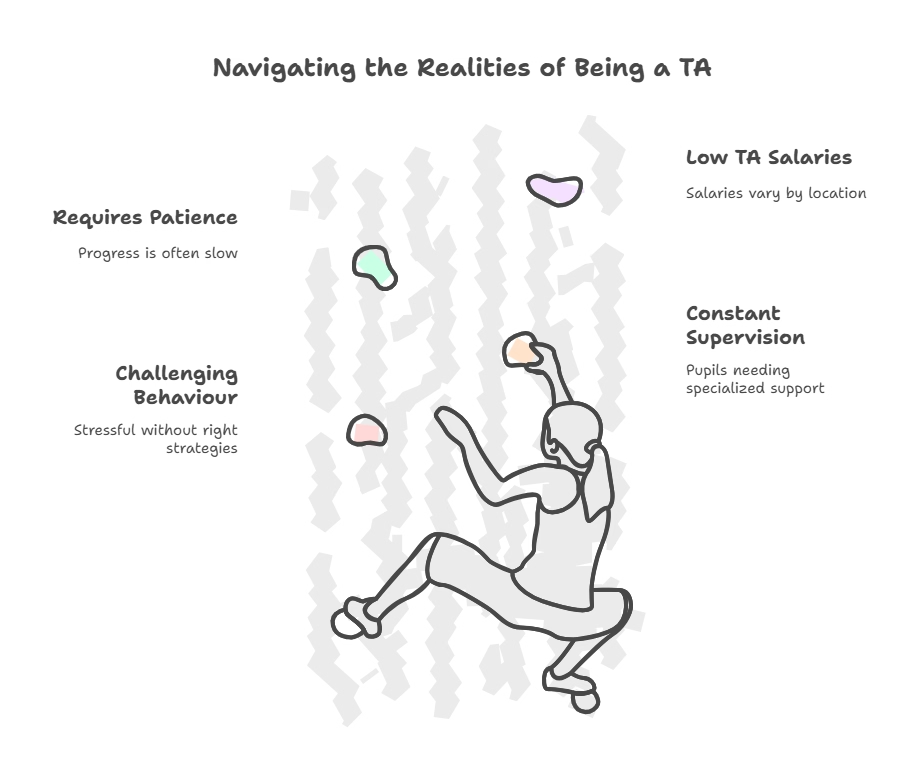
- Managing challenging behaviour can be stressful without the right strategies.
- Some pupils may need constant supervision or specialised support.
- The job requires patience and resilience — progress is often slow and steady.
- TA salaries vary by location and school, with entry-level positions averaging £18,000–£23,000 per year.
If you’re prepared for these challenges, you’ll be better equipped to thrive and enjoy long-term success in the role.
Quick Self-Check: Are You a Good Fit?
Here’s a short self-assessment to help you decide:
- Do you enjoy working closely with children and supporting their learning?
- Can you stay patient and calm, even when situations become challenging?
- Are you organised, adaptable, and comfortable working as part of a team?
- Do you have a genuine interest in child development and SEN support?
- Would you feel fulfilled knowing you helped shape a child’s confidence and success?
If you answered “yes” to most of these questions, you’re very likely to thrive as a teaching assistant.
Training Pathways to Become a Teaching Assistant
There are several routes into a TA career in the UK:
- On-the-job training: Some schools hire staff without qualifications and provide training.
- Level 2 Certificate in Supporting Teaching and Learning: Suitable for entry-level roles.
- Level 3 Teaching Assistant Diploma: A more advanced option that opens up broader career prospects.
- Specialist SEN courses: For those who want to work with children with autism, ADHD, or dyslexia.
The best choice depends on your career goals, but completing a recognised, accredited course is the fastest way to stand out in a competitive job market.
Source:📌 According to the National Careers Service, schools often prefer candidates with recognised qualifications and experience supporting SEN pupils, highlighting the importance of proper training.
Conclusion
So, is a TA role right for you? If you’re compassionate, adaptable, and eager to support children in reaching their full potential, the answer is yes. Teaching assistants play a critical role in education, and with the right training, you can build a career that’s both meaningful and future-proof.
Enrolling in a recognised qualification such as the Complete Teaching Assistant Diploma Level 3 (TA, SEN, Autism, ADHD & Dyslexia) gives you the skills, knowledge, and confidence that UK employers value. With SEN expertise, CPD accreditation, and flexible online learning, this diploma provides everything you need to step confidently into the classroom.
Fast-Track Options
If you’re looking for a quicker and more flexible route into education, consider enrolling in an online qualification such as the Complete Teaching Assistant Diploma Level 3 (TA, SEN, Autism, ADHD & Dyslexia) from Apex Learning. With self-paced learning, you could complete the course in as little as 3 to 6 months, depending on your study time and commitment.
By choosing the right training path, you can become a qualified teaching assistant within a timeframe that fits your lifestyle and career ambitions. Whether you’re aiming to start with an entry-level role or progress into SEN support, the opportunities in the education sector are both rewarding and future-proof.
FAQs
Do I need qualifications to become a Teaching Assistant in the UK?
Not always. Some schools hire teaching assistants without formal qualifications if they have relevant experience. However, holding a recognised qualification such as a Level 2 or Level 3 Teaching Assistant Diploma makes you more employable and helps you progress faster.
What qualifications do most schools prefer for teaching assistants?
Most schools look for candidates with a Level 2 Certificate or a Level 3 Diploma in Supporting Teaching and Learning. Courses accredited by CPD QS or endorsed by the Quality Licence Scheme (QLS) are widely recognised by UK employers.
Is an online TA course recognised by UK employers?
Yes, provided it is CPD-accredited or QLS-endorsed. Online courses such as the Complete Teaching Assistant Diploma Level 3 (TA, SEN, Autism, ADHD & Dyslexia) are flexible, self-paced, and fully recognised by schools across the UK.
How long does it take to complete a Teaching Assistant course?
The time varies depending on the course and your pace. Many learners complete a Level 3 Teaching Assistant Diploma in 3–6 months, while shorter CPD courses can take just a few weeks.
Can I work as a TA if I only have experience but no qualifications?
Yes, some schools accept candidates with classroom or childcare experience. However, completing a recognised qualification greatly increases your chances of securing a role and provides long-term career stability.
What skills do employers value most in teaching assistants?
Employers look for skills such as patience, communication, teamwork, organisation, and SEN support knowledge. Qualifications in safeguarding, autism, ADHD, and dyslexia are particularly valuable.
Can a TA role lead to becoming a teacher?
Yes. Many teaching assistants go on to train as teachers. With experience and additional qualifications, you can progress to Higher Level Teaching Assistant (HLTA) roles, apply for teacher training programmes, or move into SEN leadership positions such as SENCO.
Is a TA career rewarding despite the challenges?
Absolutely. While it comes with challenges such as behaviour management and supporting diverse learning needs, the ability to make a lasting impact on children’s education and wellbeing makes it one of the most fulfilling careers in education.
" alt="The 6 Principles of Safeguarding: Protect Before Harm Happens" />
" alt="Personal Development Goals: 5 Meaningful Examples That Work" />
" alt="TILE in Manual Handling: Meaning, Checklist & Safer Lifting Guide" />