

Introduction
Inclusive education is now at the heart of UK schools, with thousands of pupils identified as having special educational needs (SEN) such as autism, ADHD, or dyslexia. For many children, inclusion means being able to learn, play, and develop alongside peers in a mainstream setting. Teaching Assistants (TAs) are key to making this possible. From adapting resources to providing emotional reassurance, their work helps to ensure every pupil feels valued and supported. But what does an inclusive classroom look like in practice — and how can TAs make it work?
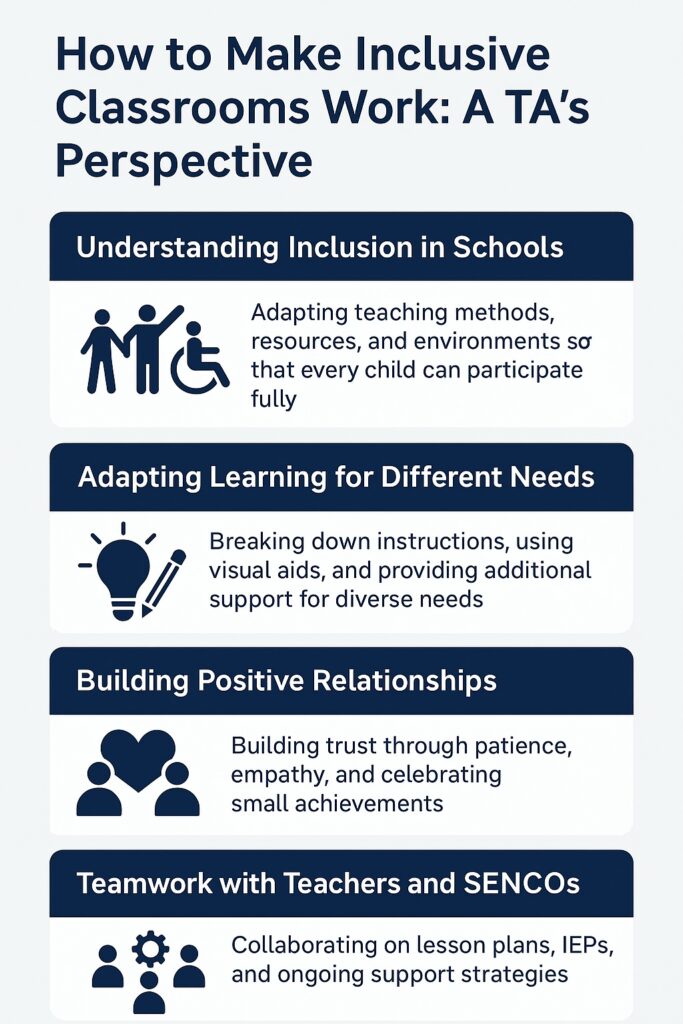
Adapting Learning for Different Needs
Children learn in different ways, and inclusive classrooms must reflect this. TAs help by:
- Breaking down complex instructions into smaller, manageable steps.
- Using visual timetables and multi-sensory learning methods.
- Offering additional support in literacy, numeracy, or communication.
- Providing quiet spaces or movement breaks to reduce anxiety.
These strategies ensure pupils with autism, ADHD, dyslexia, and other needs are not only included but also able to achieve.
Building Positive Relationships
Trust is central to inclusion. TAs build strong relationships with pupils by showing patience, empathy, and consistency. By listening carefully, modelling positive behaviour, and celebrating small achievements, they help children feel safe and confident. This emotional support is just as important as academic guidance in helping pupils succeed.
Teamwork with Teachers and SENCOs
Inclusive education relies on collaboration. TAs work closely with teachers to adapt lesson plans, and with SENCOs to implement Individual Education Plans (IEPs). They also liaise with parents, ensuring consistent support across school and home. This joined-up approach makes inclusion sustainable.
Training and Professional Development
The role of a TA in inclusion goes far beyond classroom assistance. With specialist training, such as the Level 3 Teaching Assistant Diploma with SEN, Autism, ADHD & Dyslexia, TAs gain the confidence and practical tools needed to support diverse learners. This CPD-accredited course equips assistants to become key advocates for inclusive practice in UK schools.
Creating a Supportive Learning Environment
An inclusive classroom works best when pupils feel safe, respected, and understood. Teaching assistants contribute by arranging seating to minimise distractions, introducing calming spaces for children with sensory needs, and encouraging peer collaboration. These small adjustments create an environment where every child — regardless of ability — feels they belong.
Encouraging Peer Support and Collaboration
Inclusion isn’t just about adult support; it’s also about building a community where pupils help one another. TAs play a role in facilitating group work, pairing children strategically, and encouraging classmates to show empathy and patience. This not only benefits pupils with SEN but also teaches all children the importance of cooperation and respect.
Monitoring Progress and Adapting Strategies
No two children with SEN are the same, and what works for one may not work for another. Teaching assistants help track progress through observation and feedback, adjusting strategies as needed. Whether it’s extending movement breaks, providing more visual cues, or adjusting classroom resources, TAs ensure support remains effective and responsive.
Source
According to the UNESCO Inclusive Education Guide, inclusive schools benefit all children, not just those with SEN, by fostering empathy, respect, and cooperation. This global perspective highlights why the TA’s role in promoting inclusion is so vital.
Fast-Track Options
If you’re eager to gain the skills needed to make inclusive classrooms a success, choosing a flexible online qualification is the fastest and most practical route. With self-paced study, the Level 3 Teaching Assistant Diploma with SEN, Autism, ADHD & Dyslexia can be completed in just 3 to 6 months, depending on your dedication.
This fast-track option allows you to balance learning with work or family life, while still achieving a CPD-accredited qualification recognised across UK schools. Once qualified, you’ll be ready to step into rewarding roles as a Teaching Assistant, SEN Support Worker, or Learning Support Assistant (LSA). By completing your training online, you can accelerate your career and start making a real difference in creating inclusive classrooms sooner than you think.
Conclusion
Making inclusive classrooms work is about combining patience, creativity, and specialist strategies. Teaching assistants bring all of this together, ensuring children with additional needs can learn alongside their peers. By adapting lessons, building trust, and working as part of a wider support team, TAs transform inclusion from an idea into everyday practice. With further training, they don’t just assist — they become champions of inclusive education, shaping a brighter future for pupils across the UK.
FAQs
- What does an inclusive classroom mean in UK schools?
An inclusive classroom is one where pupils of all abilities, including those with special educational needs (SEN), learn together. Lessons, resources, and environments are adapted so every child can participate, achieve, and feel valued. - How can teaching assistants support inclusive classrooms?
TAs help by adapting learning materials, using visual timetables, supporting communication, and offering one-to-one or small group support. They also work with teachers, SENCOs, and parents to provide consistent and effective inclusion strategies. - What training do you need to support inclusion as a TA?
- While you can start as a TA without formal qualifications, completing a recognised course such as the Level 3 Teaching Assistant Diploma with SEN, Autism, ADHD & Dyslexia equips you with specialist SEN skills that schools look for.
- Why are teaching assistants important for inclusion?
TAs play a vital role in helping children with SEN access the curriculum. They provide academic help, emotional reassurance, and behaviour support, ensuring pupils feel confident and included in the classroom. - 5. Can inclusive classrooms benefit all pupils, not just those with SEN?
Yes. Inclusive classrooms encourage empathy, cooperation, and respect among all pupils. By learning together, children develop stronger social skills and a better understanding of diversity.
" alt="The 6 Principles of Safeguarding: Protect Before Harm Happens" />
" alt="Personal Development Goals: 5 Meaningful Examples That Work" />
" alt="TILE in Manual Handling: Meaning, Checklist & Safer Lifting Guide" />