


Self-Paced Online learning
24/7 Online Support
14 days Money Back Guarantee
Fully Accredited Courses

Data Science & Machine Learning with Python

4.8

(311 students)
Last updated: September 19, 2025
Language: English

Data Science & Machine Learning with Python

4.8

(311 students)
qls-logo cpd-logo cpd-logo ukrlp-logo iphm-logo

Rated Excellent on

google-logo

The Data Science & Machine Learning with Python course offers a thorough introduction to Python programming and its application in data science. You will learn how to manipulate data, apply machine learning models, and evaluate them using various theoretical frameworks. This course covers the core concepts of machine learning, data transformation, and model evaluation, all delivered through structured learning content.

Key topics covered include:

  • Introduction to Python programming for data analysis
  • Understanding core machine learning algorithms such as classification, regression, and clustering
  • Exploring data preparation and pre-processing techniques, including feature selection
  • Applying data visualisation techniques to understand datasets
  • Evaluating models using metrics like accuracy, precision, recall, and F1-score
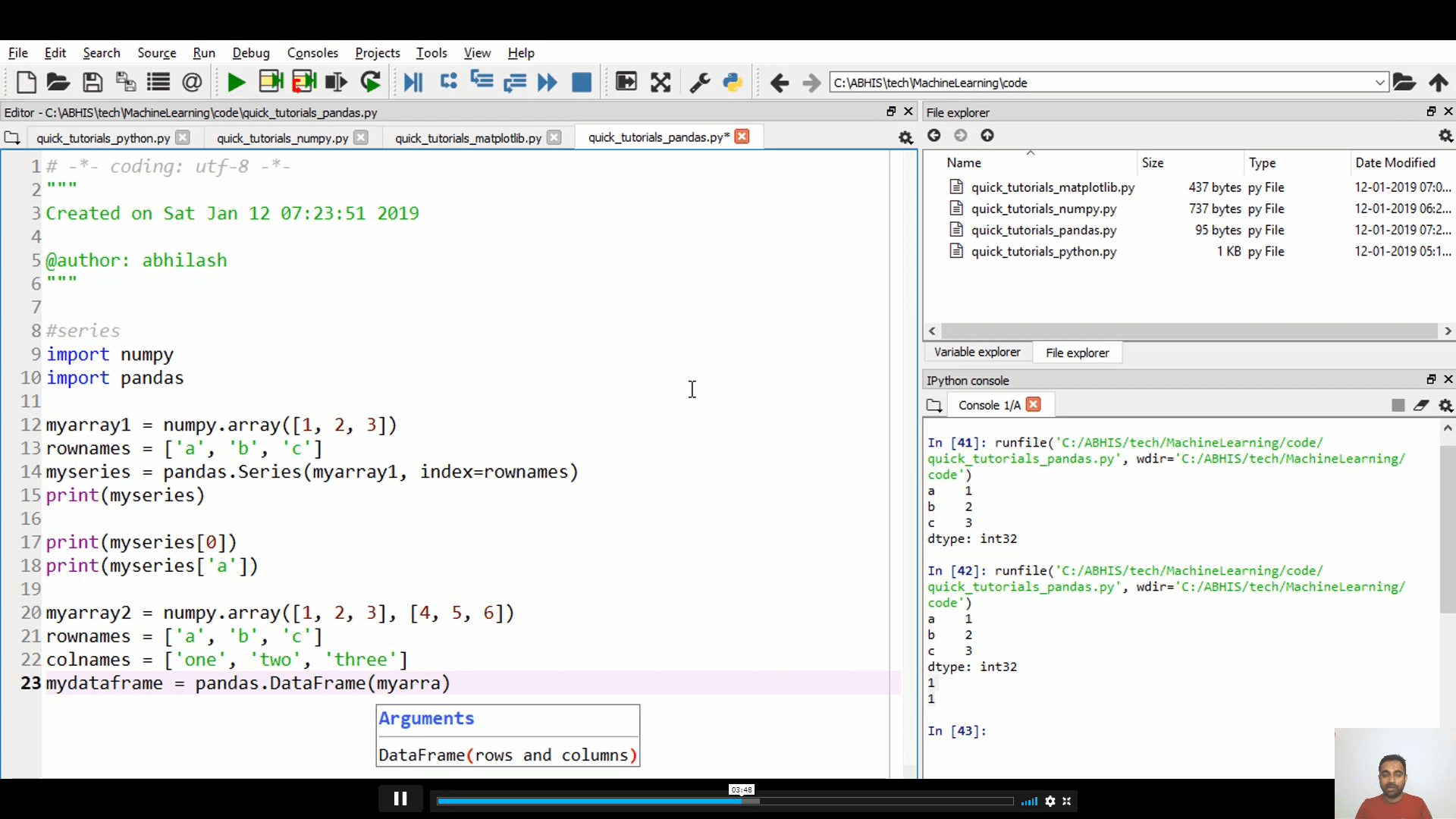
  • Learning about machine learning tools like NumPy, Pandas, and Matplotlib for theoretical applications
  • Discussing model evaluation strategies such as cross-validation and performance metrics

By the end of the Data Science & Machine Learning with Python course, you will be able to:

  • Understand Python programming fundamentals for data analysis
  • Identify and apply various machine learning algorithms in a theoretical context
  • Analyse and manipulate datasets using Python libraries like Pandas and NumPy
  • Understand data visualisation techniques using tools such as Matplotlib
  • Evaluate machine learning models based on common performance metrics
  • Learn about feature selection techniques and their impact on machine learning models
  • Understand the theoretical underpinnings of machine learning algorithms and their applications

As data-driven decision-making becomes increasingly important across industries, professionals with expertise in data science and machine learning are in high demand. This course provides you with the necessary theoretical knowledge to understand how data science and machine learning work and how they can be applied in various industries. With CPD-accredited certification, this course allows you to deepen your understanding of Python and machine learning concepts.

What you gain:

  • CPD-accredited certification to support your career development
  • In-depth knowledge of data science principles and machine learning algorithms
  • Lifetime access to the course materials for continued learning at your own pace

This course is ideal for:

  • Individuals looking to develop a strong theoretical understanding of data science and machine learning
  • Those interested in pursuing a career in data analysis or machine learning
  • Students or professionals who wish to enhance their knowledge of Python and its application in data science
  • Anyone interested in the theoretical aspects of machine learning algorithms and model evaluation

There are no formal prerequisites for this course. It is suitable for beginners who wish to gain an understanding of Python and machine learning principles.

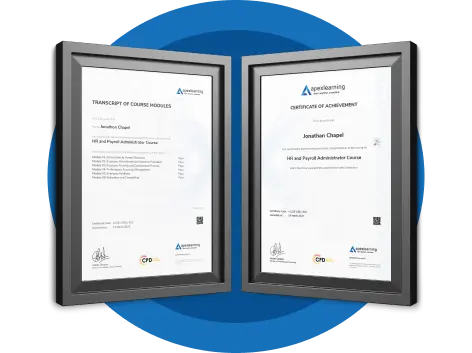
Upon completing the course and passing the final exam, you will receive a CPD QS Accredited Certificate from Apex Learning. This certification demonstrates your qualifications and skills. The Digital version of the certificate is available for a discounted price of £9.99 only, and you can order a hard copy of the certificate for a discounted price of £14.99 only.


📍Note: Discounted certificate pricing is available for a limited time only. Secure yours before the offer ends!
Apex - CPD QS Certificate Image

Completing the Data Science & Machine Learning with Python course provides the knowledge needed for various theoretical roles in data science, including:

  • Data Scientist – £35,000 to £60,000 annually
    Apply data science principles to analyse and model complex datasets.
  • Machine Learning Engineer – £40,000 to £70,000 annually
    Work with machine learning algorithms to create predictive models in various sectors.
  • Data Analyst – £25,000 to £45,000 annually
    Use theoretical knowledge of data analysis tools to interpret data and provide insights.
  • Business Intelligence Analyst – £30,000 to £50,000 annually
    Interpret data to support business decisions and visualise business intelligence metrics.

Data Science & Machine Learning with Python | CPD Accredited Course Online – UK

Data Science and Machine Learning are essential fields for analysing complex datasets and building predictive models. This CPD-accredited course offers comprehensive training in Python programming, data manipulation, machine learning algorithms, and model evaluation. Ideal for those who wish to enhance their theoretical understanding of these subjects, this course provides the foundation to work effectively with data in any context.

Course Overview

The Data Science & Machine Learning with Python course offers a thorough introduction to Python programming and its application in data science. You will learn how to manipulate data, apply machine learning models, and evaluate them using various theoretical frameworks. This course covers the core concepts of machine learning, data transformation, and model evaluation, all delivered through structured learning content.

Key topics covered include:

  • Introduction to Python programming for data analysis
  • Understanding core machine learning algorithms such as classification, regression, and clustering
  • Exploring data preparation and pre-processing techniques, including feature selection
  • Applying data visualisation techniques to understand datasets
  • Evaluating models using metrics like accuracy, precision, recall, and F1-score
  • Learning about machine learning tools like NumPy, Pandas, and Matplotlib for theoretical applications
  • Discussing model evaluation strategies such as cross-validation and performance metrics

Learning Outcomes

By the end of the Data Science & Machine Learning with Python course, you will be able to:

  • Understand Python programming fundamentals for data analysis
  • Identify and apply various machine learning algorithms in a theoretical context
  • Analyse and manipulate datasets using Python libraries like Pandas and NumPy
  • Understand data visualisation techniques using tools such as Matplotlib
  • Evaluate machine learning models based on common performance metrics
  • Learn about feature selection techniques and their impact on machine learning models
  • Understand the theoretical underpinnings of machine learning algorithms and their applications

Why Enrol in This Course?

As data-driven decision-making becomes increasingly important across industries, professionals with expertise in data science and machine learning are in high demand. This course provides you with the necessary theoretical knowledge to understand how data science and machine learning work and how they can be applied in various industries. With CPD-accredited certification, this course allows you to deepen your understanding of Python and machine learning concepts.

What you gain:

  • CPD-accredited certification to support your career development
  • In-depth knowledge of data science principles and machine learning algorithms
  • Lifetime access to the course materials for continued learning at your own pace

Who is This Course for?

This course is ideal for:

  • Individuals looking to develop a strong theoretical understanding of data science and machine learning
  • Those interested in pursuing a career in data analysis or machine learning
  • Students or professionals who wish to enhance their knowledge of Python and its application in data science
  • Anyone interested in the theoretical aspects of machine learning algorithms and model evaluation

Prerequisites

There are no formal prerequisites for this course. It is suitable for beginners who wish to gain an understanding of Python and machine learning principles.

Assessment Method

Assessment for the course is conducted through an automated multiple-choice exam. A score of 60% is required to pass and earn the CPD Accredited Certificate. Reflective assignments are provided to enhance your learning, with expert tutor feedback available.

Certification

Upon completing the course and passing the final exam, you will receive a CPD QS Accredited Certificate from Apex Learning. This certification demonstrates your qualifications and skills. The Digital version of the certificate is available for a discounted price of £9.99 only, and you can order a hard copy of the certificate for a discounted price of £14.99 only.


📍Note: Discounted certificate pricing is available for a limited time only. Secure yours before the offer ends!
Apex - CPD QS Certificate Image

Career Path

Completing the Data Science & Machine Learning with Python course provides the knowledge needed for various theoretical roles in data science, including:

  • Data Scientist – £35,000 to £60,000 annually
    Apply data science principles to analyse and model complex datasets.
  • Machine Learning Engineer – £40,000 to £70,000 annually
    Work with machine learning algorithms to create predictive models in various sectors.
  • Data Analyst – £25,000 to £45,000 annually
    Use theoretical knowledge of data analysis tools to interpret data and provide insights.
  • Business Intelligence Analyst – £30,000 to £50,000 annually
    Interpret data to support business decisions and visualise business intelligence metrics.

Frequestly Asked Questions

Yes, the course is delivered entirely online, allowing you to learn at your own pace and convenience.

No, this course is designed for beginners and does not require prior experience in programming.

Yes, you will receive a CPD-accredited certificate upon successfully completing the course.

You will have lifetime access to all course content, allowing you to revisit the material whenever necessary.

The course is self-paced, and most learners complete it in approximately 6 to 8 weeks, depending on their study schedule.

Course Curriculum

Expand All

  • 4 sections
  • 8 lectures
  • 00:00:00 total length
Expand all sections
  • video Course Overview & Table of Contents
    00:09:00
  • video Introduction to Machine Learning – Part 1 – Concepts , Definitions and Types
    00:05:00
  • video Introduction to Machine Learning – Part 2 – Classifications and Applications
    00:06:00
  • video System and Environment preparation – Part 1
    00:08:00
  • video System and Environment preparation – Part 2
    00:06:00
  • video Learn Basics of python – Assignment 1
    00:10:00
  • video Learn Basics of python – Assignment 2
    00:09:00
  • video Learn Basics of python – Functions
    00:04:00
  • video Learn Basics of python – Data Structures
    00:12:00
  • video Learn Basics of NumPy – NumPy Array
    00:06:00
  • video Learn Basics of NumPy – NumPy Data
    00:08:00
  • video Learn Basics of NumPy – NumPy Arithmetic
    00:04:00
  • video Learn Basics of Matplotlib
    00:07:00
  • video Learn Basics of Pandas – Part 1
    00:06:00
  • video Learn Basics of Pandas – Part 2
    00:07:00
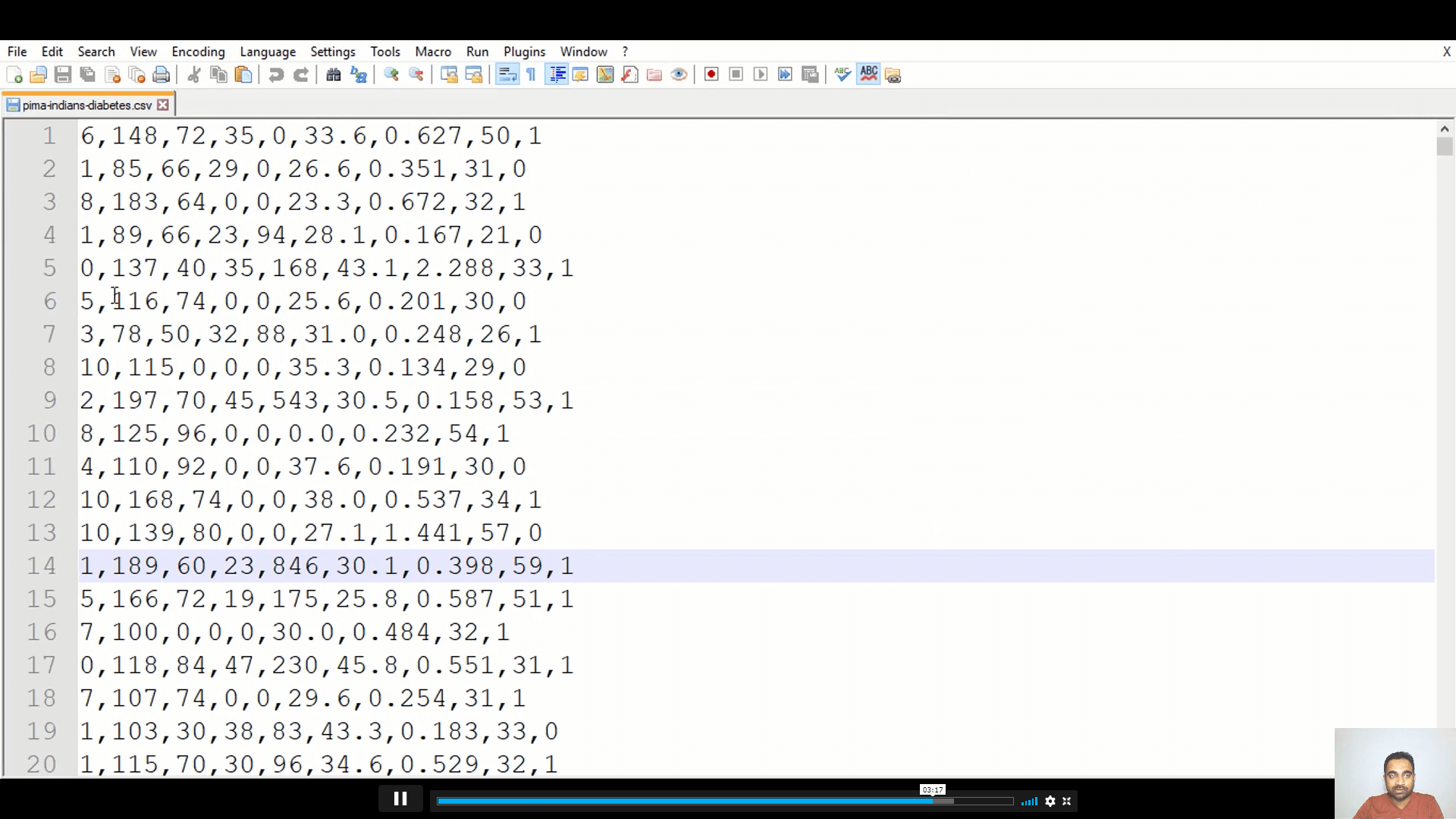
  • video Understanding the CSV data file
    00:09:00
  • video Load and Read CSV data file using Python Standard Library
    00:09:00
  • video Load and Read CSV data file using NumPy
    00:04:00
  • video Load and Read CSV data file using Pandas
    00:05:00
  • video Dataset Summary – Peek, Dimensions and Data Types
    00:09:00
  • video Dataset Summary – Class Distribution and Data Summary
    00:09:00
  • video Dataset Summary – Explaining Correlation
    00:11:00
  • video Dataset Summary – Explaining Skewness – Gaussian and Normal Curve
    00:07:00
  • video Dataset Visualization – Using Histograms
    00:07:00
  • video Dataset Visualization – Using Density Plots
    00:06:00
  • video Dataset Visualization – Box and Whisker Plots
    00:05:00
  • video Multivariate Dataset Visualization – Correlation Plots
    00:08:00
  • video Multivariate Dataset Visualization – Scatter Plots
    00:05:00
  • video Data Preparation (Pre-Processing) – Introduction
    00:09:00
  • video Data Preparation – Re-scaling Data – Part 1
    00:09:00
  • video Data Preparation – Re-scaling Data – Part 2
    00:09:00
  • video Data Preparation – Standardizing Data – Part 1
    00:07:00
  • video Data Preparation – Standardizing Data – Part 2
    00:04:00
  • video Data Preparation – Normalizing Data
    00:08:00
  • video Data Preparation – Binarizing Data
    00:06:00
  • video Feature Selection – Introduction
    00:07:00
  • video Feature Selection – Uni-variate Part 1 – Chi-Squared Test
    00:09:00
  • video Feature Selection – Uni-variate Part 2 – Chi-Squared Test
    00:10:00
  • video Feature Selection – Recursive Feature Elimination
    00:11:00
  • video Feature Selection – Principal Component Analysis (PCA)
    00:09:00
  • video Feature Selection – Feature Importance
    00:07:00
  • video Refresher Session – The Mechanism of Re-sampling, Training and Testing
    00:12:00
  • video Algorithm Evaluation Techniques – Introduction
    00:07:00
  • video Algorithm Evaluation Techniques – Train and Test Set
    00:11:00
  • video Algorithm Evaluation Techniques – K-Fold Cross Validation
    00:09:00
  • video Algorithm Evaluation Techniques – Leave One Out Cross Validation
    00:05:00
  • video Algorithm Evaluation Techniques – Repeated Random Test-Train Splits
    00:07:00
  • video Algorithm Evaluation Metrics – Introduction
    00:09:00
  • video Algorithm Evaluation Metrics – Classification Accuracy
    00:08:00
  • video Algorithm Evaluation Metrics – Log Loss
    00:03:00
  • video Algorithm Evaluation Metrics – Area Under ROC Curve
    00:06:00
  • video Algorithm Evaluation Metrics – Confusion Matrix
    00:10:00
  • video Algorithm Evaluation Metrics – Classification Report
    00:04:00
  • video Algorithm Evaluation Metrics – Mean Absolute Error – Dataset Introduction
    00:06:00
  • video Algorithm Evaluation Metrics – Mean Absolute Error
    00:07:00
  • video Algorithm Evaluation Metrics – Mean Square Error
    00:03:00
  • video Algorithm Evaluation Metrics – R Squared
    00:04:00
  • video Classification Algorithm Spot Check – Logistic Regression
    00:12:00
  • video Classification Algorithm Spot Check – Linear Discriminant Analysis
    00:04:00
  • video Classification Algorithm Spot Check – K-Nearest Neighbors
    00:05:00
  • video Classification Algorithm Spot Check – Naive Bayes
    00:04:00
  • video Classification Algorithm Spot Check – CART
    00:04:00
  • video Classification Algorithm Spot Check – Support Vector Machines
    00:05:00
  • video Regression Algorithm Spot Check – Linear Regression
    00:08:00
  • video Regression Algorithm Spot Check – Ridge Regression
    00:03:00
  • video Regression Algorithm Spot Check – Lasso Linear Regression
    00:03:00
  • video Regression Algorithm Spot Check – Elastic Net Regression
    00:02:00
  • video Regression Algorithm Spot Check – K-Nearest Neighbors
    00:06:00
  • video Regression Algorithm Spot Check – CART
    00:04:00
  • video Regression Algorithm Spot Check – Support Vector Machines (SVM)
    00:04:00
  • video Compare Algorithms – Part 1 : Choosing the best Machine Learning Model
    00:09:00
  • video Compare Algorithms – Part 2 : Choosing the best Machine Learning Model
    00:05:00
  • video Pipelines : Data Preparation and Data Modelling
    00:11:00
  • video Pipelines : Feature Selection and Data Modelling
    00:10:00
  • video Performance Improvement: Ensembles – Voting
    00:07:00
  • video Performance Improvement: Ensembles – Bagging
    00:08:00
  • video Performance Improvement: Ensembles – Boosting
    00:05:00
  • video Performance Improvement: Parameter Tuning using Grid Search
    00:08:00
  • video Performance Improvement: Parameter Tuning using Random Search
    00:06:00
  • video Export, Save and Load Machine Learning Models : Pickle
    00:10:00
  • video Export, Save and Load Machine Learning Models : Joblib
    00:06:00
  • video Finalizing a Model – Introduction and Steps
    00:07:00
  • video Finalizing a Classification Model – The Pima Indian Diabetes Dataset
    00:07:00
  • video Quick Session: Imbalanced Data Set – Issue Overview and Steps
    00:09:00
  • video Iris Dataset : Finalizing Multi-Class Dataset
    00:09:00
  • video Finalizing a Regression Model – The Boston Housing Price Dataset
    00:08:00
  • video Real-time Predictions: Using the Pima Indian Diabetes Classification Model
    00:07:00
  • video Real-time Predictions: Using Iris Flowers Multi-Class Classification Dataset
    00:03:00
  • video Real-time Predictions: Using the Boston Housing Regression Model
    00:08:00

Data Science & Machine Learning with Python

Save 95% - Sale Ends in

4.8 Star course rating

Data Science & Machine Learning with Python

£21.99

Regular Price

£419

Save 95% - Sale Ends in

14 Days Money Back Guarantee

This course includes:

  • Duration:
    10 hours, 24 minutes
  • Access:
    1 year access
  • Level:
  • CPD Points:
    10