




Abuse does not always leave a visible mark. A sudden change in behaviour, missing personal belongings or repeated failures to meet someone’s care needs can all indicate that something is wrong.
For care workers, recognising the different types of abuse is an essential part of protecting people’s safety, dignity and wellbeing. Whether you work in a residential care home, hospital, supported living service or someone’s own home, knowing what to look for can help you raise concerns before further harm occurs.
This guide explains the ten recognised categories of abuse and neglect, their warning signs, practical examples and how care workers should respond.
Want to test yourself? Try our 10-scenario quiz: Which type of abuse is this?
Can You Spot the Signs of Abuse Before It Escalates?
Build your safeguarding knowledge with flexible online learning designed for care professionals.
- Covers abuse, neglect and safeguarding legislation
- Learn to respond to disclosures and record concerns
- CPD-accredited, 100% online and self-paced
Safeguarding Level 4
✓ CPD QS accredited certificate • 100% online • Study at your own pace
What Are the 10 Types of Abuse in Safeguarding?
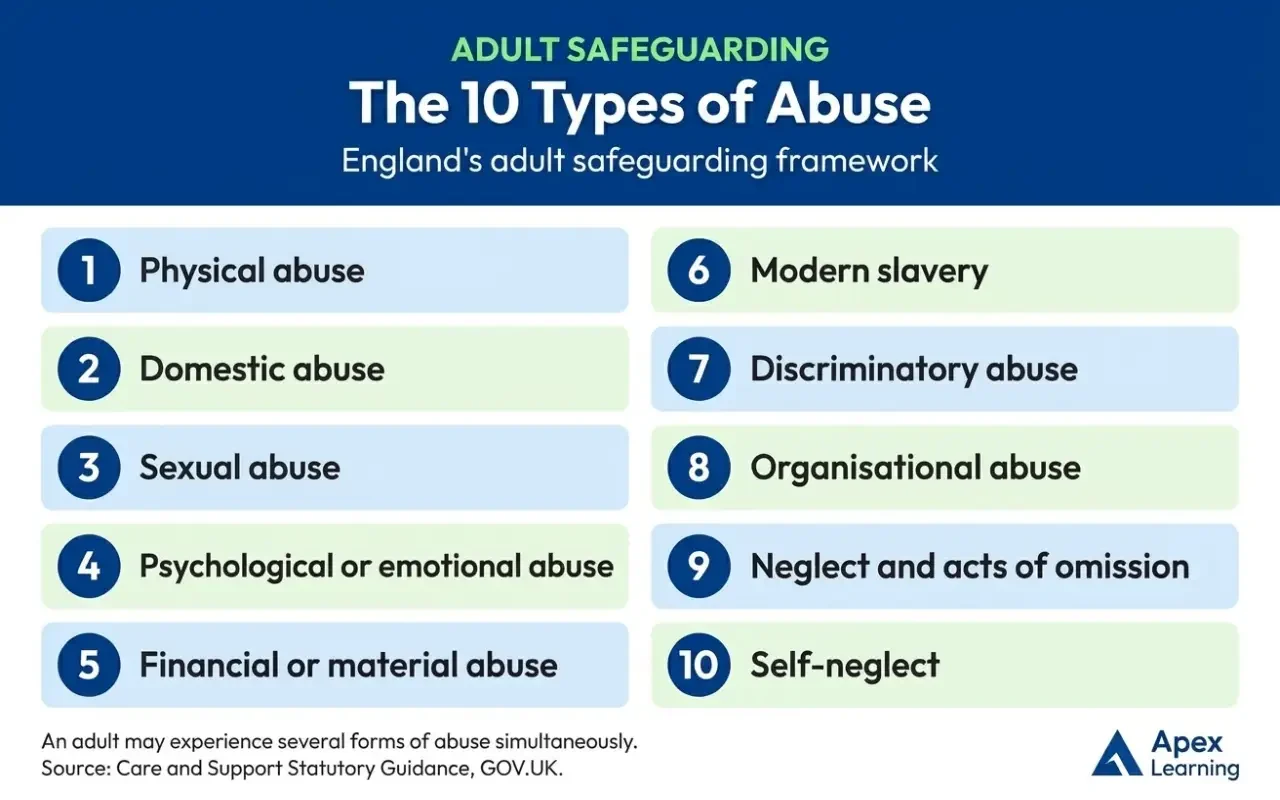
Under the Care and Support Statutory Guidance, England’s adult safeguarding framework identifies ten main categories of abuse and neglect:
- Physical abuse
- Domestic abuse
- Sexual abuse
- Psychological or emotional abuse
- Financial or material abuse
- Modern slavery
- Discriminatory abuse
- Organisational abuse
- Neglect and acts of omission
- Self-neglect
These categories are not exhaustive, and an adult may experience several forms of abuse simultaneously. Safeguarding legislation and arrangements also differ across the UK.
For those beginning a career in care, Apex Learning’s Safeguarding Adults Level 2 course offers foundational learning to help develop knowledge of adult safeguarding and abuse recognition.
10 Types of Abuse: Warning Signs and Examples
Recognising abuse requires more than knowing its definition. Care workers need to notice changes in people’s behaviour, circumstances and quality of care. The following examples illustrate how different forms of abuse may arise in everyday care settings.
1. Physical Abuse
Physical abuse involves causing bodily harm or subjecting someone to inappropriate physical treatment. It includes hitting, pushing, rough handling, medication misuse and inappropriate restraint.
Possible warning signs:
- Unexplained bruises, burns or injuries.
- Frequent injuries with inconsistent explanations.
- Fear or flinching around particular individuals.
- Unexplained changes in medication or alertness.
Example in care: A staff member handles a resident roughly while assisting them with dressing.
Care workers should also recognise when restrictions may be inappropriate or unlawful. Familiarity with deprivation of liberty safeguards can help clarify the legal protections surrounding individual freedom.
2. Domestic Abuse
Under the Domestic Abuse Act 2021, domestic abuse can include physical, sexual, psychological, emotional and economic abuse between people aged 16 or over who are personally connected.
Possible warning signs:
- A partner or relative controlling everyday decisions.
- Restricted access to money or communication.
- Increasing isolation from friends and family.
- Fearfulness around a particular person.
Example in care: During home-care visits, an adult’s partner regularly prevents them from speaking privately with their support worker.
Domestic abuse can occur without physical violence, making changes in relationships and personal independence particularly important indicators.
3. Sexual Abuse
Sexual abuse involves unwanted sexual behaviour or activity without valid consent. It can include sexual assault, inappropriate touching, harassment and sexual exploitation.
Possible warning signs:
- Unexplained intimate injuries or discomfort.
- Distress during personal care.
- Sudden changes in behaviour.
- Fear of being alone with particular individuals.
Example in care: A person receiving support is repeatedly subjected to unwanted sexual comments by a staff member.
Care workers must respect personal boundaries and consent. Communication difficulties should never be mistaken for agreement.
4. Psychological or Emotional Abuse
Psychological abuse involves behaviour that undermines someone’s dignity, confidence, independence or emotional wellbeing. It may involve threats, humiliation, intimidation, isolation or persistent criticism.
Possible warning signs:
- Increased anxiety or withdrawal.
- Loss of confidence and self-esteem.
- Reluctance to express personal preferences.
- Fearfulness around particular individuals.
- Noticeable changes in mood or communication.
Example in care: A care worker repeatedly humiliates a resident for needing assistance with meals.
Emotional abuse can be difficult to recognise because its effects are not always visible. Changes in behaviour should be taken seriously and considered alongside other observations.
5. Financial or Material Abuse
Financial abuse occurs when someone improperly uses or controls another person’s money, property or possessions. It includes theft, fraud, scams and financial coercion.
Possible warning signs:
- Unexplained withdrawals or missing money.
- Missing personal belongings.
- Unpaid bills despite sufficient funds.
- Sudden changes in financial arrangements.
Example in care: A relative pressures an older adult into handing over their bank card and personal savings.
Exploitation can also extend to someone’s home. Care workers may benefit from recognising signs of cuckooing, where criminals exploit another person’s home for criminal purposes.
6. Modern Slavery
Modern slavery involves serious exploitation through coercion, deception or control. It encompasses forced labour, human trafficking, domestic servitude and certain forms of criminal exploitation.
Possible warning signs:
- Restricted freedom of movement.
- Limited access to personal identification documents.
- Fear of speaking independently.
- Signs of being controlled or exploited by others.
Example in care: An adult receiving community support appears to be forced to work and has little control over their earnings.
Understanding the warning signs of county lines exploitation can also help care workers recognise potential criminal exploitation.
7. Discriminatory Abuse
Discriminatory abuse involves harmful or unfair treatment associated with someone’s personal characteristics or perceived differences. It may include racist language, disability-related harassment, religious discrimination or other degrading treatment.
Possible warning signs:
- Repeated exclusion from activities.
- Offensive or degrading comments.
- Unequal access to care and support.
- Distress following interactions with particular individuals.
Example in care: A resident is repeatedly mocked because of their disability or communication difficulties.
The Equality Act 2010 identifies legally protected characteristics. Respecting individual differences is fundamental to dignified and inclusive care.
8. Organisational Abuse
Organisational abuse, sometimes called institutional abuse, occurs when poor practices, procedures or workplace cultures result in harmful or inappropriate care.
Possible warning signs:
- Rigid routines that disregard individual needs.
- Repeated complaints about care quality.
- Lack of privacy, dignity or personal choice.
- Widespread unsafe or inappropriate practices.
Example in care: A residential care service routinely ignores residents’ preferred waking and sleeping times for staff convenience.
Inappropriate restrictions may also raise safeguarding concerns. Staff with relevant responsibilities should remain informed about the legal framework and the current position of Liberty Protection Safeguards.
For further learning on mental capacity, restrictions and individual rights, consider Apex Learning’s Mental Health Care Training – MCA & DoLS course.
9. Neglect and Acts of Omission
Neglect occurs when necessary care, treatment or support is not provided. It may involve missed medication, inadequate nutrition, insufficient hygiene support or failure to obtain medical assistance.
Possible warning signs:
- Unexplained weight loss or dehydration.
- Persistent unmet personal care needs.
- Repeatedly missed medication.
- Deteriorating health without appropriate attention.
Example in care: An adult regularly misses prescribed medication because staff fail to follow their care plan.
Neglect may result from individual failures or wider organisational problems. Both require appropriate attention and reporting.
10. Self-Neglect
Self-neglect involves a person neglecting their own health, personal care or surroundings to an extent that creates significant risks to their wellbeing.
Possible warning signs:
- Seriously deteriorating living conditions.
- Unmet personal hygiene needs.
- Inadequate nutrition or hydration.
- Untreated health problems.
- Excessive accumulation of possessions creating safety risks.
Example in care: A home-care worker notices that an adult’s living conditions and unmet health needs are creating serious risks.
Refusing support does not automatically mean someone lacks mental capacity. Further guidance on recognising and responding to self-neglect can help staff approach these situations sensitively.
Quiz: Which Type of Abuse Is This?
Read each care scenario and choose the type of abuse it most likely describes. Real situations can involve more than one type, so choose the best fit.
How to Recognise Abuse When the Signs Are Not Obvious
Not every safeguarding concern involves an obvious injury. Some forms of abuse develop gradually, while others may be concealed by controlling behaviour or fear.
Care workers should pay particular attention to patterns such as:
- Persistent changes in behaviour or communication.
- Increasing isolation or loss of independence.
- Repeated unexplained injuries or financial difficulties.
- Recurring failures to meet essential care needs.
Several types of abuse may occur together. For example, financial exploitation may involve threats, intimidation and psychological abuse.
Wider safeguarding concerns can also involve radicalisation. Where relevant to their role, staff should be familiar with their organisation’s procedures and responsibilities under the Prevent duty.
As reflected in NICE guidance on safeguarding adults in care homes, staff should act on legitimate concerns rather than waiting for conclusive evidence. Warning signs are possible indicators of abuse, not proof that it has occurred.
What Should Care Workers Do If They Suspect Abuse?
Recognising abuse is only the first step. An appropriate response can help protect the adult while ensuring concerns are handled through the correct safeguarding channels.
Respond, Record and Report the Concern
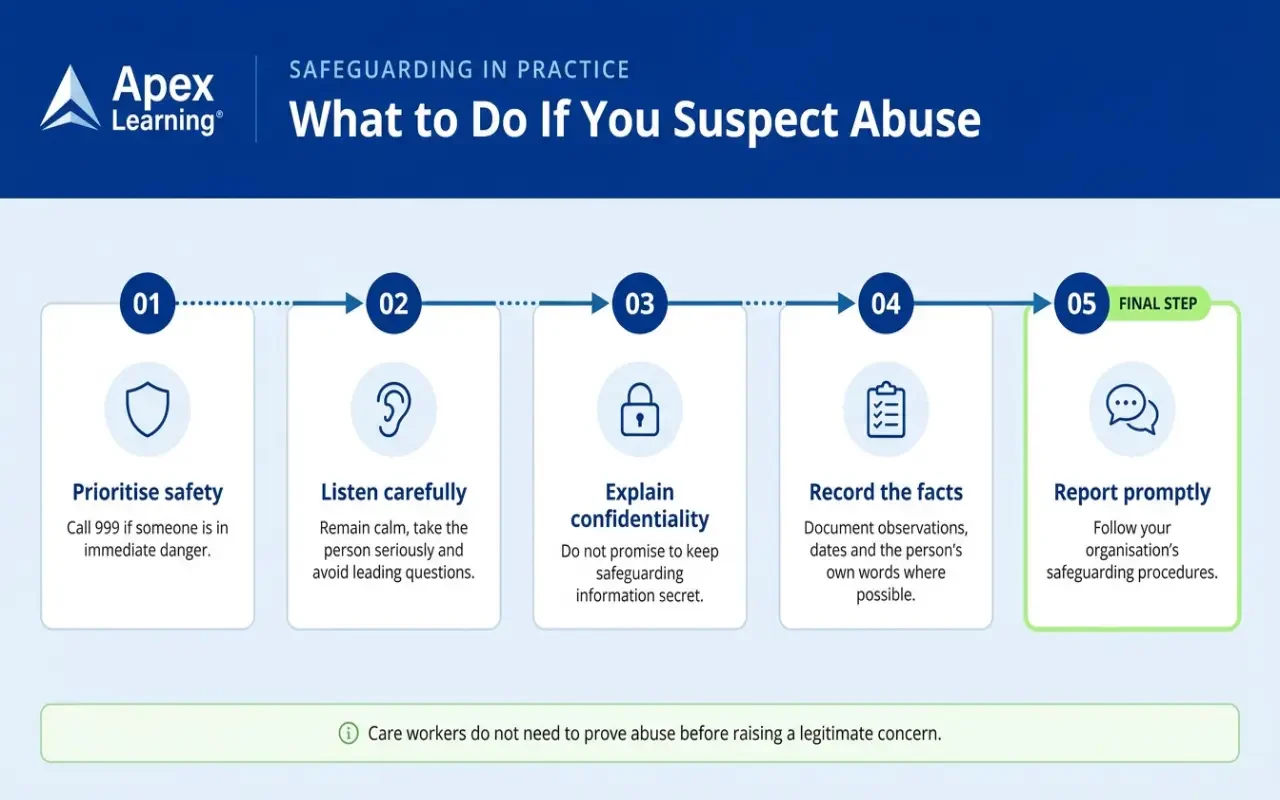
If you suspect abuse or receive a disclosure:
- Prioritise safety: Call 999 if someone is in immediate danger.
- Listen carefully: Remain calm, take the person seriously and avoid leading questions.
- Explain confidentiality: Do not promise to keep safeguarding information secret.
- Record the facts: Document observations, dates and the person’s own words where possible.
- Report promptly: Follow your organisation’s safeguarding procedures.
If internal reporting is unsafe or ineffective, concerns can be raised with the local authority’s adult safeguarding team or other appropriate authorities.
Knowing how a Section 42 safeguarding enquiry works can help staff understand what may happen following a referral.
Apex Learning’s Safeguarding Vulnerable Adults: Roles & Responsibilities course provides an additional learning opportunity for those looking to develop their knowledge of adult safeguarding responsibilities.
Respect the Adult’s Wishes, Dignity and Choices
Effective safeguarding involves working with the adult rather than automatically making decisions on their behalf.
Under the Mental Capacity Act 2005, making an unwise decision does not, by itself, establish a lack of mental capacity.
Care workers should listen to people’s preferences, respect their privacy and involve them in decisions wherever possible, while following appropriate safeguarding and information-sharing procedures.
Applying person-centred safeguarding practice helps balance protection from harm with individual rights, independence and desired outcomes.
Why Safeguarding Training Matters for Care Workers
Recognising abuse and responding appropriately are fundamental safeguarding skills. For new care workers, Care Certificate Standard 10 addresses adult safeguarding, while CQC Regulation 13 establishes provider responsibilities for protecting people from abuse and improper treatment in England.

Apex Learning’s Safeguarding Level 4 course offers flexible, CPD-accredited online learning covering abuse and neglect, safeguarding legislation, risk assessment, responding to disclosures and recording concerns.
It is suitable for individuals looking to develop their safeguarding knowledge alongside their existing responsibilities. The course can support continued professional development but does not replace employer-required training or workplace competency assessments.
Ready to Take Your Safeguarding Knowledge Further?
Learn how to recognise abuse, assess risk and report concerns with confidence, at your own pace.
- Covers abuse, neglect and safeguarding legislation
- Learn to respond to disclosures and record concerns
- CPD-accredited, 100% online and self-paced
Safeguarding Level 4
✓ CPD QS accredited certificate • 100% online • Study at your own pace
Conclusion
Recognising the ten types of abuse helps care workers protect people’s safety, dignity and independence. From physical injuries to less visible financial exploitation and emotional harm, potential warning signs deserve appropriate attention.
Care workers do not need to prove abuse before raising a legitimate concern. By remaining observant, listening carefully, recording information accurately and following safeguarding procedures, they can contribute to safer, more respectful care environments.
Frequently Asked Questions
What Are the 10 Main Types of Abuse?
England’s adult safeguarding framework identifies physical, domestic, sexual, psychological, financial, discriminatory and organisational abuse, alongside modern slavery, neglect and acts of omission, and self-neglect.
What Are Some Signs That Someone Is Being Abused?
Possible signs include unexplained injuries, withdrawal, fearfulness, missing money, behavioural changes and unmet care needs. Individual indicators do not necessarily prove abuse but may warrant further safeguarding attention.
Why Is It Important to Recognise Signs of Abuse?
Early recognition enables care workers to raise concerns promptly, support appropriate safeguarding action and reduce the risk of further harm while protecting people’s dignity, rights and wellbeing.
Can Someone Experience More Than One Type of Abuse?
Yes. Different types of abuse can occur simultaneously. For example, someone experiencing financial exploitation may also face intimidation, controlling behaviour and physical threats. Safeguarding responses should consider the person’s wider circumstances.
What Is the Difference Between Neglect and Self-Neglect?
Neglect involves failures by another person or organisation to provide necessary care or support. Self-neglect involves a person seriously neglecting their own health, personal care or living environment.
What Should a Care Worker Do If They Suspect Abuse?
Care workers should prioritise immediate safety, listen without judgement, record information accurately and report concerns through appropriate safeguarding channels. They should not attempt to conduct an independent investigation.
Do Care Workers Need Safeguarding Training?
Care providers should ensure staff receive safeguarding training appropriate to their roles and responsibilities. Additional CPD courses can help develop knowledge but should complement employer-required training and practical competency assessments.
 " alt="Black Friday Marketing Courses 2026: How To Pick One That Grows Real Audience" />
 " alt="Instagram vs TikTok vs YouTube Shorts for Creators: Where Should a Beginner Post First?" />